Factory-direct molecular sieves, mist elimination internals, and tower packings engineered for petrochemical fractionation, cryogenic gas purification, and extreme absorption processes.
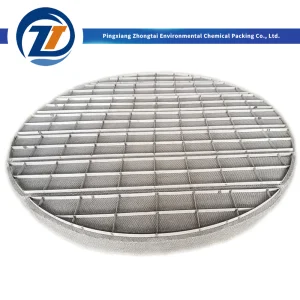
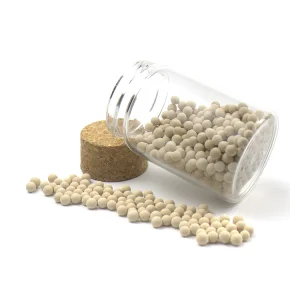
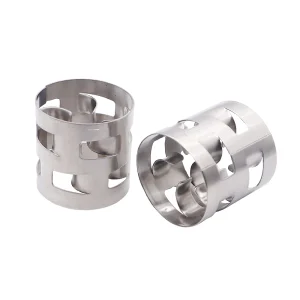
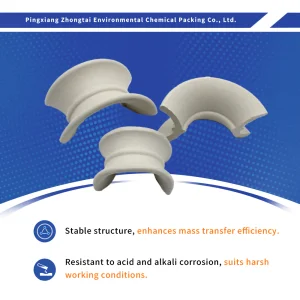
Zeolite Type 5A belongs to the synthetic aluminosilicate Linde Type A (LTA) structural family. Through precision divalent calcium cation exchange ($Ca^{2+}$), its pore window is tailored to exactly 5 Angstroms (0.50 nm), enabling precise molecular cutoff.
The basic Type 4A sodium aluminosilicate lattice ($Na_{12}[(AlO_2)_{12}(SiO_2)_{12}]\cdot 27H_2O$) features an effective 4 Å aperture guarded by $Na^+$ cations. In Chinese 5A manufacturing, controlled hydrothermal ion-exchange substitutes roughly 70% to 80% of monovalent sodium ions with divalent calcium ($Ca^{2+}$). Each $Ca^{2+}$ ion replaces two $Na^+$ ions, retracting cation blockage away from the 8-ring oxygen windows and opening the nominal kinetic diameter to 5.0 Å.
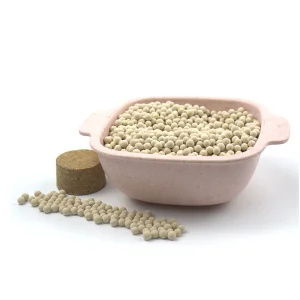
Molsieve 5A operates by strict steric exclusion and electric quadrupole interaction. Molecules possessing a kinetic cross-section smaller than 5.0 Å effortlessly enter the internal sodalite-alpha pore network, while branched hydrocarbons and cyclic molecules are rejected at the crystal perimeter. This phenomenon underpins modern linear paraffin extraction and refinery octane enhancement.
Under cyclic Pressure Swing Adsorption (PSA) or Temperature Swing Adsorption (TSA), performance is dictated by the Mass Transfer Zone (MTZ). China's leading 5A molecular sieve manufacturers optimize bead microporosity to sharpen the MTZ gradient, ensuring high breakthrough capacity, minimal unutilized bed depth, and rapid regeneration kinetics without hydrothermal pore collapse.
From heavy industrial refining hubs in the Middle East and East Asia to medical-grade medical concentrators across North America and Europe, Molsieve 5A acts as a decisive purification and fractionation engine.
In modern hydrocarbon refining, isomerate upgrading demands the extraction of low-octane linear alkanes ($C_5-C_6$) to recirculate through isomerization catalysts, elevating Research Octane Number (RON) in commercial gasoline blends. Concurrently, detergent petrochemical plants separate $C_{10}-C_{14}$ linear mono-olefins/paraffins for Linear Alkyl Benzene (LAB) synthesis. China 5A molecular sieves provide steady dynamic adsorption capacity across thousands of cycles without coking or pore channel occlusion.
Before atmospheric air reaches cryogenic fractionation columns at -196°C, moisture and carbon dioxide must be mitigated below 0.1 ppmv to prevent catastrophic cold-box plate heat exchanger freeze-up. Layered beds combining high-capacity 5A and 13X molecular sieves co-adsorb $CO_2$, $N_2O$, and light volatile hydrocarbons ($C_2H_2$), neutralizing the risk of explosive hydrocarbon accumulations inside liquid oxygen sumps.
Deep-well natural gas and LNG liquefaction trains encounter sour streams containing hydrogen sulfide ($H_2S$), methyl/ethyl mercaptans, and carbonyl sulfide ($COS$). Molsieve 5A exhibits powerful polar affinity toward $H_2S$ while simultaneously achieving dew points below -100°C. Chinese manufacturers formulate high-silica binder matrices that withstand feed gas pressure surges and acidic condensing shocks during automated switching cycles.
Refinery hydrotreaters, catalytic reformers, and fuel cell electric vehicle (FCEV) hydrogen infrastructure demand ultra-pure $H_2$. In multi-bed PSA systems, Molsieve 5A is stacked downstream of activated carbon to selectively retain carbon monoxide ($CO$), methane ($CH_4$), and unreacted nitrogen ($N_2$). Residual CO is driven down to sub-ppm levels to protect proton-exchange membrane (PEM) platinum fuel cell catalysts from irreversibly poisoning.
Pingxiang City, Jiangxi Province represents the world's most concentrated cluster for industrial ceramics, chemical tower packing, and synthetic zeolites. This specialized geographic focus delivers unmatched lead-time predictability and cost control.
Pingxiang manufacturers control local access to high-purity kaolin clay reserves and regional chemical synthesis facilities for sodium silicate ($waterglass$) and sodium aluminate. Complete internal integration from raw mineral calcination to hydrothermal zeolite crystallization isolates our operations from global commodity raw-material price volatility.
The transition from green extruded beads to structurally sound molecular sieves requires precise thermal activation between 550°C and 650°C. Chinese factories utilize automated natural-gas tunnel and rotary kilns equipped with multi-point infrared pyrometric controls. This eliminates localized hot spots, securing crystal structural integrity and minimizing fine dust production.
Direct freight connections link Pingxiang industrial parks with major deepwater ports including Shanghai, Ningbo, and Shenzhen within 24 to 48 hours. Finished products are packaged under hermetic dry conditions into nitrogen-blanketed airtight carbon steel drums (with moisture vapor barrier liners) to safeguard active adsorption capacity during marine transit.
Rigorous factory testing executed per ASTM and international standards guarantees that Chinese-manufactured Type 5A molecular sieves achieve or exceed Western brand equivalents across all operational metrics.
| Physicochemical Parameter | Test Standard / Method | Sphere / Bead (1.6 – 2.5 mm) | Pellet / Extrudate (1/16" & 1/8") | Engineering Significance |
|---|---|---|---|---|
| Nominal Pore Diameter | Crystallographic LTA Calc. | 5.0 Å (0.50 nm) | 5.0 Å (0.50 nm) | Strict molecular cutoff separating linear from branched hydrocarbons. |
| Bulk Density (Packed) | ASTM D3878 / HG/T 2524 | 0.68 – 0.74 g/mL | 0.66 – 0.72 g/mL | Determines bed loading mass, vessel design volumes, and bed inertia. |
| Crush Strength (Individual) | ASTM D4179 (Single Bead) | ≥ 35 N / particle | ≥ 30 N / particle | Prevents lower bed crushing under tall commercial column hydrostatic heads. |
| Static Water Adsorption | 25°C, 60% RH Equilibrium | ≥ 21.5 wt% | ≥ 21.0 wt% | Indicates total active pore volume and initial drying potency. |
| Static $CO_2$ Adsorption | 25°C, 250 mmHg | ≥ 16.5 cm³/g (STP) | ≥ 16.0 cm³/g (STP) | Dictates dynamic capacity in PSA/VPSA decarbonization packages. |
| Attrition Loss Rate | ASTM D4058 / Ball Mill | ≤ 0.10 wt% | ≤ 0.15 wt% | Protects downstream valves and filters from abrasive particulate dust. |
| Residual Moisture (As Shipped) | Loss on Ignition (575°C, 2hr) | ≤ 1.20 wt% | ≤ 1.50 wt% | Guarantees active sieve delivery ready for direct vessel startup. |
| Calcium Exchange Degree | ICP-OES Elemental Assay | ≥ 75% stoichiometric | ≥ 72% stoichiometric | Defines aperture uniformity and prevents premature $n$-alkane bypass. |
Chinese R&D institutes in collaboration with Pingxiang manufacturing bases are advancing zeolite synthesis beyond classical formulations to reduce operational energy consumption.
Conventional molecular sieves require 15% to 20% inert clay binder (such as attapulgite or sepiolite) to mold crystals into beads, diluting mass-transfer efficiency. Chinese researchers have commercialized chemical crystallization converting the clay matrix into active zeolite phase ($in-situ$ crystallization). The resulting binderless 5A increases dynamic breakthrough capacity by 20% to 25%, permitting smaller adsorption vessels and reduced capital expenditure.
Standard micropores create steep intra-crystalline diffusion resistance for larger $n$-alkanes ($C_{10}-C_{14}$). By employing organosilane surfactant templates during hydrothermal crystallization, hierarchical meso-microporous 5A frameworks are synthesized. The engineered secondary 2-10 nm transport highways shorten diffusion times by 40%, delivering sharper breakthrough curves in high-space-velocity refinery beds.
With industrial decarbonization mandates gaining momentum globally, our high-temperature desorption curves are being re-engineered. Advanced surface modification lowers the adsorption energy barrier for water and carbon dioxide, allowing complete thermal stripping at 170°C to 200°C instead of legacy 280°C cycles. This directly curbs process steam and electrical regeneration power consumption by over 30%.
Industrial buyers demand uncompromising verification. Every batch leaving our Chinese facilities undergoes rigorous pre-shipment laboratory assays, verified with authenticated Mill Test Certificates (MTC).
Prior to packaging, independent quality inspectors sample composite cross-sections of every kiln discharge run. Automated crush testing machines record fracture limits over 50 individual beads to calculate statistical distributions ($Weibull\ modulus$), preventing brittle outliers from entering client reactor columns.
Molecular sieve 5A is extraordinarily thirsty; accidental ambient exposure degrades performance. We package using 25kg vacuum-sealed aluminum foil bags enclosed in reinforced corrugated cartons, 55-gallon hermetically sealed air-tight steel drums, or 1000kg weather-proof Super Sacks featuring moisture-tight heat-welded polymer liners.
Operations comply strictly with ISO 9001:2015 (Quality), ISO 14001:2015 (Environmental Management), and ISO 45001:2018 (Occupational Health). Our synthetic zeolites hold comprehensive European REACH registrations, ensuring tariff-compliant and customs-cleared importation across EU, US, and Asian jurisdictions without chemical regulatory bottlenecks.
Direct engineering answers covering kinetic parameters, bed loading methodologies, operational life cycles, and Chinese factory sourcing specifications.
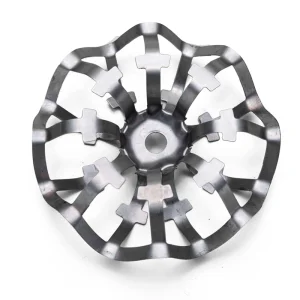
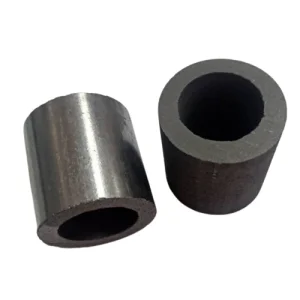
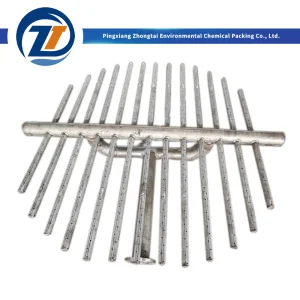
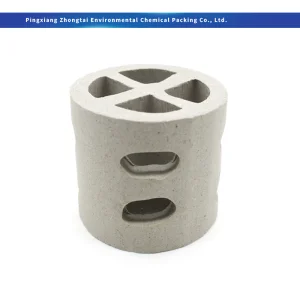
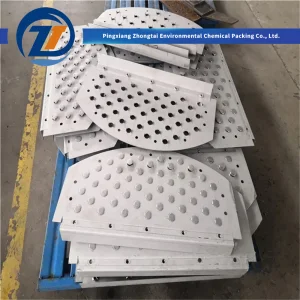
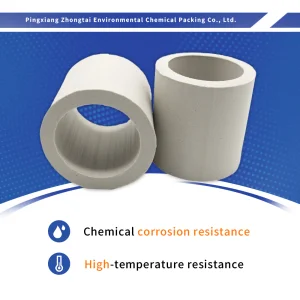
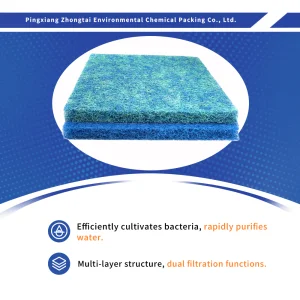
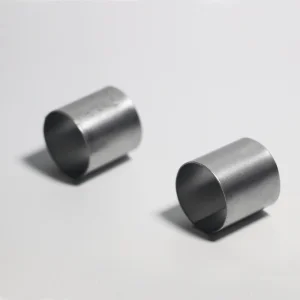
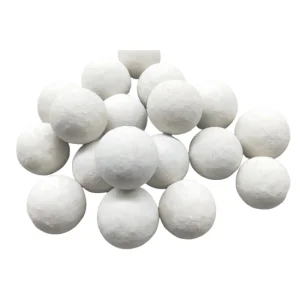
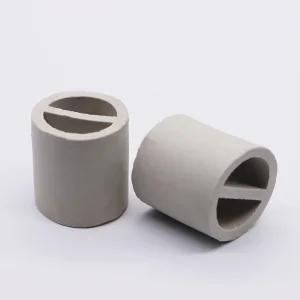
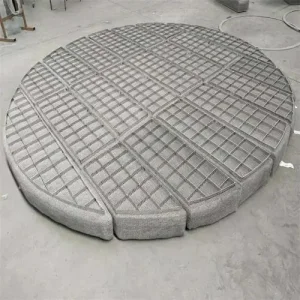
Complementary separation media including structured packings, random tower rings, fractionation trays, ceramic supports, and high-efficiency filtration components.
Whether revamping a refinery paraffin extraction train, sizing a PSA hydrogen generator, or sourcing high-crush 5A molecular sieves for cryogenic air preparation, our technical engineering team in Pingxiang provides dynamic isotherm modeling, bed differential pressure estimates, and verified factory-direct volume pricing.
