1 / 3

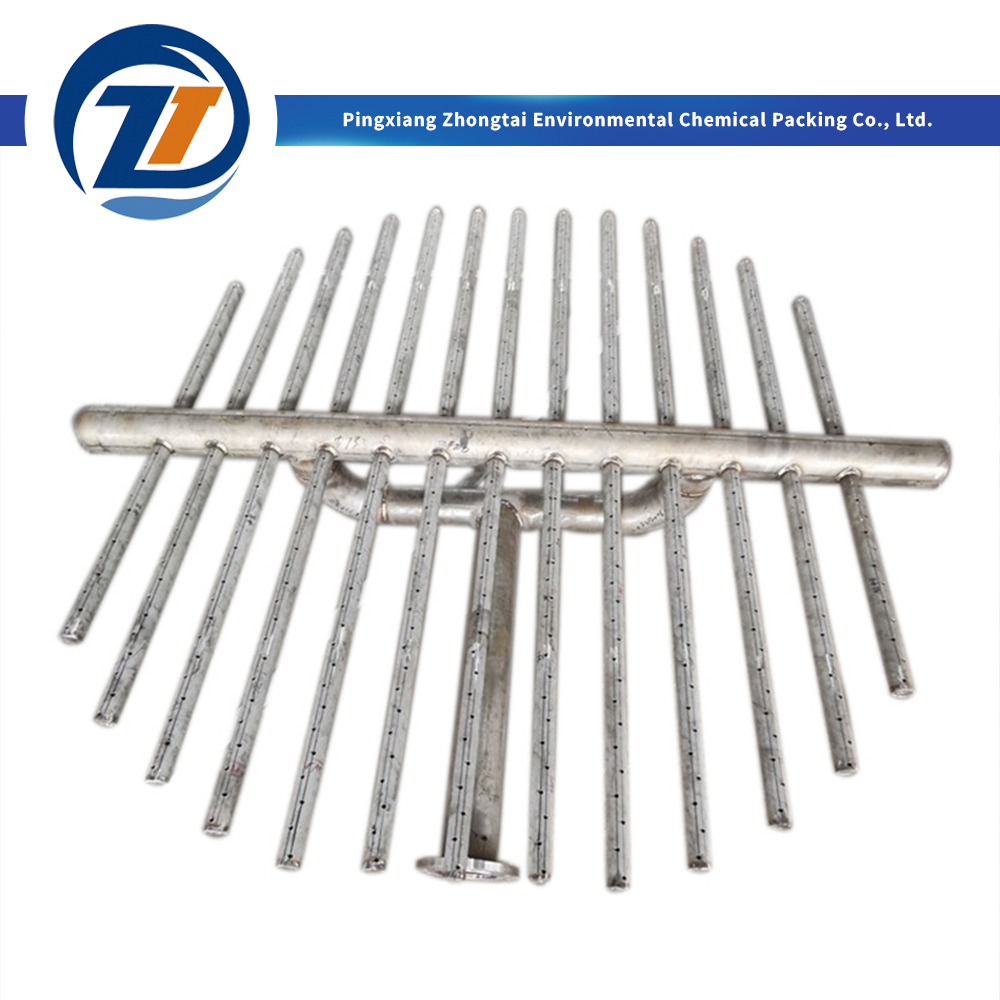
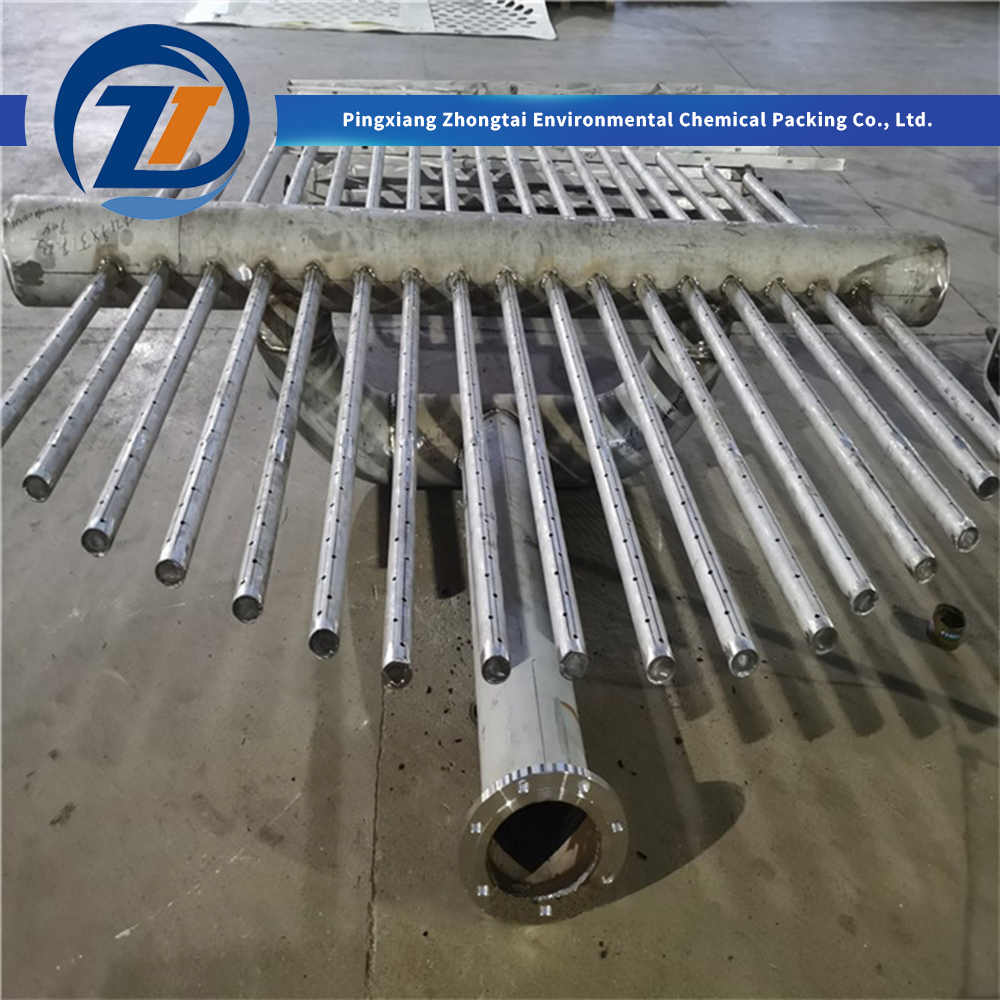
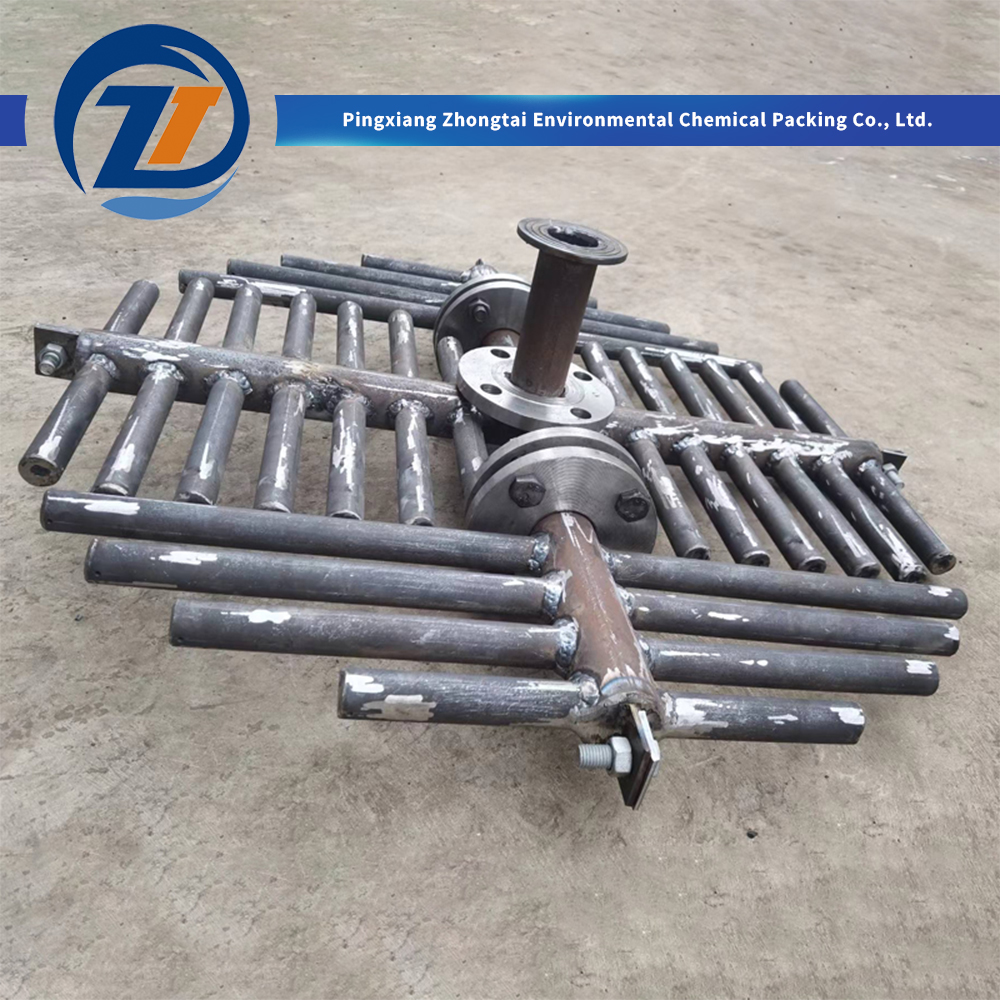
The Metal Pipe Liquid Distributor is a pressure‑driven liquid distribution system widely used in packed columns, quench towers, and scrubbers. It consists of a main header and multiple branch pipes equipped with precision‑drilled holes or spray nozzles. Liquid is fed under pressure, exits the orifices as fine jets or sprays, and is evenly dispersed across the packing surface below. This design offers a wide operating range, is inherently resistant to clogging, and allows for easy cleaning—making it the first choice for services with moderate solids content, high liquid rates, or where quick installation and removal are required. Constructed from 304/316L stainless steel, carbon steel, or high‑alloy materials, it provides robust, long‑term service in demanding industrial environments.
| Parameter | Typical Value / Range |
|---|---|
| Column Diameter | 400–8000 mm |
| Main Pipe Size | DN25–DN300 |
| Branch Pipe Size | DN15–DN80 |
| Orifice Diameter | 2.5–12 mm |
| Orifice Spacing | 25 / 40 / 50 / 75 / 100 mm |
| Liquid Load Range | 2–100 m³/m²·h |
| Turndown Ratio | Up to 3:1 |
| Pipe Material Thickness | SCH10 / SCH40 / Custom |
| Max Operating Temp | ≤450°C (SS304/316L) |



Liquid enters the central header under pressure and flows through branch arm lateral pipes. Precision-drilled discharge orifices or specialized spray nozzles generate uniform liquid jets or sprays that spread evenly over the top layer of the packed bed.
Pipe distributors are pressure-fed, making them much less sensitive to tower out-of-levelness, vessel motion, or surging liquid flows. They also require significantly less vertical installation space and provide superior anti-fouling performance in dirty services.
Yes. Because fluid velocities inside the pipes remain relatively high and discharge orifices are typically engineered between 2.5 mm and 12 mm, the system resists sedimentation and clogging better than gravity-fed drip-point systems.
Standard configurations are made from SS304 and SS316L. For severe corrosive environments, units can be fabricated from high-nickel alloys such as Hastelloy, Monel, Inconel, or Duplex Stainless Steels (2205/2507).
Engineers determine orifice spacing, hole size, and spray angles according to column diameter, design operating flow rates, liquid viscosity, and the required drip-point density to maximize packed bed mass transfer efficiency.
The assembly is constructed with flanged or threaded segment joints, permitting rapid breakdown and withdrawal through manways for straightforward cleaning, high-pressure washing, or mechanical descaling.