1 / 5



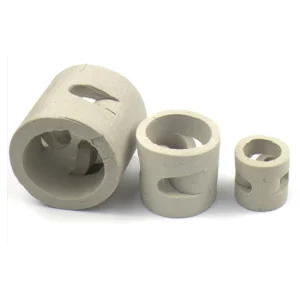
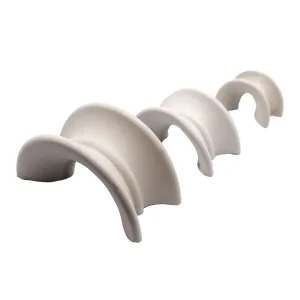
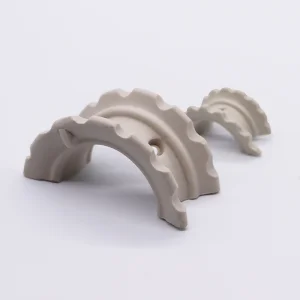
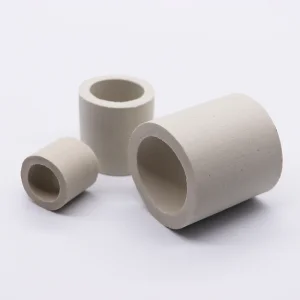
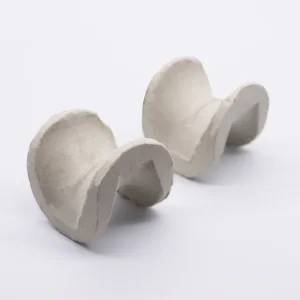
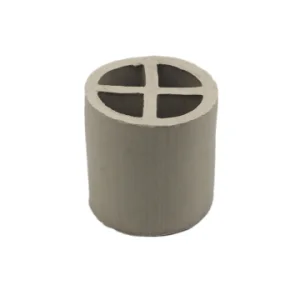
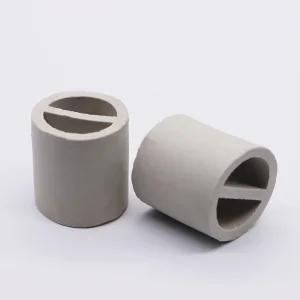
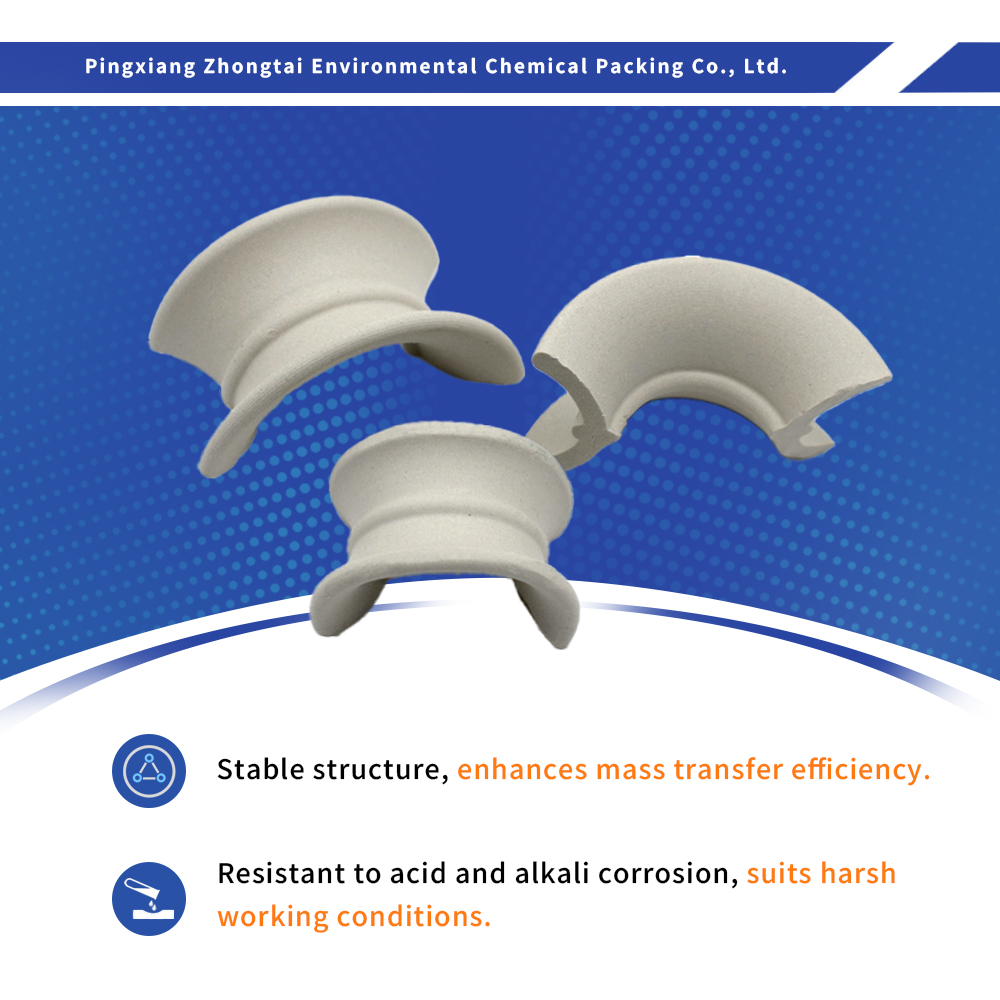
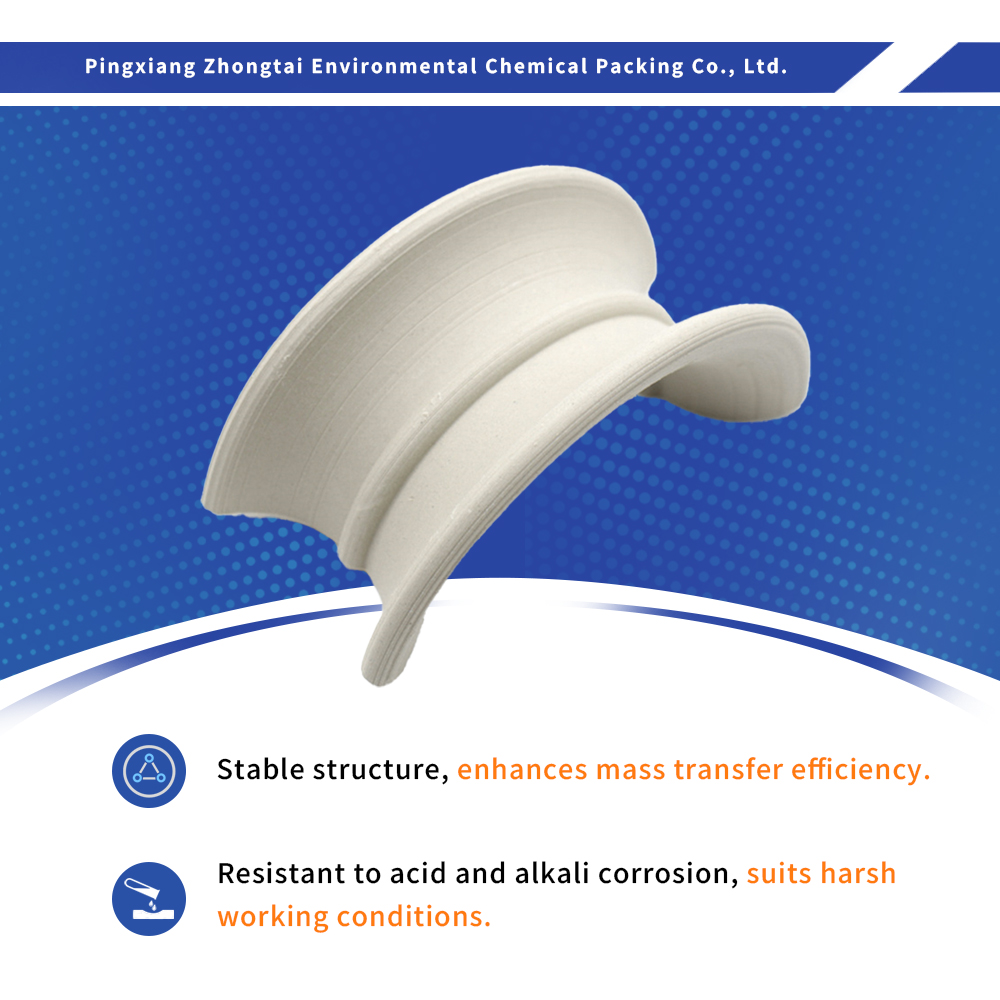
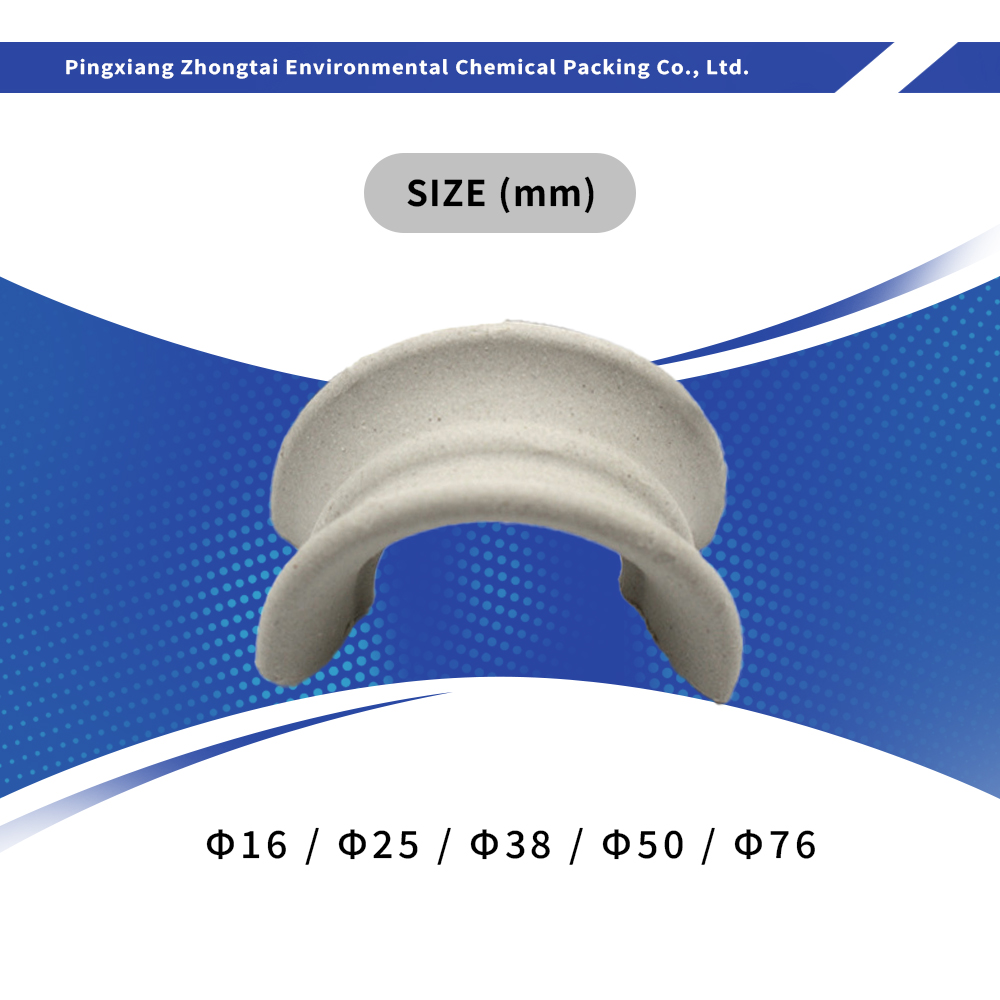
Ceramic rectangular saddle ring has excellent acid and heat resistance, and can resist corrosion of various inorganic acids, organic acids and organic solvents except hydrofluoric acid, and can be used in high or low temperature environments, so it has a wide range of use.
Ceramic rectangular saddle rings are used in two main fields, but depending on the performance requirements of practical applications.
| Type | Size (mm) | Surface Area (m²/m³) | Free Space (%) | Weight (kg/m³) | Number (pcs/m³) |
| 1/2" | 21×12×1.8 | 430 | 67 | 741 | 355,820 |
| 5/8" | 24×14×2 | 378 | 71 | 723 | 232,980 |
| 3/4" | 33×18×2.8 | 330 | 73 | 720 | 111,548 |
| 1" | 38×22×3.4 | 258 | 77.5 | 700 | 62,128 |
| 1.5" | 60×30×4 | 197 | 81 | 635 | 23,368 |
| 2" | 80×40×5 | 120 | 79 | 600 | 8,860 |
| 3" | 114×57×8 | 92 | 77 | 550 | 3,000 |
| 4" | 136.5×72.5×11 | 78 | 75 | 582 | 1,606 |
| SiO₂ | Al₂O₃ | Fe₂O₃ | CaO | K₂O + Na₂O |
| >70% | 23-30% | <1% | <1-2% | <2-4% |
| Index | Value |
| Specific gravity (g/cm³) | 2.25 - 2.35 |
| Water absorption (%) | <0.5 |
| Acid-resisting strength, %Wt. Loss (ASTM C279) | <4 |
| Firing temperature (°C) | 1280 - 1320 |
| Softening point (°C) | >1400 |
| Density (kg/m³) | 2350 |
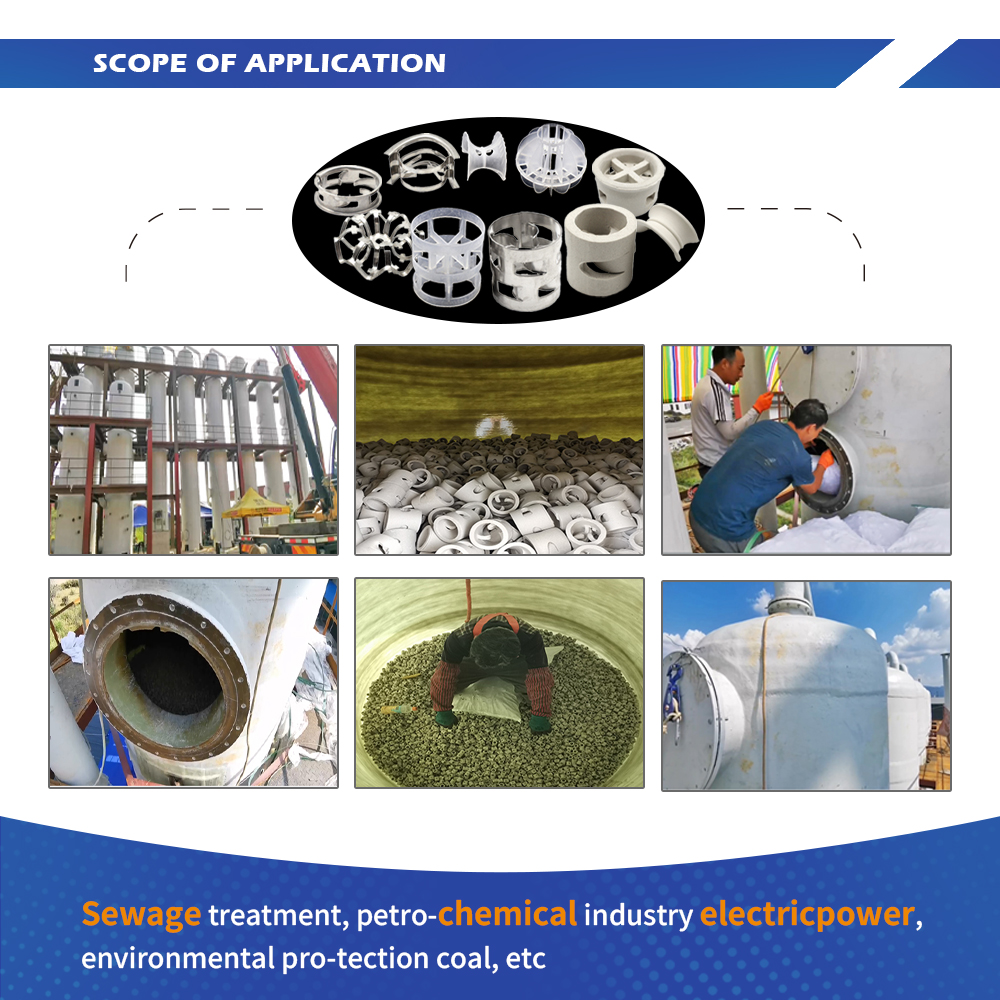
They are commonly used in packed towers across chemical, petrochemical, acid manufacturing, and environmental protection sectors for distillation, absorption, scrubbing, and extraction processes.
They offer outstanding resistance to virtually all inorganic acids, organic acids, and organic solvents, with the sole exception of hydrofluoric acid (HF).
Sintered at 1280°C to 1320°C with a softening point above 1400°C, these saddle rings maintain stability under extreme high-temperature operating conditions as well as low-temperature environments.
Smaller sizes (e.g., 1/2", 5/8") provide higher specific surface area for intense mass transfer, whereas larger sizes (e.g., 2", 3", 4") deliver greater free space, allowing higher throughput and lower pressure drop.
The packing features an extremely low water absorption rate of less than 0.5% and meets ASTM C279 standards with weight loss under 4% during acid-resisting strength tests.
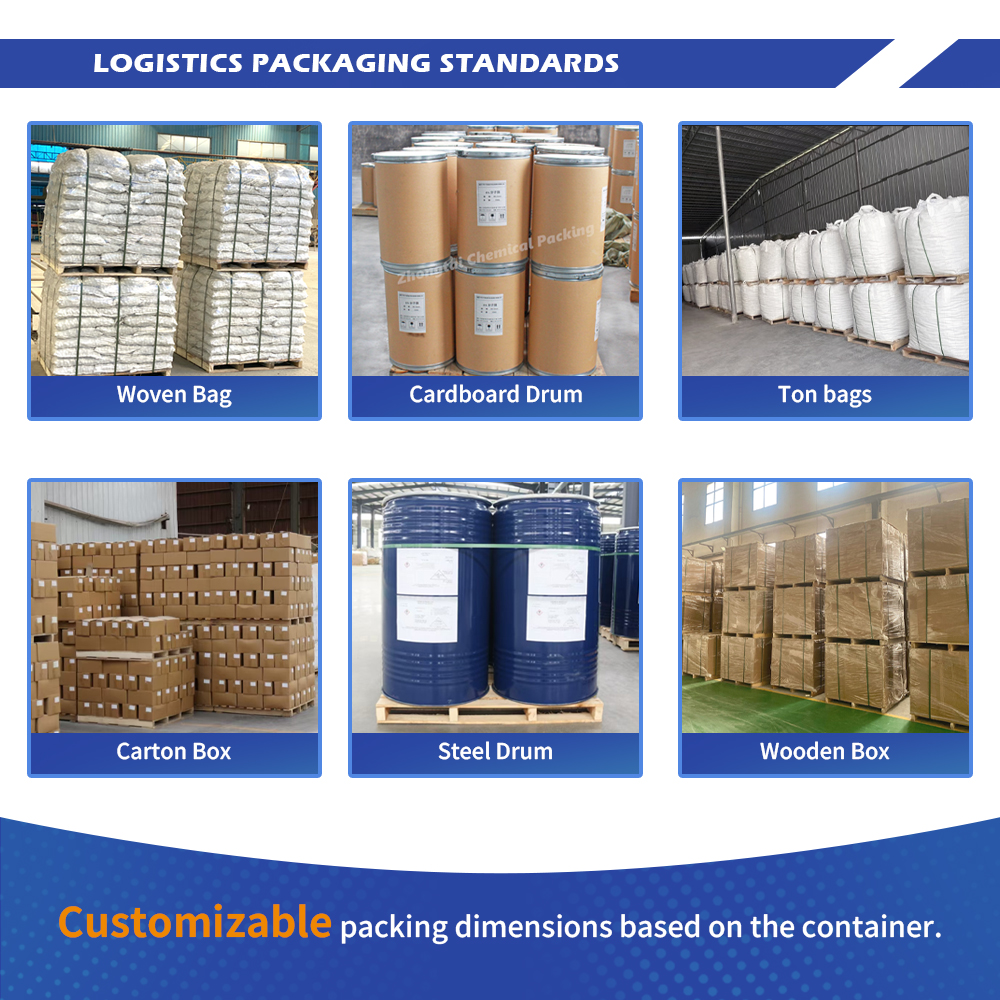
Yes, dimensions and technical properties can be matched to tower engineering criteria, accompanied by secure palletized or bulk industrial packing for overseas shipping.