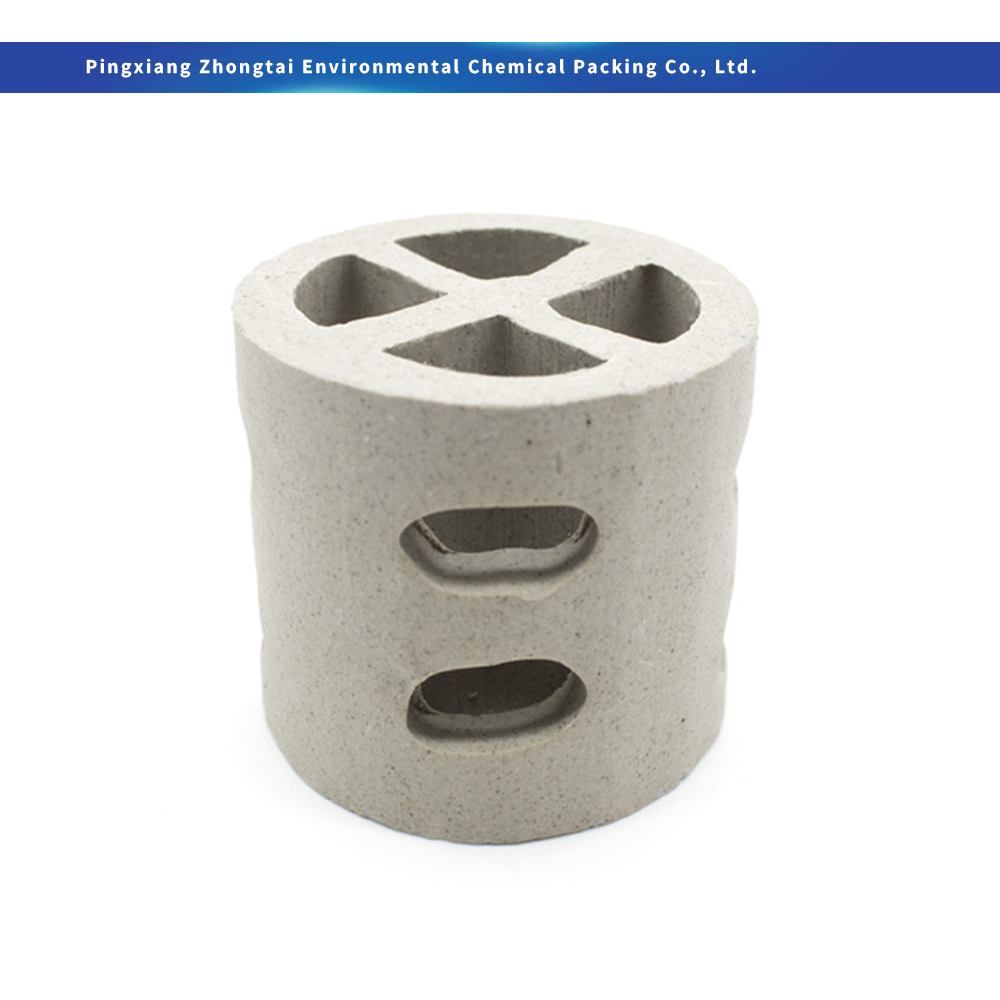
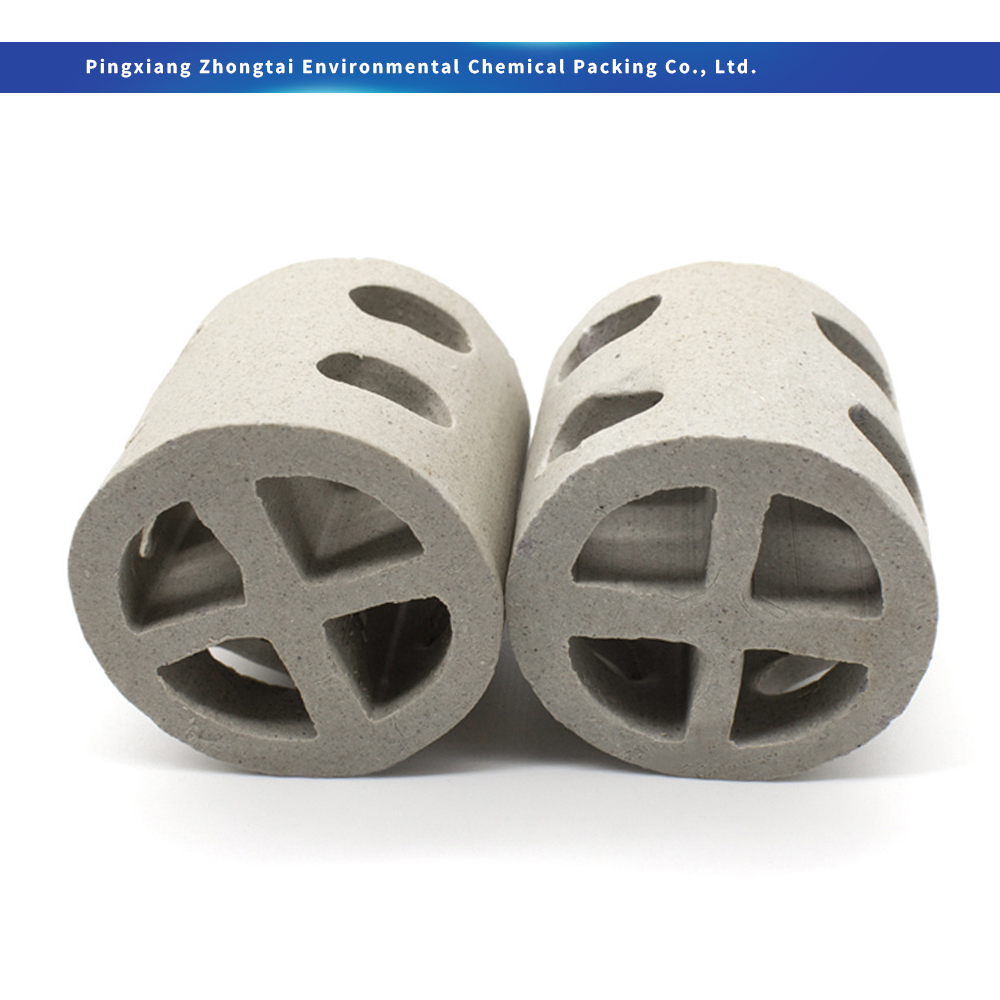
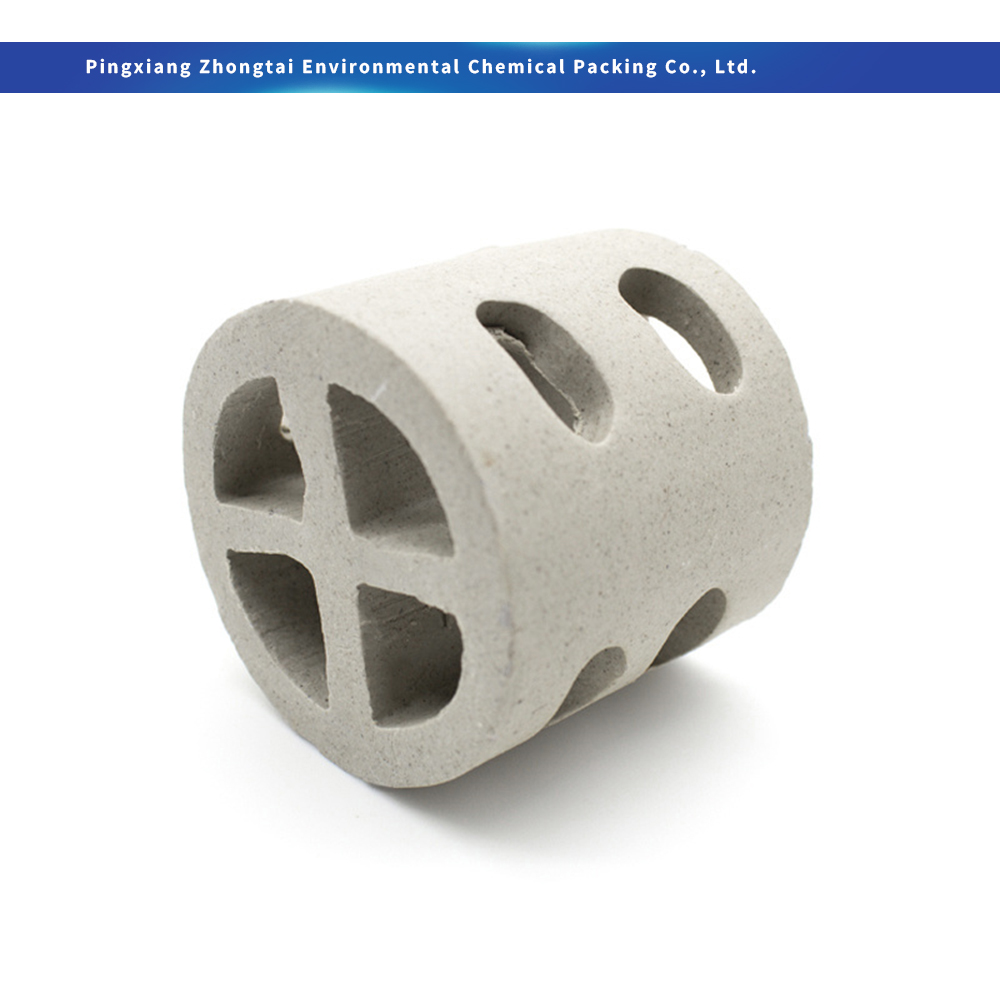
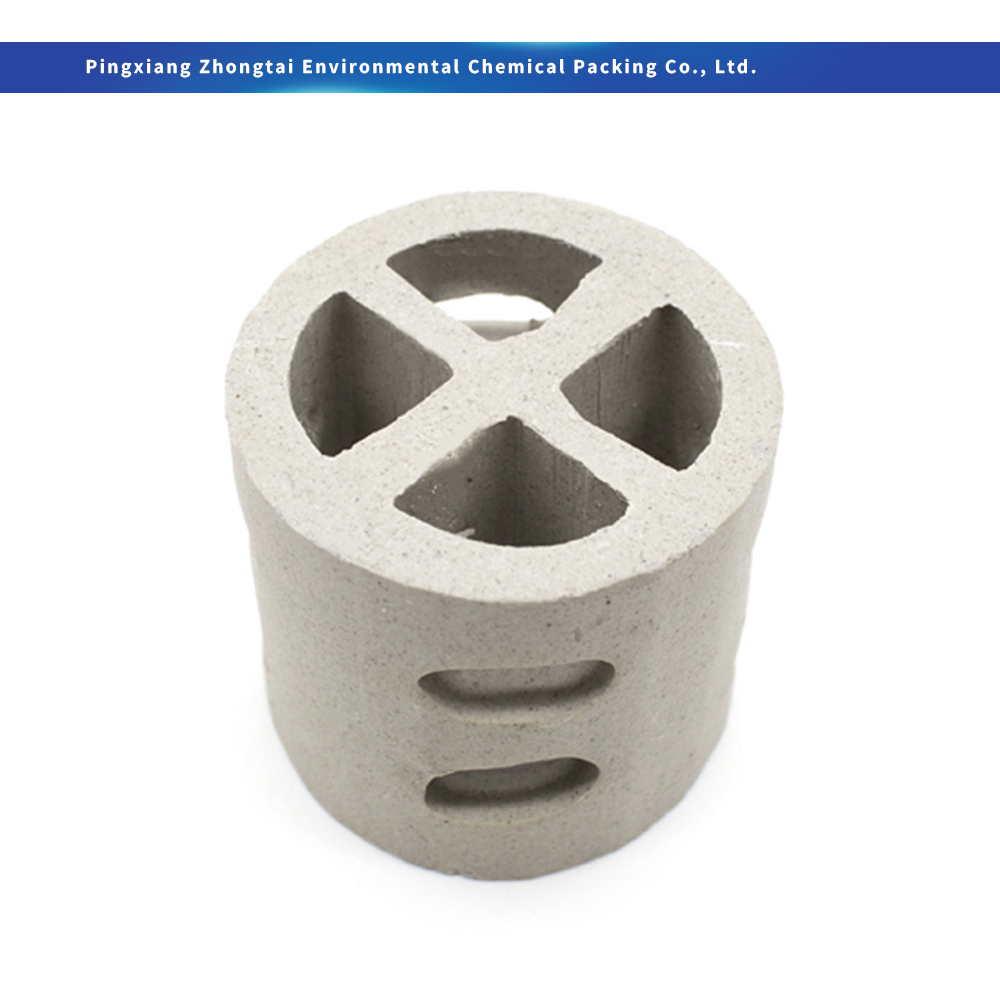
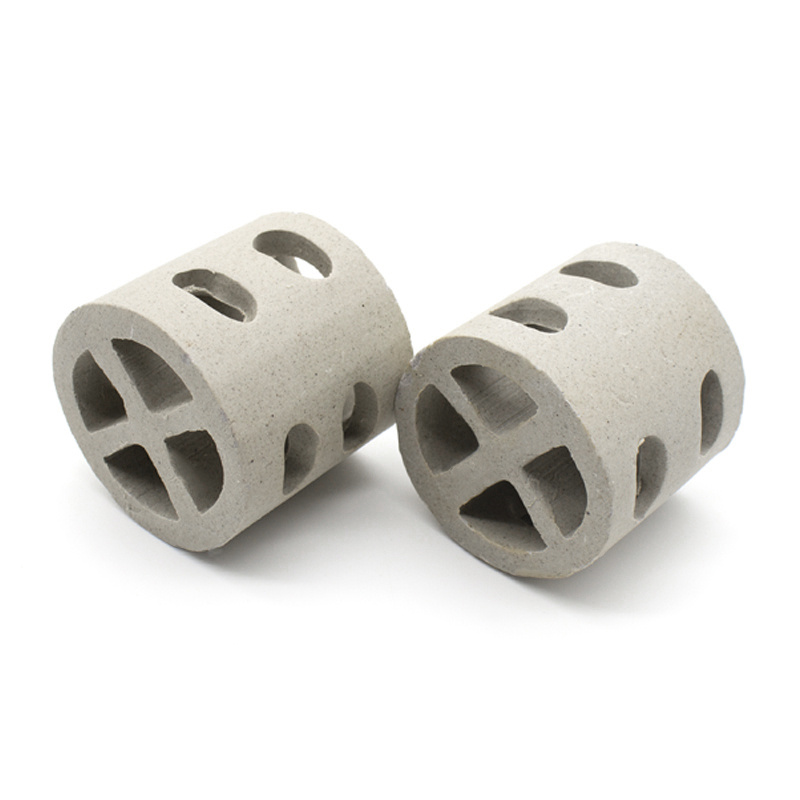
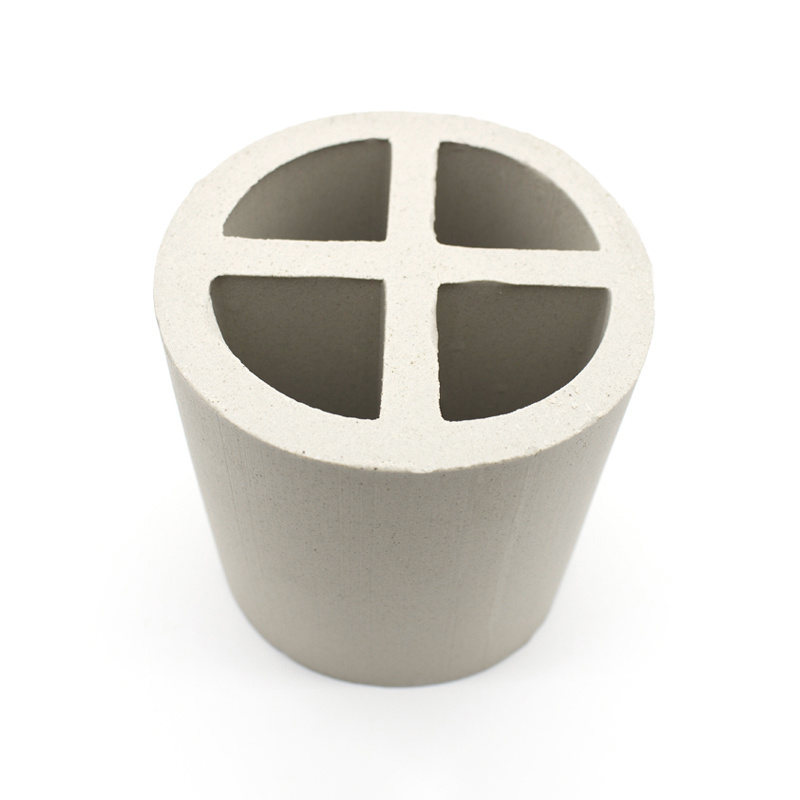
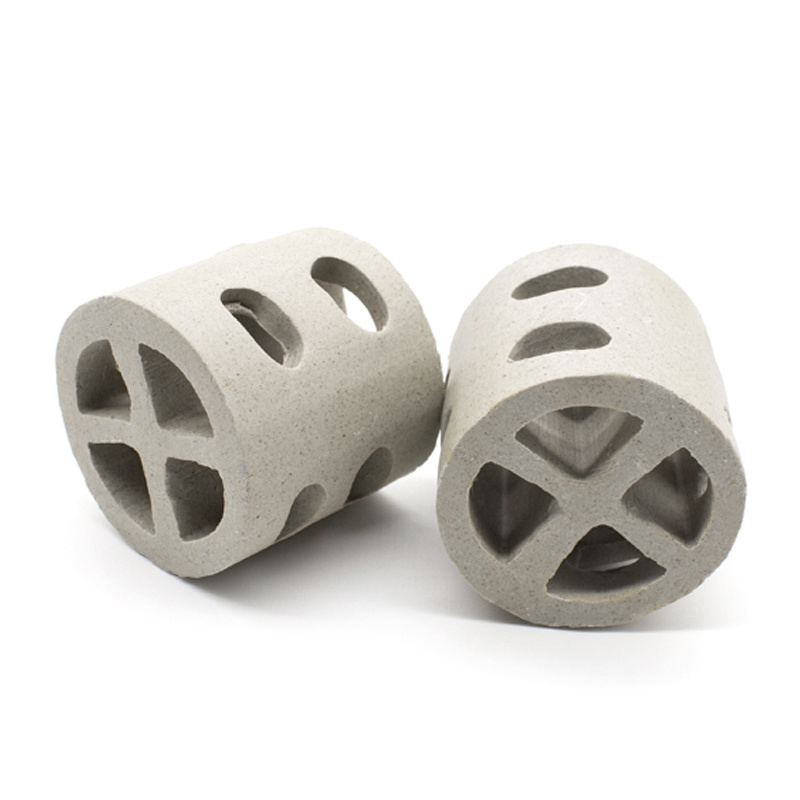
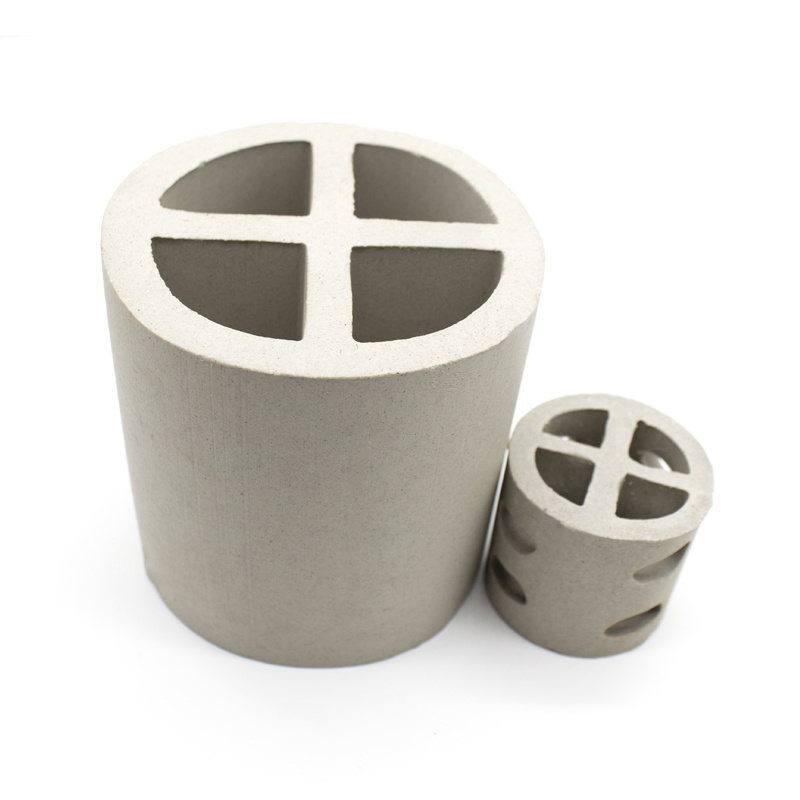
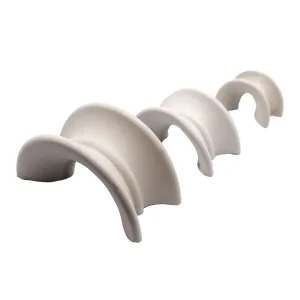
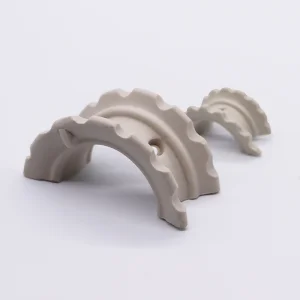
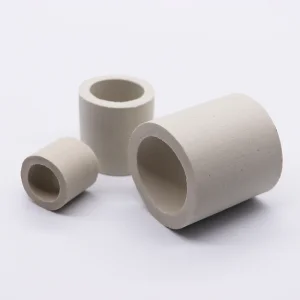
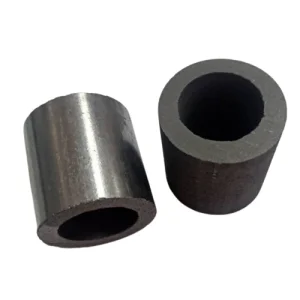
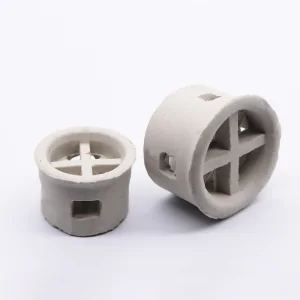
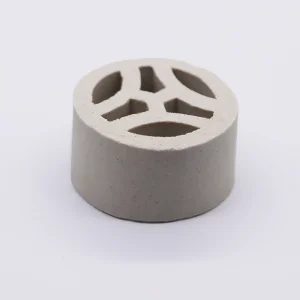
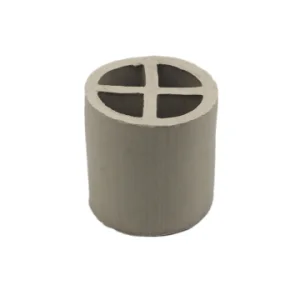
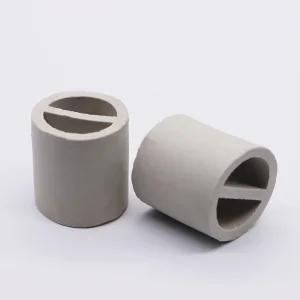
Ceramic Cross Partition Ring, also called Ceramic Cross Ring or Ceramic Cross Diaphragm Ring, is a high‑strength random packing developed as an improvement over the traditional Ceramic Raschig Ring. By adding a cross partition inside the ring, it significantly increases the specific surface area to enhance mass transfer efficiency. Due to its large size, it is typically used in orderly stacked configurations and most commonly serves as a support and distribution layer at the bottom of random packed towers.
Frequently Asked Questions
❓ What is the main difference between a Ceramic Cross Partition Ring and a standard Raschig Ring?
The primary difference is the internal cross partition structure. This feature significantly enhances both mechanical compressive strength and geometric surface area, improving mass transfer efficiency and handling heavier structural loads.
❓ Why are larger sizes (Φ80-150mm) commonly used at the bottom of packed towers?
Larger sizes arranged in an orderly manner offer high crushing strength, low pressure drops, and void ratios above 60%, making them ideal support and liquid/gas distribution layers underneath upper random packing beds.
❓ Which chemical media can Ceramic Cross Partition Rings resist?
They exhibit an acid resistance exceeding 99.6% and withstand almost all inorganic and organic acids as well as organic solvents, with the sole exception of hydrofluoric acid (HF).
❓ What is the maximum operating temperature for these ceramic rings?
Manufactured from high-grade ceramic and sintered at elevated temperatures, they operate stably at working temperatures ranging from 1200°C up to 1400°C without deformation.
❓ What industries typically utilize Ceramic Cross Partition Rings?
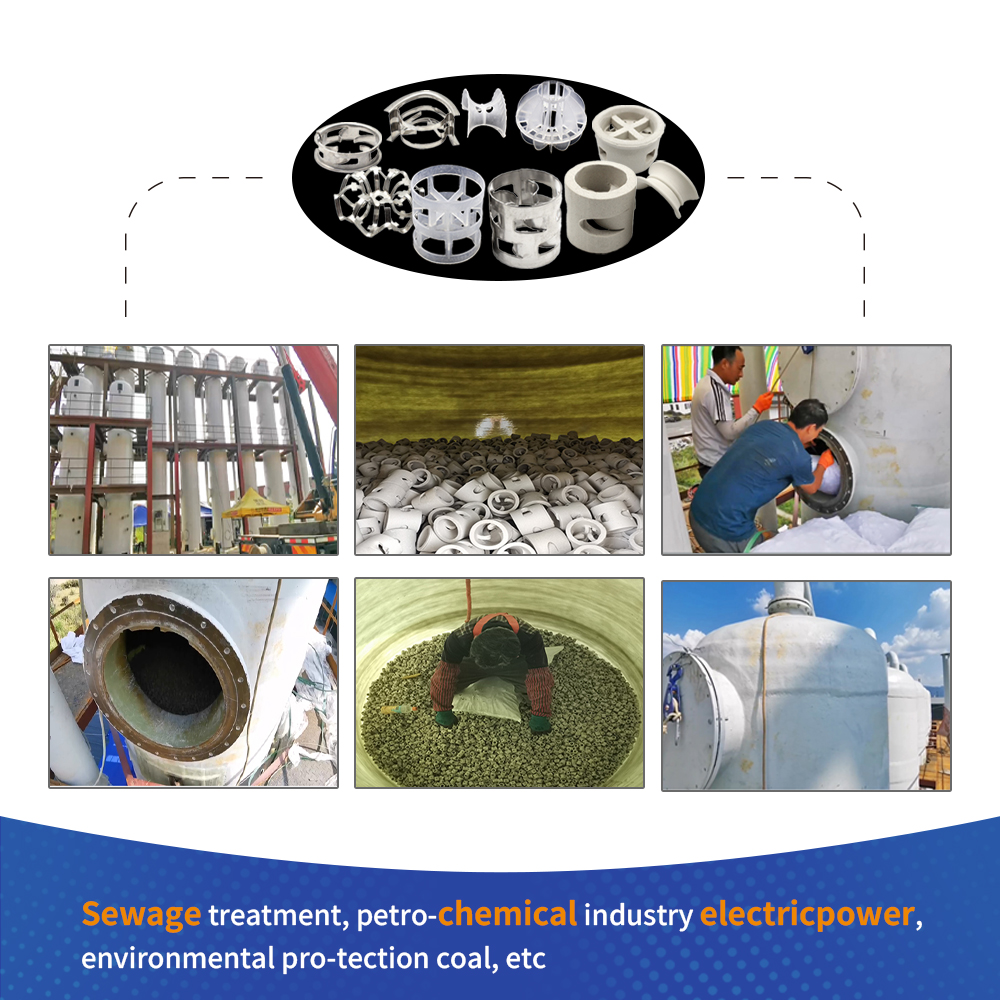
They are widely applied in chemical processing, metallurgy, coal gasification, petrochemical, and industrial gas purification systems across drying, absorption, cooling, and scrubbing columns.
❓ Are Ceramic Cross Partition Rings installed randomly or stacked?
Due to their specific geometric design and size, larger cross partition rings are most commonly installed in structured, stacked configurations to optimize fluid distribution and load bearing.