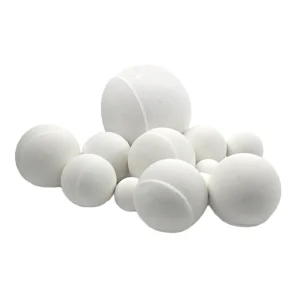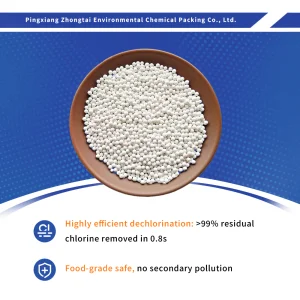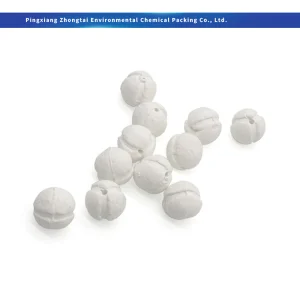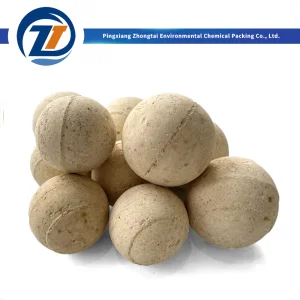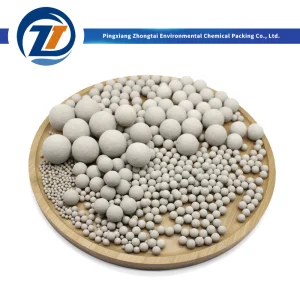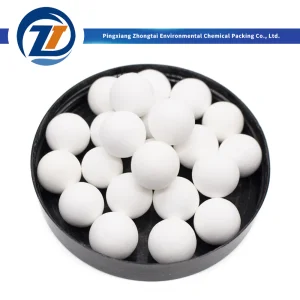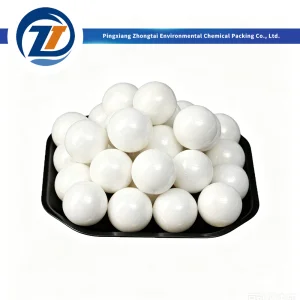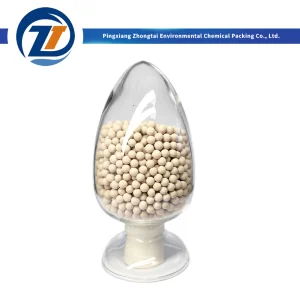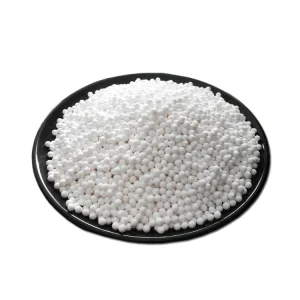
Precision-manufactured in Pingxiang, Jiangxi. Specially formulated for high crush resilience, zero phase-degradation, and absolute chemical inertness in refinery & petrochemical towers.
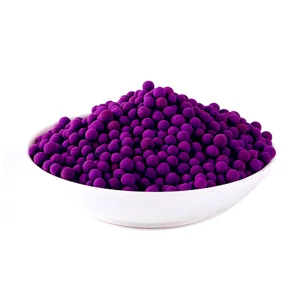
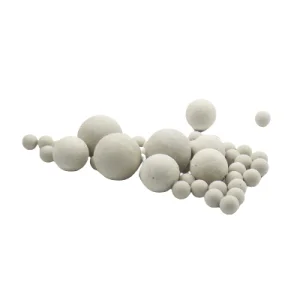
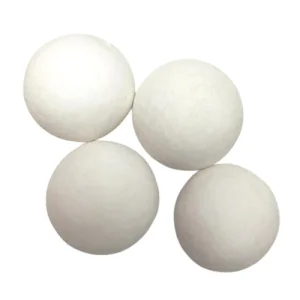
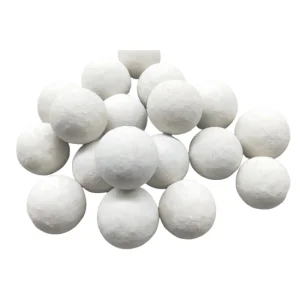
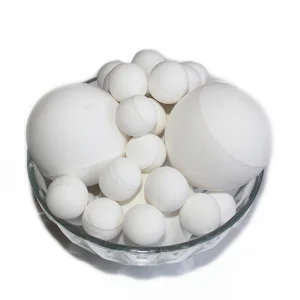
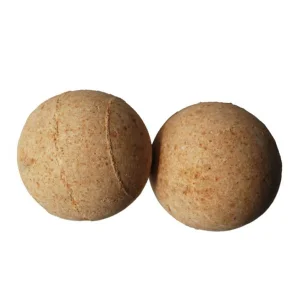
Analyzing the shift from commodity ball sourcing to total lifecycle cost mitigation in hydroprocessing, syngas, and industrial thermal abatement.
Bed failure caused by ball spalling or premature crushing leads to differential pressure spikes, channeling, and multi-million-dollar unplanned reactor shut-downs. Plant managers now prioritize certified compressive strength and thermal shock thresholds over raw tonnage FOB pricing.
In high-pressure syngas, steam methane reforming, and ammonia plants, standard silicate impurities volatilize under high steam partial pressures, poisoning downstream catalysts. Global EPCs mandate ≥99.2% Al₂O₃ content with sub-0.2% SiO₂ compliance across all bed transitions.
Optimized grading ratios (1/8", 1/4", 1/2", 1", up to 2") prevent interstitial catalyst migration, suppress liquid hold-up, and ensure uniform volumetric vapor distribution across extreme high-throughput refinery fixed-bed reactors.
How custom chemical-grade ceramic balls eliminate hydraulic instability and safeguard high-value catalysts.
Designed to withstand acute pressure cyclings up to 20 MPa and hydrogen-rich atmospheres. High-alumina inert balls act as hold-down screens to prevent costly catalyst fluidization while capturing particulate contaminants.
Our 17–23% and mid-alumina series deliver total acid corrosion resistance (>99.8% in boiling sulfuric, nitric, and hydrochloric acids), guaranteeing physical integrity across absorption column packed beds and packing-support grids.
Formulated with cordierite and high-density mullite structures for exceptional specific heat capacity and rapid thermal cycling resistance, driving up to 95% heat recovery efficiency in industrial regenerative oxidizers.
Standard industrial baseline prices based on container-load volumes. Verified through strict lot testing according to ASTM C515 and HG/T 3683.1 standards.
| Alumina Grade | Al₂O₃ Content | Bulk Density (kg/m³) | Cold Crush Strength (1/2") | Thermal Shock Resist. | Reference Price (MT/USD) |
|---|---|---|---|---|---|
| Standard Inert Ceramic | 17% – 23% | 1,350 – 1,420 | > 1.2 kN/particle | ΔT = 650°C (Water Quench) | $240 – $380 / MT |
| Medium-Alumina Support | 23% – 30% | 1,400 – 1,480 | > 1.8 kN/particle | ΔT = 750°C (Water Quench) | $380 – $520 / MT |
| High-Alumina Industrial | 65% – 75% | 1,650 – 1,750 | > 3.5 kN/particle | ΔT = 850°C (Water Quench) | $650 – $920 / MT |
| High-Wear Grinding Media | 92% – 95% | 2,100 – 2,300 | > 6.0 kN/particle | High Abrasion Wear <0.01% | $1,150 – $1,550 / MT |
| Ultra-Pure Inert Support | ≥ 99.2% (SiO₂ <0.2%) | 1,950 – 2,150 | > 5.5 kN/particle | Operating Temp to 1,650°C | $1,600 – $2,300 / MT |
| Engineered Porous Support | 35% – 45% (Porous) | 1,100 – 1,250 | Tailored Porosity 25-40% | ΔT = 700°C | $550 – $750 / MT |
*Indicative benchmark pricing in 2024–2025. Final contract prices vary based on bead diameter tolerances, custom packaging (steel drum vs. big bag), and quantity volume.
Operating from the epicentre of China's chemical ceramics industry, Pingxiang Zhongtai couples raw mineral supply-chain control with continuous-roller kiln automation.
With vertically integrated bauxite raw material procurement in Jiangxi, our processing lines eliminate third-party tolling delays, shielding international clients from freight volatility and material price spikes.
Supplying state refineries, global chemical conglomerates, and turnkey engineering contractors throughout Southeast Asia, the Middle East, the EU, North America, and Latin America.
Full batch tracability with internal XRF chemical analysis, universal hydraulic press crush testing, water absorption testing, and dimension calliper verification documented on every Certificate of Analysis (COA).
Addressing modern process challenges: low-carbon hydrogen production, decarbonization, and extreme duty wear mitigation.
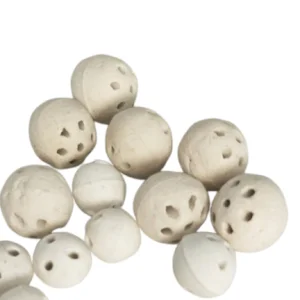
Transitioning beyond solid spheres to hollow-core and multi-hole perforated designs that provide an extra 25% geometric surface area while slashing reactor pressure drops by up to 30%.
Developing ultra-pure, zero-sulfur support materials for green hydrogen water electrolysis systems and structured ceramic contactors for high-capacity amine-based carbon dioxide capture.
Formulating Yttria-stabilized Zirconia (YSZ) and micro-crystalline alumina grinding beads for ultra-fine electronic-grade slurries, lithium iron phosphate battery cathode milling, and semiconductor polish.
From reactor loading diagrams to containerization, our process ensures smooth handovers at worldwide chemical plants.
Heavy-duty 1000 kg ton-bags with anti-static liners, or steel drums palletized on IPPC fumigated heat-treated pallets for ocean transit.
Full facilitation of third-party quality witness testing including SGS, BV, and TÜV for compositional assay and crush integrity before dispatch.
Certified compliance with REACH (EU), RoHS, and standard petrochemical material guidelines (UOP, Shell, Axens catalyst support specs).
Direct engineering review of bed packing height, spherical grading layers (sock loading vs. dense loading), and pressure loss curves.
Detailed technical clarifications on alumina grading, mechanical integrity, and custom sizing.
High-density alumina milling media, zirconia micro-beads, regenerative heat storage balls, and specialized dehydration adsorbents.