1 / 4

Optimized fixed valve geometry delivers 10–20% higher capacity than conventional sieve trays, with comparable or better tray efficiency.
No valves to stick, wear, or break, ensuring consistent performance and minimal turnaround maintenance.
Smooth, crevice‑free valve profiles prevent solids, tars, and polymers from accumulating—ideal for coker, slurry, and heavy residue services.
Fixed openings provide a lower dry pressure drop than many floating valve designs, reducing column energy consumption.
Available in 304/316L stainless steel, carbon steel, and higher alloys, withstanding temperatures up to 450°C and corrosive environments.
Simpler to manufacture and install than floating valve trays, often offering lower initial cost with equivalent or superior process performance.
| Valve Type | Typical Hole Area (%) | Valve Height (mm) | Tray Spacing (mm) | Turndown Ratio | Pressure Drop per Tray (mmHg) | Max Operating Temp (°C) |
|---|---|---|---|---|---|---|
| Round Fixed Valve | 10–15 | 8–15 | 400–600 | 2:1 | 3–5 | ≤450 |
| Rectangular Fixed Valve | 12–18 | 8–15 | 400–600 | 2:1 | 3–5 | ≤450 |
| Directional Fixed Valve | 10–16 | 10–18 | 450–600 | 2:1 | 3–6 | ≤450 |



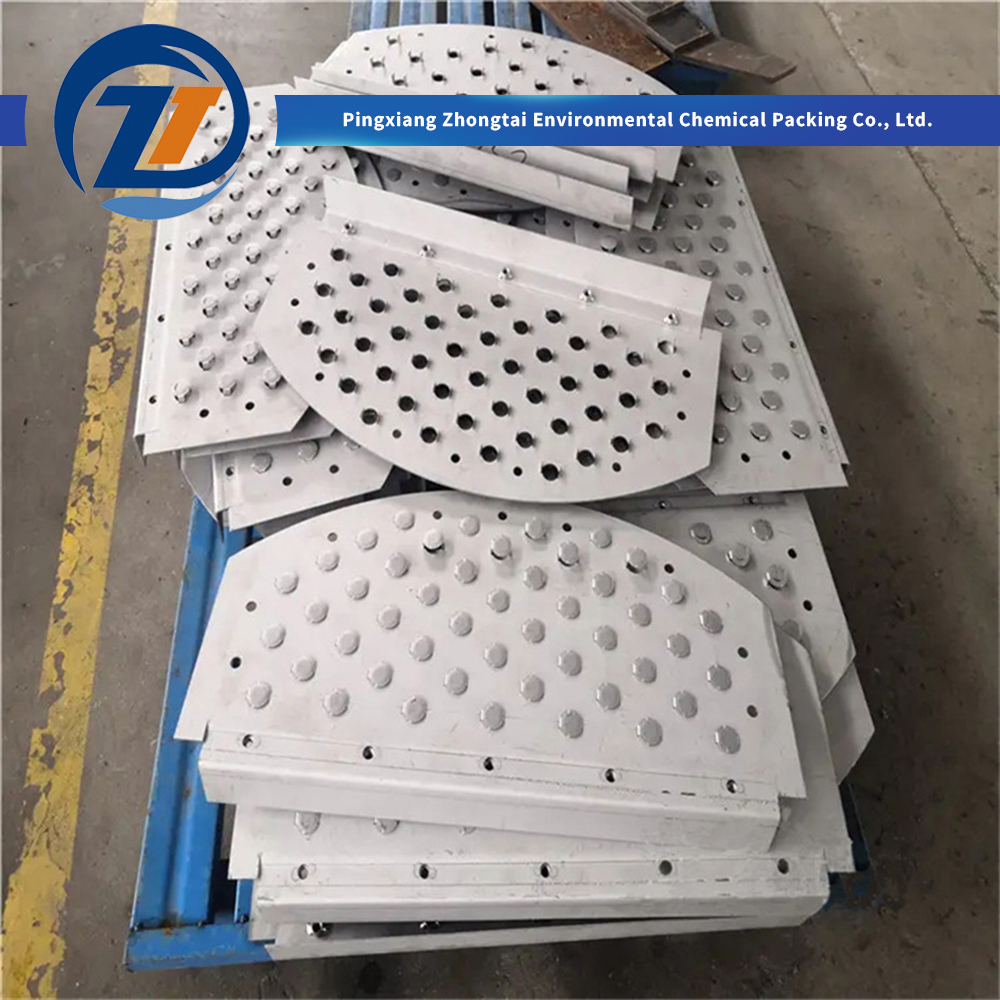
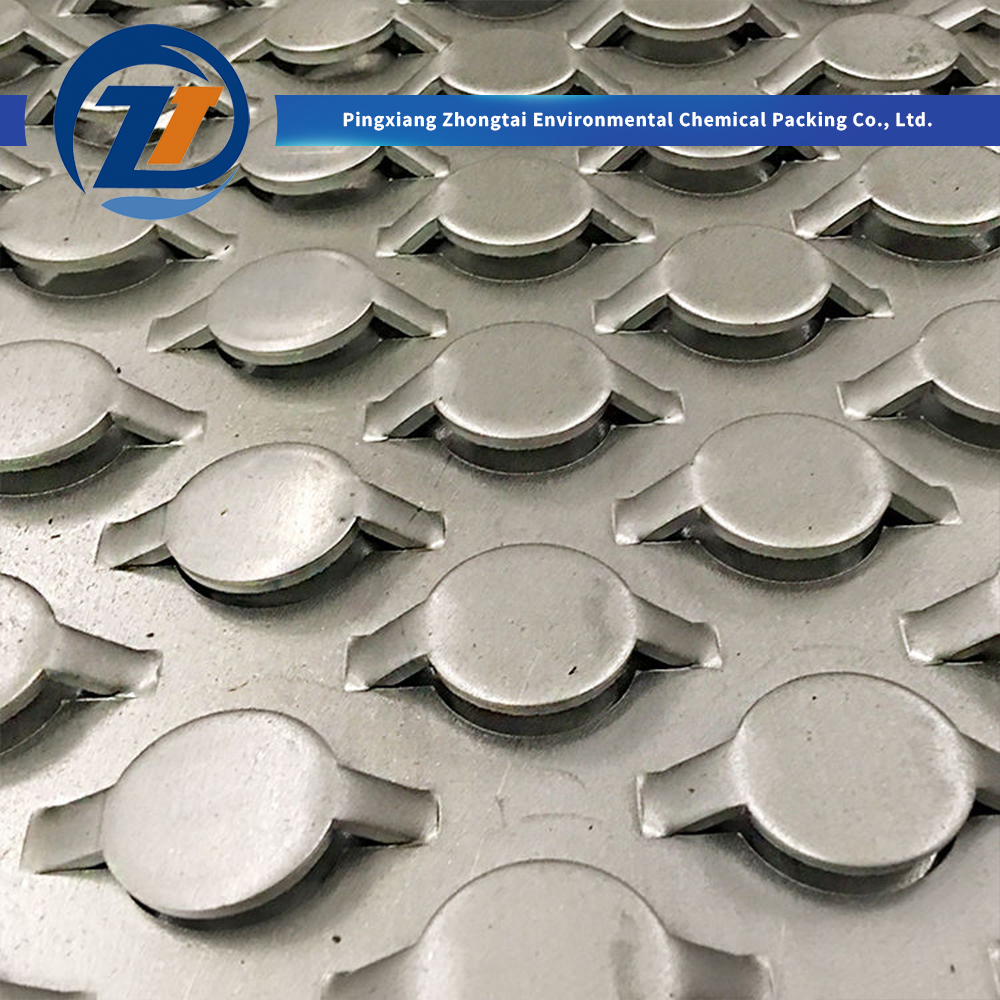
Fixed valve trays feature integral, punched openings directly formed on the tray deck with zero moving components. Unlike floating valve trays where loose caps can stick, tilt, pop out, or wear over time, fixed valve trays deliver complete mechanical reliability and eliminate risk of missing valves.
Because there are no crevices, moving joints, or retaining legs, solids, polymers, and heavy residues cannot accumulate or seize moving parts. This non-clogging profile makes them optimal for cokers, refinery bottoms, slurries, and severe fouling columns.
Metal fixed valve trays can be fabricated from carbon steel, standard stainless steels (SS304, SS316L), as well as high-performance alloys like Duplex, Monel, Hastelloy, and Titanium, allowing operation at temperatures up to 450°C and across corrosive process environments.
Yes. Fixed valve trays are frequently used in revamp and debottlenecking projects to replace conventional sieve or older bubble cap designs, providing an immediate 10–20% capacity increase with lower pressure drop and extended run-lengths between turnarounds.
Directional fixed valves push vapor horizontally toward the outlet weir, promoting uniform liquid flow across the entire deck area. This eliminates stagnant zones, minimizes liquid back-mixing, and enhances overall mass transfer performance.