Procure certified molten metal ceramic foam filters and high-efficiency random column internals directly from our Pingxiang ISO 9001 certified manufacturing plant.
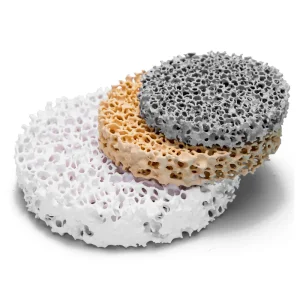
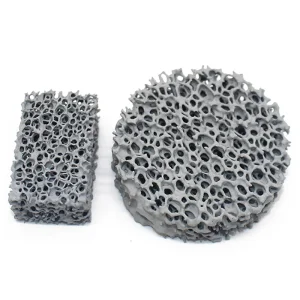
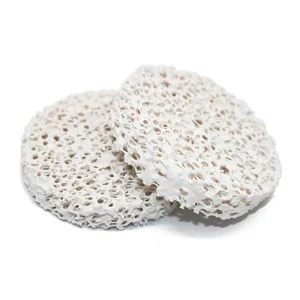
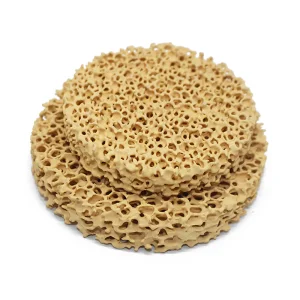
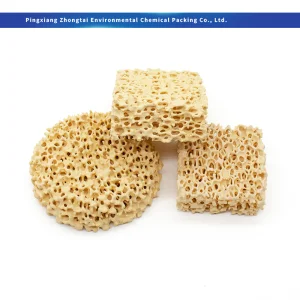
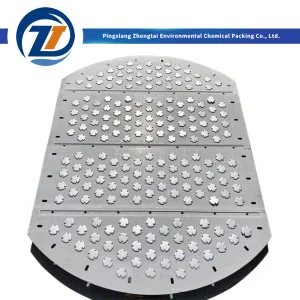
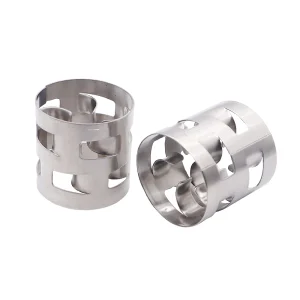
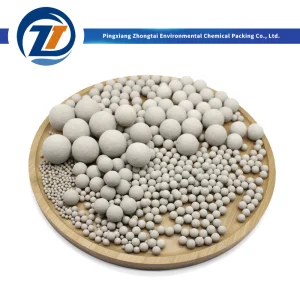
Understanding the multi-tier cost vectors governing porous foundry ceramics: pore density (PPI), carrier geometry, thermal shock rating, and raw material purity.
Standard Volumetric Porosity for High Metal Throughput
Maximum Sustained Thermal Rating (Zirconia ZrO₂ System)
Foundry Scrap & Slag Inclusion Defect Reduction Rate
Pore Density Granularity for Tailored Hydrodynamic Laminarization
| Filter Chemistry | Standard Pore Density | Service Temperature | Typical Target Alloys | Indicative Price Range (FOB China) |
|---|---|---|---|---|
| Alumina (Al₂O₃) | 10, 20, 30, 40, 50, 60 PPI | Up to 1200°C | Al-Si alloys, Aluminum ingots, billets, foils & wheels | $0.18 – $1.45 / piece (Size dependent: 40mm to 23") |
| Silicon Carbide (SiC) | 10, 15, 20, 30 PPI | Up to 1500°C | Ductile iron, gray cast iron, copper alloys, bronze | $0.35 – $2.80 / piece (Standard round/square: 40–150mm) |
| Zirconia (ZrO₂) | 10, 15, 20 PPI | Up to 1760°C | Carbon steel, low/high-alloy steel, stainless, superalloys | $1.20 – $8.50 / piece (Heavy wall, high-density refractory) |
Commercial Engineering Notice: The unit cost of ceramic foam filters correlates tightly with the polyurethane (PU) precursor matrix uniformity, the purity of refractory slurries (e.g., electronic-grade fused corundum, silicon carbide crystals, partially stabilized zirconia), and perimeter sealing options (expandable ceramic gasket vs. fiber edge sealing). Custom dimensions, beveled edges, and specialized dimensional tolerances (±0.5 mm) can be integrated with rapid tooling turnaround.
From automotive gigafactory die casting cells to precision investment turbine foundries, ceramic foam filters serve as crucial hydrodynamic rectifiers and inclusion catchers.
Aluminum structural shock towers, battery trays, and EV motor housings require micro-porosity containment. 30–50 PPI Alumina filters eradicate non-metallic inclusions (<5 μm), mitigating subsequent high-pressure leak paths and machining tool breakages.
Single-crystal and directionally solidified nickel-base and cobalt-base superalloys poured at >1600°C leverage yttria-stabilized Zirconia (CFF-ZrO₂) filters to capture sub-surface deoxidation products, preventing fatigue micro-cracking in high-stress hot turbine zones.
Integrated into deep filtration laundering troughs for can-body sheet stock (alloy 3004/3104) and lithographic plates, 50–60 PPI Al₂O₃ deep-bed foam panels preserve deep-drawing ductility and mirror-finish cold-rolling performance without pinholing.
SiC 3D tortuous reticulated filters absorb slag, dross, and sulfide inclusions generated during magnesium nodulization, transforming turbulent runner flow into stable laminar melt flow that eliminates re-oxidation air entrapment.
How cutting-edge surface functionalization, advanced stereolithography additive manufacturing, and thermomechanical modeling are redefining filtration efficiency.
Standard mechanical entrapment is being augmented by active surface coatings (TiB₂, carbon-doped cordierite) that chemically chemisorb liquid alkali metals, dissolved hydrogen, and sub-micron inclusions without causing excessive molten drag or head loss.
Replacing standard stochastic open-cell polyurethane foam precursors with mathematically optimized triply periodic minimal surface (TPMS) lattices. 3D-printed ceramic filters yield zero blind struts, guaranteed uniform flow velocity, and predictable pressure gradients.
By implementing electrified regenerative roller hearth kilns and biomass-derived binding agents, Zhongtai is cutting the embodied carbon footprint of refractory ceramics by 42%, assisting global downstream tier-1 suppliers in achieving Scope 3 ESG compliance.
Capitalizing on China's premier industrial ceramics cluster in Pingxiang, Jiangxi, combining local high-grade kaolin, bauxite reserves, high-temperature automated kilns, and integrated global shipping channels.
Direct mine-to-refractory pipeline for electronic-grade alumina and green silicon carbide crystals. Self-contained raw-material blending shields buyers from international spot-market price spikes and delivery bottlenecks.
Precision multi-stage robotic roller presses uniformly impregnate polyurethane templates while expelling excess slurry. This yields consistent cell window thickness, preventing pore occlusion and ensuring uniform flow resistance across batches.
Continuous tunnel kilns spanning over 100 meters operate under digital thermal curve controls up to 1750°C. Output capacity reaches 800,000+ filter units monthly with batch-to-batch crush strength variance maintained below 3.5%.
Pouring temp, alloy chemistry, pour rate, and casting modulus analysis.
Tiered FOB/CIF pricing, PPI optimization, and edge gasket configuration.
Standard sample cartons air-couriered within 48 hours for foundry mold trial.
Visual inspection, room/hot crush strength test, and thermal shock evaluation.
Moisture-proof vacuum packing inside palletized heavy-duty seaworthy cartons.
Examining how high-quality reticulated ceramic filtration drastically shifts the total cost of ownership (TCO) in modern metal casting operations.
In sand casting and permanent mold casting, inclusions (oxides, dross, mold erosion particles) account for up to 60% of all structural defects. Integrating a $0.80 filter into the gating system routinely protects casting bodies valued in excess of $400, resulting in an immediate net ROI of >500%.
Hard abrasive inclusions such as corundum (Al₂O₃) and silica (SiO₂) dull and chip expensive carbide and diamond tooling during CNC milling. Purified melt reduces cutting friction, prolongs tool life by 20–35%, and eliminates machining downtime.
Because the ceramic foam matrix naturally straightens turbulent melt into laminar flow via friction within the 3D tortuous channels, foundries can eliminate complex, high-volume runner traps, increasing pouring yields by 8% to 15% per box.
Every batch of ceramic foam filters is audited against stringent mechanical and thermal benchmarks before export release.
Cold crush strength testing (ASTM C133) guarantees minimum load-bearing capacities: >1.5 MPa for Alumina, >2.2 MPa for Silicon Carbide, and >2.8 MPa for Zirconia, preventing filter rupture under molten metal hydrostatic head pressures.
Instant thermal test cycles involve repeated immersion into a 1200°C–1600°C electric molten furnace without structural micro-cracking or refractory spalling, avoiding secondary melt pollution during pouring impact.
Refractory slurries are synthesized without toxic binders or organic solvents. Spent filters after foundry knocking-out are inert and non-hazardous, fully compliant with EU REACH, RoHS, and North American EPA landfill criteria.
Practical engineering answers addressing pore size selection, price determinants, and gating design.
Pricing is governed primarily by material composition (Al₂O₃ vs. SiC vs. pure ZrO₂), overall volume/thickness, pore count (higher PPI requires more delicate impregnation), perimeter edge gaskets (expandable ceramic fiber tape or vermiculite), and order quantities per production run.
For high-viscosity ductile iron or large castings (>500 kg), 10 PPI or 15 PPI is recommended to maintain flow velocity and prevent premature freezing. For high-precision gray iron, 20 PPI is typical. 30 PPI is generally reserved for specialized copper or low-weight critical components.
No. Ceramic foam filters are consumable refractory items designed for single-pour service. Once saturated with oxides, intermetallics, and dross, the filter retains inclusions inside its 3D labyrinth. Re-heating will ruin the skeleton and contaminate subsequent melt batches.
As a baseline guideline: Al₂O₃ for aluminum handles 1.0–3.0 kg/cm²; SiC for iron accommodates 1.5–4.5 kg/cm²; ZrO₂ for alloy steel supports 1.2–2.5 kg/cm². Filtration capacity depends strongly on the melt cleanness and superheat margin before pouring.
Explore our full manufacturing portfolio spanning random tower packings, biological filter structures, petrochemical ceramic proppants, and EPA emission catalysts.