1 / 5

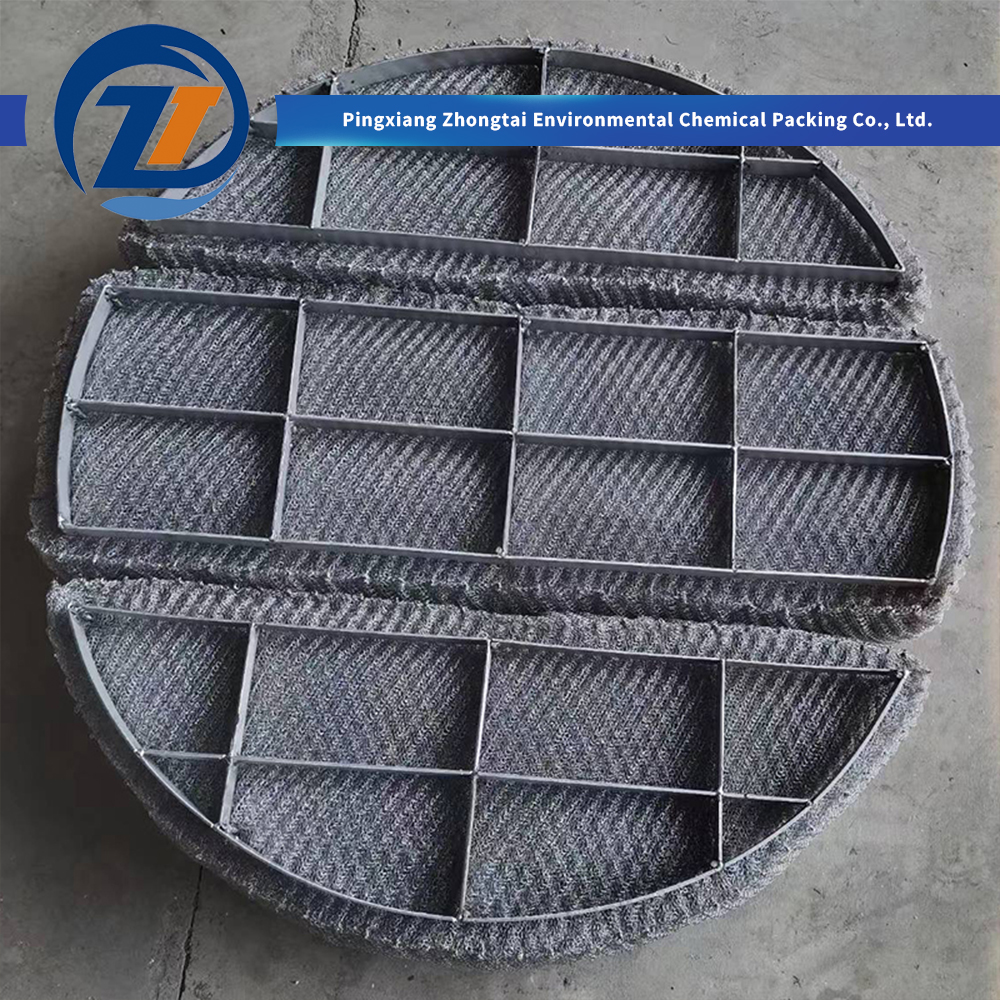
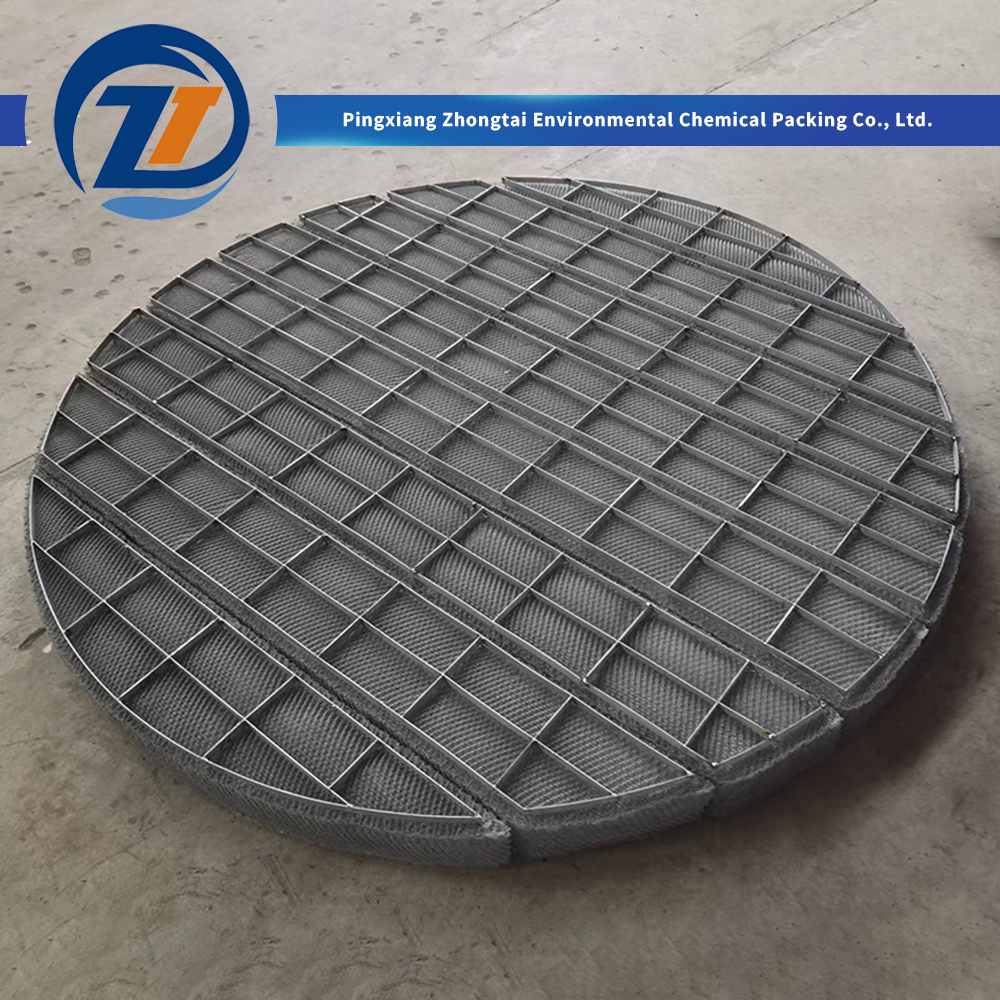
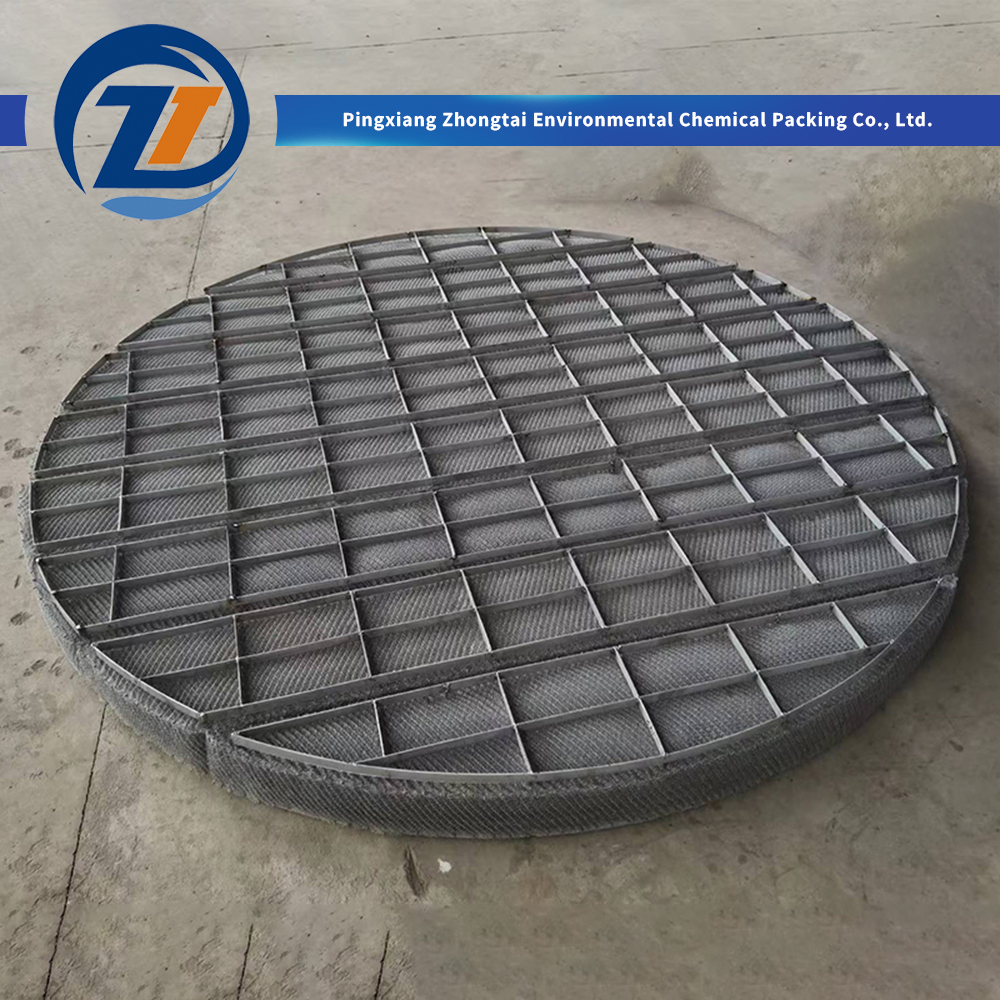
Metal Wire Mesh Mist Eliminator is a proven, high-efficiency solution for removing entrained liquid droplets from gas streams in industrial separation equipment. Constructed by knitting fine metal wires into a dense, multi-layered mesh pad, it utilizes inertial impaction, direct interception, and Brownian diffusion to capture droplets as the gas flows through. Captured droplets coalesce on the wire surfaces and drain away by gravity, achieving separation efficiencies typically exceeding 99% for particles larger than 3–5 microns. Widely used in absorption, distillation, evaporation, and scrubbing towers across the petrochemical, chemical, and environmental industries, it protects downstream equipment, reduces product loss, and helps meet strict emission standards.
The multi-layered knitted mesh structure provides extensive surface area for droplet capture, consistently achieving >99% removal of mist particles down to 3–5 microns.
With a void fraction of 92–98%, the open mesh structure causes minimal gas flow resistance, reducing energy consumption and allowing higher throughput.
Available in 304, 316L stainless steel, and high-performance alloys like Monel and Hastelloy, it withstands aggressive chemical environments and temperatures up to 450–600°C.
Metal construction ensures the pad maintains its shape and integrity under high gas velocities and pressure surges, providing reliable long-term service.
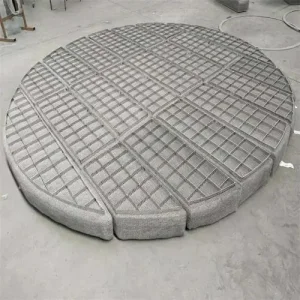
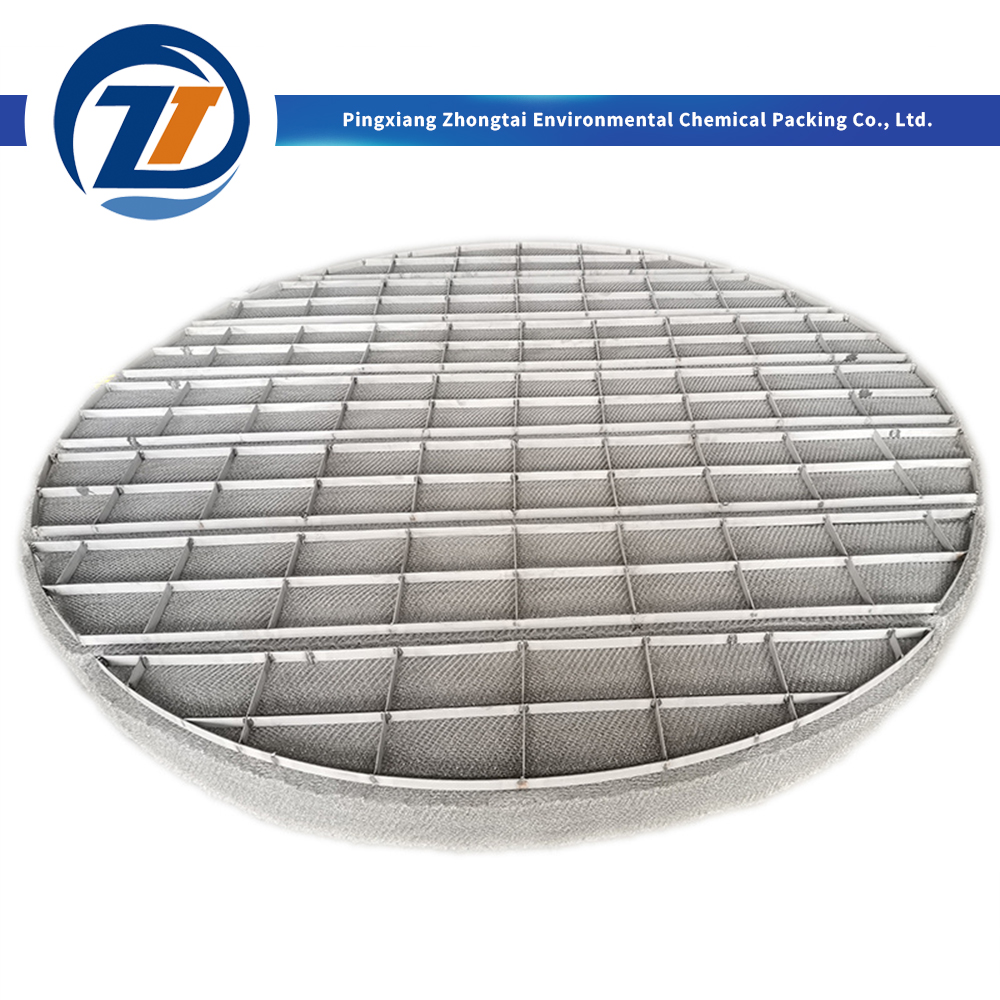
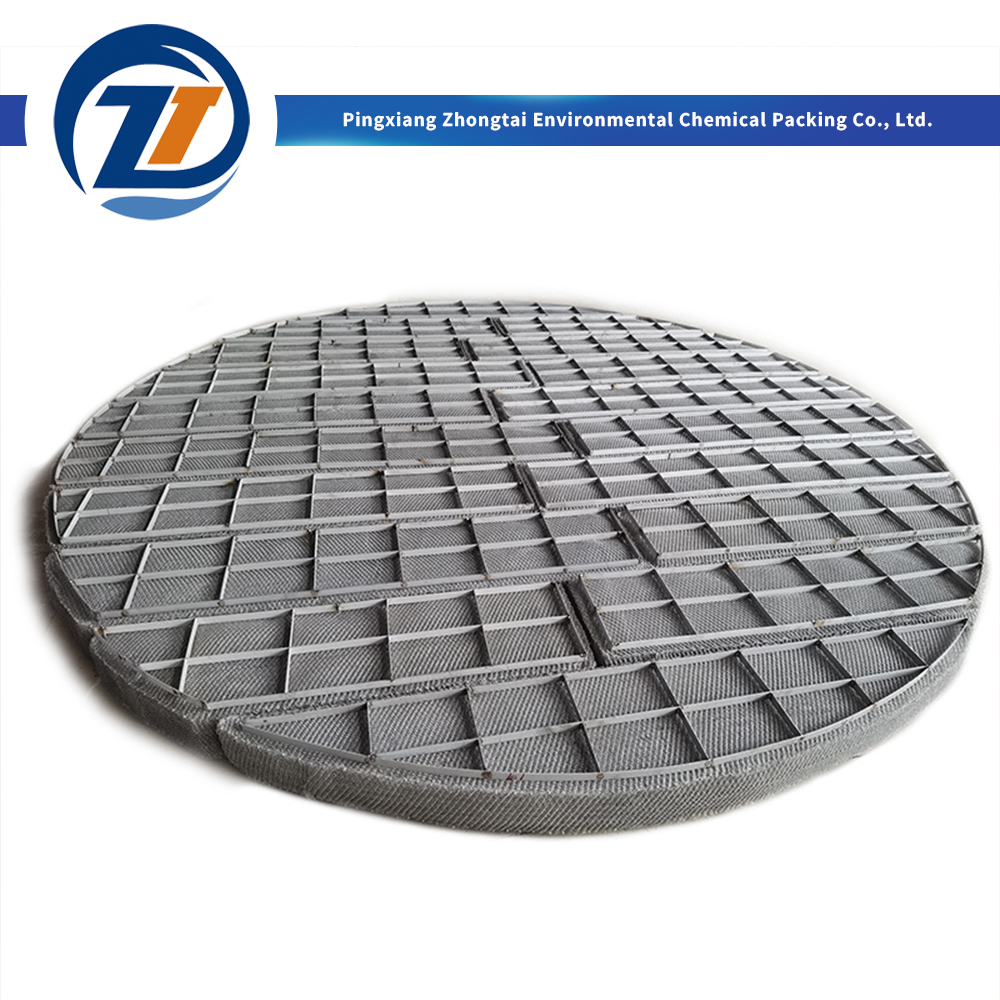
Pads can be fabricated to any diameter and thickness (100mm to 500mm), with options for flat, annular, or special shapes, and can be supplied with grids or support rings for easy installation.
Successfully deployed in acid plants, chlorine drying towers, vacuum distillation columns, evaporator separators, and flue gas desulfurization (FGD) systems.
| Specification | Wire Diameter (mm) | Void Ratio (%) | Bulk Density (kg/m³) | Surface Area (m²/m³) | Efficiency (%) | Max Gas Velocity (m/s) | Standard Thickness (mm) |
|---|---|---|---|---|---|---|---|
| Standard | 0.23–0.28 | 97–98 | 144–200 | 180–260 | >99 (≥5μm) | 3.0–4.5 | 100 / 150 |
| High Efficiency | 0.15–0.20 | 95–97 | 192–240 | 260–360 | >99.5 (≥3μm) | 2.5–4.0 | 100 / 150 |
| High Throughput | 0.25–0.30 | 98–99 | 128–168 | 150–200 | >98 (≥8μm) | 4.0–5.5 | 150 / 200 |
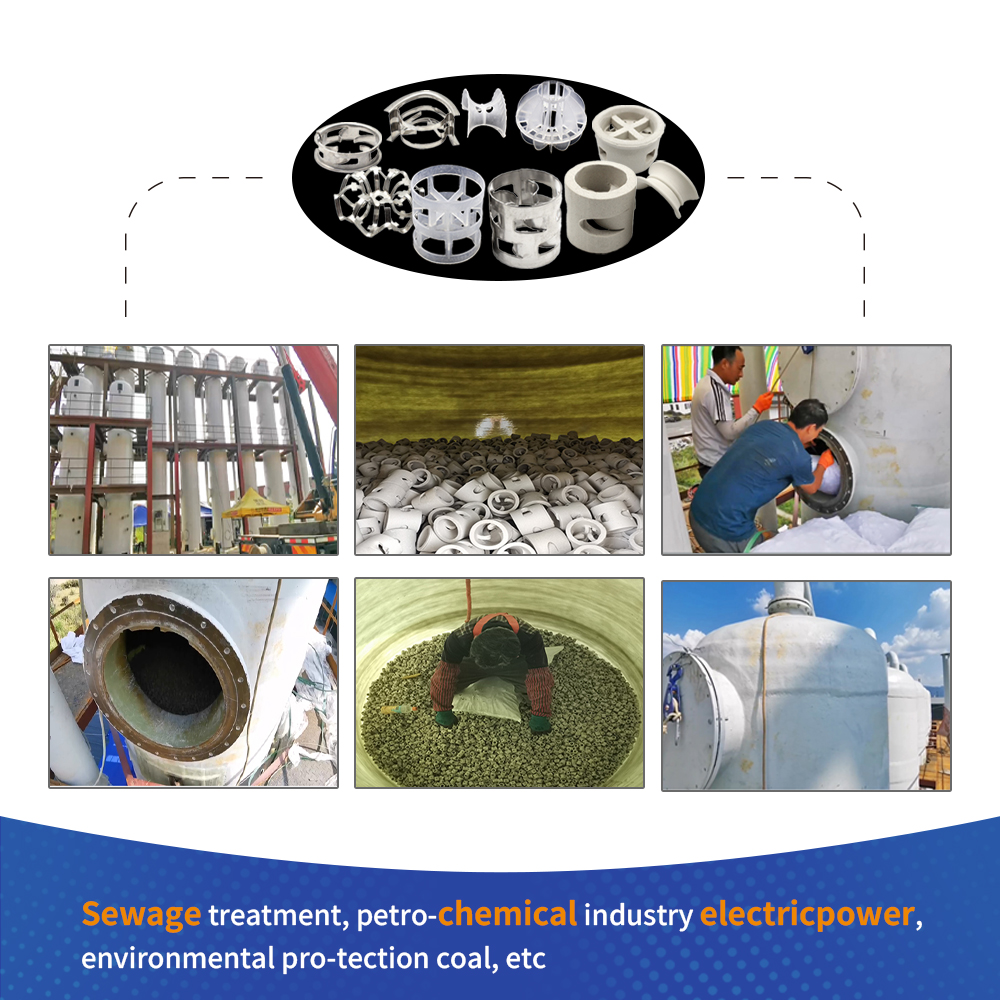



The mist eliminator works via inertial impaction, direct interception, and Brownian diffusion. As droplet-laden gas passes through the knitted wire mesh, the momentum causes droplets to impact wire surfaces, coalesce into larger drops, and drain downward by gravity against the upward gas flow.
Under optimal design and operating conditions, metal wire mesh mist eliminators achieve over 99% collection efficiency for liquid droplets down to 3 to 5 microns in diameter.
Stainless steel grades like 304 and 316L are ideal for standard chemical duties. For highly corrosive acids or extreme temperatures up to 450–600°C, specialty nickel-based alloys such as Monel and Hastelloy are widely recommended.
The multi-layered knitted structure maintains an exceptionally high void fraction (between 92% and 99%). This large open area provides minimal flow resistance to the gas stream, keeping operational pressure drop extremely low.
Yes. Demister pads can be custom fabricated to specific column diameters and thicknesses (typically 100mm to 500mm), available in round, rectangular, annular, or segmented forms complete with top and bottom support grids for vessel manway access.