Explore factory-direct core components engineered for industrial distillation, gas stripping, catalytic conversion, and high-pressure column architectures.
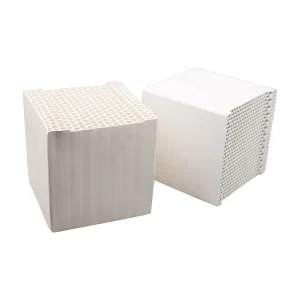
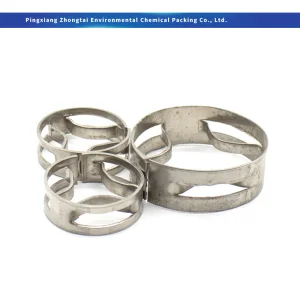
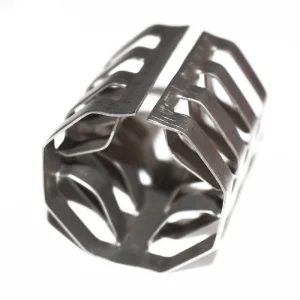
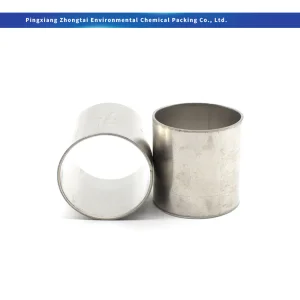
A rigorous examination of calcium-exchanged aluminosilicate zeolite columns in industrial fixed-bed adsorption regimes.
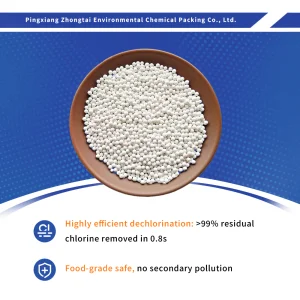
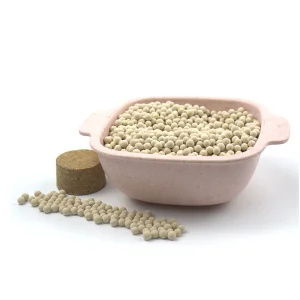
Molecular Sieve 5A, chemically recognized as the divalent calcium exchange form of the Linde Type A (LTA) cubic crystalline aluminosilicate, represents a cornerstone in precision gas phase and liquid phase separation columns. Featuring an effective crystallographic nominal pore opening of 5.0 Ångströms (0.50 nm), Type 5A columns exclude branched-chain hydrocarbons, aromatics, and large cyclic compounds while selectively adsorbing straight-chain normal paraffins, polar molecules like water (H₂O), hydrogen sulfide (H₂S), carbon dioxide (CO₂), and mercaptans.
In typical column configurations, the dynamic adsorption capacity and Mass Transfer Zone (MTZ) length dictate the operational stability of continuous thermal swing adsorption (TSA) and rapid pressure swing adsorption (PSA) units. When global engineering procurement teams evaluate wholesale molecular sieve 5A columns, their principal focus centers on macroscopic structural mechanics: maintaining high bulk density, exceptional attrition resistance under severe pressure gradients, and zero degradation of the crystalline intracrystalline diffusion pathway during thousands of cyclic regeneration cycles.
The divalent calcium ion (Ca²⁺) introduced via controlled ion exchange into the sodalite cages alters the electrostatic potential field within the alpha-cavities. This enhances quadrupolar and dipolar interactions, creating high adsorption affinity for strongly polar compounds even at exceptionally low partial pressures (down to below 1 ppmv). In normal-iso paraffin separation units (such as Molex™ and Parex™ configurations), the kinetic diameter of n-alkanes (4.3 Å) permits unrestricted ingress into the 5A cages, whereas iso-alkanes (>5.0 Å) and cycloparaffins remain excluded in the interparticle column void space, yielding separation purities exceeding 99.2%.
Vertical raw material integration, automated continuous rotary kilns, and comprehensive mass transfer engineering under one industrial cluster.
Located in Pingxiang, Jiangxi Province—the historic capital of Chinese industrial ceramics and chemical column packings—our facilities benefit from adjacent kaolin clay deposits, precision sodium aluminate supply lines, and dedicated heavy chemical transport networks, dramatically reducing raw manufacturing lead times.
By integrating zeolite hydro-synthesis, spherical bead rolling, multi-stage temperature-zoned calcination, and airtight automated container loading on-site, Zhongtai eliminates intermediary handling markups, delivering wholesale FOB/CIF pricing 25% to 40% below North American and Western European vendors.
Each production run undergoes comprehensive ASTM D3802 (attrition resistance), ASTM D4180 (vibratory packing density), dynamic breakthrough water adsorption, and nitrogen displacement porosity verification, ensuring zero bed channeling or premature column pressure drop excursions.
From hydrogen economy purification to ultra-low energy thermal regeneration protocols.
Modern hydrogen purification and industrial oxygen concentrators require rapid 10–30 second cycle times. Next-generation 5A beads feature tailored macropore architectures that slash intracrystalline diffusion resistance, permitting high throughput with significantly reduced vessel foot-prints.
Conventional sieve pellets incorporate 15–20% inert clay binders that provide structural integrity but dilute active adsorption capacity. China's chemical innovation has pioneered advanced binderless 5A sieves, transforming the binder phase into active zeolite A, yielding up to 20% higher dynamic capacity per column volume.
With aggressive global decarbonization targets, 5A columns are increasingly deployed in Biomethane (RNG) purification trains to selectively scrub carbon dioxide and moisture simultaneously, meeting rigorous pipeline grid injection standards without chemical amine solvents.
Real-world integration of molecular sieve 5A columns across petroleum, industrial gases, and clean energy production.
Separation of straight-chain C10–C14 paraffins from branched hydrocarbons to supply linear alkylbenzene (LAB) detergent feedstock and high-cetane diesel fuels.
Simultaneous deep dehydration to dew points below -100°C and co-adsorption of trace H₂S and CO₂ in LNG cryogenic liquefaction pre-treatment loops.
Purification of steam methane reformer (SMR) syngas and refinery off-gas, stripping CO, CO₂, CH₄, and nitrogen to achieve 99.999% fuel-cell grade hydrogen.
Breaking the water-ethanol azeotrope in dual-bed vapor phase columns to elevate crude fermentation ethanol (92-95%) to anhydrous fuel ethanol (99.8%+).
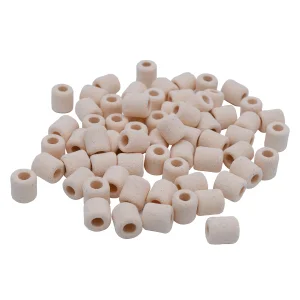
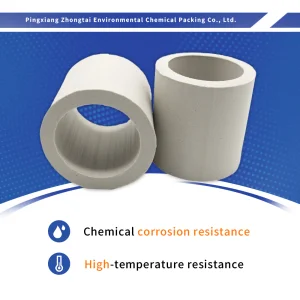
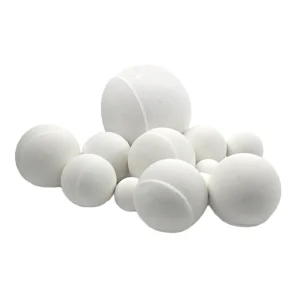
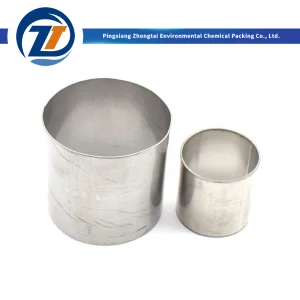
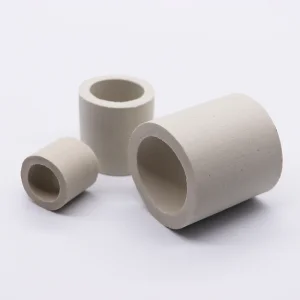
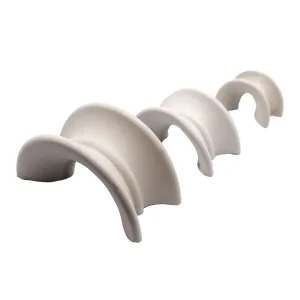
A high-efficiency fixed-bed adsorption column cannot operate on molecular sieves alone. Superior system stability requires an integrated mass transfer assembly. Zhongtai engineers design holistic column solutions wherein high-density Inert Ceramic Balls (17-23% and 99% high alumina) serve as bottom bed supports to prevent bed shifting and top hold-down layers to prevent fluidization under turbulent upward flow.
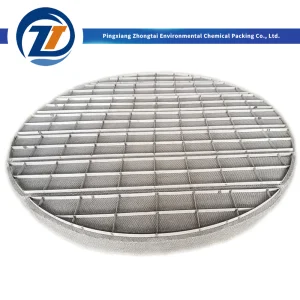
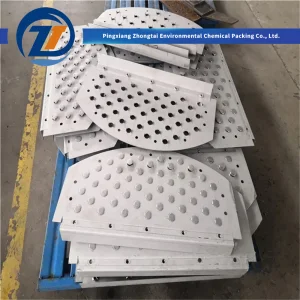
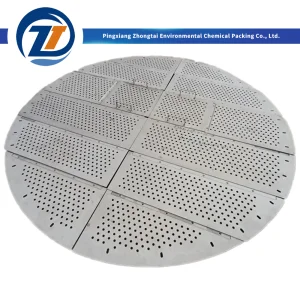
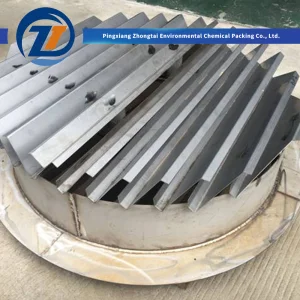
Above and below the molecular sieve fixed bed, precision 304/316L Stainless Steel Liquid Distributors, Fixed Valve Trays, and Demister Wire Mesh Pads ensure uniform plug flow and prevent fine droplet carryover. By sourcing the complete column internal assembly from Pingxiang Zhongtai, engineering firms eliminate hydrodynamic distribution imbalances and achieve guaranteed operating lifespans.
Compare standard industrial parameters for cylindrical pellets and spherical beads manufactured in accordance with ISO 9001 and ASTM testing protocols.
| Physical / Chemical Parameter | Unit | Spherical Bead (4–8 Mesh) | Spherical Bead (8–12 Mesh) | Cylindrical Pellet (1/16") | Cylindrical Pellet (1/8") |
|---|---|---|---|---|---|
| Nominal Particle Diameter | mm | 2.0 – 4.0 | 1.6 – 2.5 | 1.5 – 1.7 | 3.0 – 3.3 |
| Crystalline Pore Opening | Å | 5.0 ± 0.2 | 5.0 ± 0.2 | 5.0 ± 0.2 | 5.0 ± 0.2 |
| Bulk Packing Density | g/mL (lb/ft³) | 0.68 – 0.73 (43–46) | 0.70 – 0.75 (44–47) | 0.66 – 0.70 (41–44) | 0.65 – 0.69 (40–43) |
| Average Crush Strength | N (lbf) | ≥ 70 (≥ 15.7) | ≥ 45 (≥ 10.1) | ≥ 35 (≥ 7.8) | ≥ 60 (≥ 13.5) |
| Static Water Adsorption (RH 60%, 25°C) | wt % | ≥ 21.5% | ≥ 21.5% | ≥ 21.0% | ≥ 21.0% |
| Dynamic Carbon Dioxide Adsorption | wt % | ≥ 3.2% | ≥ 3.3% | ≥ 3.0% | ≥ 3.0% |
| Attrition Rate (ASTM D4058) | wt % | ≤ 0.08% | ≤ 0.08% | ≤ 0.12% | ≤ 0.10% |
| Loss on Ignition (LOI, 575°C) | wt % | ≤ 1.5% | ≤ 1.5% | ≤ 1.5% | ≤ 1.5% |
For global chemical plants and EPC contractors, purchasing decisions based solely on upfront media cost per ton frequently result in catastrophic financial losses through early bed breakthrough, rapid pulverization, and premature shutdowns. Zhongtai's 5A columns are engineered for low Total Cost of Ownership through three distinct metallurgical and thermodynamic safeguards:
1. Minimized Flow Channeling: Uniform spherical bead geometry (+/- 0.2mm tolerance) guarantees homogeneous bed porosity, eliminating local high-velocity gas bypass jets that prematurely saturate lower bed sections.
2. Hydrothermal Cyclic Resilience: Specially formulated attapulgite and kaolinitic binders prevent structural collapse during high-temperature thermal swing regeneration (250°C to 300°C) even under wet steam conditions.
3. Airtight Nitrogen-Purged Sealing: Shipped in hermetically sealed 140 kg heavy-gauge steel drums or 1000 kg nitrogen-purged super sacks on heat-treated fumigated pallets, guaranteeing pristine factory-dry performance upon site arrival.
Technical, procedural, and procurement clarity for chemical process designers and purchasing managers.
Precision-engineered column components designed to maximize separation efficiency and bed longevity in harsh processing environments.