1 / 1
| Chemical & Physical Index | Cordierite | Dense Cordierite | Cordierite-Mullite | Mullite | Corundum-Mullite | |
|---|---|---|---|---|---|---|
| Chemical Composition (%) | SiO₂ | 45~55 | 45~55 | 35~45 | 25~38 | 20~32 |
| Al₂O₃ | 30~38 | 33~43 | 40~50 | 50~65 | 65~73 | |
| MgO | 10~15 | 5~13 | 3~13 | - | - | |
| K₂O + Na₂O | <1.0 | <1.0 | <1.0 | <1.0 | <1.0 | |
| Fe₂O₃ | <1.5 | <1.5 | <1.5 | <1.5 | <1.5 | |
| Thermal Expansion Coefficient (10⁻⁶/K⁻¹) | <2 | <4 | <4 | <5 | <7 | |
| Specific Heat (J/kg·K) | 830~900 | 850~950 | 850~1000 | 900~1050 | 900~1100 | |
| Working Temperature (℃) | <1300 | <1300 | <1350 | <1450 | <1500 | |
PS: We can also produce customized products tailored to your specific requests and actual operating conditions.
| Size (mm) | Hole Qty (N×N) | Hole Density (cpsi) | Hole Diameter (mm) | Wall Thickness (mm) | Porosity (%) |
|---|---|---|---|---|---|
| 150×150×300 | 5×5 | 0.7 | 27 | 2.4 | 81 |
| 150×150×300 | 13×13 | 4.8 | 9.9 | 1.5 | 74 |
| 150×150×300 | 20×20 | 11 | 6.0 | 1.4 | 64 |
| 150×150×300 | 25×25 | 18 | 4.9 | 1.00 | 67 |
| 150×150×300 | 40×40 | 46 | 3.0 | 0.73 | 64 |
| 150×150×300 | 43×43 | 53 | 2.79 | 0.67 | 64 |
| 150×150×300 | 50×50 | 72 | 2.4 | 0.60 | 61 |
| 150×150×300 | 59×59 | 100 | 2.1 | 0.43 | 68 |
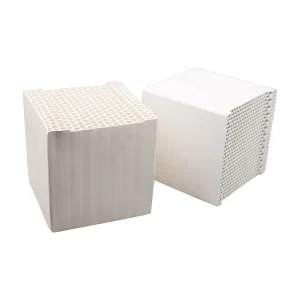
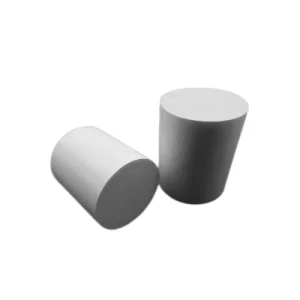
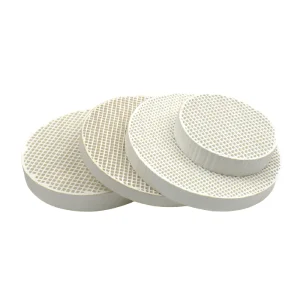
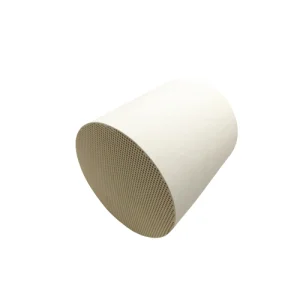
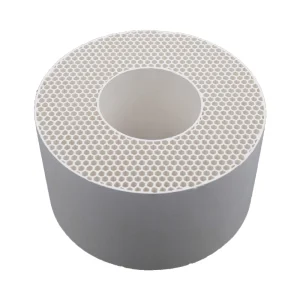
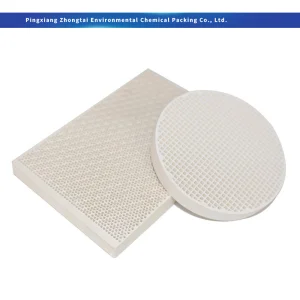
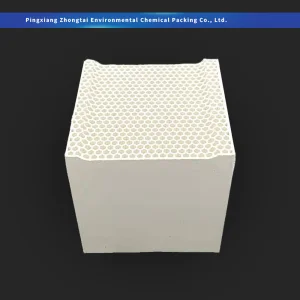
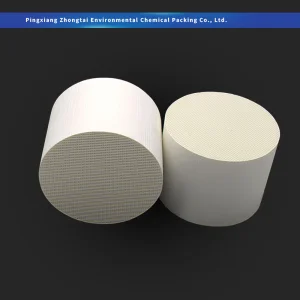
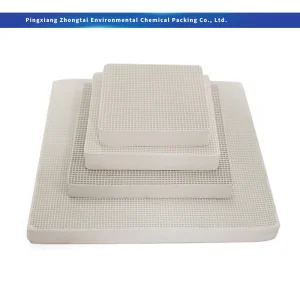
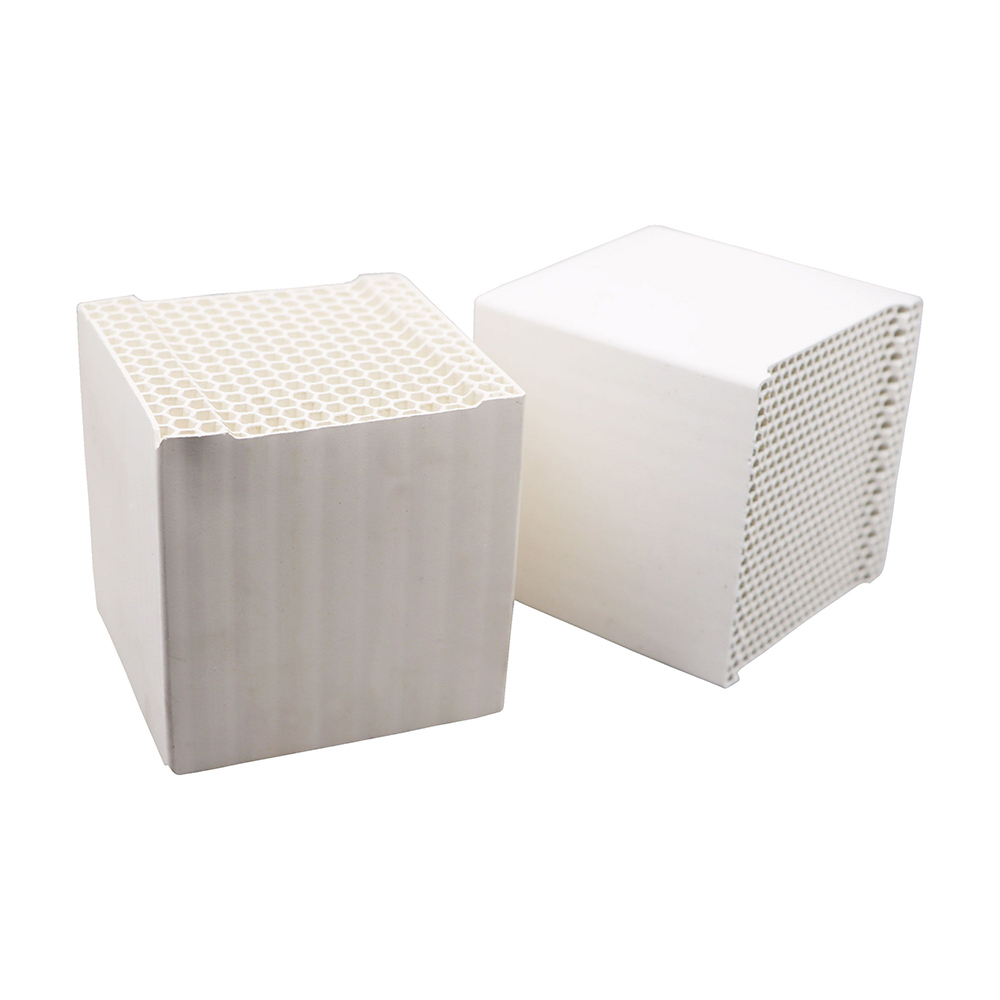
Ceramic honeycomb is primarily manufactured using Cordierite, Dense Cordierite, Cordierite-Mullite, Mullite, and Corundum-Mullite, each suited for varying temperature and industrial requirements.
Depending on the material composition, maximum working temperatures range from below 1300℃ (Cordierite) up to 1500℃ (Corundum-Mullite).
Yes, products can be customized according to your specific dimensional requirements, hole density (cpsi), wall thickness, and actual operating conditions.
A low thermal expansion coefficient ensures exceptional thermal shock resistance, preventing structural cracking or failure during rapid heating and cooling cycles.
Standard cell configurations range from large open channels of approximately 0.7 cpsi (5×5 holes) up to dense structures of 100 cpsi (59×59 holes) or more.