Direct-from-factory adsorbents and column internals tested to ASTM and ISO industrial standards.
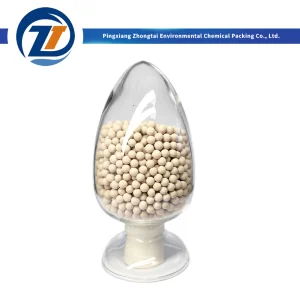
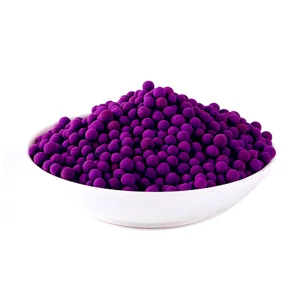
Molecular sieve type 3A (pore aperture ~3 Angstroms or 0.3 nm) represents the benchmark crystalline alkali metal aluminosilicate synthesized via targeted potassium ion exchange within a basic Type A zeolite structure (0.4 nm). With a chemical formula typically denoted as 0.45K2O · 0.55Na2O · Al2O3 · 2.0SiO2 · nH2O, its sub-nanometer framework excludes any molecule with an effective dynamic kinetic diameter larger than 3 Ångströms.
Because critical hydrocarbons such as ethylene (3.9 Å), propylene, and ethanol (4.4 Å) possess dynamic kinetic cross-sections strictly exceeding 3.0 Å, the 3A matrix enables rigorous desiccation down to < 0.1 ppm moisture levels without risking co-adsorption or catalytically inducing olefin polymerization within the internal crystal cavities.
Industrial dehydration columns subject packing to massive hydrostatic static heads and cyclic thermal swings. Zhongtai formulations utilize premium attapulgite clay binders with advanced automated rolling granulation to preserve high mechanical crush strengths (≥ 40 N/bead for 1/8") and minimize attrition fines down to < 0.1% wt.
Equilibrium water capacity is maintained at ≥ 21.0% (at 25°C, 60% RH). Optimized crystalline tortuosity speeds mass transfer front velocities during transient pressure-swing (PSA) and thermal-swing (TSA) cycles, drastically reducing bed length requirements in industrial desiccators.
The standard regeneration threshold for desorbing water molecules sits between 200°C and 250°C using an inert purge gas. Controlled firing during manufacture protects crystalline lattice stability, yielding service lifespans spanning over 20,000 thermal swing hours without significant loss of zeolite crystallinity.
Procurement managers and process engineers must balance purity, bead diameter, physical shape, and binder chemistry against plant lifecycle budgets. Below is our baseline factory pricelist and technical specifications.
| Adsorbent Grade / Form | Nominal Bead Diameter | Bulk Density (g/ml) | Static H₂O Adsorption | Crush Strength | Factory Export Price Tier (USD/MT) |
|---|---|---|---|---|---|
| Type 3A Standard Ethylene Grade (Spherical) | 1.6 – 2.5 mm (8×12 mesh) | 0.72 – 0.78 | ≥ 21.5% | ≥ 30 N | $1,350 – $1,650 |
| Type 3A Natural Gas / TSA Bead (Spherical) | 3.0 – 5.0 mm (4×8 mesh) | 0.70 – 0.76 | ≥ 21.0% | ≥ 65 N | $1,280 – $1,550 |
| Type 3A Ethanol Fuel Dehydration (Pelletized) | 1/16" (1.6mm Extrudate) | 0.68 – 0.74 | ≥ 20.5% | ≥ 25 N/cm | $1,420 – $1,750 |
| Type 3A Insulating Glass Desiccant (Beads) | 0.5 – 0.9 mm / 1.0 – 1.5 mm | 0.75 – 0.82 | ≥ 20.0% | ≥ 18 N | $1,180 – $1,400 |
| Type 3A Low-Dust Catalyst Bed Protective Layer | 4.0 – 6.0 mm (Special Large Bead) | 0.72 – 0.77 | ≥ 20.0% | ≥ 85 N | $1,500 – $1,800 |
*Prices valid for standard full container loads (FCL 20GP/40HQ) FOB Qingdao/Tianjin/Shanghai. Custom private-label packaging, palletization under ISPM 15, and air-free hermetic drum packing require quotation adjustments.
From petrochemical cracks to renewable biofuel loops, specialized 3A desiccants prevent cryogenic line freezing and mitigate destructive catalyst poisoning.
Ethylene cracker overhead streams carry saturated moisture. 3A sieves dynamically dry cracked gas to below -100°C dew point without trapping or polymerizing sensitive ethylene or propylene components, preventing hydrate formation in fractionation towers.
Ethanol-water distillation hits an azeotropic limit at ~95.6% purity. High-capacity 3A molecular sieve pressure swing adsorption beds selectively adsorb water molecules while completely excluding ethanol, producing 99.8%+ fuel-grade anhydrous bioethanol.
With an extremely low initial moisture content (< 1.0% wt.), ultra-low dusting 3A spherical beads selectively trap environmental moisture penetrating spacer bars without absorbing atmospheric gases (nitrogen/oxygen), preventing glass deflection and seal collapse.
Addressing high parasitic energy costs during thermal desorption and transitioning towards green chemical infrastructure.
Traditional binders consume 15-20% of bead mass without contributing to adsorption capacity. Zhongtai's laboratory pipeline focuses on hydrothermal in-situ crystallization to convert inert binders into active zeolitic phases, elevating active capacity by 18%.
By engineering defect-free lattice networks and modulating extra-framework potassium cations, next-generation 3A desiccants release bonded hydroxyl water at 160°C instead of 250°C, drastically cutting carbon footprints in steam-heated TSA loops.
Integrating breakthrough curve modeling algorithms to assist overseas engineering teams in accurately forecasting remaining run-length based on pressure drop (ΔP), bed contaminants (e.g., heavy hydrocarbons, sulfur), and thermal fatigue.
Pingxiang Zhongtai Environmental Chemical Packing Co., Ltd. operates in direct alignment with international marine safety conventions and stringent European/American chemical directives.
Standardized packaging includes 25 kg multi-layer composite vacuum cartons with PE liners, airtight 140–150 kg carbon steel drums, and 1000 kg moisture-sealed FIBC super-sacks mounted on heat-treated, fumigation-free ISPM 15 pallets.
All molecular sieve and chemical mass transfer products fully conform to EU REACH, RoHS, and GHS classification mandates. Shipments include comprehensive Certificates of Analysis (COA), safety data sheets (SDS), and Non-Hazardous Cargo certifications.
We welcome third-party inspections (SGS, Bureau Veritas, Intertek) prior to vessel boarding at major Chinese export terminals. Physical property audits confirm bead uniformities, bulk densities, LOI (loss on ignition ≤ 1.5%), and crush values.
The pore opening defines selectivity: 3A (0.3 nm) adsorbs H₂O while rejecting all larger hydrocarbons; 4A (0.4 nm) adsorbs H₂O, CO₂, and light alkanes; 5A (0.5 nm) separates normal vs. iso-paraffins; and 13X (1.0 nm) treats large branched chains, mercaptans, and air separation feedstocks.
The presence of heavy oils, liquid carryover from upstream coalescing filters, and severe thermal shocks. Hydrocarbon coking clogs the macropores of the binder, restricting molecular ingress into the active zeolite cages and causing rapid drop in dynamic H₂O capacity.
Standard spherical 3A molecular sieves (1.6–2.5 mm and 3.0–5.0 mm) are maintained in permanent strategic inventory in Pingxiang. Bespoke mesh requirements, specialty custom-formulated extrudates, or private-label steel drum printings typically ship in 10 to 15 calendar days.
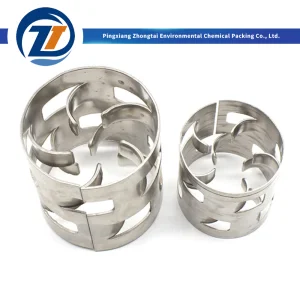
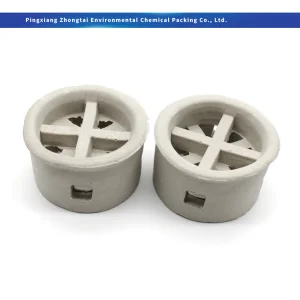
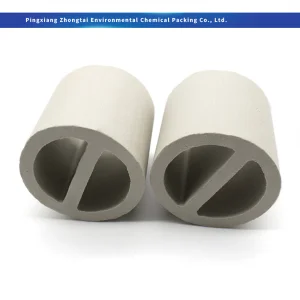
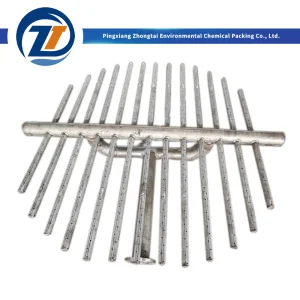
High-strength column internals, filtration matrices, and mass transfer solutions manufactured to client drawing specifications.