1 / 1
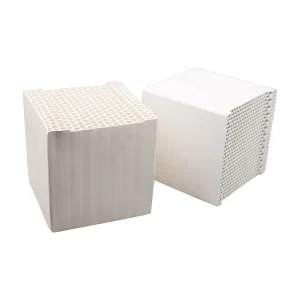
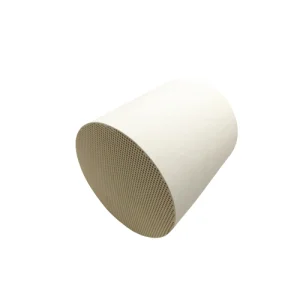
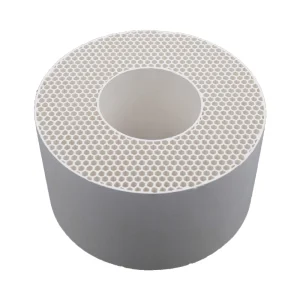
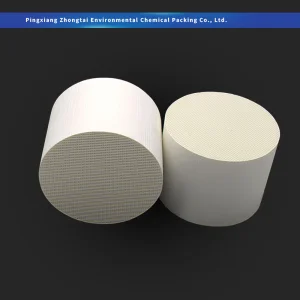
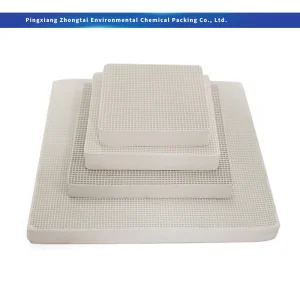
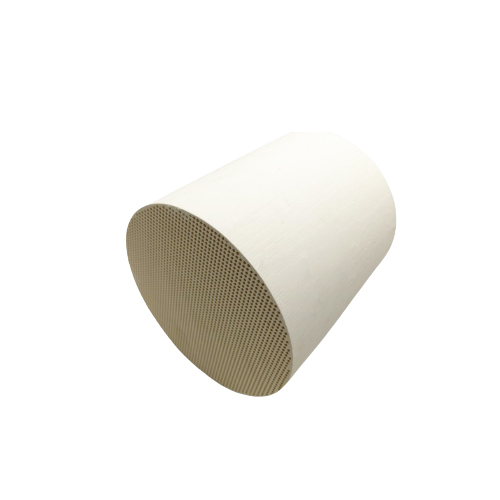
By forcing the exhaust gases through the walls between the channels of the DPF, the particulate matter is deposited on the walls, so reducing the amount of air pollution.
| Size | CPSI | Volume (L) |
|---|---|---|
| φ118*152.4 | 100/200 | 1.67 |
| φ118*254 | 100/200 | 2.78 |
| φ127*152.4 | 100/200 | 1.93 |
| φ127*180 | 100/200 | 2.3 |
| φ127*254 | 100/200 | 3.22 |
| φ144*152.4 | 100/200 | 2.49 |
| φ144*203 | 100/200 | 3.31 |
| φ144*254 | 100/200 | 4.44 |
| φ144*305 | 100/200 | 4.97 |
| φ190*152.4 | 100/200 | 4.32 |
| φ190*203 | 100/200 | 5.76 |
| φ190*305 | 100/200 | 8.65 |
| φ240*240 | 100/200 | 10.9 |
| φ240*305 | 100/200 | 13.8 |
| φ250*305 | 100/200 | 14.97 |
| φ267*267 | 100/200 | 14.22 |
| φ267*305 | 100/200 | 14.95 |
| φ286*305 | 100/200 | 17.07 |
| φ286*355 | 100/200 | 19.6 |
| φ305*305 | 100/200 | 22.8 |
| φ330*381 | 100/200 | 32.59 |
| Parameters | Unit | Data | ||
|---|---|---|---|---|
| Material: Cordierite | wt% | ≥90 | 94 | |
| Coefficient of Thermal Expansion (20-800℃) | cm/cm/℃ | ≤1.8*10 | ≤1.5×10⁻⁶ | |
| Thermal Stability (20-650℃) | times | ≥1 | 3 | |
| Soften Temperature | ℃ | ≥1420 | 1440 | |
| Compression Strength | Lengthways | MPa | 16 | 16.9 |
| Horizontal | MPa | 5 | 6.2 | |
| Specific Weight | Kg/L | 0.45-0.55 | 0.45-0.5 | |
| Porosity | % | 40-45 | 41 | |
| Water-absorbing rate | % | 23-25 | 23.8 | |
The main function of a DPF is to capture and filter out harmful particulate matter (soot) from diesel engine exhaust gases by forcing the gas through porous substrate walls, significantly cutting emissions.
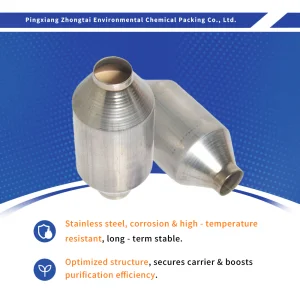
Cordierite provides high thermal stability, a low coefficient of thermal expansion, and a high softening temperature (above 1420℃), ensuring reliable durability under extreme exhaust temperatures.
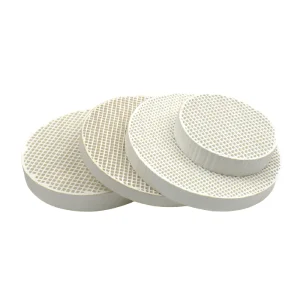
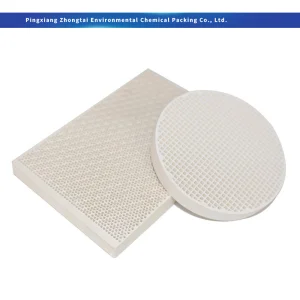
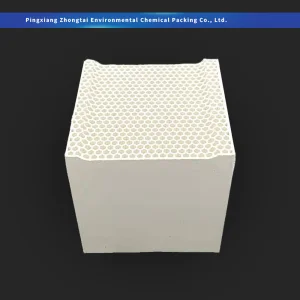
CPSI stands for Cells Per Square Inch. It defines the cell density across the filter face. A rating of 100 or 200 CPSI provides an optimal balance between filtration efficiency and exhaust backpressure.
The filters demonstrate high mechanical durability with a lengthways compression strength of up to 16.9 MPa and a horizontal compression strength of 6.2 MPa to withstand vehicle vibrations and packaging stress.
With a controlled porosity level between 40% and 45%, the substrate ensures efficient gas permeability to prevent excessive backpressure while effectively trapping fine soot particles inside the channel walls.
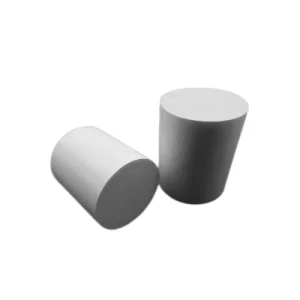
Substrates range from smaller capacities starting at 1.67 Liters (φ118*152.4) up to heavy-duty industrial capacities reaching 32.59 Liters (φ330*381) to match diverse engine displacement requirements.