1 / 5


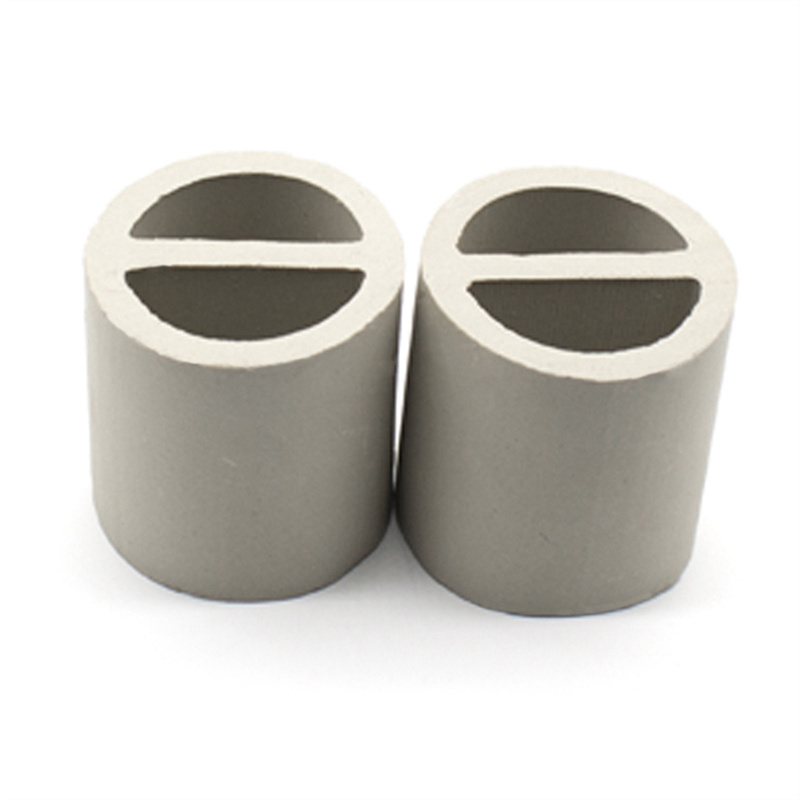
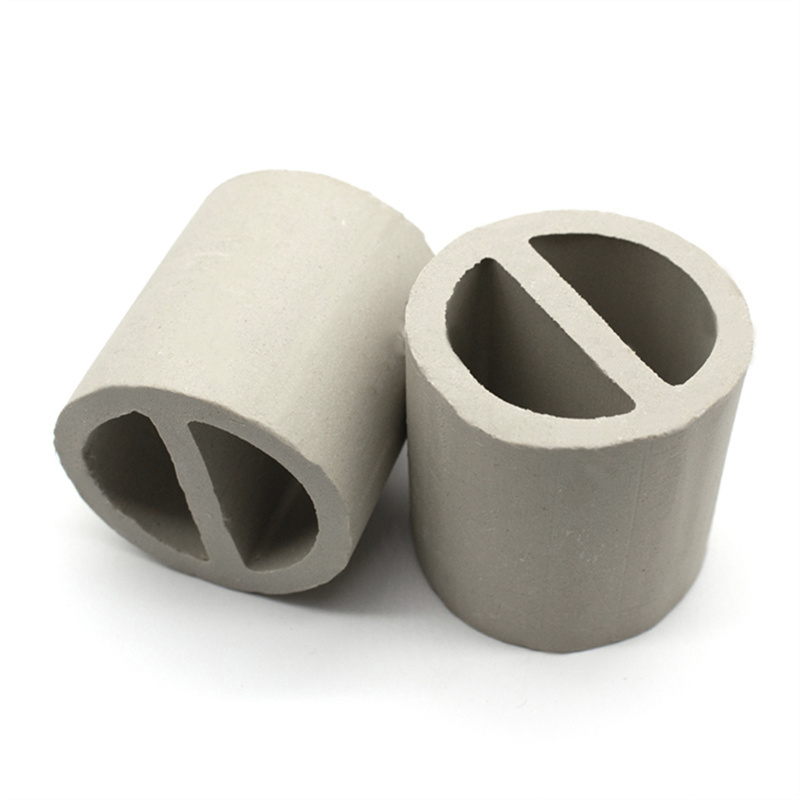
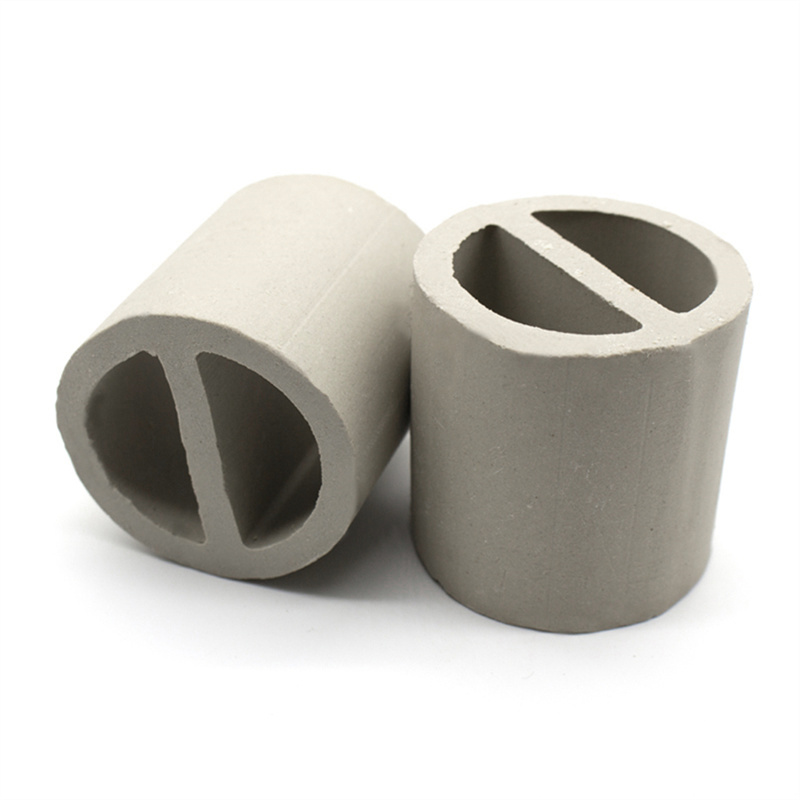
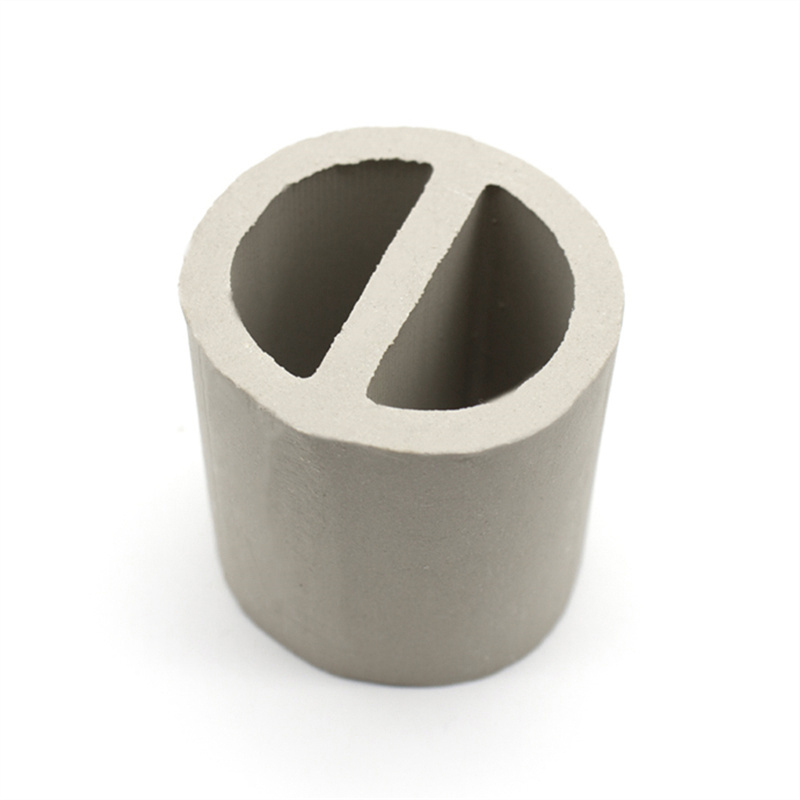
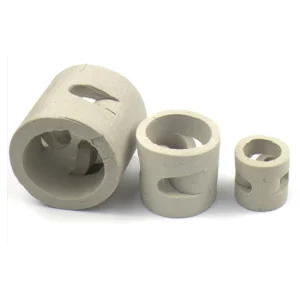
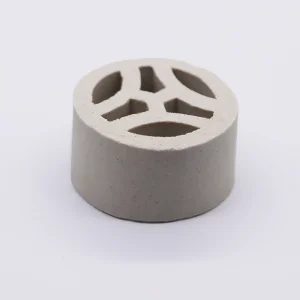
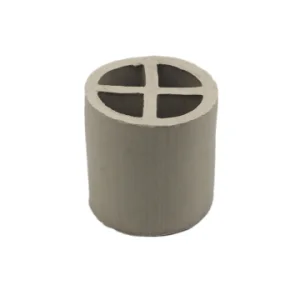
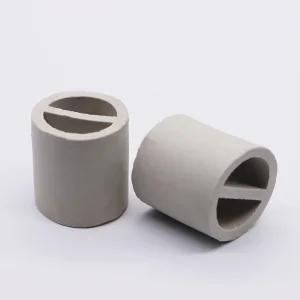
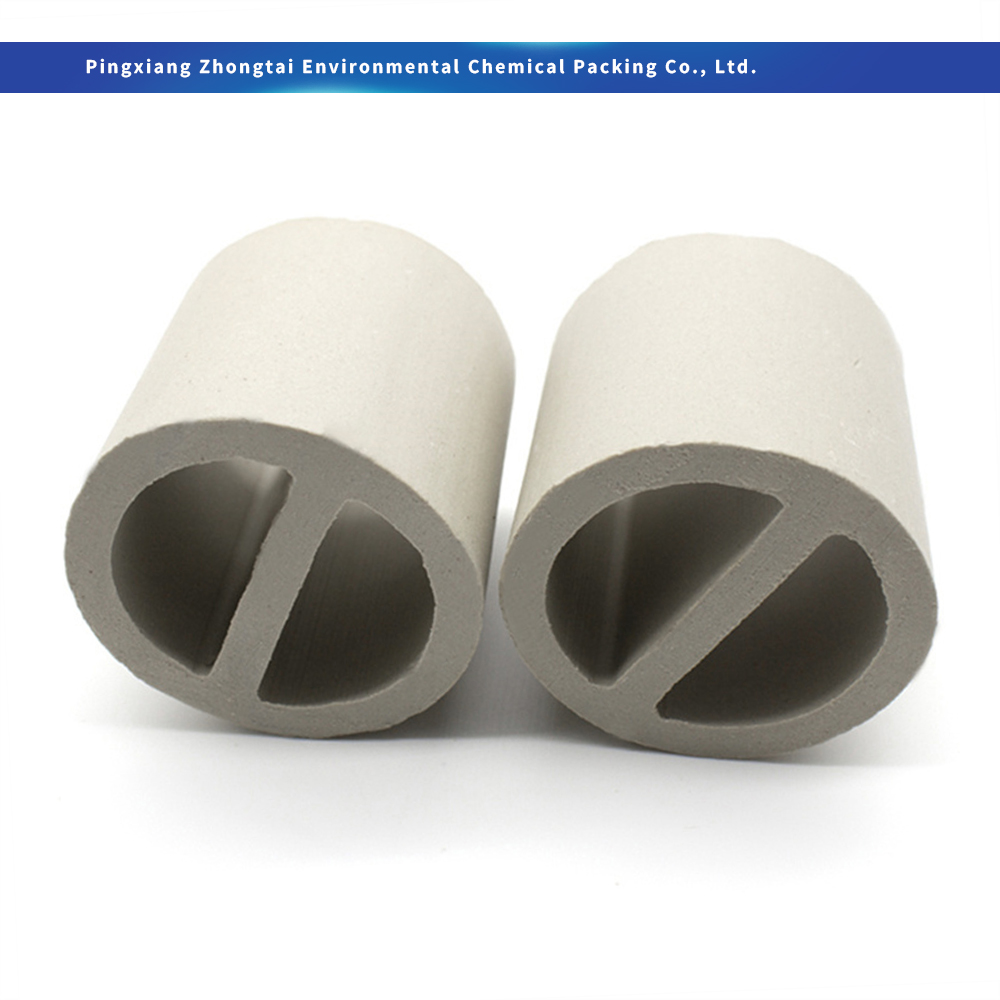
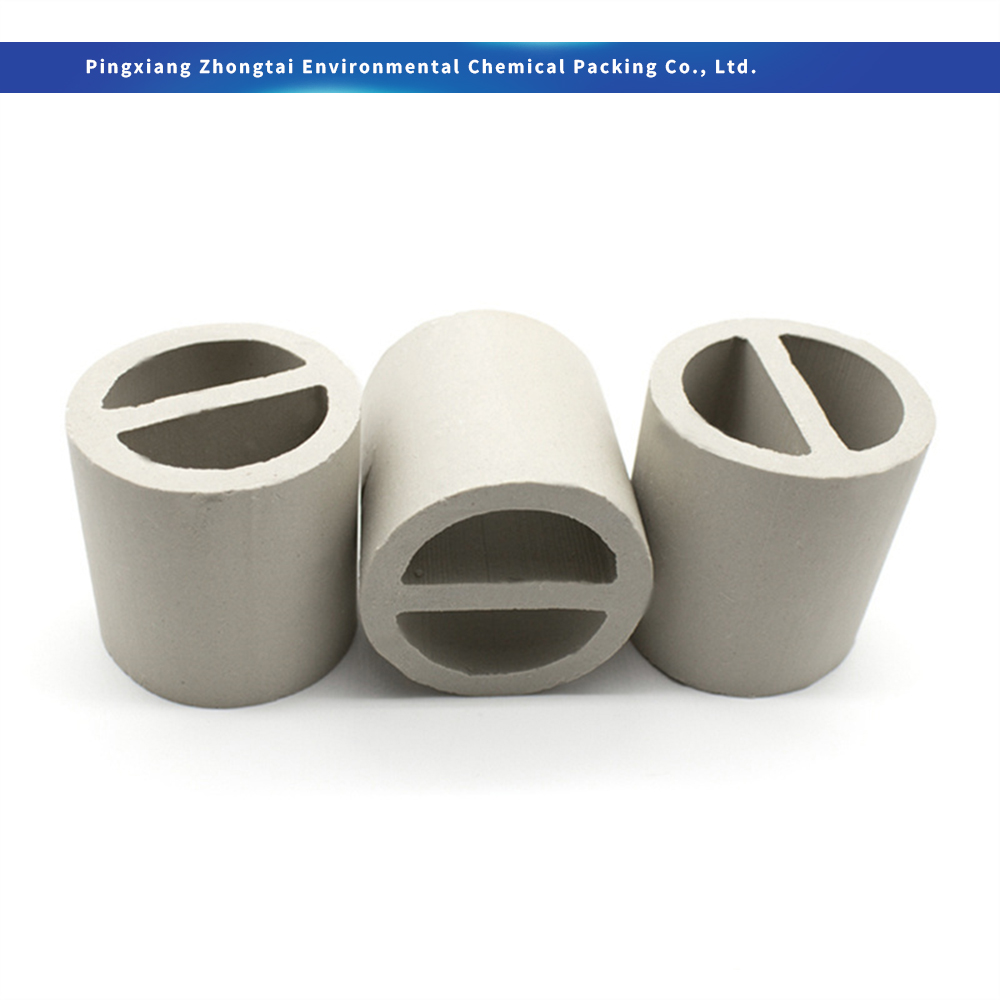
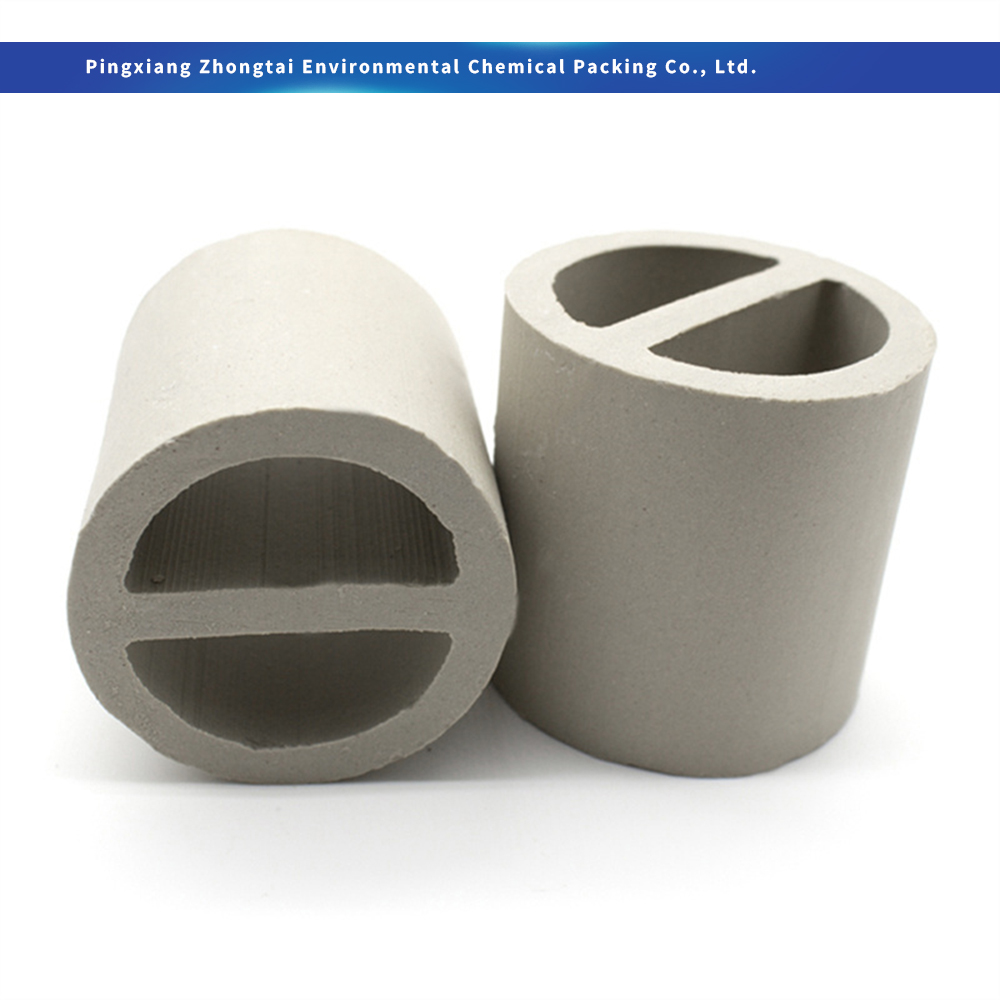
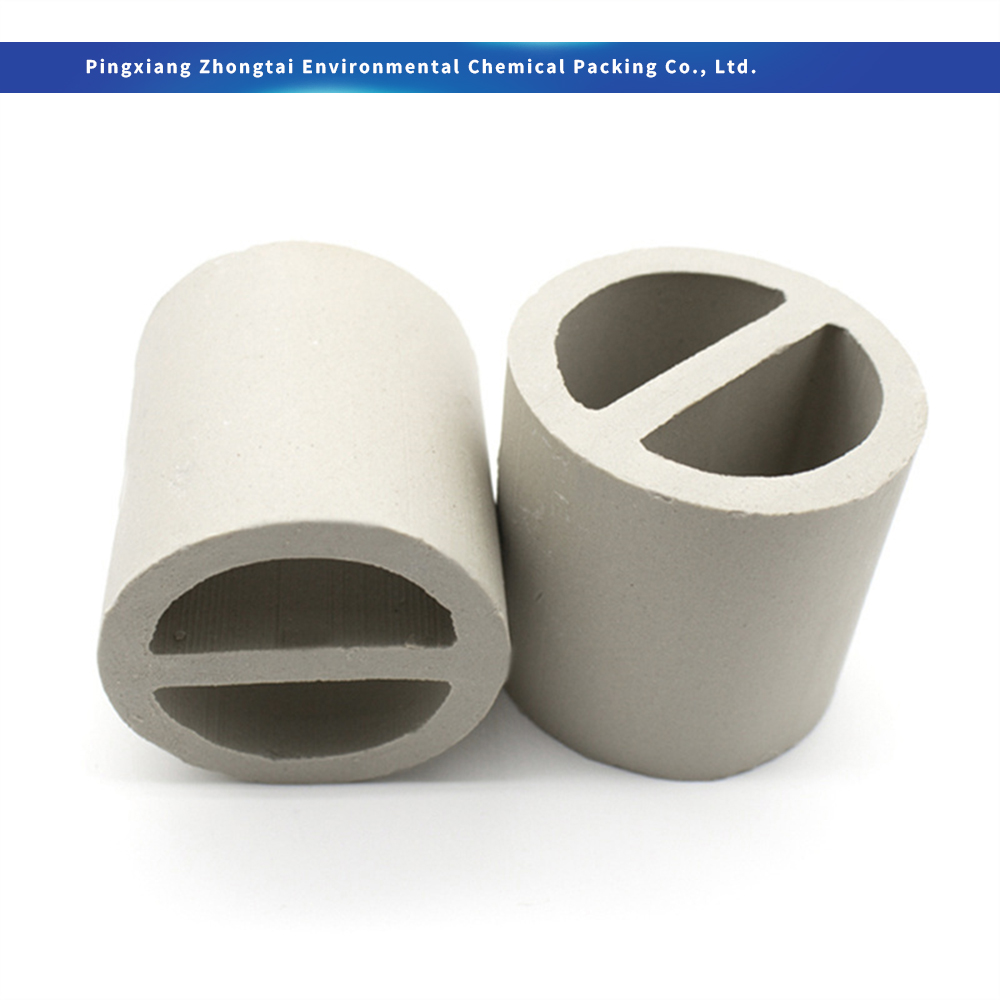
Ceramic Lessing Ring, also known as Ceramic One-Partition Ring, Ceramic Single Partition Ring, or Ceramic One-Word Ring in Chinese industry terminology, is a structural random packing developed as an improvement over the traditional Ceramic Raschig Ring. Its defining feature is a single vertical partition (diaphragm) inserted across the internal diameter of the cylinder—this design was patented as the “Lessing ring” and is recognized as one of the earliest structured enhancements to random tower packing. In Chinese industry, it is also commonly referred to by the alternative name 勒辛环 (Lessing Ring).
The ring is typically produced in large dimensions (Φ50mm up to Φ150mm and beyond) and is most often used in stacked (ordered) arrangement. Its primary role today is as a support and distribution layer at the bottom of random packed towers, where high mechanical strength and chemical resistance are essential.
The internal single partition significantly increases the ring's mechanical strength compared to standard Raschig Rings, providing the load-bearing capacity required for tower bottom support layers.
The added partition increases the specific surface area, enhancing mass transfer potential while maintaining sufficient void space for gas-liquid flow.
High-alumina ceramic composition resists all inorganic acids, organic acids, and organic solvents except hydrofluoric acid, with acid resistance >99.6%.
Withstands operating temperatures up to 1200–1400°C with a softening point >1400°C, making it suitable for extreme thermal environments and RTO applications.
In Φ80–200mm sizes, Ceramic Lessing Rings serve as support material at the bottom of random packed towers, with void fraction greater than 60%.
Suitable for drying towers, absorption towers, cooling towers, scrubbing towers, and regeneration towers in chemical, metallurgy, coal gas, and oxygen production industries.
| Size (mm) | D×H×T (mm) | Surface Area (m²/m³) | Void Ratio (%) | Number per m³ | Bulk Density (kg/m³) | Dry Packing Factor (m⁻¹) |
|---|---|---|---|---|---|---|
| φ25 | 25×25×3 | 190 | 78 | 49,000 | — | 400 |
| φ40 | 40×40×4 | 126 | 75 | 12,700 | — | 305 |
| φ50 | 50×50×5 | 93 | 81 | 6,000 | 560 | 177 |
| φ80 | 80×80×8 | 120 | 56 | 1,950 | 780 | 123 |
| φ100 | 100×100×10 | 110 | 53 | 1,000 | 810 | 106 |
| φ120 | 120×120×12 | 75 | 55 | 370 | 820 | 86 |
| φ150 | 150×150×15 | 60 | 58 | 295 | 950 | 74 |





The main difference is the internal single vertical partition. This added web enhances geometric surface area and greatly increases compressive crush strength, making it ideal for deep beds and bottom support layers.
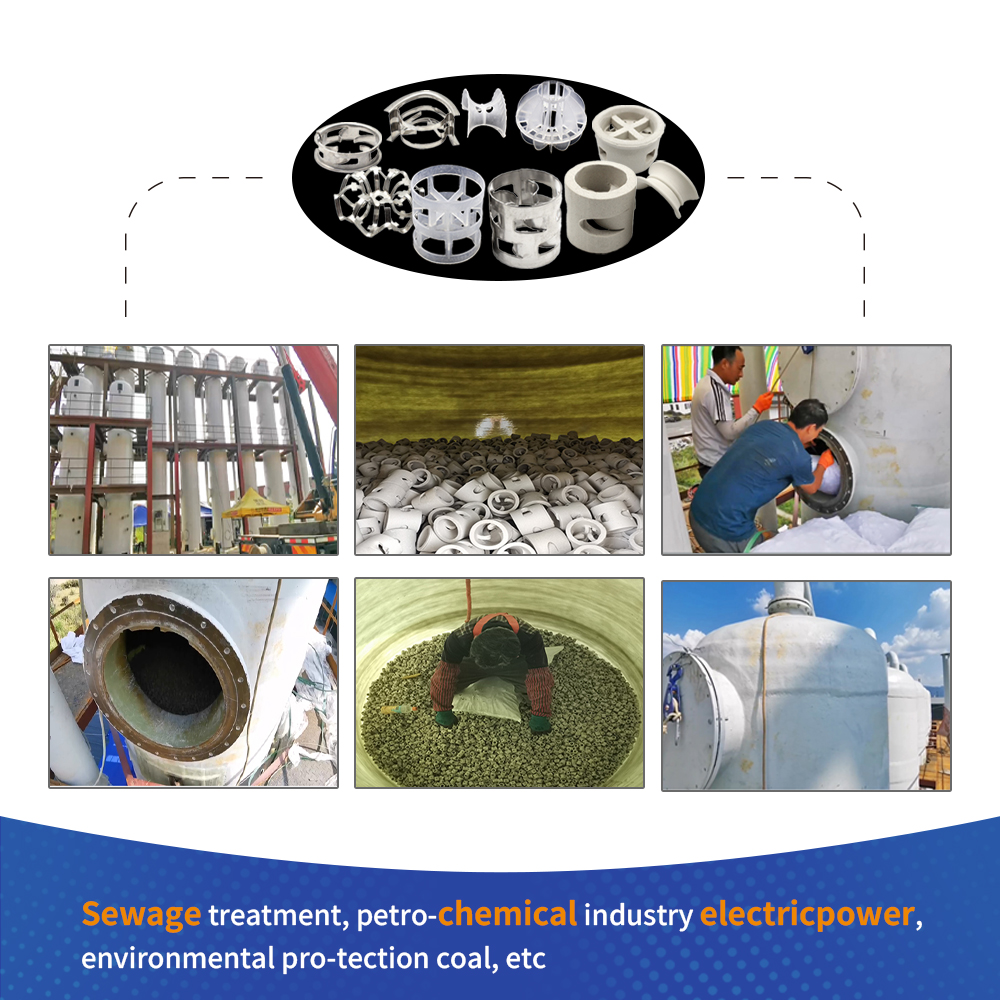
They are primarily utilized in drying towers, absorption towers, cooling towers, scrubbing towers, and regenerators across the chemical, petrochemical, metallurgical, and gas industries.
Smaller sizes (e.g., φ25mm, φ40mm) can be randomly dumped, while larger sizes (typically φ80mm to φ150mm+) are commonly installed in structured, stacked arrangements to serve as lower support grids.
Ceramic Lessing Rings have an acid resistance rating exceeding 99.6%. They withstand virtually all inorganic acids, organic acids, and solvents, except hydrofluoric acid (HF).
Yes, with a softening point above 1400°C, they can continuously operate in environments reaching 1200–1400°C, providing exceptional stability in thermal equipment like RTO systems.