1 / 5




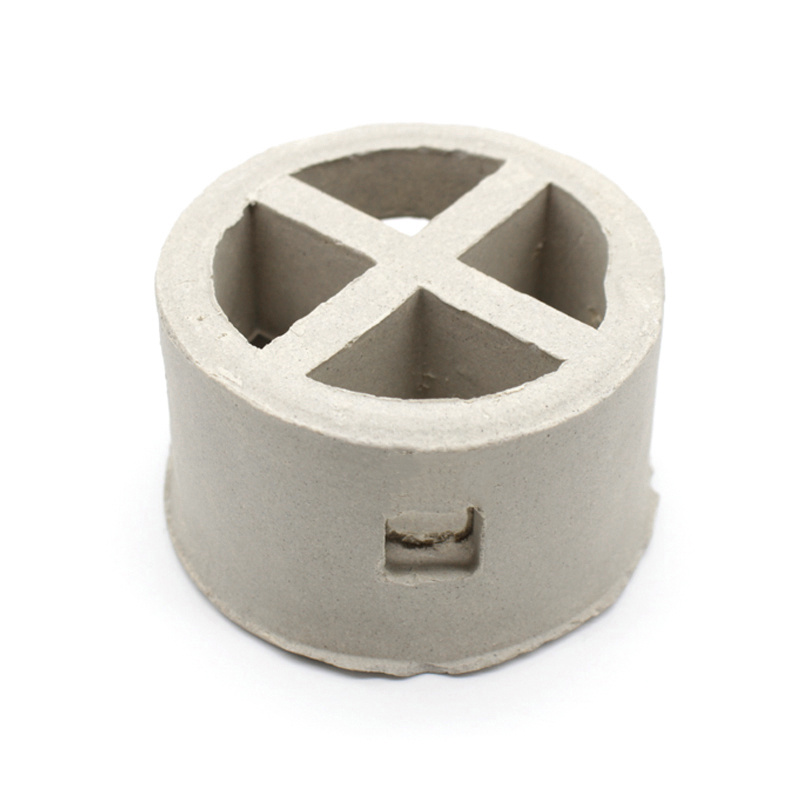
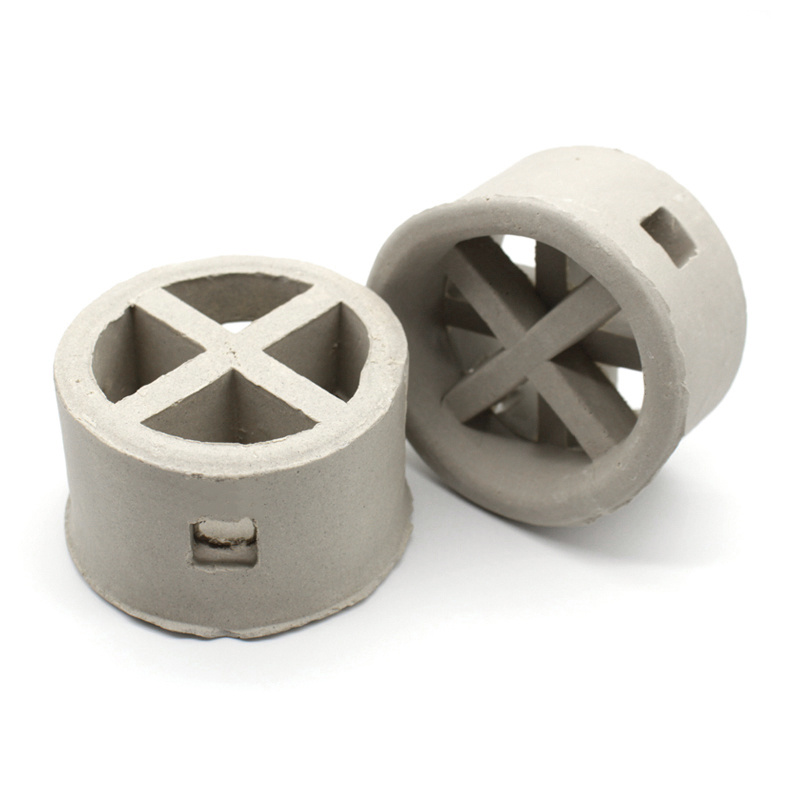
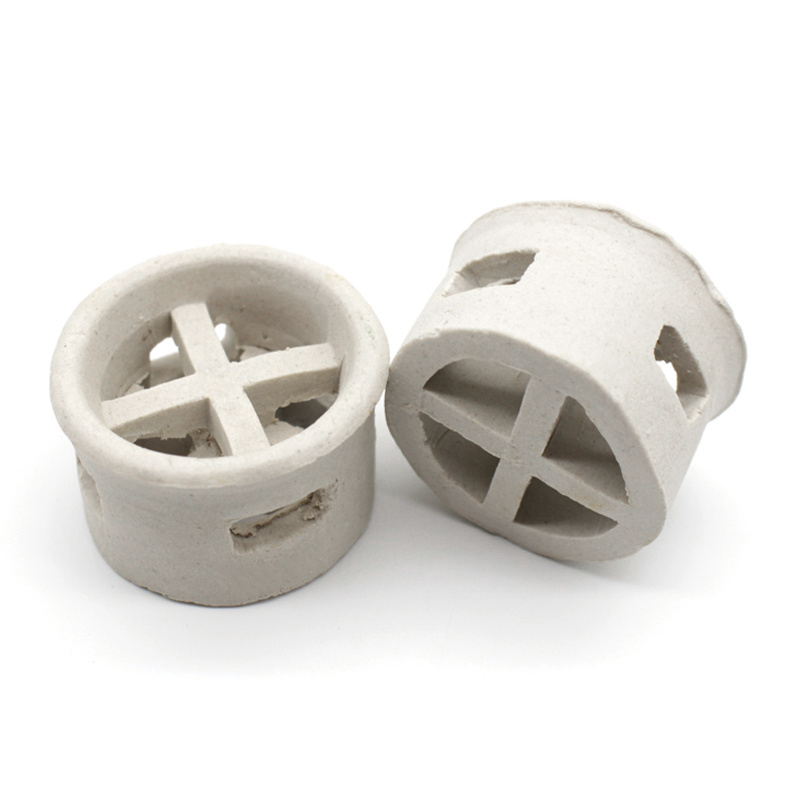
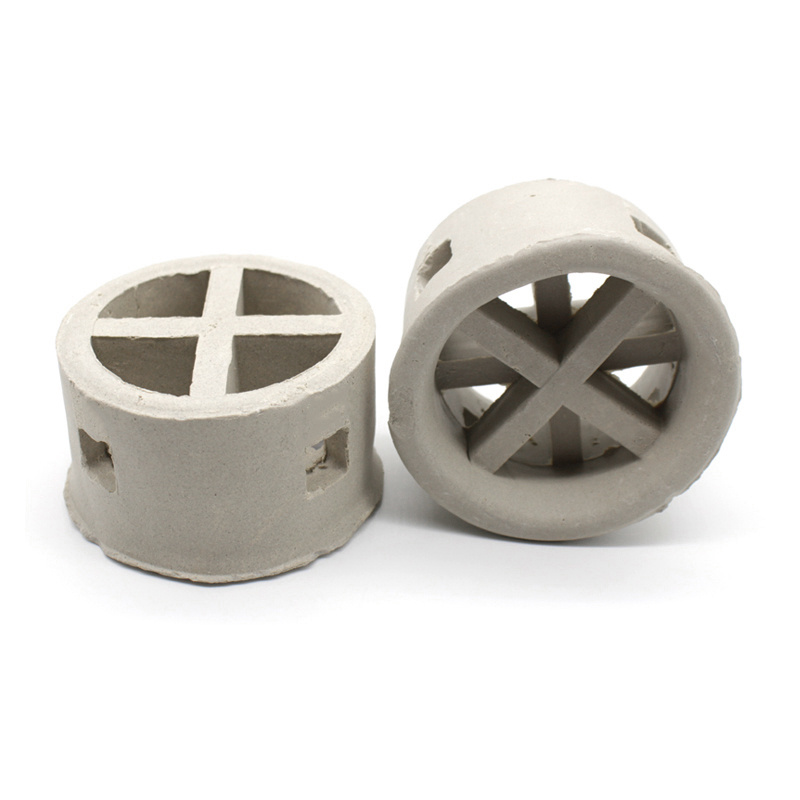
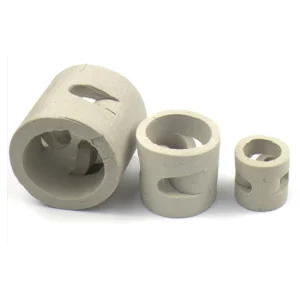
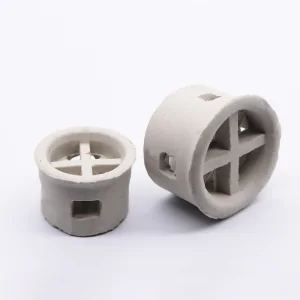
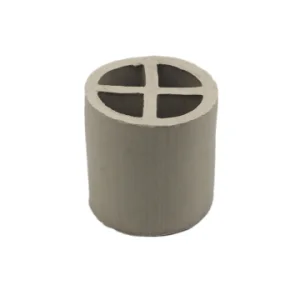
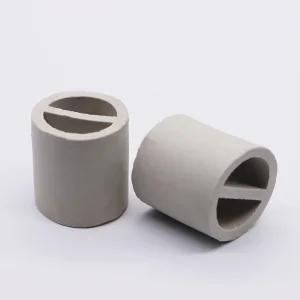
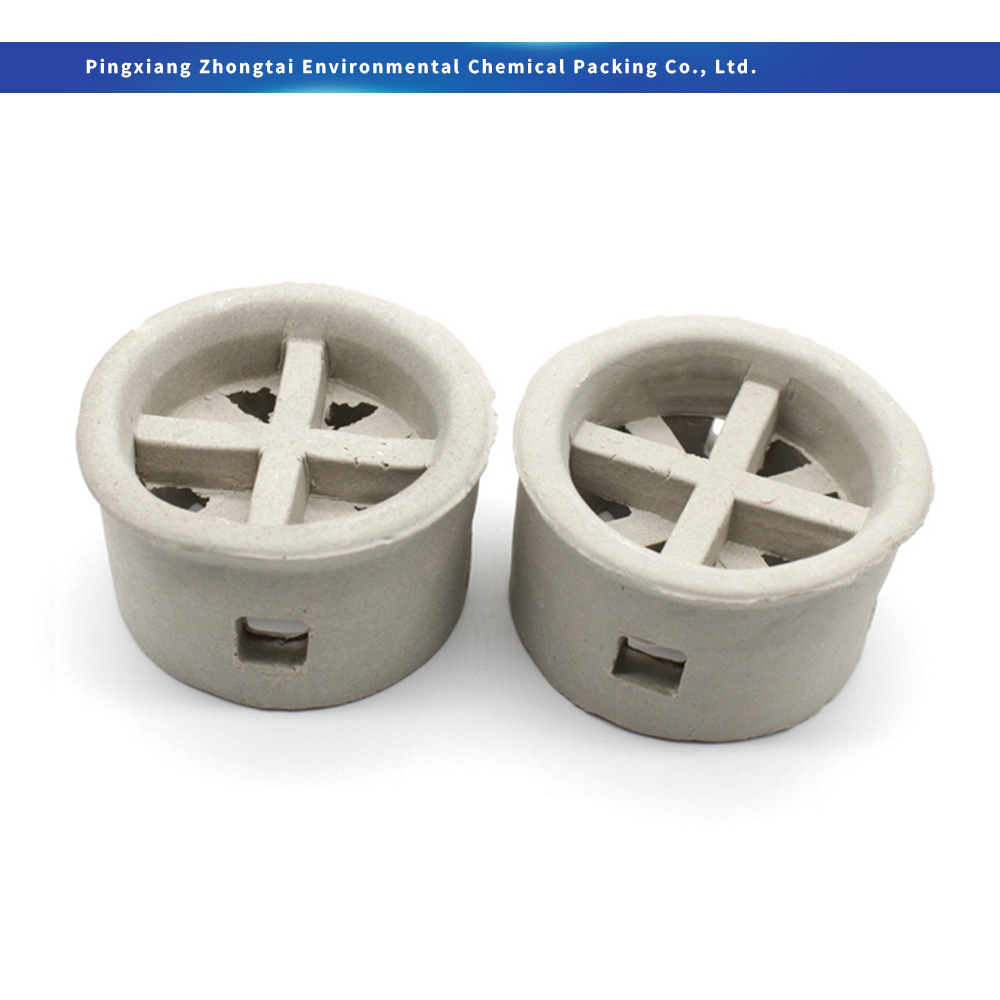
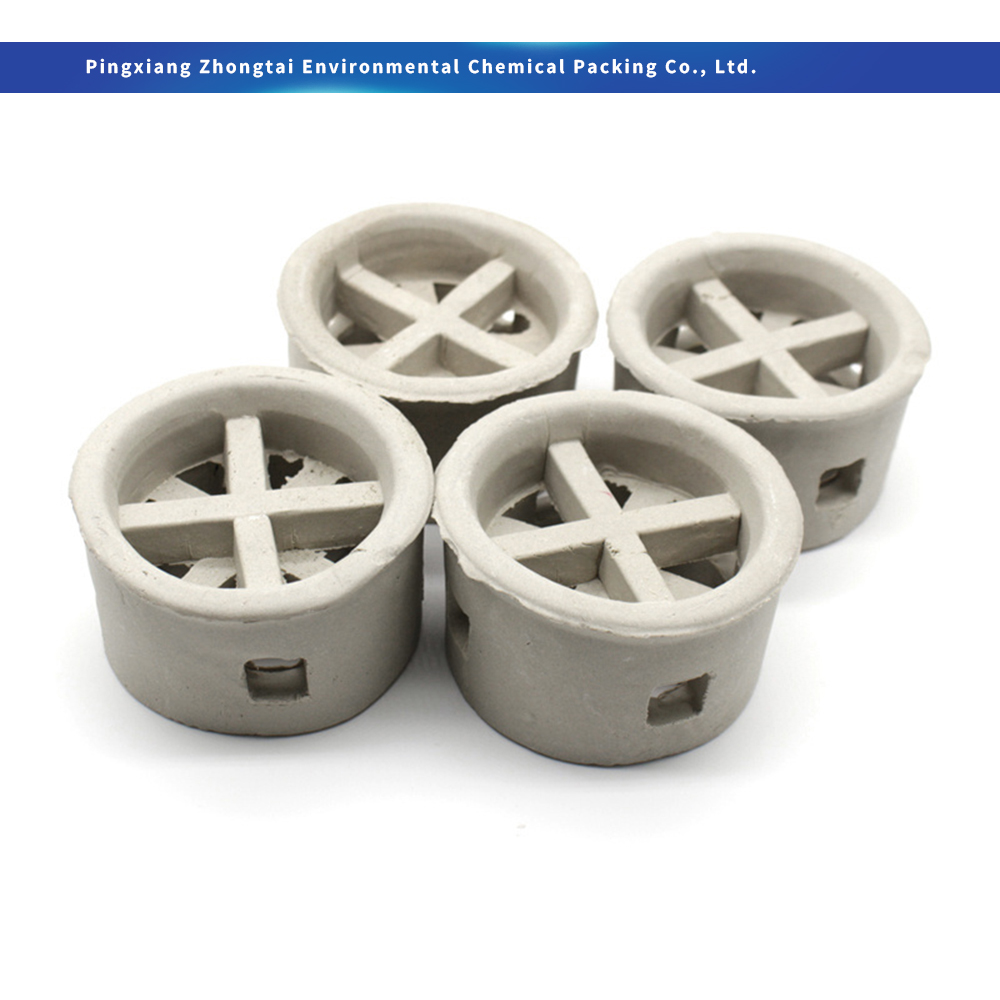
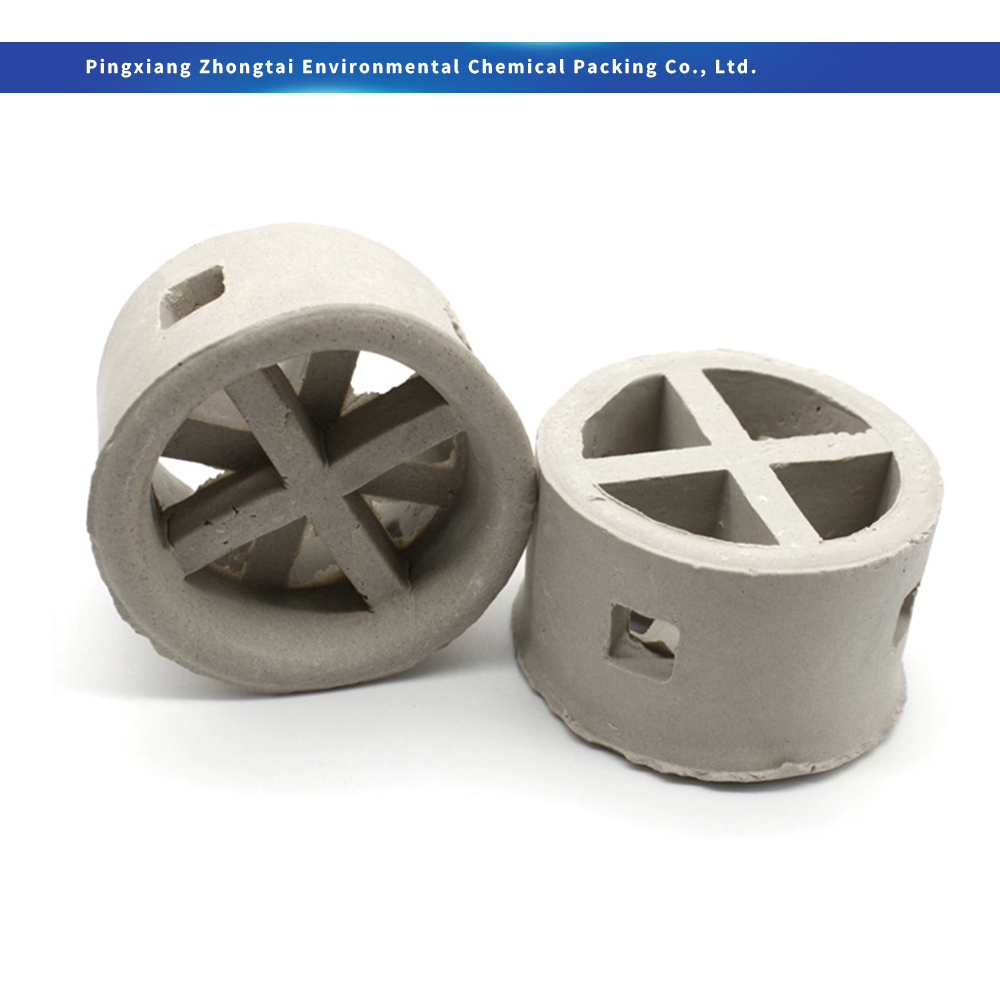
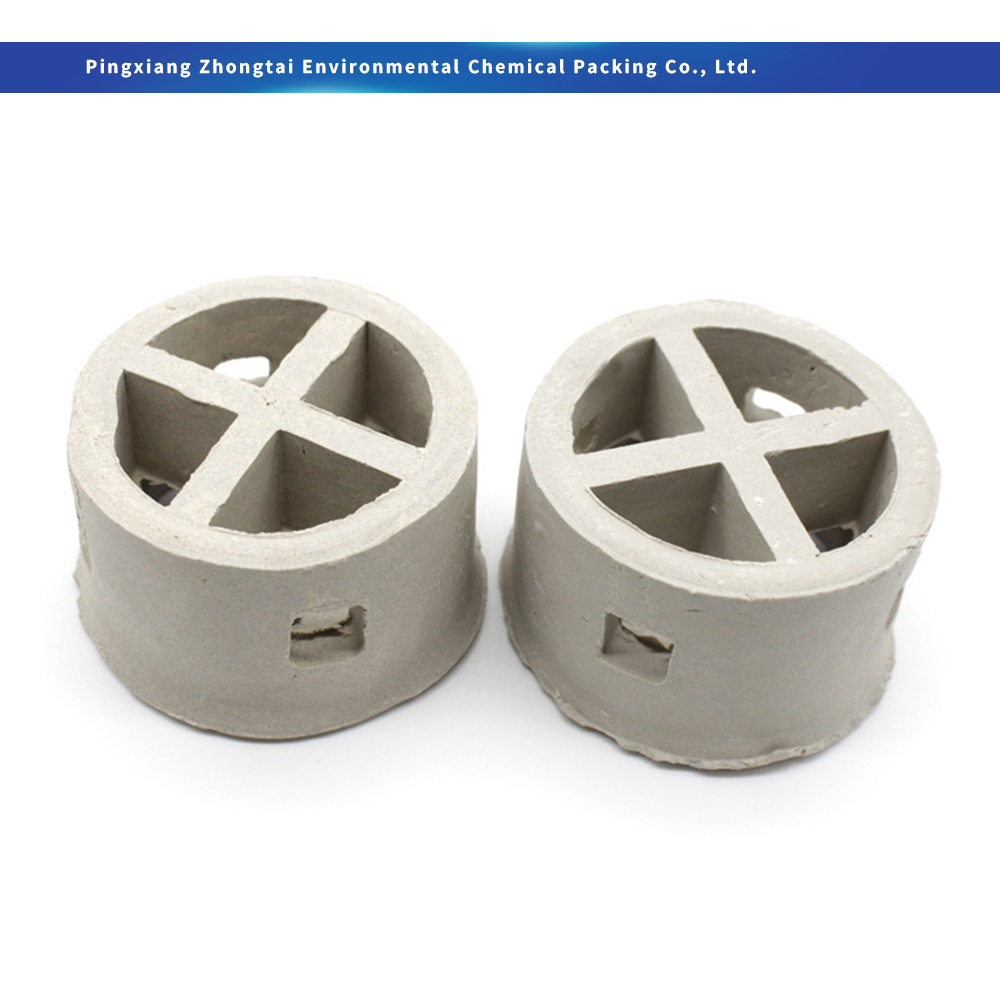
The Ceramic Cascade Ring is a high-efficiency random packing further developed from the Ceramic Pall Ring and Raschig Ring. It features a reduced height-to-diameter ratio of 1:2 or 1:3, combined with a unique conical rolled edge (flared end) and a window design with five inwardly bent tongues per layer—staggered at 45° between upper and lower rows. This innovation reduces wall thickness, enhances mechanical strength, and makes it a preferred choice over conventional rings for energy-saving mass transfer systems.
| Size (mm) | D×H×T (mm) | Surface Area (m²/m³) | Void Ratio (%) | Number per m³ | Bulk Density (kg/m³) | Packing Factor (m‾) |
|---|---|---|---|---|---|---|
| φ25 | 25×20×3 | 228 | 74 | 72000 | 624 | 540 |
| φ38 | 38×23×4 | 153 | 74 | 21600 | 630 | 378 |
| φ50 | 50×30×5 | 110 | 76 | 9100 | 580 | 232 |
| φ76 | 76×45×9 | 77 | 78 | 2500 | 530 | 158 |





Ceramic Cascade Rings feature a lower height-to-diameter ratio and a distinctive conical flared end. This design creates point-contact stacking rather than nested line-contact, expanding the open void space and reducing pressure drop by 50% to 70%.
They are produced with high-alumina chemical porcelain containing 17%–23% Al₂O₃, granting superior chemical inertness against virtually all inorganic and organic acids (except hydrofluoric acid) and outstanding thermal resistance exceeding 1000°C.
The wall windows (accounting for approximately 30% of total surface area) and inwardly bent tongues promote multi-pathway fluid redistribution. Liquids and gases can continuously wet both internal and external surfaces, yielding 50% to 100% higher treatment efficiency.
Standard nominal sizes include φ25 mm, φ38 mm, φ50 mm, and φ76 mm. Each size offers specific geometric surface areas and bulk densities tailored to specific column diameters, gas velocities, and loading conditions.
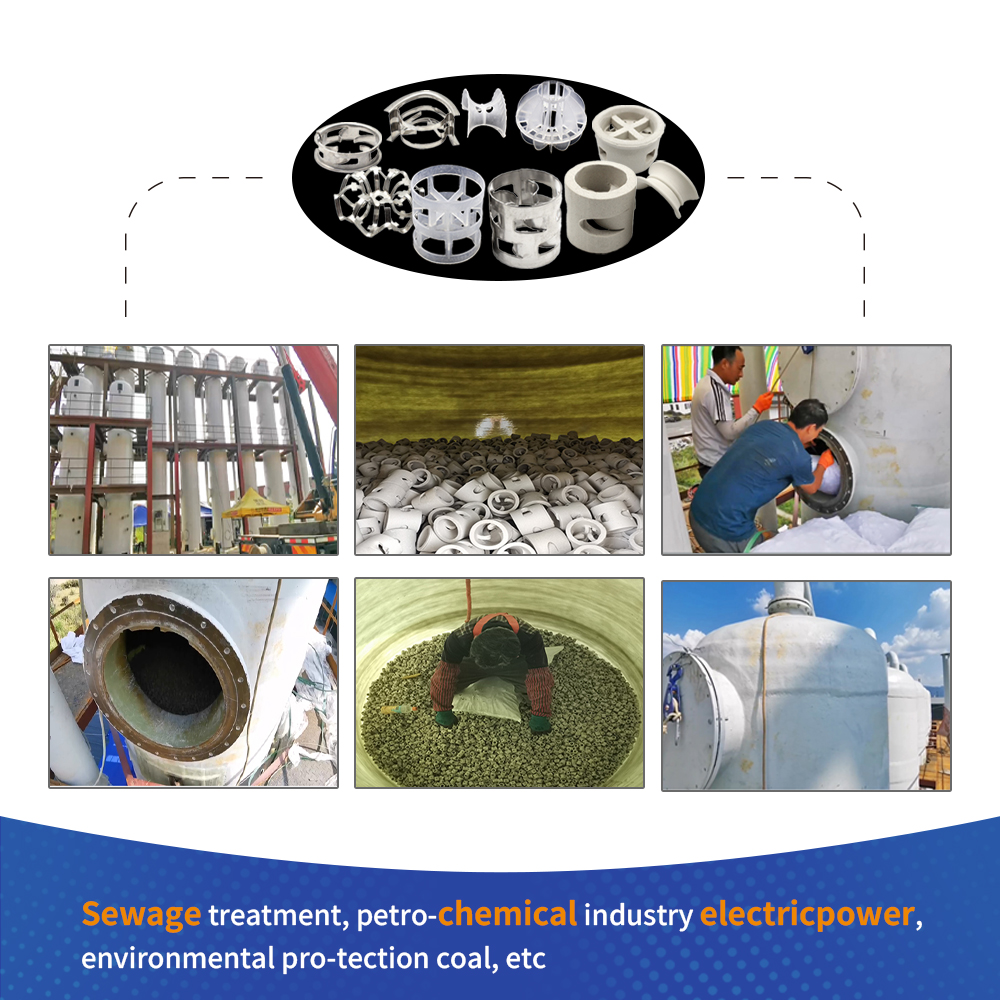
They are widely deployed across drying towers, acid absorption towers, cooling towers, desulfurization scrubbers, and regenerative thermal systems within the chemical, metallurgical, coal gasification, and industrial gas separation industries.
Products are manufactured in strict compliance with the GB/T 18749-2008 national standard for chemical-resistant ceramic tower packings, guaranteeing consistent bulk density, high crushing strength, and chemical durability.