1 / 1
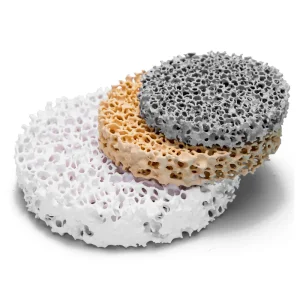
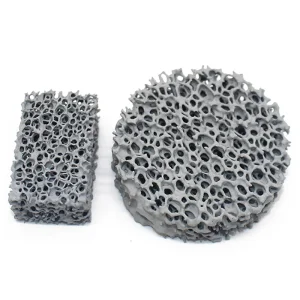
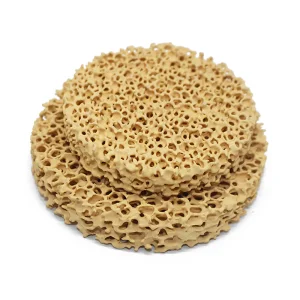
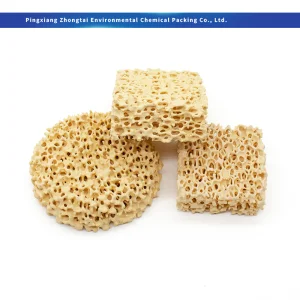
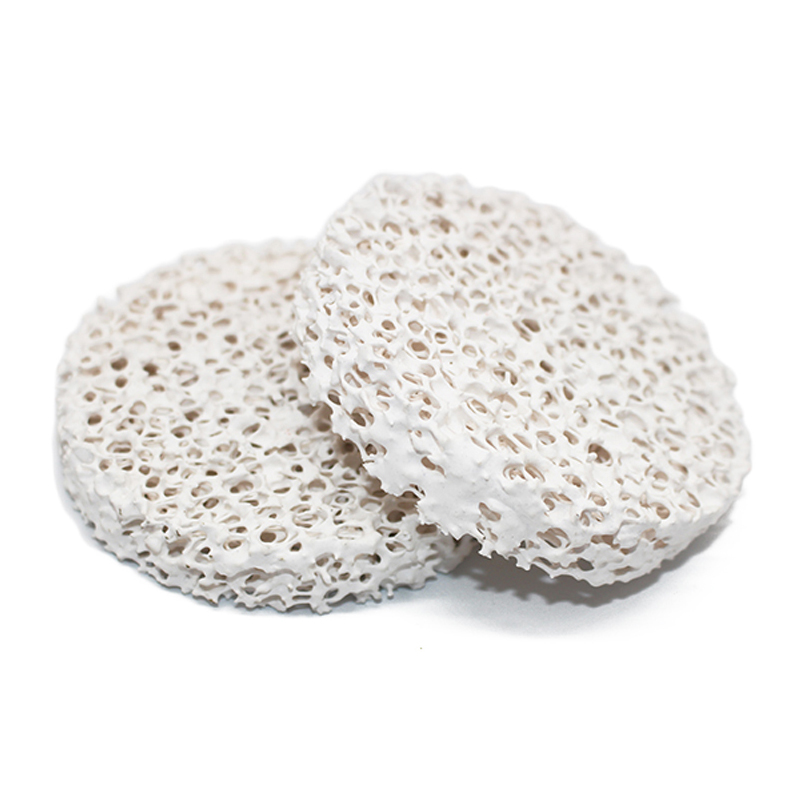
By virtue of its interconnected three-dimensional structure, the foam ceramic filter fully embodies its four essential filtration mechanisms: rectification, mechanical screening, "filter cake," and adsorption when filtering molten metal.
The filter material features high chemical stability and remains unreactive with alloy liquids. This effectively removes and minimizes inclusions within the molten metal to significantly increase purity. Castings produced with this filter display smooth surfaces, enhanced mechanical strength, lower scrap rates, and reduced machining allowances—ultimately leading to minimized energy consumption, elevated labor productivity, and lower production costs.
Rectification, mechanical screening, filter cake buildup, and physical adsorption.
Zero chemical reactivity with alloy liquids, preserving metal integrity.
Reduces casting scrap rates, optimizes machining allowance, and cuts total energy costs.
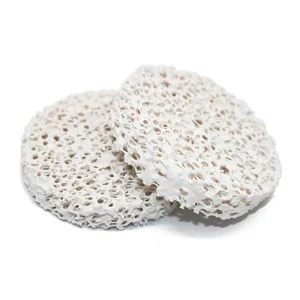
| Description | Alumina | |
| Main Material | Al2O3 | |
| Color | White | |
| Work Temperature | ≤ 1200°C | |
| Physical Specification | Porosity | 80 - 90% |
| Compression Strength | ≥ 1.0 Mpa | |
| Bulk Density | ≤ 0.5 g/cm³ | |
| Size Availability | Round | Φ 30 - 500 mm |
| Square | 30 - 500 mm | |
| Thickness | 5 - 50 mm | |
| Pore Diameter | PPI | 10 - 90 ppi |
| Metric Equivalent | 0.1 - 15 mm | |
| Application Areas | Copper-aluminum alloy filter casting | |
| Electronic cigarette filters, air feeder filters, range hood filters, smoke filters, aquarium filters, etc. | ||