Engineered mass transfer internals manufactured under strict ISO quality controls
In industrial chemical processing, separation columns represent the core operational unit for distillation, absorption, stripping, and scrubbing. Selecting an optimal Random Packed Column Manufacturer directly governs a plant's thermal efficiency, hydraulic capacity, operational flexibility, and long-term capital expenditure. Unlike structured packing—which follows geometric lattice patterns—random tower packing involves dumping engineered geometric elements into a column body to form a highly porous mass transfer bed.
The fundamental mechanism relies on maximizing liquid-gas contact area while minimizing hydraulic resistance (pressure drop $\Delta P$). When liquid trickles downward driven by gravity, it spreads over the outer and inner surfaces of the packing elements, forming a thin, continuously refreshed liquid film. Concurrently, rising vapor moves counter-currently through the interstitial void spaces. The separation efficiency is quantitatively determined by the Height Equivalent to a Theoretical Plate (HETP), mass transfer coefficients ($K_L a$ and $K_G a$), and interfacial area per unit volume ($a$).
Advanced random packings utilize open geometric windows and inner fingers to shift the loading line closer to the hydraulic limit without triggering liquid entrainment or flooding.
By balancing static and dynamic liquid holdup, high-performance shapes prevent stagnant fluid zones, suppressing liquid-phase thermal degradation in heat-sensitive distillation.
Modern ring and saddle geometries provide void fractions exceeding 90–95%, drastically slashing blower horsepower demands in atmospheric scrubbing systems.
Engineers must balance chemical compatibility, mechanical strength, weight, thermal shock resistance, and cost when selecting random column packing materials. The three fundamental material classes—Ceramic, Metal, and Plastic—address distinct operational environments:
| Packing Geometry / Type | Material Options | Void Fraction (%) | Specific Surface Area ($m^2/m^3$) | Operating Temp Range | Primary Industrial Application |
|---|---|---|---|---|---|
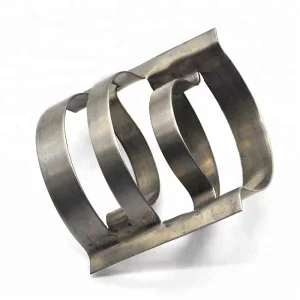
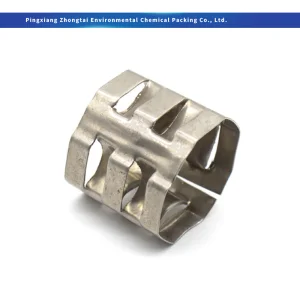
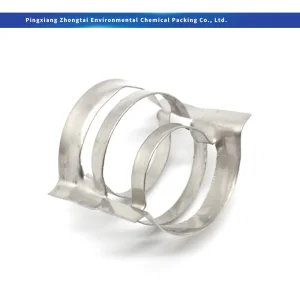
| Metal Conjugated Ring | SS304, SS316L, Carbon Steel | 92% - 96% | 110 - 240 | Up to 400°C | High-vacuum distillation, petrochemical fractionators, refinery revamps. |
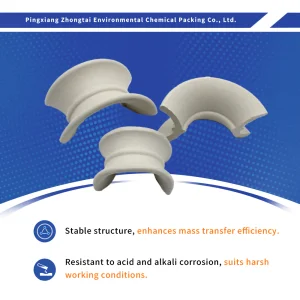
| Ceramic Intalox Saddle | Chemical Porcelain, Alumina | 72% - 78% | 120 - 320 | Up to 1000°C | Sulfuric acid drying/absorption towers, halogen scrubbing, RTO units. |
| Metal VSP Ring (Mellaring) | SS316L, Monel, Titanium | 94% - 97% | 130 - 250 | Up to 450°C | High-flux chemical absorption, air separation, gas stripping columns. |
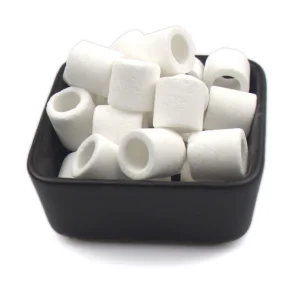
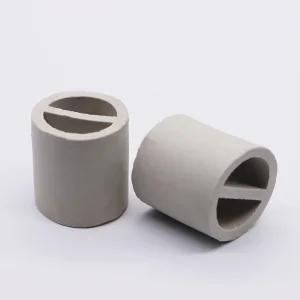
| Ceramic Raschig Ring | Industrial Acid-Resistant Ceramic | 68% - 74% | 80 - 220 | Up to 900°C | Corrosive chemical reactors, catalyst support bed topping, mass transfer. |
| Plastic Super Intalox / Pall | PP, RPP, PE, PVC, PVDF | 88% - 94% | 100 - 210 | -20°C to 140°C | Water treatment, CO2 scrubbing, municipal gas stripping, marine scrubbers. |
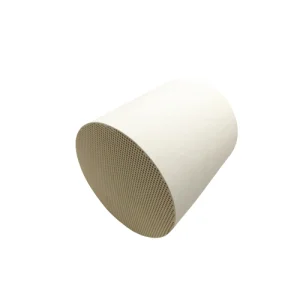
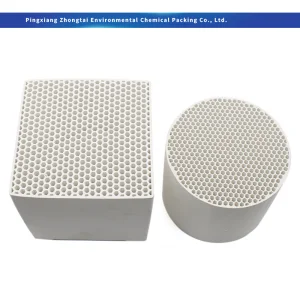
| Honeycomb Ceramic Substrate | Cordierite, Mullite, Alumina | 65% - 80% | 1500 - 3000 | Up to 1350°C | VOC purification, automotive catalyst carrier, RTO thermal energy storage. |
* Note: Data above reflects standardized engineered ranges. Custom wall thicknesses, surface treatments (textured, perforated), and tailored alloys are provided based on operational tower hydraulics.
Located in Pingxiang, Jiangxi Province—the world-renowned capital of industrial ceramics and chemical mass transfer media—our manufacturing ecosystem integrates decades of metallurgical and ceramic heritage with modern Industry 4.0 automation.
Direct ownership and long-term contracts with premium kaolin clay, alumina powder, and stainless steel coil foundries guarantee absolute consistency in chemical composition and raw material pricing stability.
Equipped with high-speed automated progressive die presses for metal rings and computer-controlled tunnel kilns with precise multi-zone firing temperature curves for industrial ceramic elements.
Every batch undergoes stringent testing for bulk density, specific surface area, acid resistance (ASTM C279), crush strength, thermal expansion, and dimensional tolerance checks prior to packaging.
Random packed towers are applied extensively across critical processing operations where mass and heat transfer must be executed with extreme operational reliability:
Used in atmospheric and vacuum crude distillation units (CDU/VDU), demethanizers, deethanizers, and quench towers. Metal VSP and Conjugated rings deliver unmatched throughput and pressure drop resilience.
High-purity ceramic Intalox saddles and Raschig rings are vital in drying towers and SO3 absorption towers, demonstrating near-zero corrosion under hot, concentrated $H_2SO_4$ contact.
Cordierite and mullite honeycomb ceramic substrates serve as regenerative heat storage media in RTO/RCO systems, achieving thermal efficiency exceeding 95% while destroying volatile organic compounds.
Polypropylene and PVDF random packings excel in air stripping, CO2 scrubbing using amine solvents, degasification towers, and municipal drinking water dechlorination systems.
As global process industries shift toward net-zero decarbonization goals and lower operational energy consumption, column internal design is undergoing rapid technological evolution:
Using 3D Computational Fluid Dynamics (CFD), new packing geometries feature micro-textured ribbing and aerodynamic curvature, eliminating micro-channeling of gas flows and maximizing effective liquid wetted area.
Development of silicon carbide (SiC) and zirconia-toughened alumina (ZTA) formulations enables random packings to withstand thermal shocks up to 1400°C and severe abrasive, highly alkaline operational environments.
Tailored low-pressure-drop random packings specifically optimized for carbon capture, utilization, and storage (CCUS) absorber towers using advanced non-aqueous solvents, minimizing energy penalty per ton of CO2 captured.
Ensuring smooth site installation and compliance with international engineering standards is non-negotiable for Tier-1 EPC contractors and refinery buyers. Every shipment manufactured by our factory adheres to rigorous international protocols:
For enterprise procurement officers and project engineers initiating a Request for Quotation (RFQ), providing complete tower operating parameters ensures precise volume calculation, optimal material selection, and accurate lead-time estimates:
Specify internal tower diameter ($mm$), total bed height ($m$), operating pressure ($kPa$), design vapor velocity, and liquid loading rates ($m^3/m^2\cdot h$).
Define fluid stream composition, presence of trace contaminants (e.g., HF acid, free chlorides, caustic concentration), and operating temperature profiles.
Select preferred bulk volume units ($m^3$, tons, cubic feet), bag packaging weights, and required delivery incoterms (FOB Shanghai/Ningbo, CIF, DDP site).
Our mass transfer engineering group provides complete hydraulic rating, pressure drop curves, and packing volume recommendations.
Inert alumina ceramic balls, molecular sieves, and high-purity honeycomb support matrices
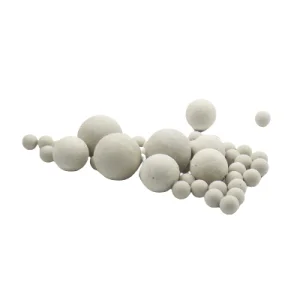
China 17%AL2O3 Inert Alumina Ceramic Ball Manufacturer, Factories
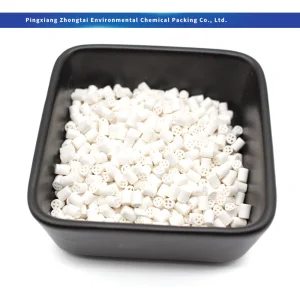
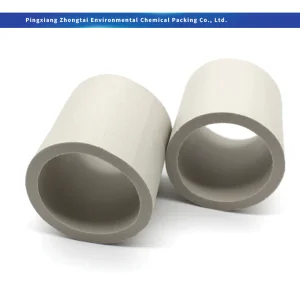
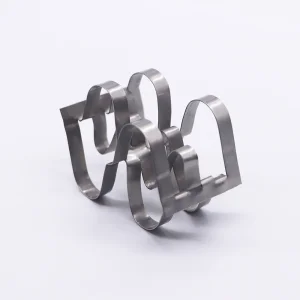
China Metal Super Raschig Ring Tower Packing Factory, Factories
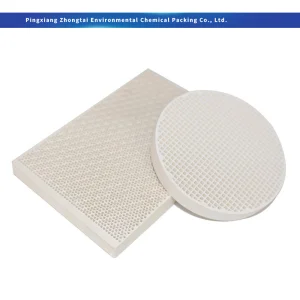
Wholesale 400 CPSI Cordierite Heater Plate | High-Temp Infrared Industrial Heater Supplier, Factory
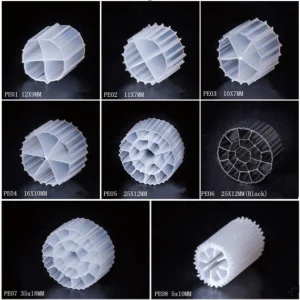
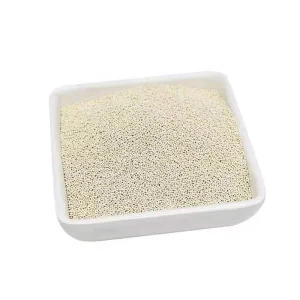
Wholesale PSA Oxygen Generator Concentrator 13X-HP Molecular Sieve Manufacturers, Pricelist
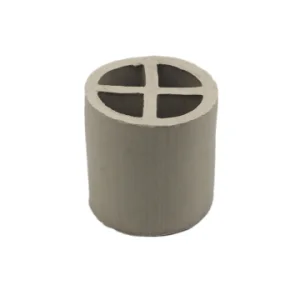
China Ceramic Cross Ring Tower Packing Manufacturer, Manufacturers