Procure high-performance packing media, catalyst substrates, and adsorption compounds manufactured strictly under ISO 9001:2015 process controls.
Pall ring architecture remains the ubiquitous standard in random tower packings, revolutionizing gas-liquid interfacial surface contact since its departure from conventional solid-wall Raschig rings.
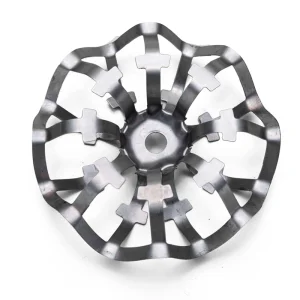
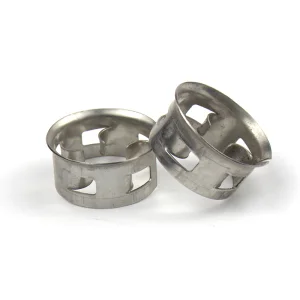
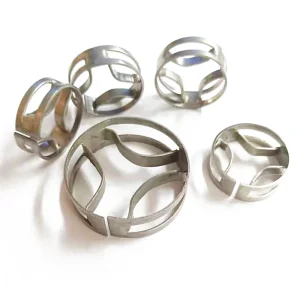
Unlike non-perforated packings, the Pall Ring utilizes an open cylinder design featuring internal bent tongues (fingers) punched outward from its cylindrical walls. This geometric advancement yields a free void fraction routinely exceeding 90% to 96%, ensuring an exceptional liquid-distribution index, minimized wall channeling, and drastically reduced vapor pressure drops across multi-stage fractionation towers.
Chemical processing plants, olefin crack units, and natural gas treating plants continuously balance capital expense against operational throughput. Pall Rings deliver the optimal empirical intersection: robust volumetric loading capacities comparable to premium structured packings at roughly 40–60% lower material and installation costs, offering unprecedented resilience against heavy fouling fluids and particulate sludge.
Situated within the world’s most concentrated chemical mass transfer manufacturing hub in Pingxiang, Jiangxi, our factory leverages unified metallurgy lines, specialized automated stamping presses, high-tonnage polymer extruders, and fully integrated tunnel kilns. This logistical consolidation minimizes raw material supply risks and ensures tight batch-to-batch dimensional tolerances conforming to international engineering EPC standards.
Examine physical mass transfer metrics across our metallic, polymeric, and ceramic Pall Ring variants to match specific hydraulic column sizing requirements.
| Nominal Size (mm / in) | Material Class | Geometric Surface Area (m²/m³) | Void Fraction (%) | Bulk Density (kg/m³) | Nominal Packing Factor (1/m) | Primary Industrial Utility |
|---|---|---|---|---|---|---|
| 16 mm (5/8") | Stainless Steel (304 / 316L) | 340 | 93% | 390 | 230 | High-purity vacuum fine distillation, pharma fractionators |
| 25 mm (1") | SS316L / Hastelloy / CS | 215 | 95% | 280 | 160 | CO₂ stripping columns, sour gas amine scrubbers |
| 38 mm (1.5") | Polypropylene (Virgin PP) | 140 | 90% | 75 | 120 | Corrosive wet gas scrubbing, chlor-alkali brine towers |
| 50 mm (2") | PVDF / PTFE Fluoropolymers | 110 | 92% | 115 | 85 | Halogen stripping, nitric/hydrochloric chemical stripping |
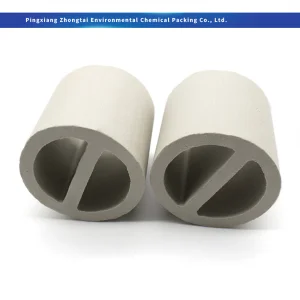
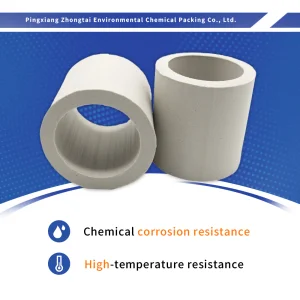
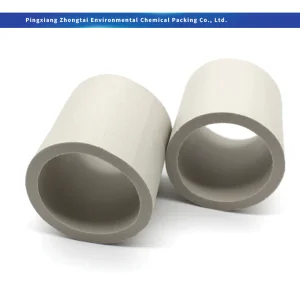
| 76 mm (3") | Industrial Acid Ceramic | 90 | 76% | 580 | 95 | Hot sulfuric acid absorption towers, SO₂/SO₃ converters |
From GCC LNG sweetening facilities to North American municipal VOC scrubbers, explore how targeted Pall Ring implementations drive efficiency.
In point-source carbon capture facilities across Europe and North America utilizing MEA (monoethanolamine) and AMP-PZ solvent loops, our low-ΔP SS316L & Duplex stainless steel Pall Rings minimize reboiler thermal energy penalties while eliminating hydraulic flooding thresholds during fluctuating exhaust loads.
Mining smelter off-gas drying units and high-temperature sulfuric acid towers in Chile and Peru deploy our heavy-wall ceramic and metal alloy packings. These rings endure violent thermal cycling up to 800°C and relentless liquid sulfuric acid mist without matrix softening, stress corrosion cracking, or catastrophic structural collapse.
Municipal and petrochemical industrial wastewater installations throughout Southeast Asia depend on hydrophobic, high-purity virgin Polypropylene (PP) and PVDF Pall Rings. Their open lattice promotes active microbiological biofilm adhesion while safeguarding stripping columns against calcium carbonate scaling and biological slime bridging.
Pioneering chemical engineering demands next-generation surface textures, hybrid composite polymers, and automated CFD-guided fluid flow topologies.
Laser-textured and chemical-pickled metallic surfaces on stainless and nickel alloy Pall Rings, artificially raising dynamic wettability angles to sustain a continuous falling film even under low liquid hydraulic irrigation rates.
Infusing carbon nanotube and nano-graphene matrices into standard polyolefin and fluoropolymer resins, boosting maximum allowable heat deflection temperatures by 35°C without compromising cost efficiency.
Deploying 3D scanning paired with High-Performance Computing (HPC) Computational Fluid Dynamics to optimize tab angle bending and thickness variations, ensuring minimal vortex turbulence behind internal ring tabs.
Implementing factory-level circular recycling streams for scrap metals and industrial re-extrusion, supporting scope 3 decarbonization metrics required by tier-1 global EPCs and international petrochemical conglomerates.
Direct, highly rigorous answers addressing mass transfer design limits, metallurgical compatibility, export packaging, and onsite column loading.
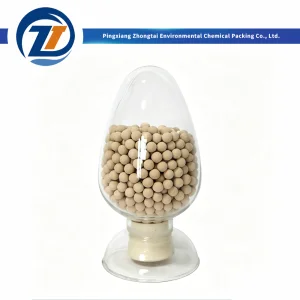
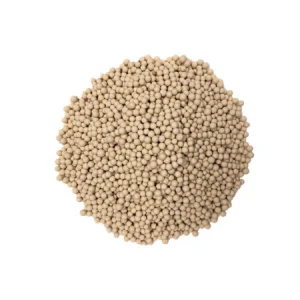
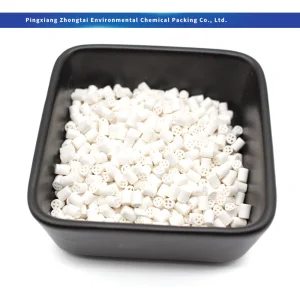
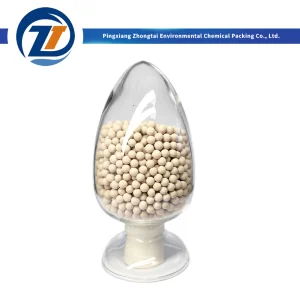
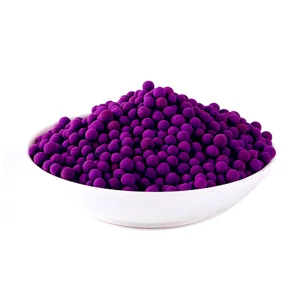
Complete your tower internals bill of materials with our line of catalyst bedding spheres, high-purity alumina, and specialty metallic rings.