
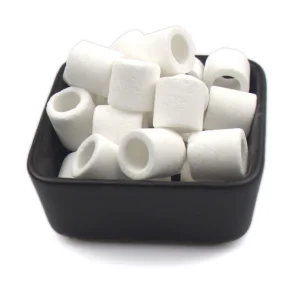
China Aquarium Ceramic Filter Media Ceramic Glass Ring Factory, Quotes
Request Factory Quote
Explore our core engineered chemical ceramic spheres, mass transfer internals, and specialized refinery supports engineered to exceed ASTM and international chemical process specifications.
A comprehensive examination of supply chain structures, consumption vectors, and material dynamics in petrochemical, chemical, and metallurgy sectors.
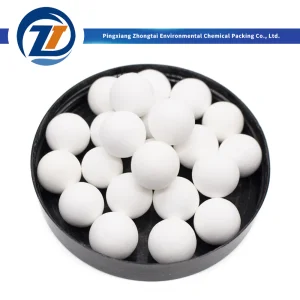
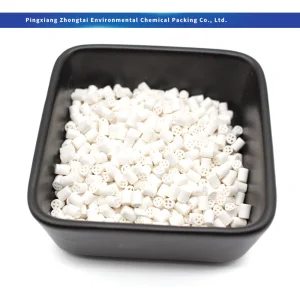
Over 55% of global high-alumina inert ceramic sphere consumption resides in fixed-bed catalytic reactors: Hydrodesulfurization (HDS), Hydrocracking (HCU), Continuous Catalytic Reforming (CCR), and Steam Methane Reforming (SMR). Ceramic spheres act as both physical catalyst bed retaining media and turbulent fluid distributors, preventing hot-spot channel formation and pressure drop spikes.
Microcrystalline alumina spheres boasting specific densities between 3.60 to 3.85 g/cm³ have systematically displaced conventional forged steel and low-grade silica pebbles in high-energy stirred mills. Industries processing lithium iron phosphate (LFP), high-purity titanium dioxide, and specialized ceramics rely on zero-iron contamination and exceptional Vickers hardness (>1100 HV).
Thermal regenerative thermal oxidizers (RTO) and high-temperature blast stove heat exchangers demand high thermal capacity, high shock resistance, and thermal conductivity. Cordierite and mullite composite spheres withstand severe cycle variations between 200°C and 1250°C without microfracturing or structural decrepitation.
Selecting the correct chemical ceramic sphere requires matching alumina phase purity, silica leaching tendencies, and crush loads under high operating stresses.
| Sphere Grade | Al₂O₃ Content (%) | SiO₂ Content (%) | Bulk Density (g/cm³) | Crush Strength (1/2" Sphere) | Primary Industrial Use Case |
|---|---|---|---|---|---|
| Standard Inert Bed Support | 17% – 24% | 70% – 75% | 1.35 – 1.45 | > 5.0 kN / sphere | Secondary reforming, drying beds, bottom hold-down layers |
| Medium-High Alumina | 65% – 75% | 20% – 28% | 1.70 – 1.90 | > 11.0 kN / sphere | High-pressure hydrogenation, severe thermal cycling reactors |
| High-Purity Alumina (92%) | 90% – 93% | 4% – 7% | 2.10 – 2.30 | > 18.0 kN / sphere | Abrasive ball mill grinding, high-temperature gas crackers |
| Ultra-Pure Low-Silica (99.5%) | > 99.2% | < 0.15% | 2.25 – 2.45 | > 24.0 kN / sphere | Ammonia converters, high-temp steam loops (Zero silica volatilization) |
| Porous Biological Filter | 35% – 45% | 45% – 55% | 0.70 – 0.95 | > 2.5 kN / sphere | Nitrification beds, aquarium bio-filtration, municipal aeration |
Under operational conditions involving high-temperature steam exceeding 450°C and 100+ bar pressure (such as in secondary ammonia synthesis reformers and primary shift units), standard silica-bearing ceramic balls react with superheated vapor. This reaction forms volatile orthosilicic acid [Si(OH)₄], which migrates downstream to cooler sections, precipitating as glassy amorphous silica that blankets active catalyst sites and chokes waste-heat boiler tubes. For these services, specifying 99.5% super high-purity alumina with <0.15% silica is mandatory.
Zhongtai engineers synthesize microcrystalline phases with controlled porosity to absorb rapid operational temperature excursions (up to 400°C/hr thermal transitions). Utilizing tunnel kilns with 120-hour gradual firing cycles ensures uniform mullite and alpha-alumina crystallization, virtually eliminating internal residual stresses and catastrophic spalling during reactor shutdown and emergency depressurization.
How Pingxiang Zhongtai is fusing traditional ceramic chemistry with computerized quality verification, machine-vision inspection, and continuous calcination.
Traditional hand-rolled or simple rotary-drum ceramic spheres suffer from internal laminations, air pockets, and uneven center-of-mass distributions. Next-generation production at Zhongtai utilizes high-pressure cold isostatic pressing (CIP) coupled with automated high-velocity granulation mills. This yields ceramic spheres with absolute monolithic core integrity, eliminating bed settling under heavy catalyst weight.
Firing shrinkage, crystal nucleation, and alpha-alumina phase transformation depend critically on microclimates within multi-zone kilns. By introducing distributed infrared pyrometers and neural-network-guided oxygen-trim valves, Zhongtai regulates sintering thermal gradients with precision, guaranteeing repeatable density and near-zero open porosity per production batch.
Engineered media arrays configured to solve fluid dynamics, mass transfer, and thermal degradation issues across core refining and chemical plant units.
Layered grading designs utilize ceramic spheres descending in diameter (from 2" at the base support grid through 1", 1/2", 1/4", to 1/8" capping layers). This progressive sizing prevents fine catalysts from migrating into process piping while balancing interstitial velocity vectors for flat laminar entry across active beds.
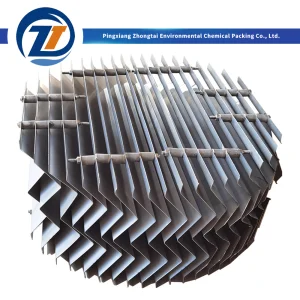
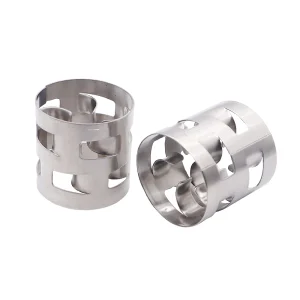
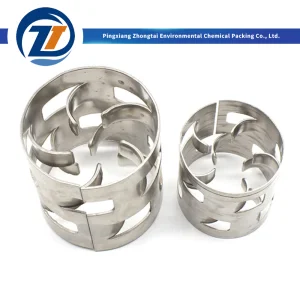
For wet gas sulfuric acid towers, chlorine drying columns, and corrosive stripping facilities, combining acid-resistant ceramic spheres at column support plates with ceramic Intalox saddles and high-efficiency Chevron mist eliminators ensures maximum gas-liquid interfacial contact while eliminating corrosive degradation.
In high-capacity ball mills grinding lithium battery precursor oxides, transitioning from steel balls to 92% high-alumina ceramic spheres avoids chemical fouling while reducing motor amperage by up to 22% due to improved slip coefficients and optimized bulk specific gravity.
Clear, specifications-focused guidance on factory tolerances, testing procedures, packaging protocols, and project lead-times.
Complete your mass transfer, hydraulic fracturing, foundry filtration, and tower internals procurement with our factory-direct wholesale portfolio.
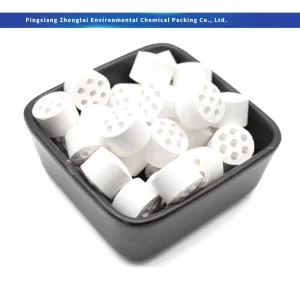
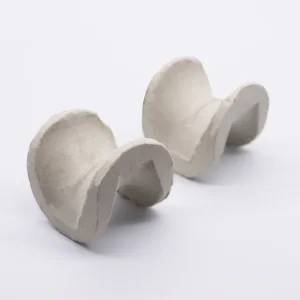
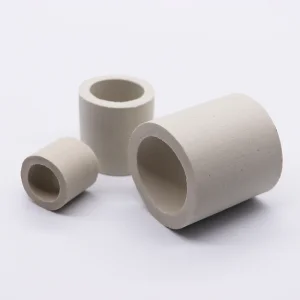
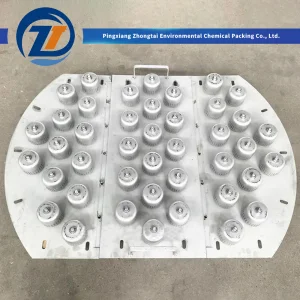
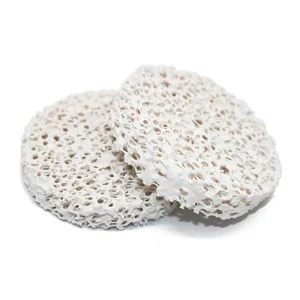
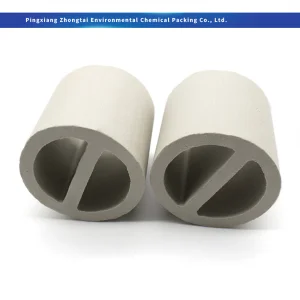
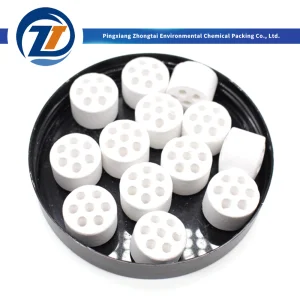
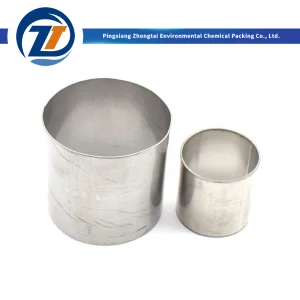
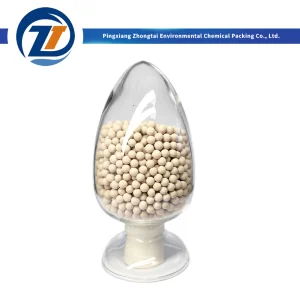
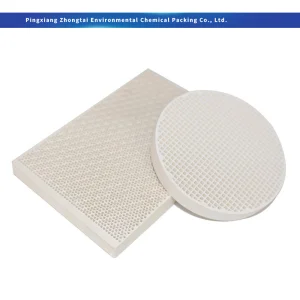
Eliminate trading intermediaries and access precision-controlled ceramic spheres, honeycomb ceramics, molecular sieves, and column internals produced under rigorous batch inspection. Receive certified Mill Test Certificates (MTC), independent lab assays, and custom crating.