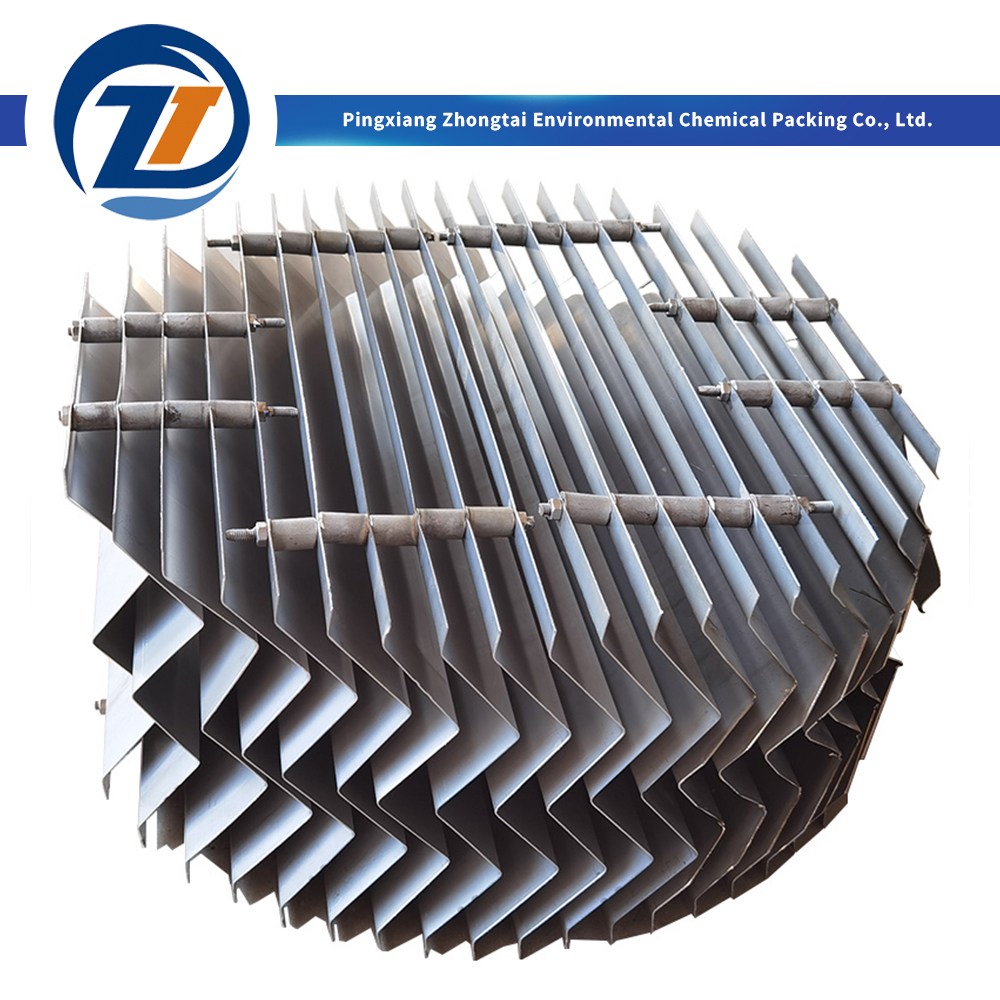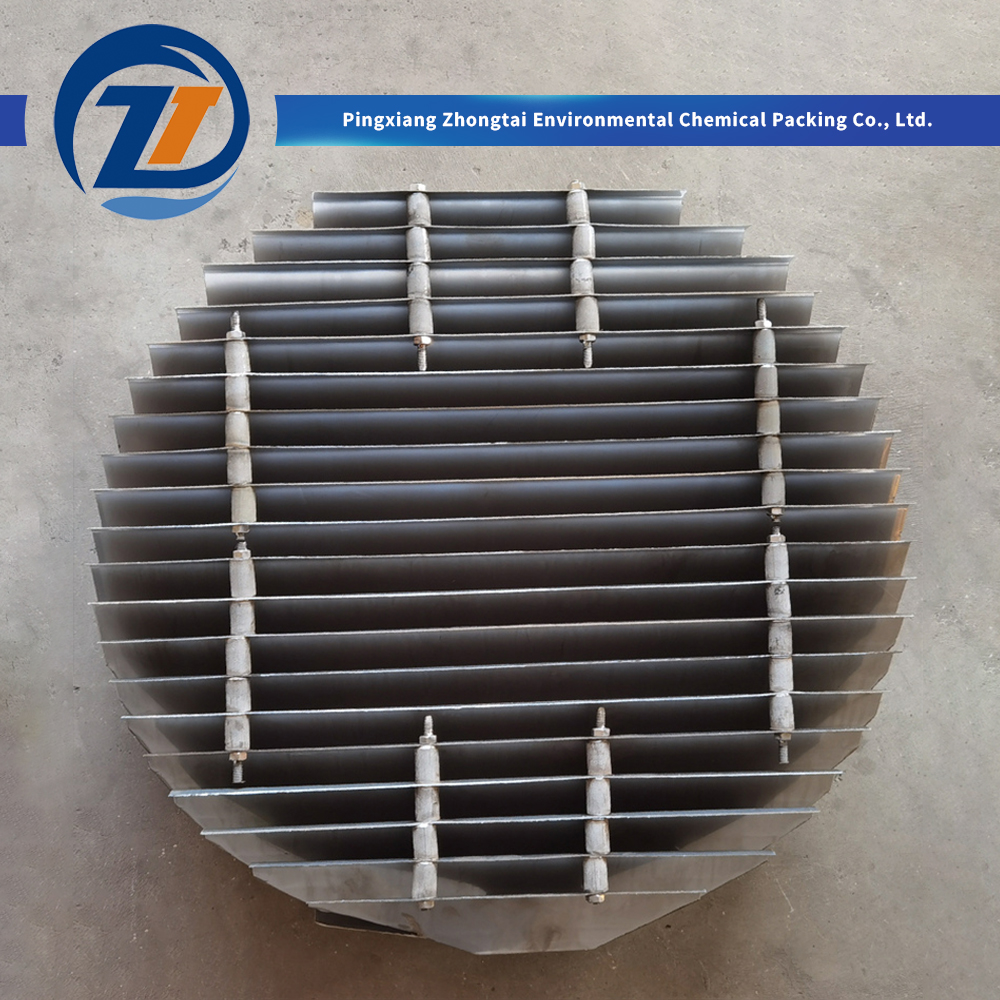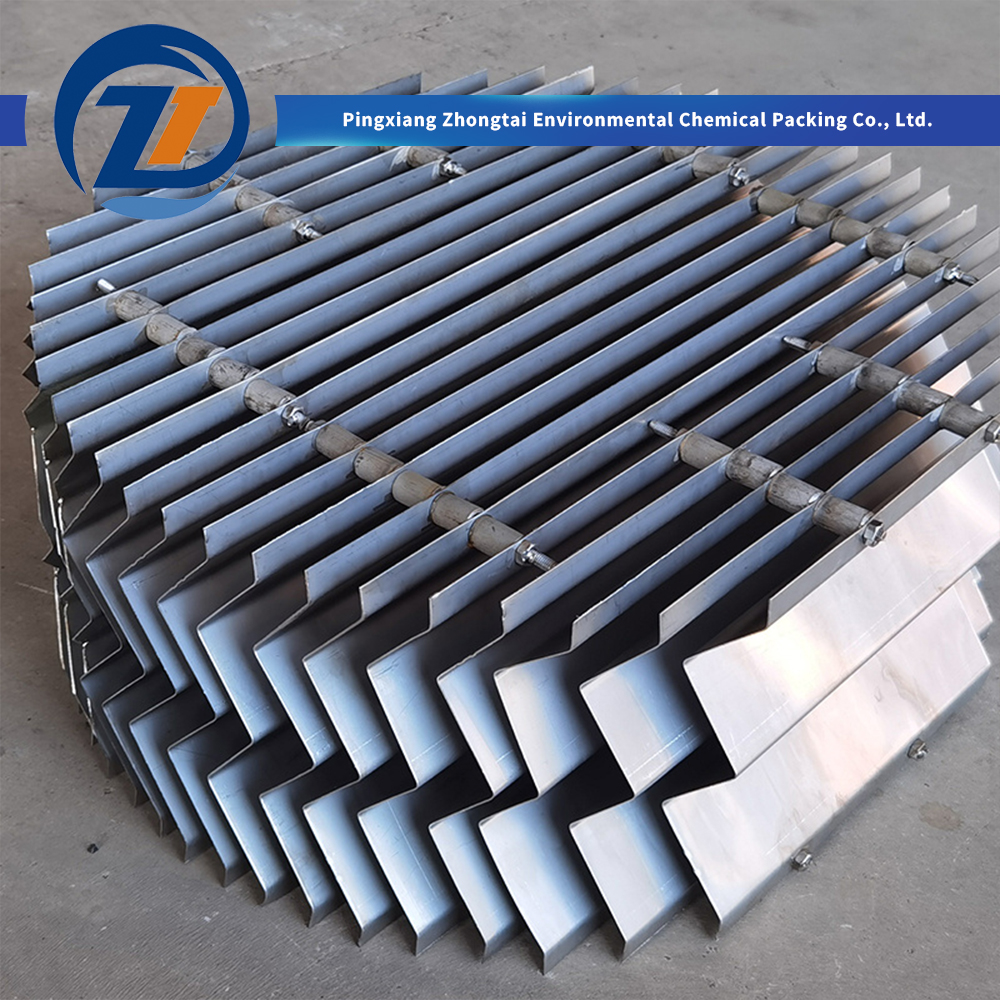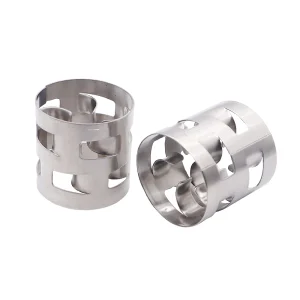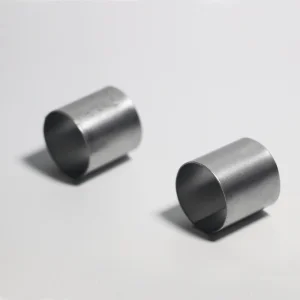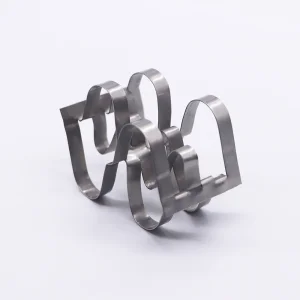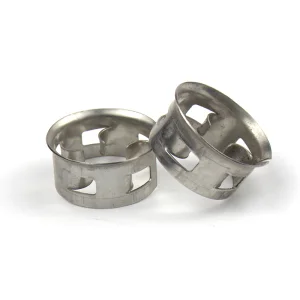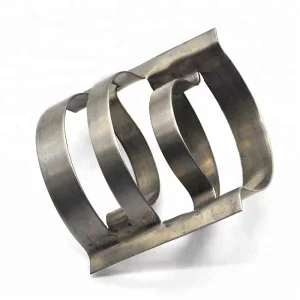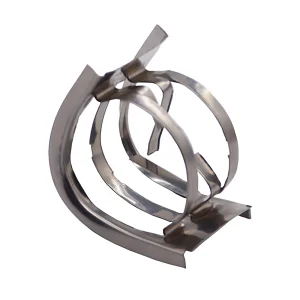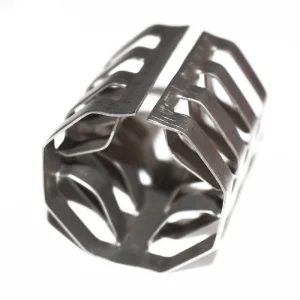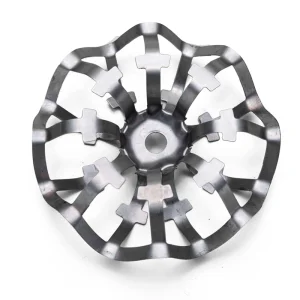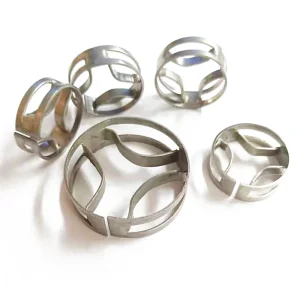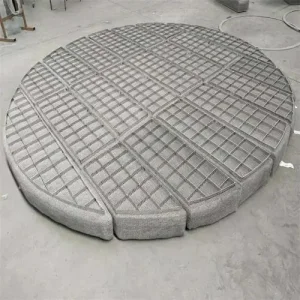
Metal Chevron Mist Eliminator is a heavy-duty gas-liquid separation device designed for demanding industrial applications with high liquid loads, viscous fluids, or solids-laden gas streams. It consists of a series of precisely formed parallel metal vanes arranged in a zigzag pattern, creating multiple abrupt changes in gas flow direction. As the gas stream navigates the tortuous path, entrained droplets—carried by their own momentum—cannot follow the rapid directional changes and impinge directly onto the vane walls. The captured liquid coalesces and drains downward via gravity through integrated liquid collection pockets or hooks on each vane. This inertial separation mechanism makes it uniquely capable of handling liquid loads up to 10 times higher than wire mesh demisters, and its open structure resists clogging in fouling or scaling service.
Product Highlights
⚙
Extremely High Liquid Handling Capacity
Capable of operating at liquid loads exceeding 100 m³/m²·h, making it 5–10 times more tolerant of heavy liquid loads compared to wire mesh mist eliminators.
✔
Anti-Clogging Design
The wide, open vane spacing (20–50mm) prevents blockage from solids, slurries, or scaling fluids, ensuring reliable operation in FGD, wet scrubbing, and fouling-prone processes.
▼
Low Pressure Drop
The streamlined vane geometry creates minimal flow resistance, typically generating only 50–200 Pa pressure drop—significantly lower than knitted mesh pads.
🛡
Robust Single/Double-Pocket Vanes
Each vane is equipped with integrated collection hooks or pockets that capture and channel liquid away, preventing re-entrainment even at high gas velocities.
🔥
Superior Corrosion & Heat Resistance
Fabricated from 304, 316L, duplex stainless steel, or Hastelloy, it withstands aggressive chemicals and temperatures up to 450–600°C.
⚒
Fully Customizable
Vane packs are custom-engineered to any vessel size or shape, with options for horizontal or vertical gas flow, single-stage or two-stage configurations, and complete assemblies with support structures.
Technical Specifications
| Vane Spacing (mm) |
Max Gas Velocity (m/s) |
Pressure Drop (Pa) |
Removal Efficiency (%) |
Typical Droplet Size (μm) |
Liquid Load Capacity (m³/m²·h) |
Suitable Application |
| 20 |
3.0–5.0 |
100–200 |
>99 (≥15μm) |
≥15 |
50–120 |
High efficiency general scrubbing |
| 25 |
3.5–5.5 |
80–180 |
>99 (≥20μm) |
≥20 |
60–140 |
Chemical scrubbing, acid plants |
| 30 |
4.0–6.0 |
60–150 |
>99 (≥25μm) |
≥25 |
70–160 |
FGD, high liquid load scrubbing |
| 40 |
4.5–6.5 |
50–120 |
>99 (≥30μm) |
≥30 |
80–180 |
Evaporation, heavy fouling service |
| 50 |
5.0–7.0 |
40–100 |
>98 (≥40μm) |
≥40 |
100–200+ |
Extreme fouling, highest liquid load |
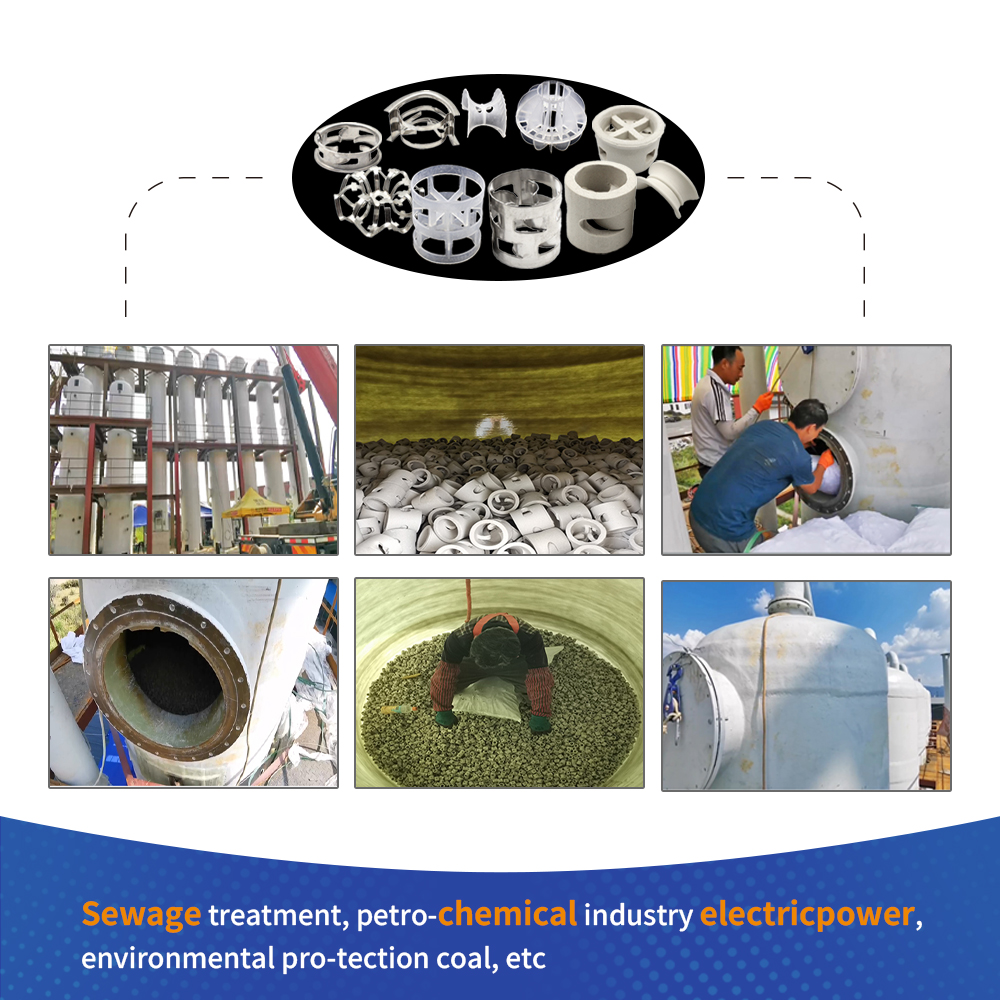
Product Overview & Applications
Frequently Asked Questions (FAQ)
How does a Metal Chevron Mist Eliminator differ from a wire mesh mist eliminator?
Chevron mist eliminators utilize inertial impaction across zigzag vane profiles with wide spacing (20–50mm), allowing them to handle significantly higher liquid loads and prevent clogging in dirty or scaling services where wire mesh demisters typically plug quickly.
What droplet sizes can the Chevron Mist Eliminator effectively capture?
Depending on vane spacing and gas velocity, it achieves over 98% to 99% separation efficiency for entrained liquid droplets ranging from ≥15 μm to ≥40 μm.
What material options are available for harsh chemical environments?
Units are available in various metals including 304 and 316L stainless steel, duplex stainless steel, and high-nickel alloys like Hastelloy, capable of handling highly corrosive conditions and temperatures up to 450–600°C.
Can this mist eliminator be installed in both horizontal and vertical flow vessels?
Yes. Vane profiles and internal collection pockets are custom-engineered for both vertical (upflow) and horizontal gas flow configurations to ensure efficient drainage without re-entrainment.
How does this design help maintain low pressure drop?
The streamlined chevron profile offers open flow paths with low aerodynamic drag, maintaining operational pressure drops between 50 Pa and 200 Pa, which reduces fan or compressor energy demands.