Direct-from-factory catalog items specified across high-temperature gas phase contactors, hydrotreating beds, and thermal recovery loops.
Industrial reactors, multi-stage distillation columns, and ultra-fine nanomaterial wet mills require precise tribological and chemical media stability. Explore how monolithic ceramic spheres safeguard multi-million-dollar catalyst beds.
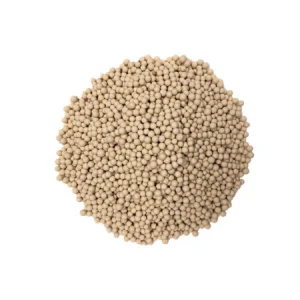
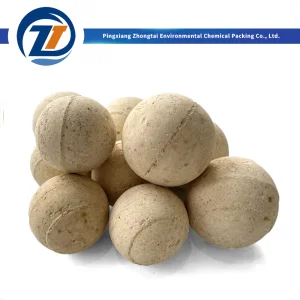
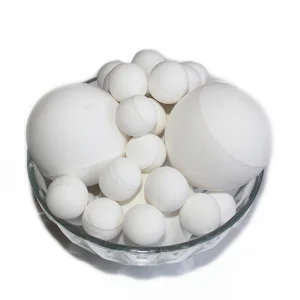
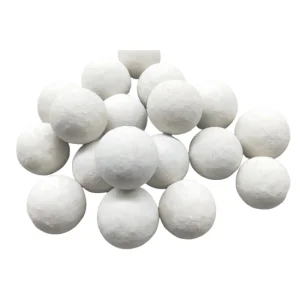
High-density alumina ceramic beads (from 17% up to 99% Al₂O₃) form a calibrated hold-down top layer over active catalyst beds. This anchors sensitive reforming, desulfurization, and cracked hydrocarbon catalyst extrudates against massive upward or fluctuating process gas velocities, preventing irreversible fluidization attrition and fining.
Graded ceramic bead layer designs (progressing smoothly from 50mm, 25mm, 13mm down to 3mm or 6mm beads) create an optimal hydrodynamic interstitial voidage profile. This dampens turbulent flow vectors, converts localized channel jets into laminar planar fluid fronts, and guarantees uniform space velocity across 100% of the active catalyst volume.
Engineered microcrystalline cordierite-mullite and sintered corundum ceramic beads withstand severe cyclic thermal shocks from 20°C ambient start-up to operational spikes exceeding 1400°C without micro-fracturing, structural dusting, or loss of radial compressive crush resistance in harsh reducing atmospheres.
Evaluating supply chain shifts, sustainability pressures, and high-purity processing imperatives across the Americas, Europe, Middle East, and Asia-Pacific.
Global environmental mandates (such as Euro VI, IMO 2020 low-sulfur bunkering, and EPA Tier 3) have compelled petrochemical refineries to operate ultra-deep hydrodesulfurization (HDS) and hydrocracking reactors under extreme hydrogen partial pressures (up to 180 bar). These severe operating regimes eliminate the viability of second-tier ceramic balls, escalating demand for low-silica (<0.2% SiO₂) high-purity alpha-alumina beads that permanently prevent volatile silica volatilization and downstream zeolitic catalyst poisoning.
The explosive ramp-up in electric vehicle (EV) battery manufacturing demands sub-micron grinding of Lithium Iron Phosphate (LFP), Nickel Manganese Cobalt (NMC), and synthetic silicon-graphite matrices. Wholesale ceramic micro-beads and micro-crystalline zirconia-stabilized alumina beads (0.1mm - 2.0mm) have superseded metallic media, eliminating iron ion contamination that would otherwise trigger internal battery short circuits and catastrophic thermal runaway.
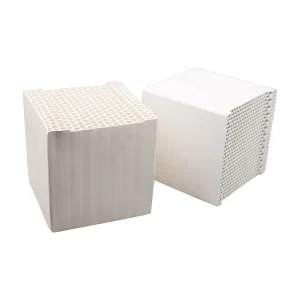
Stricter industrial emissions enforcement in chemical clusters worldwide requires regenerative thermal oxidizers (RTO) and regenerative catalytic oxidizers (RCO) with thermal energy efficiencies exceeding 95%. High-density heat storage ceramic balls and refractory honeycomb matrices act as the critical heat sink, recapturing high-enthalpy thermal energy and cutting natural gas consumption by millions of BTU per operating facility.
China's Pingxiang ceramic industrial cluster provides unified access to high-purity kaolin clay, microfine calcined bauxite, advanced isostatic presses, and computerized multi-chamber tunnel kilns. This physical integration within a 30-kilometer logistics radius creates structural cost and lead-time advantages that allow Pingxiang Zhongtai to guarantee international engineering delivery timelines within 10 to 20 days.
Engineers must rigorously cross-reference mechanical crush strength, chemical leaching rates, and thermal endurance prior to issuing procurement specifications.
| Material Category | Al₂O₃ Content (%) | SiO₂ Content (%) | Bulk Density (g/cm³) | Crush Strength (kN/particle, 1/2") | Water Absorption (%) | Operational Temp Max | Primary Industrial Use |
|---|---|---|---|---|---|---|---|
| Standard Inert Ceramic | 17 - 23% | 70 - 75% | 1.35 - 1.45 | > 5.5 kN | < 2.5% | 1100 °C | HDS & Reforming Hold-Down |
| Medium-Alumina Support | 23 - 35% | 60 - 68% | 1.40 - 1.55 | > 8.0 kN | < 2.0% | 1200 °C | Deep Bed Hydrocracking |
| High-Alumina Grinding Media | 90 - 92% | < 6.5% | 3.60 - 3.70 | > 18.0 kN | < 0.02% | 1500 °C | Ball Mill Nano Dispersions |
| Super High Alpha-Alumina | ≥ 99.2% | < 0.15% | 3.80 - 3.90 | > 25.0 kN | < 0.01% | 1650 °C | Ammonia / Steam Reforming |
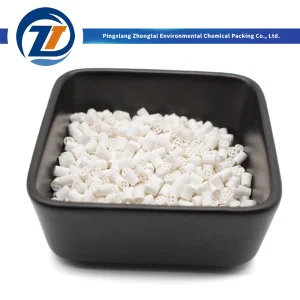
| Cordierite Heat Storage Ball | 35 - 45% | 45 - 55% | 1.20 - 1.35 | > 4.0 kN | < 3.0% | 1300 °C | RTO Thermal Regenerators |
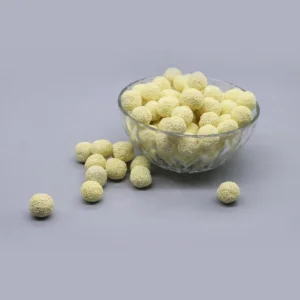
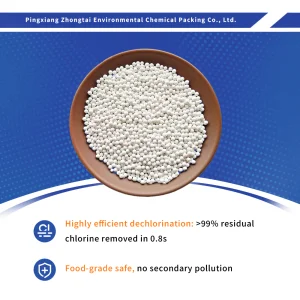
| Food-Grade Dechlorination Ball | Mineral Matrix | CaSO₃ ≥ 68% | 1.25 - 1.30 | > 2.5 kN | Porous Microstructure | 100 °C | Municipal Water Treatment |
Examining how wholesale ceramic beads and structured packing perform across distinct plant unit operations under high-consequence duty.
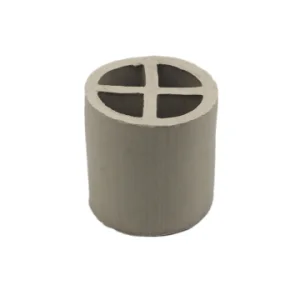
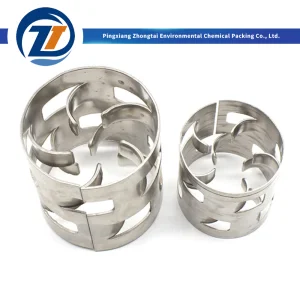
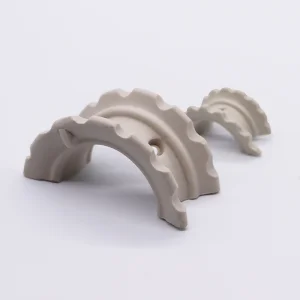
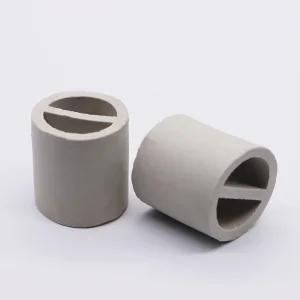
In double absorption (DCDA) sulfuric acid towers operating at 98.5% H₂SO₄ concentrations and 120°C, metallic internals fail rapidly. Zhongtai's Ceramic Super Intalox Saddles and Cross Rings exhibit acid resistance greater than 99.8% in boiling sulfuric, nitric, and hydrochloric acids, guaranteeing 10+ years of continuous operating lifecycle without matrix crumbling.
In paint, pigment, and chemical pesticide formulations requiring particle fineness down to D90 < 2 microns, 92% high-alumina micro beads deliver high impact kinetic energy transfer. Their isotropic spherical sphericity (>0.98) minimizes inner mill sleeve liner wear and cuts attrition loss to less than 0.01% per operational hour.
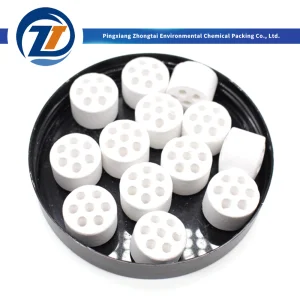
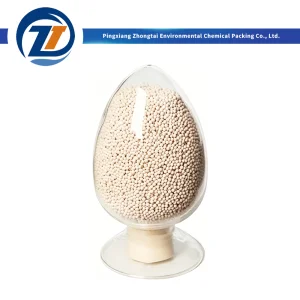
Pressure Swing Adsorption units extracting medical-grade oxygen or removing moisture from pipeline natural gas require 13X-APG and 4A molecular sieve desiccants. Inert ceramic beads loaded above and below the adsorbent bed absorb high-frequency valve pulsation cycles, shielding zeolite pellets from crushing and dusting.
In high-integrity aluminum automotive engine casting and aerospace foundry lines, ceramic foam filters and silicon carbide micro-porous beads trap sub-millimeter non-metallic slag inclusions, eliminating cast micro-porosity and lowering casting scrap rates by over 14% across high-volume production runs.
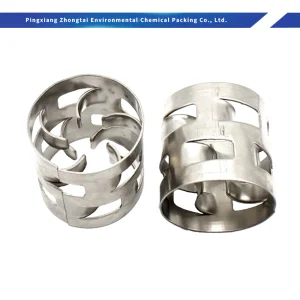
For municipal leachate, sour water strippers, and biological odor abatement, plastic Tri-Pak and Pall Rings fabricated from virgin Polypropylene (PP) and PVDF prevent nesting, guarantee open gas-liquid contacting area (>90% free void space), and eradicate microbial bio-film clogging.
Deep unconventional shale oil and gas reservoirs operating under closure pressures above 10,000 psi require ultra-high strength sintered bauxite ceramic proppants. These round ceramic beads sustain subterranean fracture aperture pathways, boosting barrel-of-oil equivalent (BOE) recovery rates over multiple years.
International process buyers require rigorous certification, third-party laboratory audits, and turnkey export logistics. Here is how Zhongtai maintains process integrity.
Every commercial production batch undergoes verified laboratory analysis conforming to ASTM C517 (Inert Ceramic Support Media) and ASTM C133 (Cold Crushing Strength). Raw slurry elemental composition is validated using X-Ray Fluorescence (XRF) to guarantee alumina purity down to 0.01% tolerances.
Zhongtai hosts customer and third-party technical surveillance audits at our Pingxiang Hi-Tech Industry Park factory. Following rigorous on-site facility audits by prominent Korean chemical consortiums in July 2018 and South American EPC partners, our batch QA/QC records have consistently satisfied ISO 9001:2015 traceability criteria.
Media integrity during ocean transit is paramount. We pack ceramic beads in multi-wall moisture-barrier 25kg PP bags, 1000kg/1200kg heavy-duty UV-stabilized jumbo ton-bags, or steel drums securely palletized on ISPM-15 compliant fumigated wooden pallets or custom steel crates with anti-abrasion shrink wrapping.
Leading the technological transition toward zero-carbon kiln firings, nanostructured grain boundaries, and circular ceramic reclamation.
Implementation of dry-bag cold isostatic pressing (CIP) up to 250 MPa across micro-bead production lines. This replaces traditional roll-granulation methods, achieving zero internal micro-void density and enhancing single-particle cold crush strength by an additional 22%.
Pilot retrofitting of high-temperature tunnel kilns to run on hydrogen-enriched clean gas blends. This initiative will diminish the embedded Scope 1 carbon footprint per metric ton of sintered ceramic media by 40%, supporting global chemical corporations' net-zero ESG targets.
Inline optical machine vision integration on wholesale sorting lines. AI algorithms evaluate up to 1,200 beads per minute for diameter eccentricity, surface crack propagation, and ovality deviation down to ±0.05mm thresholds, virtually eliminating field sieve failures.
Specification-level answers addressing chemical resistance, crush parameters, sizing selection, and international sourcing logistics.
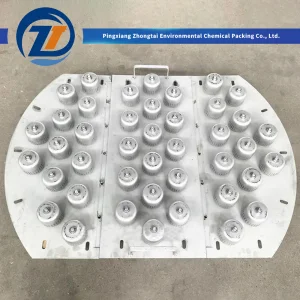
Refining trays, high-purity inert corundum balls, honeycombs, and selective molecular sieves engineered for stringent industrial process targets.
Over 20 continuous years supplying world-scale petrochemical complexes, gas processors, and environmental equipment constructors across 50+ countries.
Founded in Pingxiang City, Jiangxi Province, establishing advanced calcination kilns and mechanical forming lines for inert ceramic balls and acid-resistant chemical packing.
Major Korean petrochemical consortium performed exhaustive on-site manufacturing, ISO testing, and QA audits, certifying Zhongtai for long-term catalyst support supply contracts.
Finalized strategic OEM distribution agreements with South American mining and refinery engineering contractors during the Canton Fair, expanding RTO honeycomb ceramic exports.
Exhibited core mass transfer and ceramic bead media at the China International E-commerce Industry Expo and Indonesia Product Selection Exhibition, cementing Southeast Asian supply chains.
Connect directly with our chemical engineering team in Pingxiang. We formulate custom alumina fractions, calculate column loading schemes, and prepare formal tenders with full Mill Test Certificates.
