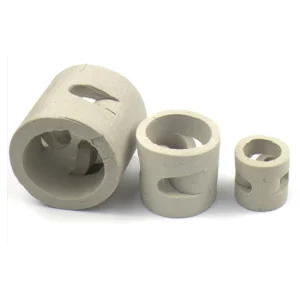
Procure certified industrial-grade ceramic and alloy equipment engineered under ISO 9001:2015 strict quality control protocols for continuous operating uptime.
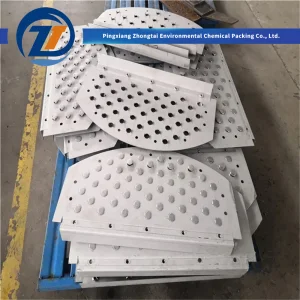
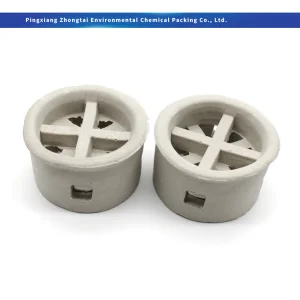
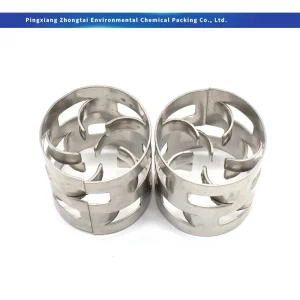
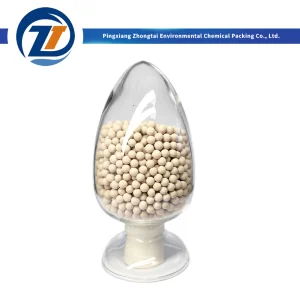
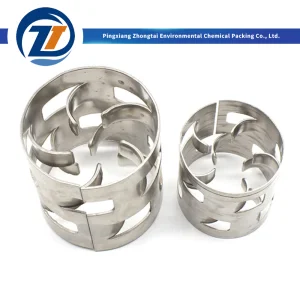
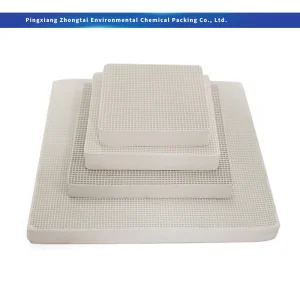
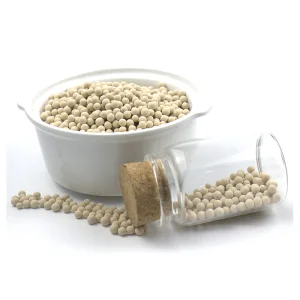
In modern industrial synthesis, fixed-bed reactors, and ultra-fine comminution operations, ceramic balls serve as the indispensable backbone for process thermodynamics, catalyst preservation, and fluid dynamics.
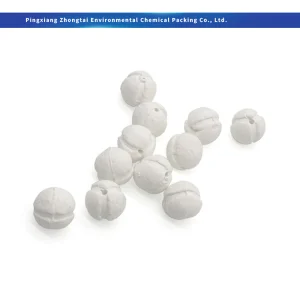
Over 68% of global inert alumina ball consumption resides in catalytic hydrotreating, hydrocracking, and catalytic reforming units across downstream petroleum refineries. Inert spheres act as critical structural top and bottom layers, deflecting turbulent hydrodynamic shear forces, filtering heavy metallic particulate scale, and sustaining structural integrity under operating pressures exceeding 15 MPa and temperatures up to 1350°C.
In world-scale ammonia and methanol plants, secondary reforming reactors demand ultra-pure, low-silica (<0.1% SiO₂) ceramic support media. At process temperatures exceeding 1200°C alongside high-pressure steam, conventional silica leachates vaporize downstream to coat waste heat boiler tubes and foul methanator catalysts, making certified 99% alpha-alumina balls an operational requirement.
Microcrystalline 92% and 95% Al₂O₃ grinding balls have supplanted traditional forged steel balls across high-value battery cathode precursor processing, electronic ceramics, and zirconia slurry manufacturing. Delivering wear rates lower than 0.005 g/kg·h, these high-density media eradicate iron contamination and maximize power-to-surface grinding kinetics in stirred media detritors.
Inert ceramic spheres must satisfy rigorous international metallurgical and mechanical standards, including ASTM C515, ASTM C279, and HG/T 3683-2014, to eliminate reactor channel channelling and bed collapse risks.
| Alumina Grade | Al₂O₃ (%) | SiO₂ (%) | Bulk Density (g/cm³) | Water Absorption (%) | Crush Strength (Ø25mm) | Primary Industrial Service |
|---|---|---|---|---|---|---|
| Standard Inert Support | 17% – 24% | 70% – 76% | 1.35 – 1.45 | < 3.0 | > 5.0 kN | General petrochemical distillation column hold-downs, air separation dryers |
| Medium-High Alumina | 25% – 32% | 60% – 68% | 1.45 – 1.55 | < 2.5 | > 7.5 kN | Hydrodesulfurization (HDS), fixed-bed gas absorbers, chemical towers |
| High Alumina Inert | 65% – 75% | 20% – 28% | 1.60 – 1.75 | < 1.5 | > 12.0 kN | High-pressure hydrogenation, ethylene cracking fractionators, shift reactors |
| High-Purity Corundum | 90% – 95% | < 5.0% | 1.90 – 2.05 | < 1.0 | > 18.0 kN | Partial oxidation units, ammonia converters, high-temperature synthesis gas |
| Super High Purity (Low Si) | ≥ 99.2% | ≤ 0.10% | 2.10 – 2.30 | < 0.5 | > 22.0 kN | Secondary reforming furnaces, steam-methane reformers, pure hydrogen trains |
| Porous / Perforated Spheres | 17% – 99% | Custom Balance | 1.15 – 1.35 | Variable (Engineered) | > 4.0 kN | High superficial velocity reactors requiring reduced pressure drop (ΔP) |
When operating temperatures exceed 1000°C under steam partial pressures above 3.0 MPa, refractory silicates experience volatile decomposition into silicic acid (Si(OH)₄). This vapor deposits onto downstream low-temperature zones, coating waste-heat boiler tube walls, driving premature deactivation of methanation catalysts, and producing severe thermal penalties. Specifying verified 99% super-purity inert balls with SiO₂ below 0.1% eliminates downtime-inducing silica deposition risks.
A catalyst support bed is not merely an inert resting base; it is an engineered fluid distributor governed by the Ergun Equation, designed to eliminate radial maldistribution while absorbing differential pressure spikes.
Reactor beds frequently fail due to catalyst migration into bottom collection grids or top-layer fluidization caused by incoming fluid velocity. Process best practices require a stratified support structure based on the rule-of-four dimensional transition:
For chemical operators approaching hydraulic flooding thresholds, custom perforated (holey) ceramic balls provide lower drag alternatives. Engineered with internal multi-hole conduits, perforated spheres achieve:
From deep hydrodesulfurization along the US Gulf Coast to high-abrasion lithium carbonate milling across the South American Lithium Triangle, localized conditions govern material selection.
Operated in severe hydrocracker environments processing heavy gas oils containing up to 3.5% sulfur. Support spheres encounter intense hydrogen partial pressure alongside ammonium bisulfide salts. High-purity 23% and 99% alumina spheres prevent thermal degradation, eliminating bed crusting over 48-month uninterrupted production cycles.
Advanced steam methane reformers converting bio-methane require super-low-silica inert media. With European Net-Zero mandates penalizing efficiency losses, our high-density corundum balls eliminate downstream boiler scale formation, maintaining targeted heat recovery coefficients across high-flux shell-and-tube exchangers.
Processing battery-grade lithium iron phosphate (LFP) and cathode active precursors demands sub-micron grinding media without trace-element iron or chrome contamination. Sintered 95% microcrystalline alumina balls deliver abrasion resistance under 0.003%, protecting battery charge capacities and electrical purity.
In double absorption sulfur-burning sulfuric acid plants across South Asia and North Africa, intermediate drying towers subject ceramic packings and support balls to 98% boiling sulfuric acid. Our acid-resistant ceramic formulations endure decades of acid immersion without spalling, mass loss, or structural dissolution.
Deep cryogenic liquefied natural gas processing uses molecular sieve desiccant beds requiring robust bed topping. Inert ceramic spheres prevent turbulent inlet gas surges from crushing zeolite crystal adsorbents during high-frequency pressure swing cycling, preventing bed attrition and downstream valve jamming.
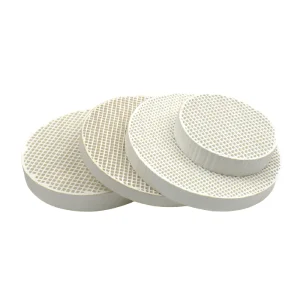
Regenerative Thermal Oxidizers (RTO) deployed in automotive coating lines utilize dense ceramic spheres and honeycomb blocks for thermal regeneration. Enduring temperature shifts from 200°C to 1100°C within 90-second reversal valves, these media supply 95%+ thermal energy recovery without thermal shock spalling.
The manufacturing transition from conventional roll-forming techniques to cold isostatic pressing (CIP) and digitally monitored tunnel kilns establishes new durability benchmarks across harsh reactor systems.
Roll-forming ceramics can yield internal micro-voids and density variations prone to stress fractures under thermal cycling. Automated cold isostatic pressing subjects raw formulations to uniform 200 MPa omnidirectional hydraulic pressure. This eliminates inner porosity, producing a dense microcrystalline corundum structure with crush strengths 40% higher than conventional spheres.
Adding sub-micron yttria (Y₂O₃) and magnesia (MgO) crystallite stabilizers inhibits abnormal grain boundary coarsening during firing at 1600°C. Maintaining average crystal grain sizes below 3.5 microns strengthens intergranular toughness, preventing brittle cleavage fractures during rapid reactor depressurization cycles.
Our long-range sustainability roadmap integrates low-NOx oxy-fuel and electric kiln technology into the Pingxiang manufacturing base. Transitioning from traditional gas-fired tunnel kilns cuts Scope 1 manufacturing carbon footprints by 35%, assisting multinational chemical operators with corporate Scope 3 supply chain reduction requirements.
Every production run undergoes traceable physical and metallurgical batch testing, backed by factory test certificates and third-party validation (SGS, BV, TÜV) prior to export dispatch.
Automated hydraulic compressive load frames test randomly sampled spheres across every metric ton batch. Spheres must meet minimum compressive standards before lot release.
Vacuum saturation verification confirms zero open capillary porosity (typically <0.5%), preventing sulfur-feed absorption and internal hydraulic expansion cracking.
Sample lots undergo 48 hours of boiling in 70% sulfuric acid and 20% sodium hydroxide (ASTM C279), enforcing weight losses strictly below 0.5% mass thresholds.
Subjected to rapid heating to 850°C followed by instant quenching in 20°C water for 10 consecutive cycles, confirming zero micro-crack development or acoustic resonance degradation.
Expert clarifications regarding sizing calculations, chemical resistance profiles, transport stability, and vessel loading procedures.
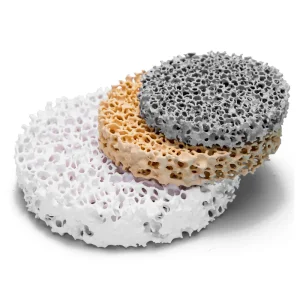
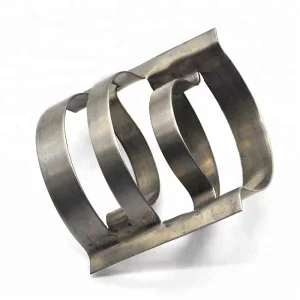
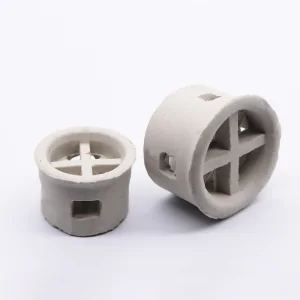
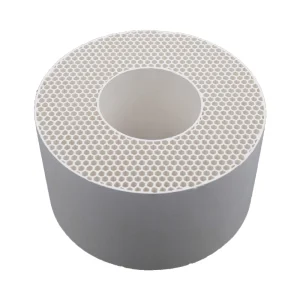
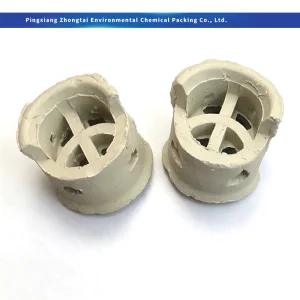
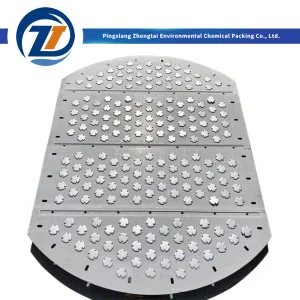
Explore our certified tower packings, molecular sieves, and honeycomb substrates engineered for heavy industrial distillation, acid absorption, and emission control.
Connect directly with our Pingxiang chemical engineering team to evaluate reactor bed loading schemes, pressure drop calculations, or request custom pilot testing samples.
Collaborate with chemical engineering specialists to establish custom bed grading, void fraction optimization, and silica mitigation strategies tailored to your exact vessel conditions.
Request physical evaluation samples, complete chemical assay analyses, and ASTM/HG lot certificates for plant quality auditing before confirming full production orders.
Leverage our extensive Pingxiang warehouse stock for urgent plant maintenance, shutdown revamps, and unplanned catalyst changeouts with rapid container dispatch.