1 / 4

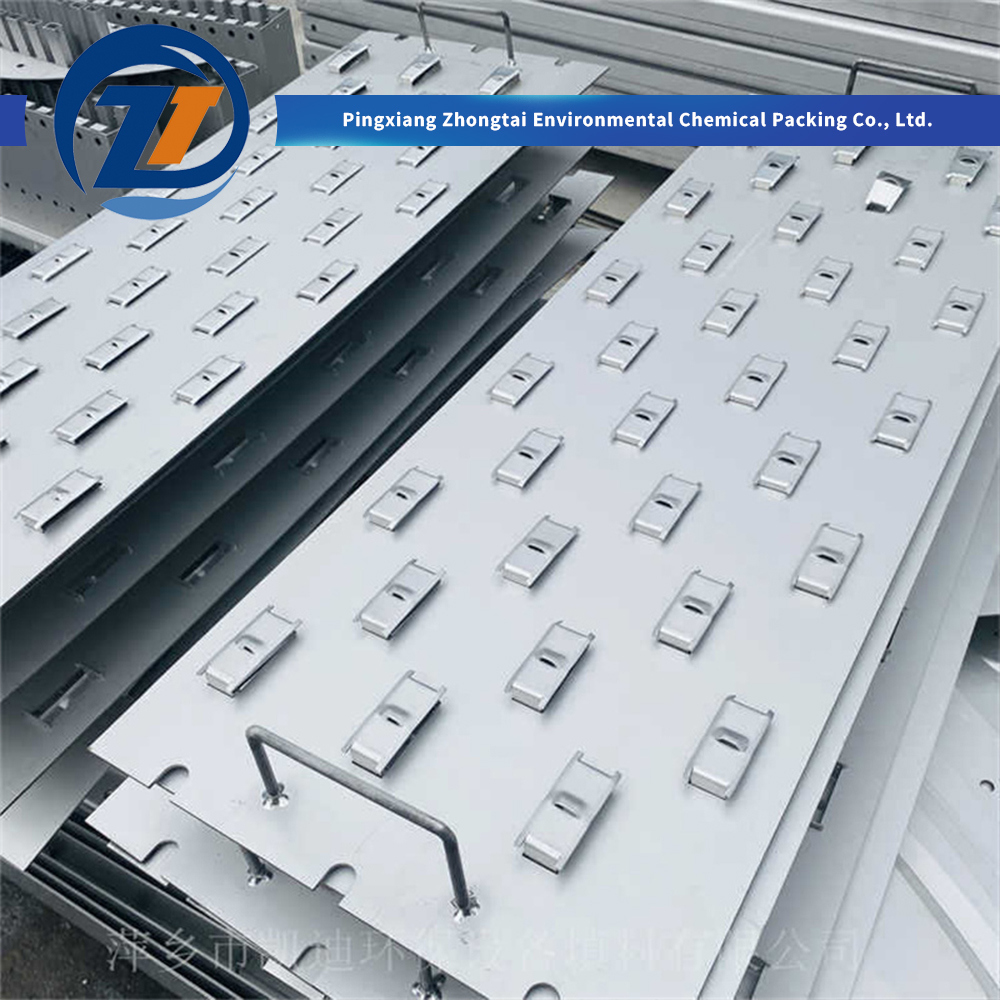
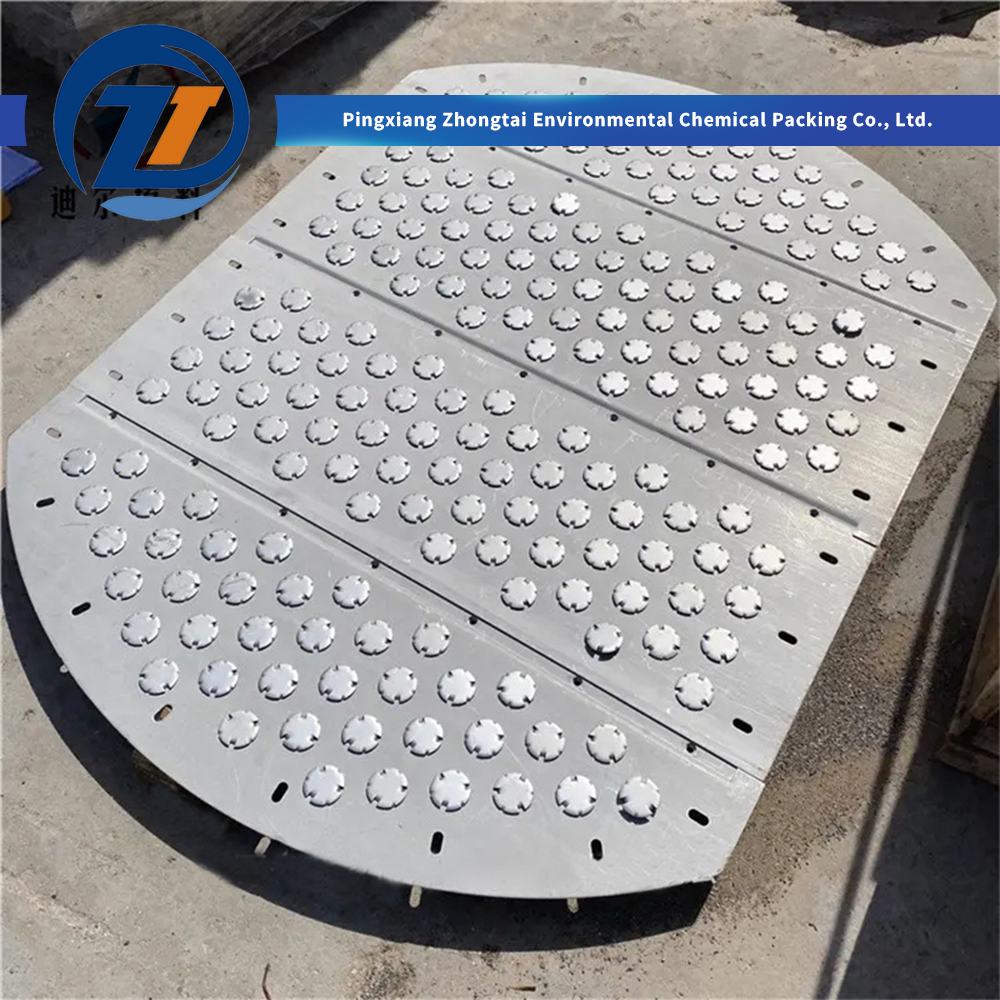
Self-adjusting valves maintain excellent tray efficiency from 30% to 110% of design load, achieving a turndown ratio of up to 3:1 – far beyond that of fixed sieve trays.
At low vapor loads, valves remain partially closed, maintaining sufficient pressure drop to prevent liquid weeping and ensuring stable gas-liquid dispersion across the entire tray deck.
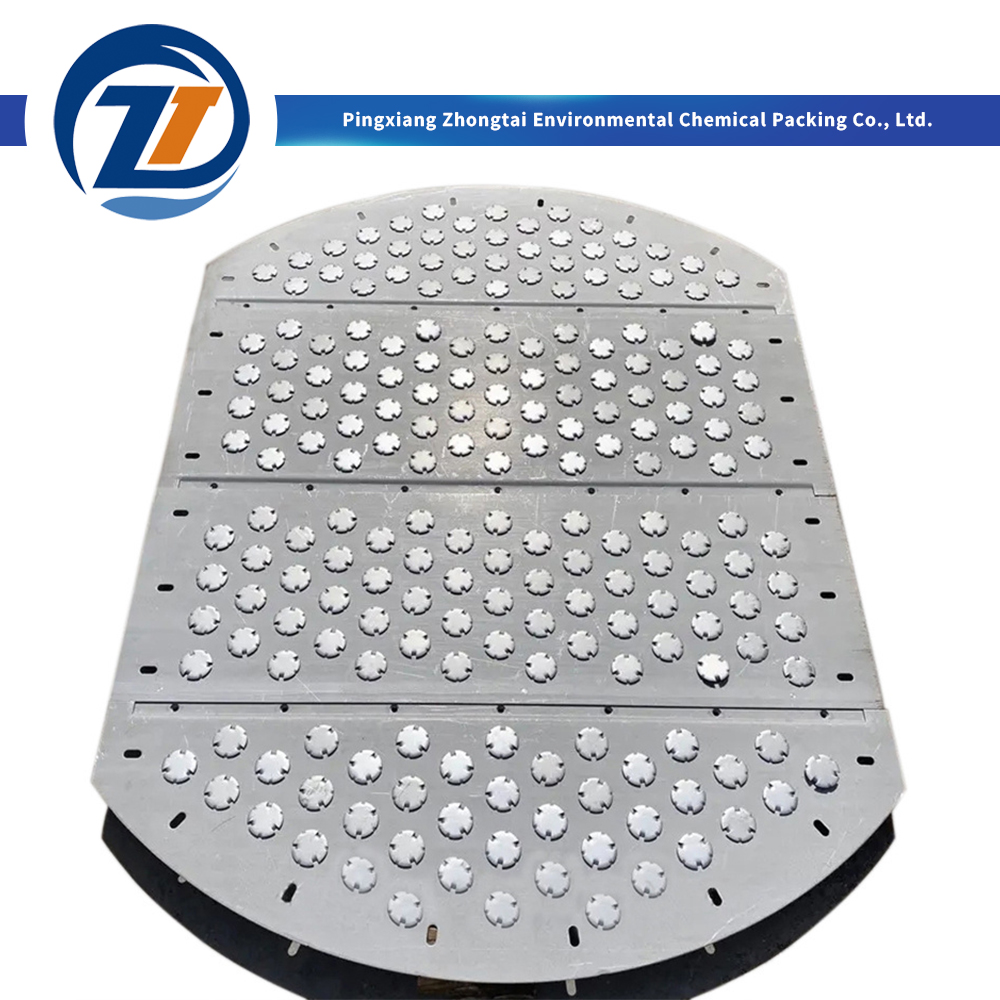
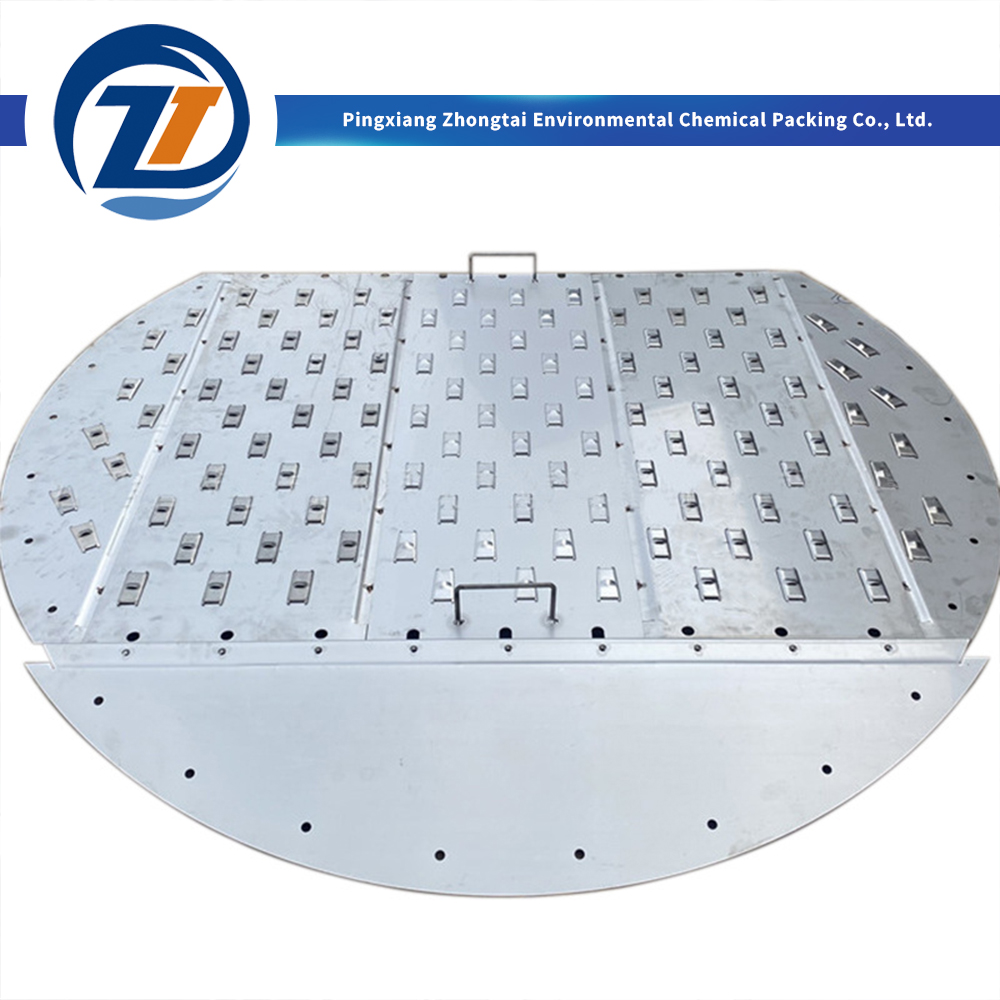
Full-open valve design and optimized valve layout maximize throughput while minimizing pressure drop, often reducing column diameter and energy costs compared to bubble cap trays.
The floating valve's constant movement and self-cleaning action prevent solids, tars, and polymers from accumulating on the tray deck, extending run length in fouling services.
The classic F1 round valve and V1 rectangular valve are available from stock in large quantities, with well-established hydraulic performance data enabling reliable, predictable designs.
Fabricated from 304, 316L, or carbon steel (and alloys), the all-metal valve units are mechanically durable, corrosion-resistant, and can operate at temperatures up to 450°C without deformation or sticking.
| Valve Type | Valve Material | Deck Material | Hole Diameter (mm) | Valve Weight (g) | Typical Turndown Ratio | Pressure Drop per Tray (mmHg) | Tray Spacing (mm) |
|---|---|---|---|---|---|---|---|
| F1 Round Valve | SS304/316L/CS | SS304/316L/CS | 39 | 22–26 | 2.5:1 – 3:1 | 3–5 | 400–600 |
| V1 Rectangular Valve | SS304/316L/CS | SS304/316L/CS | 25×64 (slot) | 18–22 | 2.5:1 – 3:1 | 3–5 | 400–600 |
| High‑Performance Float Valve | SS304/316L | SS304/316L | 38–50 | 15–28 | Up to 4:1 | 2–4 | 350–500 |



Floating valve trays provide a much broader operating range and higher turndown flexibility (typically 3:1) compared to sieve trays, preventing liquid weeping at low vapor rates while maintaining lower pressure drop at high capacities.
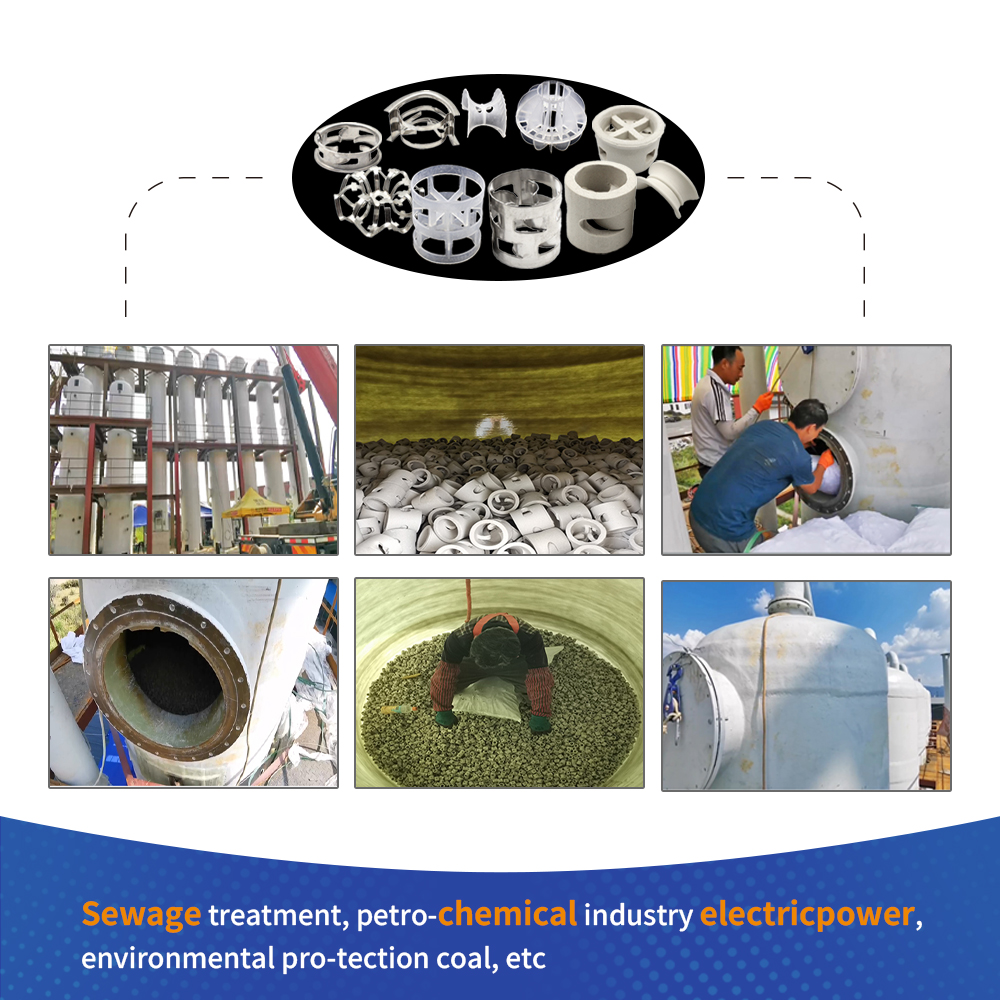
They are extensively utilized in crude oil refining, petrochemical processing, natural gas treatment, and general chemical distillation, absorption, and stripping units.
The constant vertical floating and slight rotational movement of the metal valves in response to vapor fluctuations help dislodge polymeric materials, tars, and particulates, preventing them from baking onto the tray deck.
Standard units are fabricated from carbon steel, stainless steel 304, and stainless steel 316L. Other corrosion-resistant specialty alloys can be supplied based on specific chemical process requirements.
Yes, they are ideal for column revamps. Replacing older bubble cap or conventional sieve trays with floating valve trays significantly increases capacity, optimizes mass transfer efficiency, and reduces column pressure drop without altering the column shell.