
1 / 5




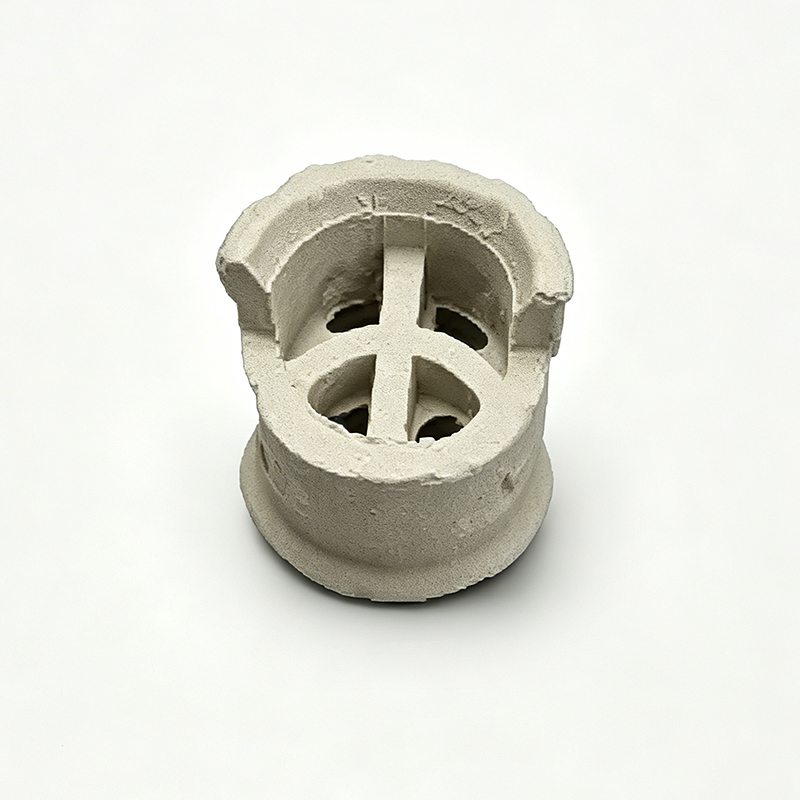
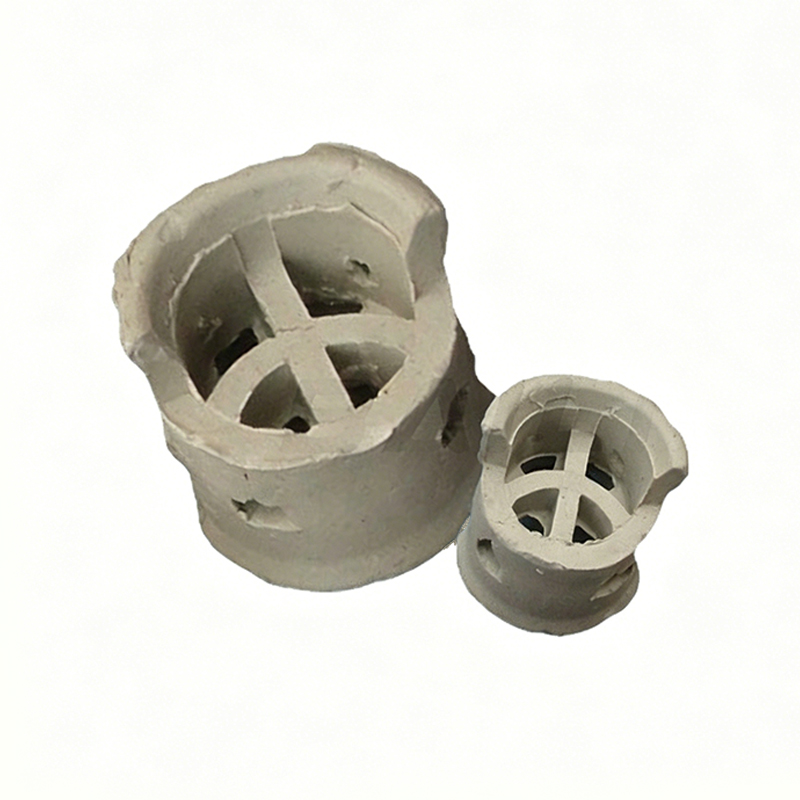
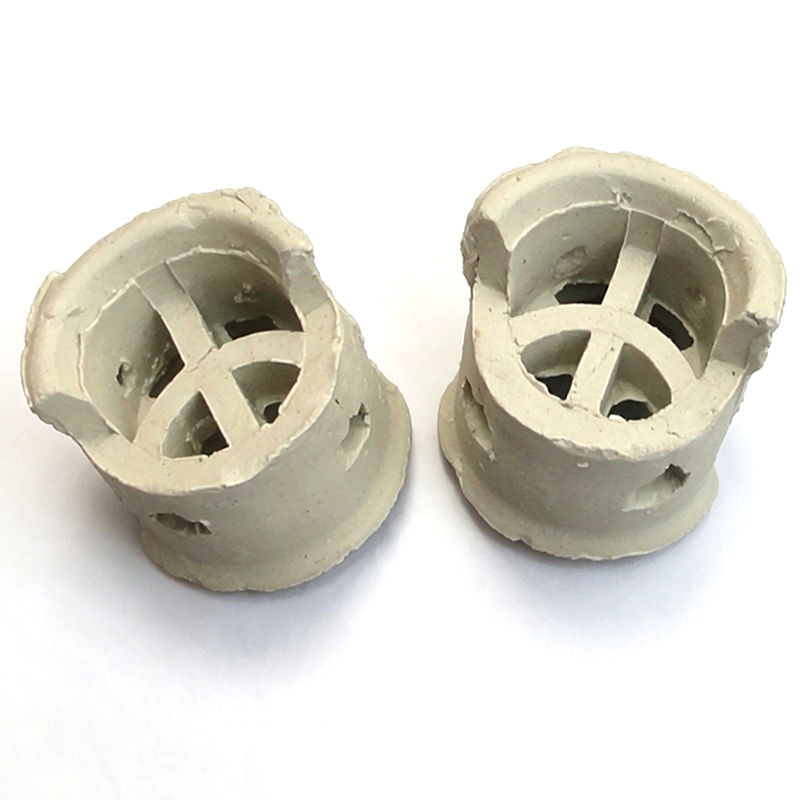
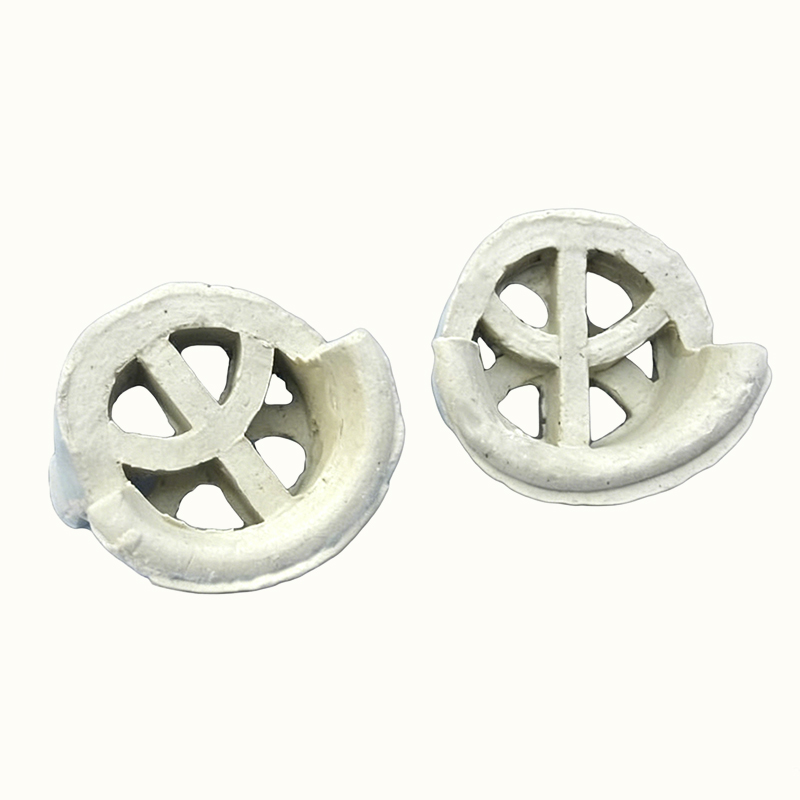
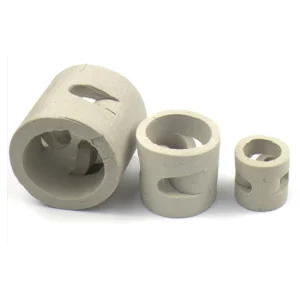
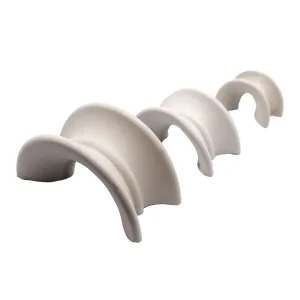
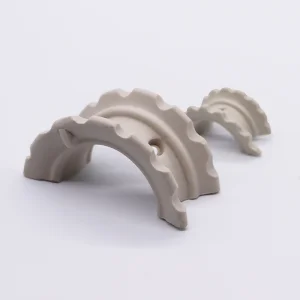
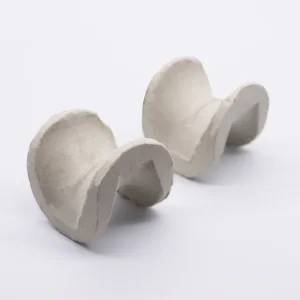
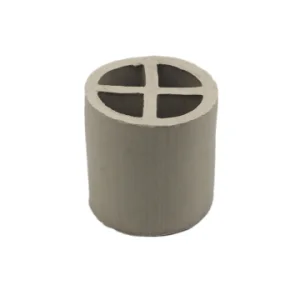
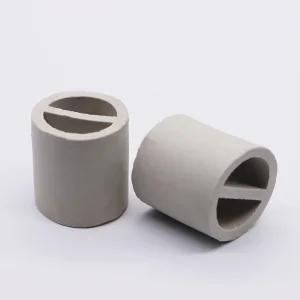
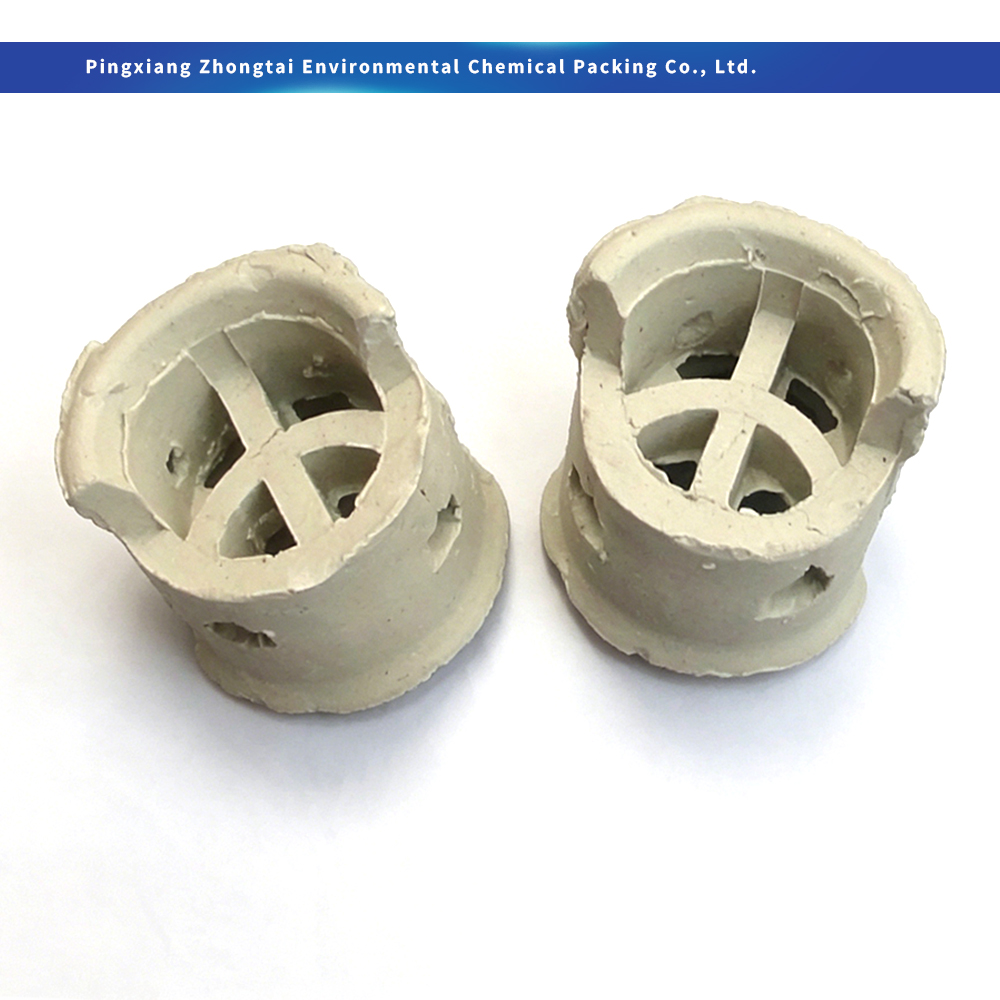
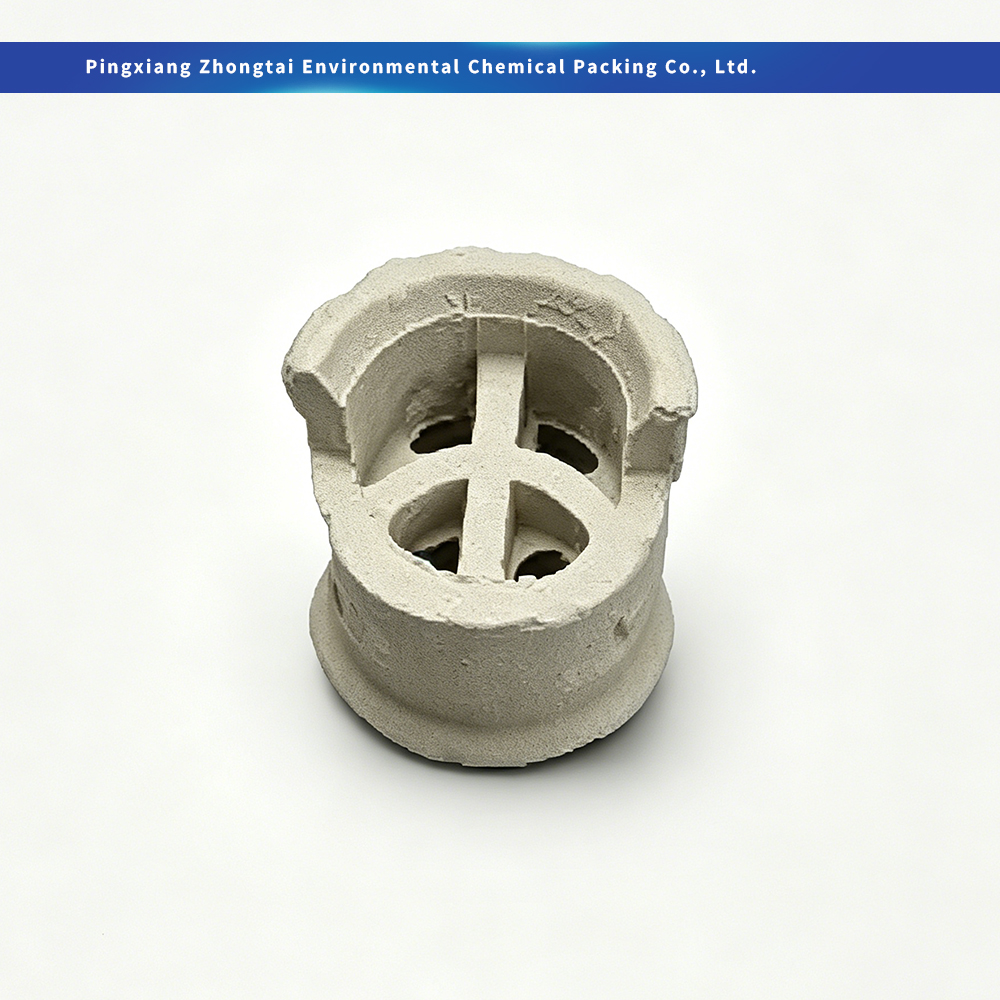
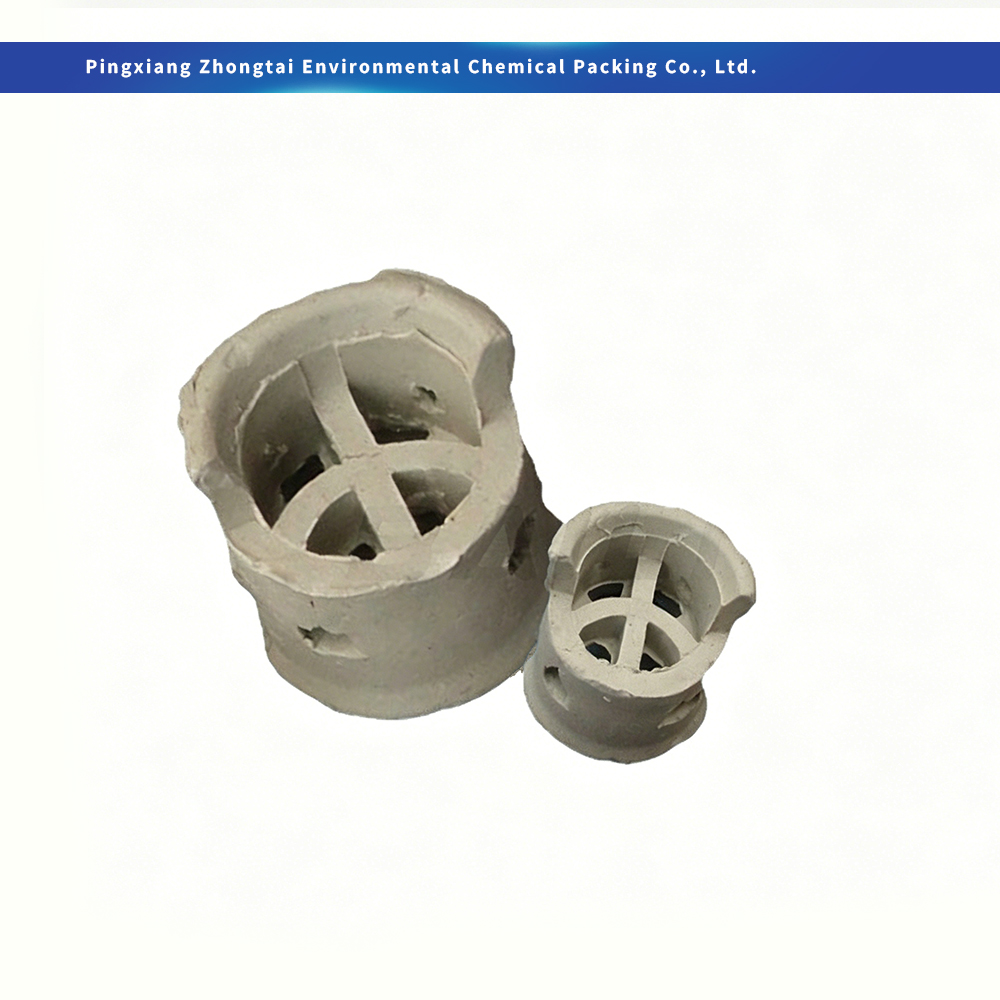
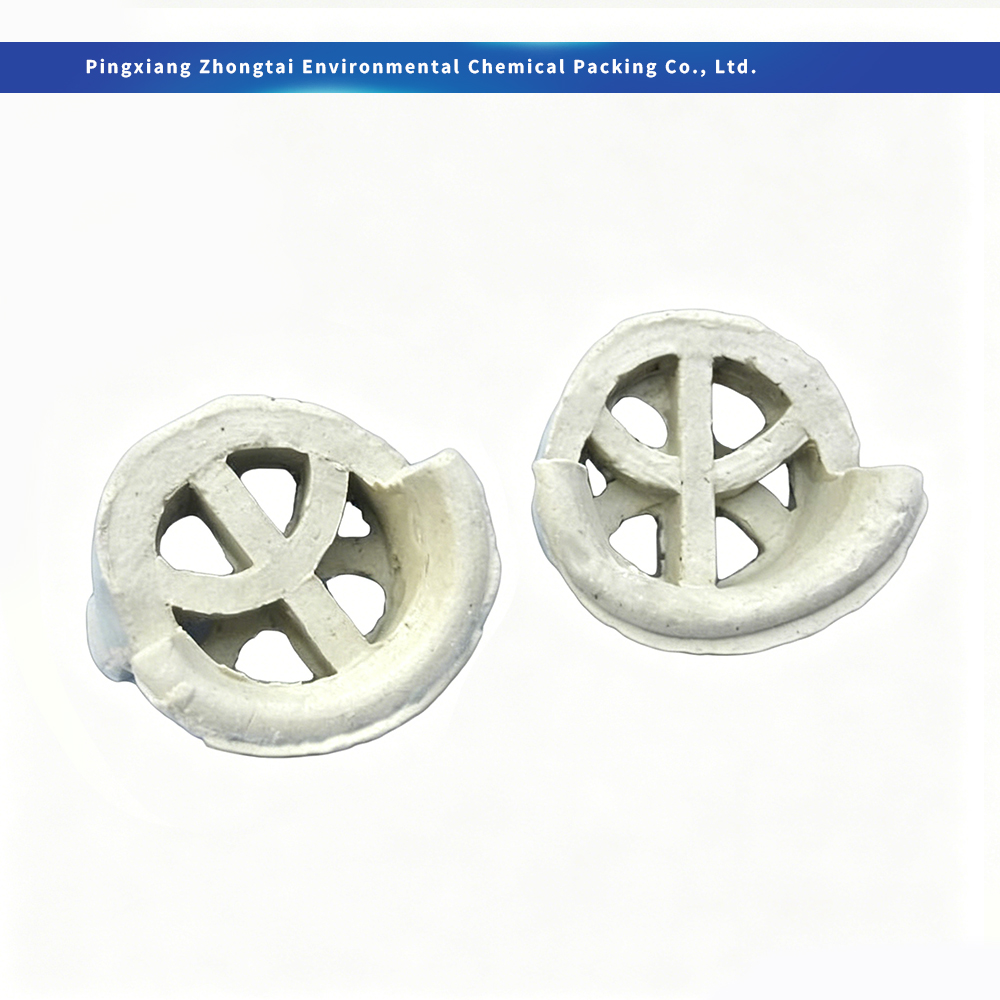
Ceramic Conjugate Ring is a high-performance random packing developed by South China University of Technology based on international research, combining the structural advantages of both ring-type and saddle-type packings into one compact, symmetrical design. Its unique construction is achieved by conceptually bisecting a Cascade Ring along the axial plane, rotating one half by 180°, and reconnecting them—creating a conjugate curve rib structure with an additional semi-annular fin within each semicircular segment. This innovative design results in superior fluid dynamics and mass transfer performance.
Unique asymmetric geometry ensures point contact between individual rings and with the tower wall, effectively eliminating nesting, overlapping, and stacking. This creates uniform porosity throughout the packed bed, significantly reducing channeling and wall flow.
Curved fin structure promotes liquid dispersion and continuous surface renewal, utilizing more of the effective surface area for intimate gas-liquid contact and resulting in higher mass transfer efficiency compared to standard rings and saddles.
Open, symmetrical design and uniform bed porosity produce excellent hydraulic performance with lower energy consumption, delivering consistent results in both atmospheric and vacuum service.
High-alumina ceramic body resists virtually all inorganic acids, organic acids, and organic solvents (except hydrofluoric acid), and operates reliably at temperatures up to 1000-1400°C.
Developed as a direct improvement over Cascade Rings, offering larger effective surface area, lower pressure drop, and higher mass transfer efficiency for retrofitting existing columns.
Manufactured in accordance with GB/T 18749-2008 for chemically resistant ceramic tower packing, ensuring consistent quality and dimensional accuracy across all batches.
| Size (mm) | D×H×T (mm) | Surface Area (m²/m³) | Void Ratio (%) | Number per m³ | Bulk Density (kg/m³) | Packing Factor (m⁻¹) |
|---|---|---|---|---|---|---|
| φ25 | 25×25×3 | 245 | 78 | 64,000 | 530 | 350 |
| φ38 | 38×38×4 | 208 | 80 | 13,950 | 480 | 230 |
| φ50 | 50×50×5 | 150 | 80 | 6,500 | 460 | 140 |
| φ76 | 76×76×6 | 118 | 80 | 3,120 | 430 | 90 |





It features a conjugate curve rib structure with semi-annular fins, created by bisecting a Cascade Ring along the axial plane, rotating one half 180°, and reconnecting them. This combines the advantages of both ring-type and saddle-type geometries.
The asymmetric point contact structure prevents rings from overlapping and stacking inside the bed. This preserves uniform porosity, minimizes liquid wall flow, and significantly suppresses channeling effects.
Engineered with high-alumina ceramic, it resists virtually all inorganic and organic acids/solvents (excluding hydrofluoric acid) and operates reliably at elevated temperatures from 1000°C up to 1400°C.
Yes, it was developed as a direct replacement. Its higher surface renewal rate, reduced pressure drop, and higher mass transfer efficiency make it an ideal drop-in upgrade for column retrofits.
Standard sizes include φ25 (25×25×3 mm), φ38 (38×38×4 mm), φ50 (50×50×5 mm), and φ76 (76×76×6 mm), catering to varied pressure drop and surface area specifications.
It is manufactured strictly in adherence to the GB/T 18749-2008 national standard for chemically resistant ceramic tower packings, guaranteeing consistent batch-to-batch dimensional accuracy.