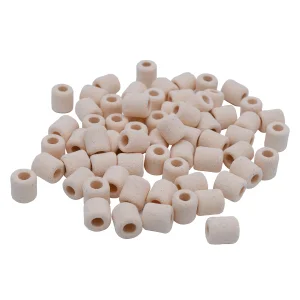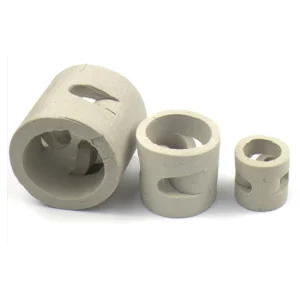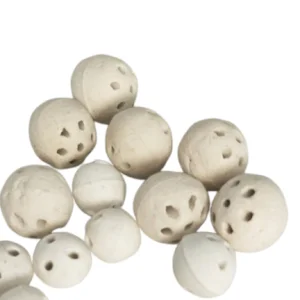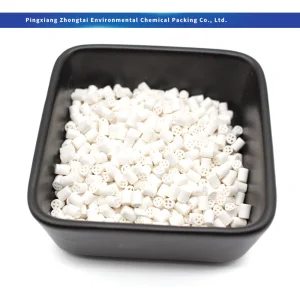
Certified factory-direct industrial media developed under batch-level ISO quality control, ensuring maximum cold crush strength, thermal stability, and low silica leaching for critical process units.
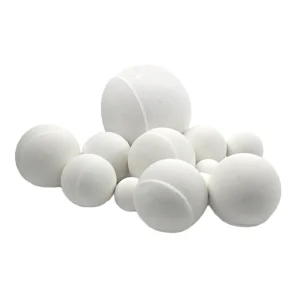
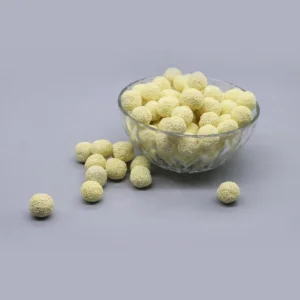
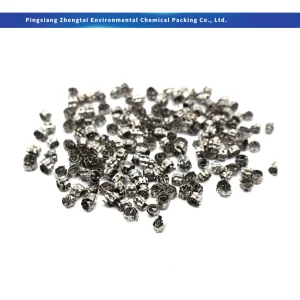
In modern chemical processing, metallurgy, and severe tribological environments, ceramic spheres operate as foundational media. Understanding the material transition between high-purity oxide ceramics (white) and non-oxide covalent ceramic matrices (black) is pivotal for operational uptime.
White ceramic balls are primarily composed of alpha-phase aluminum oxide (α-Al2O3) ranging from 17% for standard inert support up to 99.7% for ultra-pure steam-reforming catalyst hold-downs. In contrast, engineered black ceramic balls utilize non-oxide silicon nitride (Si3N4), silicon carbide (SiC), or mineral-doped carbon matrices. Non-oxide configurations eliminate micro-porosity while delivering extreme fracture toughness (KIC > 6.0 MPa·m½) and vanishingly low friction coefficients under non-lubricated mechanical stress.
Thermal cycling in secondary reformers, hydrocracking reactors, and regenerative thermal oxidizers (RTO) induces intense internal stress. White high-alumina spheres provide compressive strength exceeding 25 kN/sphere but require controlled heating ramp rates. Black silicon carbide and silicon nitride balls demonstrate exceptionally low thermal expansion coefficients (3.2 × 10⁻⁶/K) and high thermal conductivities, allowing uncracked survival through cyclic instantaneous temperature deltas exceeding 850°C.
In refining hydrotreaters and ammonia synthesis units, trace silica leaching poisons precious metal catalyst beds (platinum, palladium, nickel-molybdenum). Standard white ceramic balls with silica contents above 12% undergo hydrothermal leaching above 380°C in high-pressure steam. Modern tier-1 specifications demand either super-pure white alumina balls (SiO2 < 0.1%) or covalent black nitride/carbide media to guarantee absolute downstream catalyst bed integrity.
International petrochemical enterprises, fine grinding operations, and advanced environmental systems require stringent compliance protocols. Buying wholesale ceramic balls demands precise alignment with technical bid packages.
Global procurement teams (Aramco, Shell DEP, ExxonMobil GP standards) mandate third-party mechanical verification. Key qualification criteria include ASTM C515 (Standard Specification for Chemical-Resistant Ceramic Units), cold crushing strength (CCS) across random samples, and water absorption below 1% to prevent gas entrainment. For high-pressure gasification, autoclave leaching assays in demineralized water at 250°C ensure that trace silica, sodium, and iron emissions remain well beneath ppm limits.
Engineering procurement is never based merely on tonnage; bed packing efficiency dictates reactor hydraulics. Plant designers engineer catalyst support beds in graduated tiers (e.g., 1/8", 1/4", 1/2", 1", and 2" layers). Irregular sphericity or wide dimensional tolerances cause channeling, localized hot spots, and early pressure drop spikes (ΔP). Factory direct quality audits inspect dimensional roundness using laser sorting, verifying bulk density (1.4–2.1 g/cm³) within a ±3% deviation.
Pingxiang, Jiangxi Province, stands as the global capital for chemical packings and industrial ceramics. Zhongtai's advanced manufacturing infrastructure leverages localized raw material networks, automated tunnel kilns, and digital batch control.
Sitting at the heart of Pingxiang's geological ceramic mineral belt, Zhongtai secures direct access to premium bauxite, high-grade kaolin, and industrial-grade refined alpha-alumina powders. This hyper-local supply chain eliminates inter-provincial shipping disruptions, isolates raw material price volatility, and guarantees continuous kiln feeds during sudden global supply crunches.
Gone are the days of manual rolling. Zhongtai employs automated cold isostatic pressing (CIP) up to 200 MPa, alongside automated rolling granulators. Sintering is conducted in SCADA-controlled 120-meter high-temperature natural gas tunnel kilns. Real-time multi-zone thermocontrol maintains internal temperatures within ±3°C of target sintering profiles, ensuring homogenous crystalline mullite and corundum formation across 10,000-ton annual output runs.
Every manufacturing lot is issued a digital QR-coded Quality Inspection Certificate. Automated high-speed machine-vision laser sorters discard out-of-round spheres and surface pinholes at microsecond velocity. Crush-test rigs run statistical failure modeling under ISO 9001 guidelines, certifying each container shipment with full trace records of bulk density, chemical assay, and compressive rupture limits.
Direct physical, chemical, and mechanical parameters for process design engineers and EPC specification managers.
| Performance Characteristic | Standard White Inert Ball (Al2O3 17-23%) | High-Purity White Corundum (Al2O3 99.5%) | Black Silicon Nitride (Si3N4 Engineering) | Black Silicon Carbide (SiC Industrial) |
|---|---|---|---|---|
| Primary Composition | SiO2 + Al2O3 Matrix | Alpha-Alumina (α-Al2O3) | Si3N4 Composite | Sintered Alpha-SiC |
| Bulk Density (g/cm³) | 1.35 – 1.45 | 2.00 – 2.15 | 1.85 – 1.95 | 1.70 – 1.82 |
| True Density (g/cm³) | 2.30 – 2.40 | 3.80 – 3.90 | 3.20 – 3.25 | 3.10 – 3.15 |
| Cold Crush Strength (Ø25mm) | > 5.5 kN/sphere | > 22.0 kN/sphere | > 38.0 kN/sphere | > 28.0 kN/sphere |
| Max Operating Temperature | 1100 °C | 1550 °C | 1200 °C (Oxidizing) / 1400 °C (Inert) | 1600 °C |
| Acid Resistance (ASTM C279) | > 99.2% | > 99.8% | Resistant to hot acids (except HF) | Complete resistance (including HF/HNO3) |
| Thermal Shock Resistance (ΔT) | ΔT = 600 °C Cycles | ΔT = 800 °C Cycles | ΔT = 950 °C Cycles | ΔT = 850 °C Cycles |
| Primary Target Application | Refining catalyst bed support | Steam reformers, pure chemical hold-downs | Precision hybrid bearings, severe wear valves | Aggressive abrasive milling, corrosive nozzles |
From heavy petroleum processing to nanoscale mineral grinding and ultra-pure environmental aquaculture, explore how our media configurations resolve operational bottlenecks.
In hydrodesulfurization (HDS) and hydrocracking reactors, inert white alumina balls are laid at the bottom to mechanically support hundreds of metric tons of catalyst while evenly dispersing high-pressure liquid/gas phases. A top hold-down layer of 1-inch and 2-inch balls prevents fluidization and catalyst migration under turbulent feed velocity. In reforming units operating at 500°C with free steam, 99% high-purity corundum balls prevent volatile silica transfer to downstream heat exchangers.
The manufacturing of Lithium Iron Phosphate (LiFePO4) and solid-state battery precursors requires continuous wet-milling down to D50 < 300nm without iron or metal cross-contamination. High-density white alumina grinding media (92–95% Al2O3) and black silicon carbide micro-beads deliver intense kinetic impact and low wear loss (< 0.01% wt/24h), avoiding batch darkening and maintaining electrochemical purity.
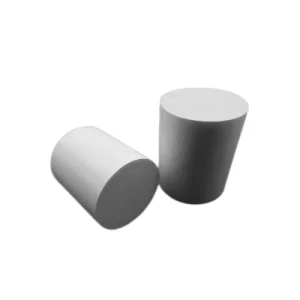
In chemical and paint plant exhaust streams, RTO units incinerate volatile organic compounds (VOCs) at 850°C. Refractory white ceramic balls and mullite-cordierite honeycomb ceramics serve as regenerative heat-storage media. High thermal storage capacity (Cp > 1.0 kJ/kg·K) recaptures over 95% of exhaust heat, reducing auxiliary natural gas consumption to virtually zero during balanced thermal oxidation cycles.
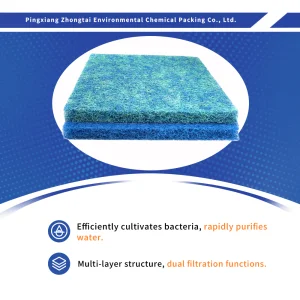
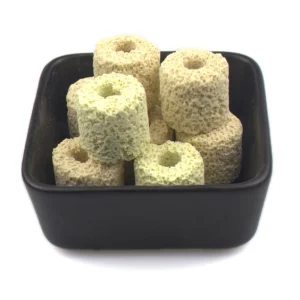
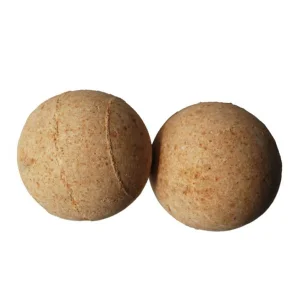
Black bio-ceramic far-infrared balls combined with white porous quartz/alumina rings constitute the primary filtration media in commercial RAS aquaculture and aquatic bio-filters. The porous internal structure (> 450 m²/L specific surface area) supports dense aerobic and anaerobic nitrifying bacteria colonies, rapidly neutralizing toxic ammonia (NH3) and nitrites (NO2-) while far-infrared wavelengths activate water molecules for enhanced aquatic vitality.
Clear, spec-level answers for chemical engineers, maintenance directors, and international purchasing agents.
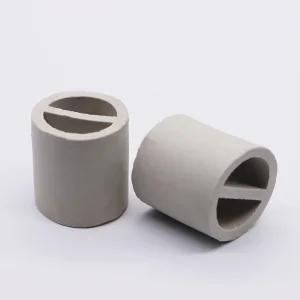
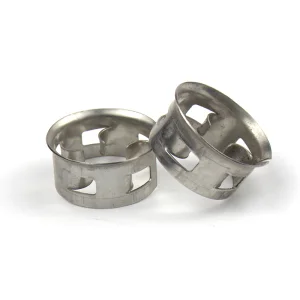
Engineered mass transfer internals, high-surface zeolites, and structured ceramic components manufactured in our Pingxiang industrial complex.