China Porous Ceramic Ball for catalyst covering and supporting material Manufacturer, Manufacturers
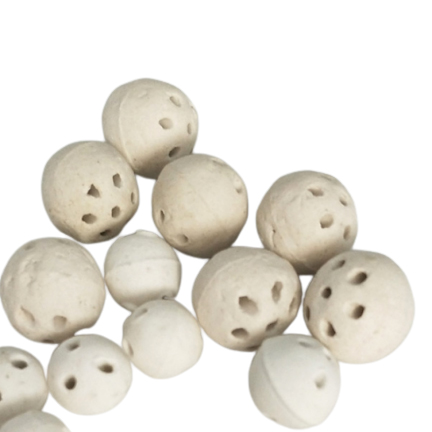
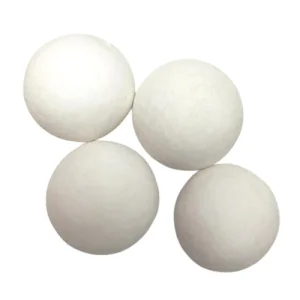
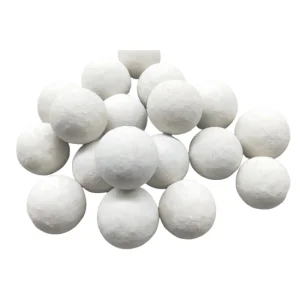
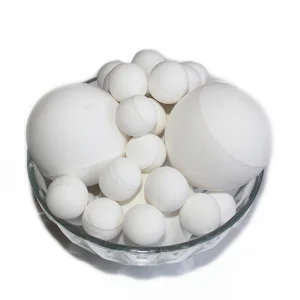
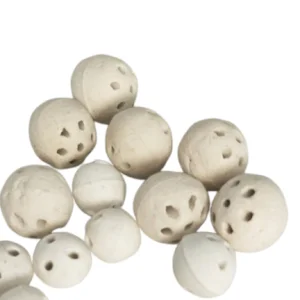
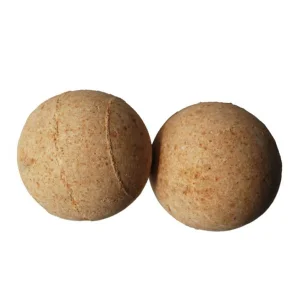
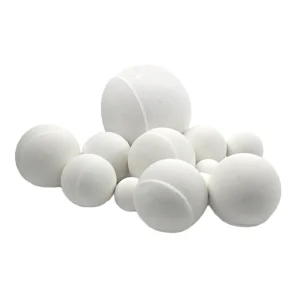
Porous ceramic ball is also called filtering balls. It is made by make 20-30% pores inside the inert ceramic balls. Therefore it can be used not only for supporting and covering the catalyst, but also for filtering and eliminating the impurities of grain, gelatin, asphalting, heavy metal and iron ions of less than 25um. If the porous ball is set on the top of a reactor, the impurities fail to be eliminated in former process could be adsorbed in the pores inside the balls, there upon protect the catalyst and prolong the operating cycle of the system. As the impurities present in the materials are different, the user can select the product by their sizes, pores and porosity, or if necessary, add molybdenum, nickel and cobalt or other active components to prevent the catalyst from coking or poisoning.
Q: What is the primary function of porous ceramic balls?
Porous ceramic balls are typically used as catalyst support media, filtration material, or distribution layers in chemical reactors, petrochemical processing, and environmental engineering applications to ensure smooth fluid dynamics and high mechanical stability.
Q: Which material type offers the highest operating temperature resistance?
The Corundum type provides the highest operating temperature rating, capable of withstanding working conditions equal to or exceeding 1700°C, followed by Molai-Corundum at ≥1600°C.
Q: How does crushing strength vary with the diameter and type of ceramic ball?
Crushing strength increases proportionally with diameter (e.g., from Φ3mm to Φ75mm) and with higher alumina content, with Corundum balls achieving crushing strengths exceeding 15000 N/piece in larger sizes.
Q: What are the standard acid and alkali resistance ratings?
Across all material types, acid resistance remains consistently high at ≥98%, while alkali resistance ranges from ≥80% up to ≥95% depending on the specific mineral grade.
Q: What is the relationship between ball diameter and internal pore diameter?
Larger ceramic ball diameters correlate with larger structural pore diameters, ranging from 2-3 mm for smaller spheres (Φ6-10mm) up to 8-10 mm for high-diameter spheres (Φ60-75mm).