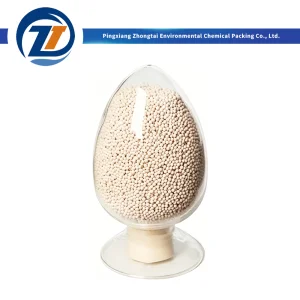
Direct factory supply of high-purity inert supports, cellular ceramics, and structural packings designed for severe chemical and thermal degradation environments.
Modern mineral beneficiation, battery chemical synthesis, and non-metallic mineral processing face escalating energy tariffs and stricter contamination thresholds. Learn how industrial grinding media selection directly affects mill power consumption and circuit yield.
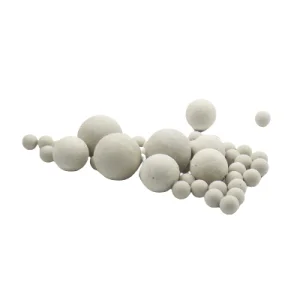
For more than a century, tumbling and stirred mills relied extensively on forged or cast high-chromium alloy steel balls. While steel delivers high impact kinetic energy due to its elevated density (~7.8 g/cm³), it incurs massive parasitic energy losses. Over 70% of gross energy consumed in mineral comminution plants is lost in heat dissipation, acoustic generation, and mechanical friction rather than mineral grain shearing.
In wet ultrafine grinding circuits—such as those required for lithium iron phosphate (LFP) cathode materials, high-purity quartz (HPQ), and precipitated calcium carbonate (PCC)—metallic abrasion produces soluble iron oxides. Even minor contamination of Fe³⁺ ions ruins dielectric matrices, causes catastrophic voltage drop-offs in battery cells, and discolors white industrial fillers. Engineered microcrystalline alumina grinding media (92%, 95%, and 99% α-Al₂O₃) have permanently solved this dilemma by combining exceptional wear resistance with chemical passivity.
Procurement directors and metallurgical engineers now demand full life-cycle accountability across grinding media inputs. The benchmark considerations include:
Not all ceramic media deliver equal operational lifespans. The mechanical longevity of grinding beads is governed by grain boundary nucleation, sintering densification curves, and isostatic consolidation protocols.
Unlike roll-formed beads that suffer from concentric density gradients and internal air pockets, our industrial grinding balls undergo omnidirectional cold isostatic compaction at pressures exceeding 200–250 MPa. This eliminates micro-structural laminations and assures uniform mass distribution.
Sintered inside high-temperature computerized natural gas tunnel kilns between 1620°C and 1680°C, the precursor calcined bauxite transforms fully into high-purity α-Al₂O₃ corundum crystals. Microcrystalline grain size is maintained below 3–5 microns, effectively inhibiting intergranular microcrack propagation.
Specialized secondary glass-phase doping (SiO₂-MgO-CaO ternary flux system) provides high fracture toughness ($K_{IC} \ge 4.2\ \text{MPa}\cdot\text{m}^{1/2}$), shielding the outer surface against high shear abrasion and repetitive Hertzian impact collisions within wet slurry milling environments.
| Property Parameter | 92% High Alumina Ball | 95% Wear-Resistant Ball | 99% Ultra-Pure Alumina | High-Cr Forged Steel Ball |
|---|---|---|---|---|
| Al₂O₃ Content (%) | ≥ 92.0% | ≥ 95.0% | ≥ 99.2% | N/A (Cr 10–28%, Fe bal.) |
| Bulk Density (g/cm³) | ≥ 3.60 – 3.65 | ≥ 3.68 – 3.75 | ≥ 3.90 – 3.95 | ≥ 7.60 – 7.85 |
| Mohs Hardness | 9.0 | 9.0 | 9.2 | 6.0 – 6.5 |
| Self-Wear Rate (‰ per 24h) | ≤ 0.15‰ | ≤ 0.08‰ | ≤ 0.03‰ | 1.2 – 3.5‰ (Corrosive Wet) |
| Water Absorption (%) | ≤ 0.01% | ≤ 0.01% | ≤ 0.005% | 0.00% |
| Crush Strength (Ø30mm, kN) | ≥ 18.0 kN | ≥ 22.0 kN | ≥ 28.0 kN | High Plastic Deform |
Zhongtai is situated in the West Section Hi-Tech Industry Park of Pingxiang, Jiangxi Province—the globally acknowledged capital of industrial ceramics, mass transfer packing, and catalyst support media.
Our facility draws synthetic alumina powders and calcined bauxite directly from integrated local beneficiation units. Eliminating secondary regional transport stabilizes raw input moisture, reduces supply shock risk, and enables precise control over chemical tolerances.
Operating high-capacity tunnel kilns spanning over 120 meters with multi-zone digital PID thermal control loops, Zhongtai guarantees identical heat treatment across millions of spheres. This avoids under-fired cores and over-vitrified surface skins that degrade field performance.
Situated within seamless rail and highway arteries directly linking to the deepwater maritime ports of Shanghai, Ningbo, and Shenzhen. Large bulk-container shipments (20–26 metric tons per 20' FCL) clear customs quickly with pre-verified packing certificates.
From South American copper extraction to Southeast Asian ceramic tile glazes and European titanium dioxide pigment dispersion, media sizing must match the particle size distribution (PSD) target of your slurry.
Primary Media: 0.5–2.0 mm High-Purity Alumina or YSZ beads.
Environment: Horizontal sand mills grinding LFP and NMC precursor slurries.
Challenge: Eradication of trace paramagnetic metallic debris.
Primary Media: 30–60 mm 92% Al₂O₃ Ceramic Balls.
Environment: Secondary and regrind stirred mills (IsaMill, SMD).
Challenge: Preventing catastrophic impact fracture while grinding pyritic ores at high solid contents.
Primary Media: 25–50 mm 92% / 95% Alumina Balls.
Environment: Large batch-type ceramic ball mills with rubber or silica linings.
Challenge: Maintaining pure white color value ($L^* \ge 96$) without introducing dark speckled impurities.
Primary Media: 1.2–3.0 mm High-Density Alumina Beads.
Environment: Wet attrition milling of crude rutile or anatase slurry.
Challenge: Achieving sub-micron particles ($D_{50} < 0.35\ \mu\text{m}$) with maximum optical dispersion efficiency.
Savvy mineral processing plant managers do not purchase grinding media on price-per-ton alone. The true operational cost depends on media wear rate per ton ground, liner longevity, and electrical drawdown.
Operating an alumina media charge with specific gravity between 3.60 and 3.90 g/cm³ significantly reduces the starting torque and operational electrical load of large-diameter SAG and ball mills. Mills designed for steel charges often experience a 30% to 45% reduction in active kilowatt-hour consumption, offsetting capital costs within 9 months.
Due to the elastic modulus and spherical geometry of high-alumina media, abrasive gouging and shear cracking on rubber, polyurethane, and ceramic brick mill linings are vastly diminished. Operational plant records verify that liner lifespans are routinely doubled compared to operations using forged alloy steel spheres.
Every commercial production run at Zhongtai is cataloged with batch-specific Certificates of Analysis (CoA). Tests verify apparent density, Archimedes water absorption, Vickers microhardness (HV10), and chemical composition via wavelength dispersive X-ray fluorescence (WD-XRF).
How advanced materials engineering is addressing deep decarbonization and the nano-scale processing revolution across global supply chains.
By uniformly dispersing nanoscale yttria-stabilized tetragonal zirconia particles ($t\text{-ZrO}_2$) inside an alpha-alumina matrix, phase-transformation toughening is triggered whenever micro-fissures develop. This structural leap yields a grinding ball with 30% higher impact resilience than conventional ceramics.
Meeting Scope 1 and Scope 2 carbon reduction goals, our manufacturing units are steadily integrating high-efficiency oxy-fuel combustion, electric element kiln modules, and heat recovery from RTO systems to lower the embedded carbon footprint of our ceramic products by 28%.
With clean energy applications requiring sub-micron particulate dispersions ($D_{90} < 100\ \text{nm}$), micro-media beads ranging from 0.05 mm to 0.4 mm with perfectly rounded sphericity are manufactured using advanced droplet dripping protocols.
Technical, operational, and commercial answers for sourcing high-alumina and industrial ceramic media directly from China.
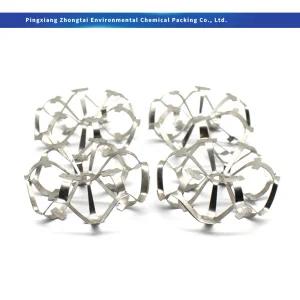
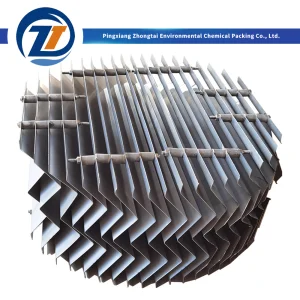
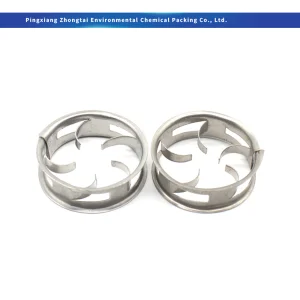
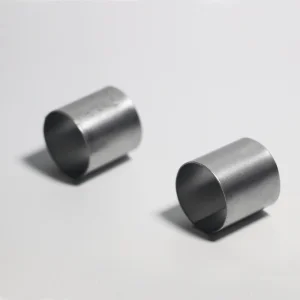
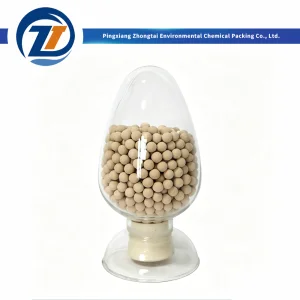
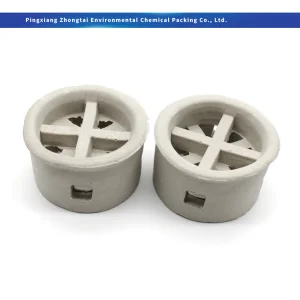
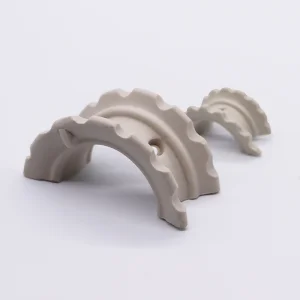
Complementary mass transfer products designed to optimize chemical separation, gas scrubbing, and industrial gas purification columns globally.