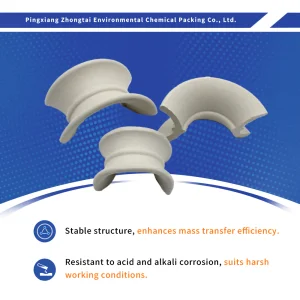
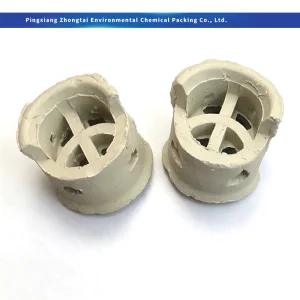
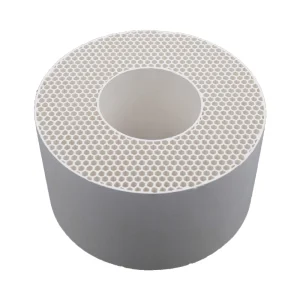
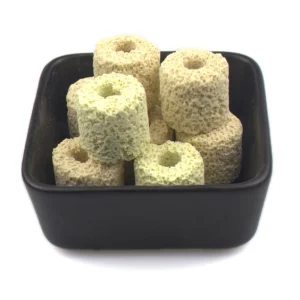
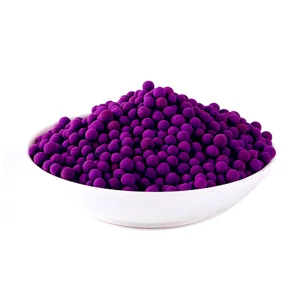
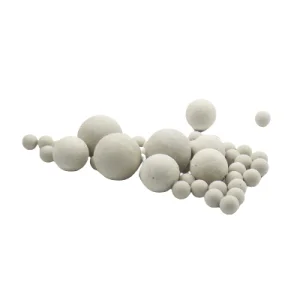
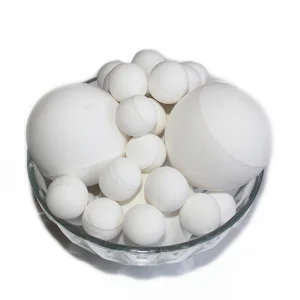
Explore our primary engineered chemical fillers, molecular sieves, and mass-transfer packing products utilized in demanding global industrial operations.
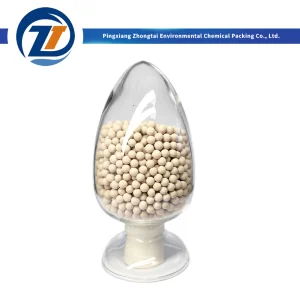
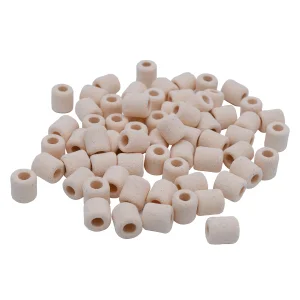
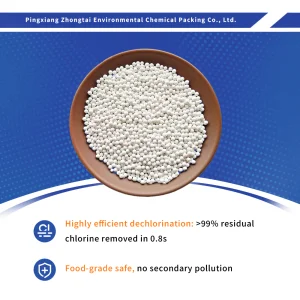
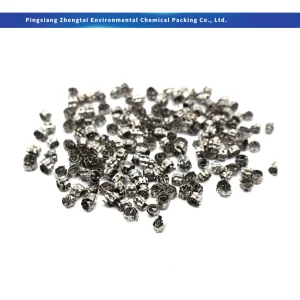
In modern high-energy agitator bead mills and ultra-fine wet grinding systems, the choice of grinding media dictates overall mechanical efficiency, product purity, particle size distribution (PSD), and operational expenditure (OPEX). Zirconia ceramic grinding balls represent the pinnacle of wear-resistant media engineering, replacing traditional steel beads, glass beads, and low-density alumina media across critical processing sectors.
As a leading Chinese manufacturer and direct factory, our production ecosystem integrates advanced powder metallurgy, precision titration forming, cold isostatic pressing (CIP), and high-temperature tunnel kiln sintering. By controlling microstructural phase transformation—specifically stabilizing the tetragonal zirconia crystal phase using Yttria (Y₂O₃) or Cerium Oxide (CeO₂)—we manufacture micro-beads engineered to resist severe impact stress, chemical attack, and hydrodynamic shear.
Our Pingxiang manufacturing complex operates fully automated, dust-controlled production lines committed to rigorous quality benchmarks:
Analyzing how global industrial transformations drive specialized demands for high-density Zirconia micro-beads and grinding media.
The global push toward electric vehicles (EVs) and grid storage requires massive scale wet-milling of Lithium Iron Phosphate ($LiFePO_4$), NCM precursor formulations, and synthetic graphite anodes down to sub-micron ($d_{50} < 300\text{ nm}$) thresholds. Procurement managers specify Y-TZP beads ($0.1\text{ mm} - 0.6\text{ mm}$) to maximize grinding energy density while eliminating iron particle contamination that compromises cell safety.
Multi-Layer Ceramic Capacitor (MLCC) manufacturers require dielectric titanate powders ($BaTiO_3$) with narrow grain size distributions. Zirconia grinding media guarantee high shear transfer without introducing lattice impurities, maintaining the dielectric properties required for high-density electronic circuit boards and 5G telecommunication hardware.
High-end automotive finishes, jet-ink formulations, and optical transparency coatings demand nanoparticle dispersion without color distortion. Cerium-Stabilized Zirconia (Ce-TZP) and high-purity Y-TZP beads provide smooth dispersion kinetics, preventing agglomeration while reducing mill residence time by up to 35% compared to silica glass media.
Paper coating and plastic filler industries require ultra-fine Ground Calcium Carbonate (GCC) and kaolin clay slurries ($90\% < 2\mu\text{m}$). Large-diameter Zirconia Toughened Alumina (ZTA) and Cerium-Zirconia media provide an optimal balance between wear resistance and cost efficiency in massive vertical and horizontal continuous stirred mills.
Active Pharmaceutical Ingredients (APIs), sunscreen titanium dioxide ($TiO_2$), and food pigments call for certified inertness. Our zirconia media strictly conform to global heavy-metal limits, ensuring zero toxic leaching during wet micro-milling processes, compliant with US FDA and European Pharmacopoeia standards.
Flowable suspension concentrates (SC) and water-dispersible granules (WDG) require rapid particle size reduction to improve biological efficacy and suspension stability. Zirconia micro-beads deliver uniform shear rates, extending product shelf-life and field dispersion rates.
Understanding the microstructural, chemical, and physical differences between primary zirconia grinding media classifications.
| Property Parameter | Y-TZP (Yttria-Stabilized) | Ce-TZP (Cerium-Stabilized) | ZTA (Zirconia Toughened Alumina) | Zirconium Silicate ($ZrSiO_4$) |
|---|---|---|---|---|
| $ZrO_2$ Content (%) | ≥ 95% | ≥ 80% | 15% - 30% | ≥ 64% |
| Stabilizing Agent | 5% $Y_2O_3$ | 20% $CeO_2$ | $Y_2O_3$ / $Al_2O_3$ Matrix | Silica Composite |
| Specific Density (g/cm³) | ≥ 6.00 | ≥ 6.20 | 3.70 - 4.10 | 4.00 - 4.20 |
| Bulk Density (g/cm³) | 3.60 - 3.80 | 3.75 - 3.90 | 2.30 - 2.50 | 2.50 - 2.65 |
| Mohs Hardness | 9.0 | 8.5 | 8.5 - 9.0 | 7.2 |
| Fracture Toughness ($K_{IC}$) | $9.0 \text{ MPa}\cdot\text{m}^{1/2}$ | $12.0 \text{ MPa}\cdot\text{m}^{1/2}$ | $5.5 \text{ MPa}\cdot\text{m}^{1/2}$ | $4.5 \text{ MPa}\cdot\text{m}^{1/2}$ |
| Primary Application Target | Nano-grinding ($<100\text{nm}$), LFP, MLCC, CMP Slurries | High-viscosity paints, heavy pastes, high-shear mills | Ground Calcium Carbonate, metallic ores, cost-sensitive lines | Medium fine grinding, paper coatings, paints |
The superior performance of Y-TZP zirconia grinding balls stems from a unique physical phenomenon known as Stress-Induced Phase Transformation Toughening. Under localized impact stress inside high-speed pin-type mills, metastably retained tetragonal crystal grains transform into the monoclinic phase.
This phase transformation is accompanied by a volume expansion of approximately 3% to 5%. The resulting volumetric expansion induces compressive stresses around the micro-crack tip, arresting crack propagation and preventing catastrophic mechanical breakdown of the bead during continuous operation.
Our factory employs two distinct manufacturing pathways customized to bead size requirements:
Bridging advanced Chinese manufacturing capability with rigorous international quality systems and localized technical support.
Every production run undergoes strict Quality Control (QC). Samples are tested via X-Ray Fluorescence (XRF) for chemical composition, laser particle sizing for sphericity, and laboratory bead mills for wear rate verification. Certificates of Analysis (COA) accompany every shipment.
Heavy-duty steel drums (25kg/50kg), reinforced UN-certified plastic buckets, or jumbo bulk bags on fumigated heat-treated wooden pallets ensure safe transport. Our export team coordinates FOB, CIF, DDP, and DAP logistics across Europe, North America, Southeast Asia, and South America.
Choosing the correct media size is critical: media diameter should typically be 20 to 30 times larger than the feed particle size ($d_{90}$), and targeting 1000 times larger than the desired final product size. Our FAE team provides technical calculations customized to your agitator mill specs.
Addressing essential technical, procurement, and application questions for process engineers and procurement officers.
Discover our broader catalog of inert bed supports, tower packings, RTO ceramics, and specialized adsorptive materials.