Explore our core mass transfer packings precision-manufactured under ISO9001 quality controls in Pingxiang, China's premier industrial ceramics and packings hub.
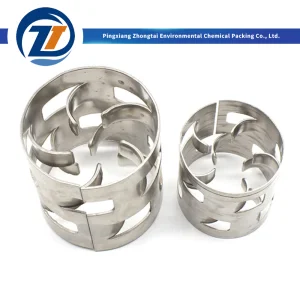
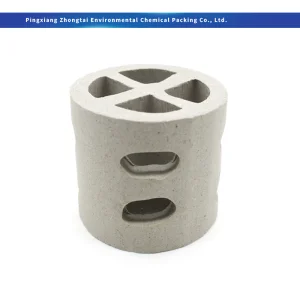
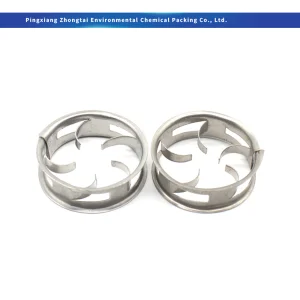
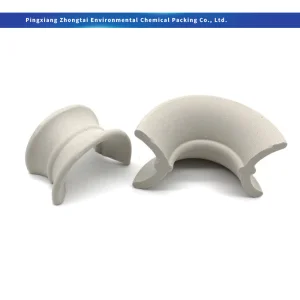
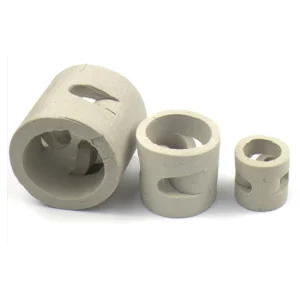
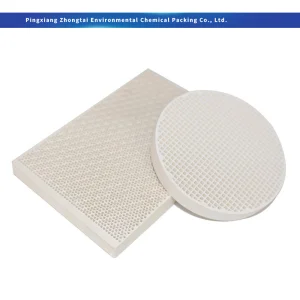
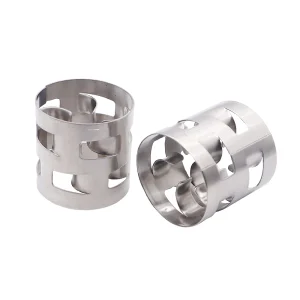
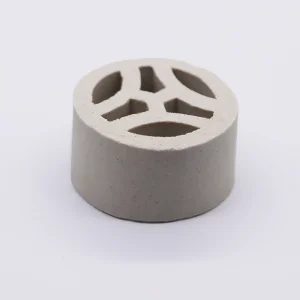
From the pioneering 1914 Raschig cylinder to 4th-generation aerodynamic saddle matrices, random packing engineering continues to push boundary curves in HETP efficiency, anti-nesting geometry, and parasitic pressure loss.
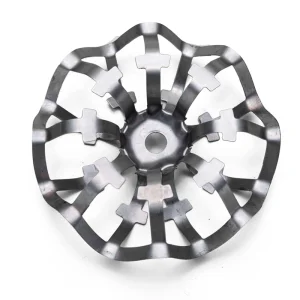
Early cylindrical Raschig rings established continuous mass transfer beds but suffered from extensive internal vapor stagnation and early flood boundaries. The breakthrough addition of inward-bent tongues and fenestrated sidewalls in Pall Rings transformed mass transfer kinetics by opening internal void fraction to >90%, doubling effective phase contact.
Cascade Mini Rings (CMR) revolutionized hydraulic resistance by truncating aspect ratio (height-to-diameter ~ 1:3). This forced preferential vertical alignment upon dumped installation, cutting directional skin drag while inducing continuous micro-droplet renewal along scalloped rims for maximum liquid film turbulence.
Engineered Intalox saddles and ribbed super-structures decouple liquid holdup from pressure drop. The hyperbolic curves prevent packing elements from interlocking (nesting), maintaining homogeneous hydraulic distribution, lower fouling tendencies, and stable mass transfer coefficients (KLa) across extreme operational turndown ratios.
| Packing Type | Predominant Materials | Specific Surface Area (m²/m³) | Void Fraction (%) | Hydraulic Characteristics | Key Operational Advantages |
|---|---|---|---|---|---|
| Metal Pall Ring (50mm) | SS304, SS316L, Carbon Steel | 100 – 115 | > 95% | Low vapor bypass, high liquid spreading | Standard for chemical distillation revamps |
| Cascade Mini Ring (CMR #2) | SS316L, Titanium, Monel | 130 – 145 | > 96% | Lowest aspect ratio, minimal ΔP/meter | Ideal for high-capacity vacuum crude towers |
| Ceramic Intalox Saddle (50mm) | Chemical Porcelain, Acid Stone | 95 – 110 | 72 – 78% | High chemical inertia, extreme thermal limit | Immunity to hot H₂SO₄, Cl₂, and wet SO₂/SO₃ |
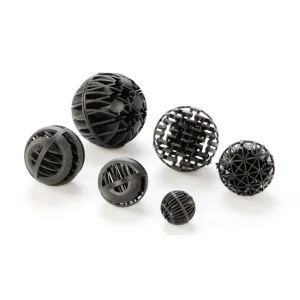
| Polypropylene Tri-Pak (50mm) | PP, HDPE, PVDF, ETFE | 120 – 135 | 88 – 92% | Isotropic spherical geometry, zero nesting | Optimum for VOC scrubbers, bio-reactors, degassing |
In today's complex downstream refining, syngas, and petrochemical landscape, global plant managers face a dual challenge: maximizing throughput while drastically reducing parasitic thermal and electrical energy consumption. Distillation, absorption, and stripping units consume up to 40% of industrial chemical processing energy.
Transitioning old tray columns or unoptimized packing beds to advanced random packing geometries yields immediate thermodynamic dividends:
Procuring random packing solely on initial FOB capital expenditure introduces substantial lifecycle risk. Low-grade ceramic packings crack under mechanical thermal stress, creating fines that blind redistributor trays. Sub-spec metal alloys lead to chloride stress corrosion cracking within months. True Total Cost of Ownership (TCO) demands verified metallurgical traceability, accurate crush-strength testing, and reliable volumetric density consistency from single-source manufacturing hubs.
How Pingxiang Zhongtai Environmental Chemical Packing leverages localized mineral refining, high-volume automated stamping, tunnel-kiln robotics, and end-to-end traceability to fulfill global turnarounds on time.
As the epicentre of China's chemical packing production for decades, Pingxiang hosts raw kaolin clay deposits, precision mold designers, and metallurgy supply chains within a tight 30km radius. This geographic concentration drastically truncates lead times and eliminates supply bottlenecking experienced elsewhere.
Operating modern computer-controlled hydraulic presses for ceramic saddles, multi-station high-speed progressive metal stamping presses for Pall/CMR rings, and automated injection tooling for fluoropolymer internals under one umbrella. Multi-material flexibility allows turnkey project packaging for EPC clients.
Every export consignment is validated for chemical purity (XRF analysis), crush resistance (hydraulic test bench), Leeb hardness, and dimensional tolerance. Complete Mill Test Certificates (MTC), non-radioactivity guarantees, and export seaworthy fumigation pallets accompany every shipment.
Where engineering tolerances translate into uninterrupted production, purity yields, and long-term operating profit.
Metal Pall rings and Cascade Mini rings optimize vacuum flash towers, stabilizer columns, and sour water strippers, providing substantial turndown margins without weeping.
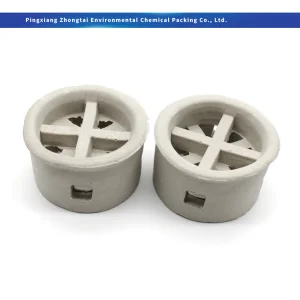
Ceramic Intalox saddles and Cross Partition rings provide total chemical resistance in sulfuric acid drying/absorption towers and chlorine drying scrubbers up to 1000°C.
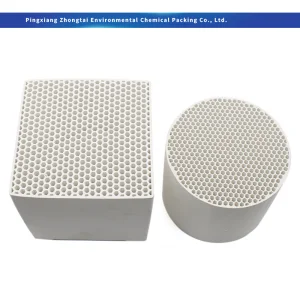
Honeycomb ceramics and high-temperature cordierite plates store and release thermal energy efficiently in Regenerative Thermal Oxidizers treating complex industrial fumes.
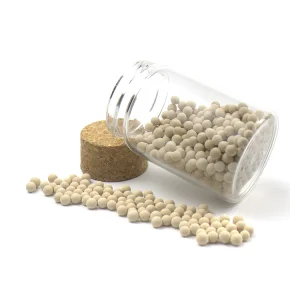
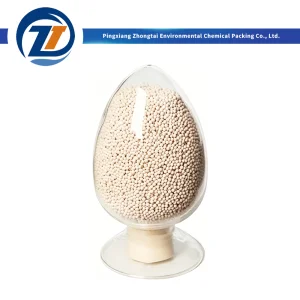
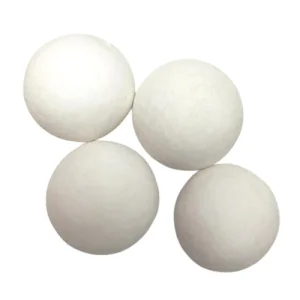
Zeolite molecular sieves and high-strength inert ceramic ball bed supports prevent bed shifting while extracting trace moisture to sub-ppm levels in LNG processing trains.
A rigorous sizing framework balancing Tower Diameter (Dt) to Nominal Packing Size (dp), surface tension wettability, and anti-nesting criteria.
To prevent severe liquid maldistribution and excessive wall channeling, the ratio between the column inside diameter (Dt) and nominal packing size (dp) must always exceed 10:1, with an optimal balance between 12:1 and 15:1.
Fluid chemistry, process temperature, and liquid surface tension dictate material limits:
Clear, direct answers for mass transfer process engineers, EPC buyers, and turnaround plant managers.
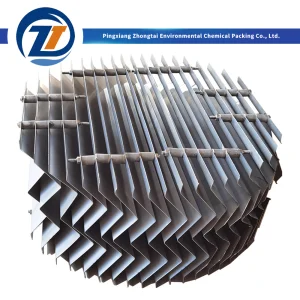
Engineered consumables designed to work synergistically across reaction, scrubbing, mist elimination, and drying trains.
Whether you require full-bed replacement, revamp calculations, or custom metallurgical fabrication, our chemical engineering team in Pingxiang is ready to review your tower operating parameters.
