Directly manufactured under ISO 9001:2015 standards, designed to optimize bed pressure drop, mechanical crush strength, and separation efficiency.
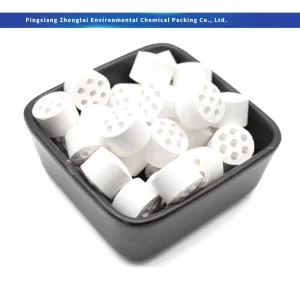
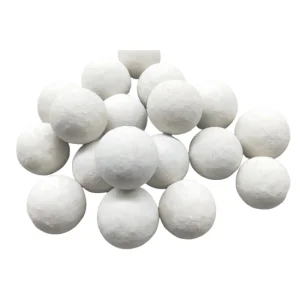
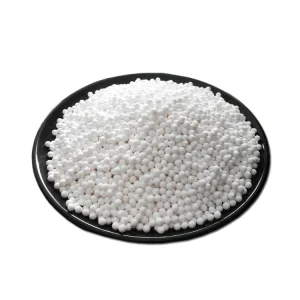
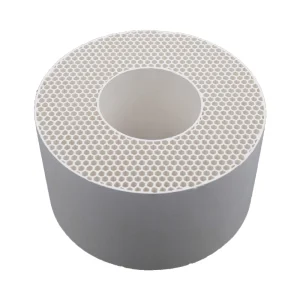
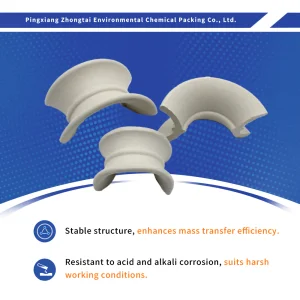
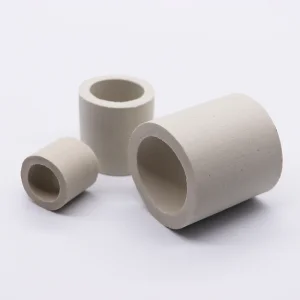
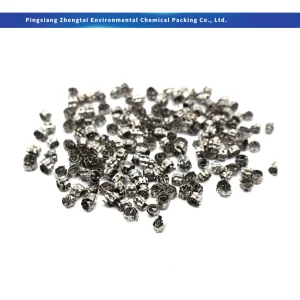
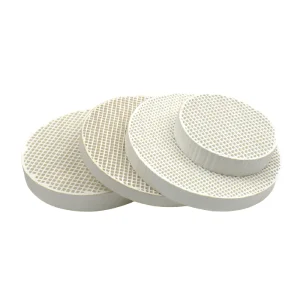
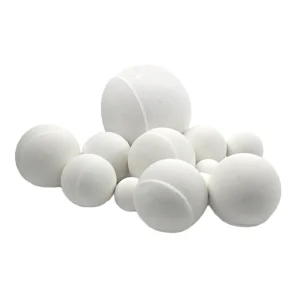
Precision ceramic spheres have evolved from standard catalyst support media into critical enabling components across semiconductor fabrication, Electric Vehicle (EV) high-rpm drivelines, aerospace bearings, green hydrogen electrolysis, and severe-service chemical mass transfer.
Zero silica-leaching for hydrocracking beds.
60% lighter than bearing-grade steel.
Sub-micron dimensional tolerance.
Resistant to extreme thermal shock ($\Delta T \ge 800^\circ\text{C}$).
Unlike conventional chrome steel balls, advanced precision ceramic balls ($Si_3N_4$, $ZrO_2$, $Al_2O_3$) exhibit near-zero electrical conductivity, extreme hardness (Vickers hardness $\ge 1500\text{ HV}$), and exceptional resistance to adhesive wear. In high-speed electric motor bearings, ceramic balls eliminate electrical pitting caused by stray shaft currents, extending bearing operating life by up to 800%.
In refining hydrotreating, steam reforming, and petrochemical reactors, chemical inertness is paramount. Chinese manufacturing clusters, specifically Pingxiang, have pioneered high-density, low-porosity ceramic spheres. By controlling free silica ($\text{SiO}_2 < 0.2\%$), these balls eliminate downstream heat exchanger fouling caused by silica vaporization under high-temperature steam environments.
The global push toward decarbonization has accelerated demand for structured heat-exchange ceramic media. In Regenerative Thermal Oxidizers (RTO) and high-stress chemical absorption towers, low-thermal-expansion ceramics prevent thermal spalling under rapid temperature cycling from ambient up to 1350°C.
A comprehensive technical evaluation comparing chemical formulation, crushing strength, temperature limits, and tribological indices across leading industrial ceramic ball grades.
| Material Classification | Primary Composition | Bulk Density (g/cm³) | Vickers Hardness (HV) | Crushing Strength (KN) | Max Temp (°C) | Primary Industrial Use Case |
|---|---|---|---|---|---|---|
| Standard Inert Ceramic Ball | 17% - 23% $\text{Al}_2\text{O}_3$, 70% $\text{SiO}_2$ | 1.35 - 1.45 | 750 - 850 | $\ge 5.5$ (for $\phi 25\text{mm}$) | 1050 °C | Refinery catalyst bed support, gas dryers, water treatment. |
| Medium Alumina Support Ball | 23% - 65% $\text{Al}_2\text{O}_3$ | 1.60 - 2.10 | 900 - 1100 | $\ge 8.0$ (for $\phi 25\text{mm}$) | 1350 °C | Petrochemical secondary reactors, acid tower packing base. |
| High-Purity Alumina Ball | 99.5% $\text{Al}_2\text{O}_3$, $< 0.1\%$ $\text{SiO}_2$ | 3.60 - 3.75 | 1450 - 1650 | $\ge 22.0$ (for $\phi 25\text{mm}$) | 1650 °C | Ammonia synthesis, hydrocrackers, steam reformers. |
| Silicon Nitride ($\text{Si}_3\text{N}_4$) Precision Ball | $> 90\%$ $\text{Si}_3\text{N}_4$ (GPS / HIP) | 3.20 - 3.25 | 1600 - 1800 | Ultra-High Dynamic Strength | 1200 °C | EV motor bearings, aviation turbopumps, wind turbine gearboxes. |
| Yttria-Stabilized Zirconia ($\text{Y-TZP}$) | 95% $\text{ZrO}_2$, 5% $\text{Y}_2\text{O}_3$ | 6.00 - 6.05 | 1200 - 1350 | $\ge 35.0$ (High Toughness) | 1000 °C | Chemical check valves, lithium battery slurry ultra-fine grinding. |
| Silicon Carbide ($\text{SiC}$) Sphere | Sintered / SSiC ($> 98\%$) | 3.10 - 3.15 | 2200 - 2600 | Extreme Wear Resistance | 1400 °C | Slurry pump check valves, semiconductor abrasive CMP media. |
In high-temperature steam environments ($>400^\circ\text{C}$ with high partial pressure of $\text{H}_2\text{O}$), silica contained in low-grade ceramic support balls reacts to form volatile silicic acid $\text{Si(OH)}_4$. This vapour travels downstream, condensing on cold heat exchanger tubes and poisoning sensitive precious-metal catalysts (e.g., platinum-rhenium reforming catalysts). Always specify $\ge 99\%$ High-Purity Inert Alumina Balls for steam reforming and hydroprocessing applications.
Engineered ceramic media tailored to solve complex process bottlenecks across chemical, energy, and advanced manufacturing sectors.
Challenge: Catalyst bed compaction, high pressure drop ($\Delta P$), and bed movement under high gas space velocity.
Solution: Graded bed configuration using 99% alumina inert ceramic balls ($\phi 3\text{mm}$, $\phi 6\text{mm}$, $\phi 13\text{mm}$, $\phi 25\text{mm}$, $\phi 50\text{mm}$). The top layer acts as a gas distributor and particulate hold-down, while the bottom support layer secures the catalyst bed without restricting gas flow.
Challenge: High motor speeds ($>20,000\text{ RPM}$) causing electrical discharge breakdown of lubricant films and micro-welding.
Solution: Silicon Nitride ($\text{Si}_3\text{N}_4$) G3 precision ceramic balls. Offering a dielectric constant of 8.5 and density of $3.21\text{ g/cm}^3$, these ceramic spheres lower centrifugal ball loads, reduce operating temperature by $15^\circ\text{C}$, and prevent shaft-current erosion.
Challenge: Corrosion of metal column internal packings under concentrated hot acid ($\text{H}_2\text{SO}_4$, $\text{HCl}$).
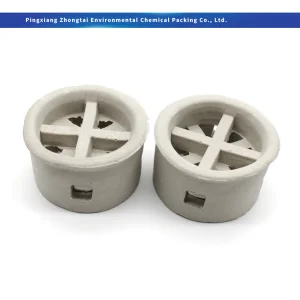
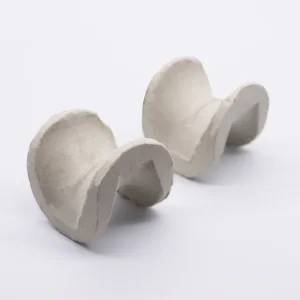
Solution: Ceramic Intalox Saddles, Raschig Rings, and Cascade Mini-Rings. Combined with inert ceramic ball support bases, these ceramics resist temperatures up to $1000^\circ\text{C}$ and all organic/inorganic chemicals (excluding hydrofluoric acid).
Challenge: Metallic ion contamination during sub-micron wet grinding of Lithium Iron Phosphate ($\text{LiFePO}_4$) cathode slurries.
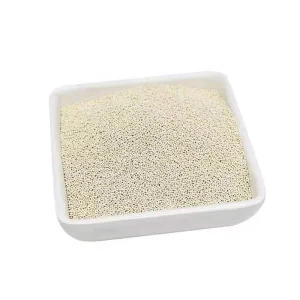
Solution: Ultra-fine Yttria-Stabilized Zirconia ($\text{Y-TZP}$) ceramic beads ($\phi 0.1\text{mm} - \phi 2.0\text{mm}$). Extremely low wear loss rates ($<0.01\text{ g/kg}$) guarantee zero iron contamination while achieving particle size distributions below $D_{50} < 200\text{ nm}$.
Challenge: Closure stress exceeding $100\text{ MPa}$ in deep shale reservoirs crushing quartz sand proppants.
Solution: Sintered Ultra-High Crush Resistance Ceramic Proppants (20/40, 30/50, 40/70 Mesh). Sintered bauxite ceramic spheres maintain fracture conductivity under effective closure pressures up to $86\text{ MPa} (12,500\text{ psi})$.
Challenge: High fuel consumption in industrial Volatile Organic Compound (VOC) treatment units.
Solution: Cordierite / Mullite Honeycomb Ceramics combined with ceramic sphere heat-storing layers, delivering thermal recovery efficiency $\ge 95\%$ while resisting thermal shock up to $1200^\circ\text{C}$.
From sub-micron powder preparation to high-temperature Isostatic Pressing and laser sphericity inspection, our Pingxiang production facility adheres to batch-level traceability.
Ultra-fine ceramic powders ($\text{Al}_2\text{O}_3$, $\text{ZrO}_2$, $\text{Si}_3\text{N}_4$) are wet ball-milled, homogenized with organic binders, and atomized in spray drying towers to form spherical granules with consistent flowability.
Precision ceramic balls are formed using Cold Isostatic Pressing (CIP) at pressures exceeding $200\text{ MPa}$ or automated CNC roll-forming machines, eliminating internal voids and structural micro-cracks.
Green bodies are densified in computer-controlled high-temperature tunnel kilns ($1650^\circ\text{C} - 1800^\circ\text{C}$) or Gas Pressure Sintering (GPS) furnaces under inert nitrogen atmosphere to achieve theoretical density.
For high-precision grades, ceramic spheres undergo multi-stage magnetic fluid polishing and diamond grinding. Final products are verified via X-Ray Fluorescence (XRF), crushing testers, and laser interferometers.
As industrial processes demand higher energy efficiencies, zero-emission standards, and extreme operating parameters, our R&D engineering roadmap focuses on three key vectors:
Scaling mass production of ISO 3290-2 Grade 3 (G3) Silicon Nitride balls with surface roughness $Ra < 0.003\ \mu\text{m}$. Essential for 800V EV motor architectures, hydrogen turbopumps, and semiconductor wafer CMP processes.
Transitioning from solid spheres to hollow, micro-porous, and 3D additive-manufactured ceramic lattice packing. This provides $300\%$ higher specific surface area ($\text{m}^2/\text{m}^3$) while reducing column dead weight by half.
Developing specialized ceramic support spheres for high-temperature Solid Oxide Electrolyzer Cells (SOEC) and Direct Air Capture (DAC) structured beds capable of thermal cycling up to $1400^\circ\text{C}$ without degradation.
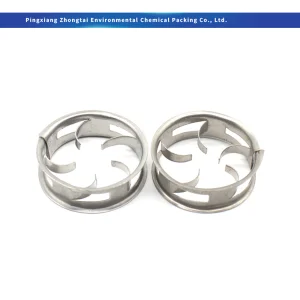
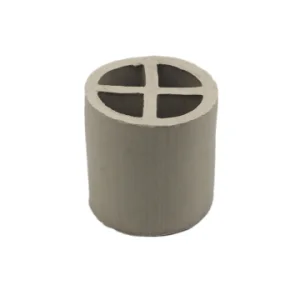
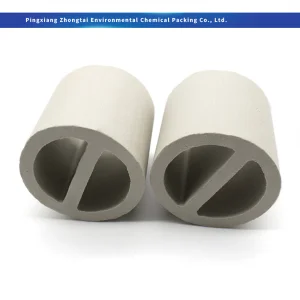
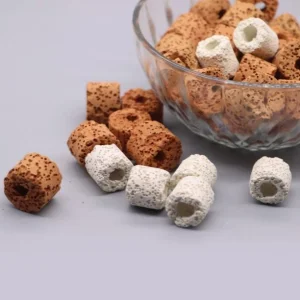
High-efficiency random packing rings, molecular sieves, and water purification media engineered for global EPC projects.
Expert insights addressing critical selection criteria, composition requirements, and operational guidelines for precision ceramic media.
