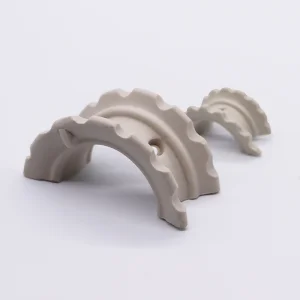
Explore high-performance tower packings, ceramic structures, and adsorption solutions designed for extreme refining and chemical processing operations.
Authoritative technical overview of synthetic aluminosilicate crystalline zeolites impregnated with moisture-sensitive chromogenic reagents for active saturation tracking.
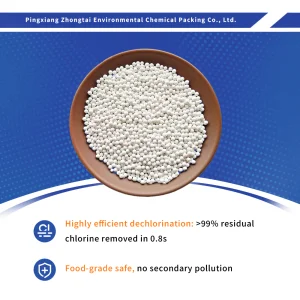
Synthetic zeolites (Type 4A, 3A, 5A, and 13X) possess uniform microporous three-dimensional crystalline frameworks. Indicating molecular sieves selectively adsorb polar water molecules into their internal cavities via strong electrostatic fields generated by framework cations (Na⁺, K⁺, or Ca²⁺). Water adsorption occurs without structural volumetric expansion, preventing physical degradation during operation.
By surface-doping the aluminosilicate lattice with precision inorganic salts or organic optical indicators, the sieve demonstrates distinctive, reversible bathochromic shifts:
Unlike conventional silica gels that experience saturation plateaus at low relative humidity, indicating molecular sieves maintain steep adsorption isotherms at extremely low vapor pressures. They achieve critical effluent dewpoints below -70°C (-94°F), making them irreplaceable for moisture-critical dielectric insulating transformers, cryogenics, and avionics desiccators.
| Property Parameter | Standard Cobalt-Free Indicating Sieve | High-Capacity Zeolite 13X Indicator | Testing Protocol |
|---|---|---|---|
| Nominal Pore Aperture | 4 Å (0.4 nm) | 10 Å (1.0 nm) | Crystallographic XRD |
| Bulk Density (g/ml) | 0.70 – 0.82 | 0.68 – 0.75 | ASTM D3838 / ISO 903 |
| Equilibrium Water Capacity (25°C, RH 80%) | ≥ 21.5% wt | ≥ 24.0% wt | Static Gravimetric Vapor Isotherm |
| Crush Strength (N/bead, 2.5-5.0mm) | ≥ 40 N | ≥ 35 N | ASTM D4179 Radial Compression |
| Visual Chromatic Transition | Dry: Deep Amber → Saturated: Dark Green | Dry: Royal Blue → Saturated: Soft Pink | Visual Reflectance Spectrophotometry |
| Thermal Regeneration Envelope | 150°C – 200°C (302°F – 392°F) | 180°C – 250°C (356°F – 482°F) | Desorption Thermogravimetry (TGA) |
Examining international demand drivers, environmental compliance pressures, and critical sector adoption of visual desiccants.
Global engineering firms are rapidly phasing out cobalt-dichloride (CoCl₂) indicating agents due to their classification as Substances of Very High Concern (SVHC) under European REACH regulations. China's premier manufacturers have pioneered environmentally stable, non-toxic formulations utilizing organic indicators and manganese/iron-based complexes that fully satisfy ISO 14001 and international safety directives.
The global upgrade toward ultra-high voltage (UHV) electrical grids, offshore wind turbines, and hydrogen storage systems necessitates maintenance-free moisture interception. Indicating sieves deployed inside transformer breather breathers prevent dielectric breakdown in transformer insulating oils, saving millions in preventative asset shutdowns.
Precision guidance optics, aerospace avionics modules, and deep-sea fiber optic repeater enclosures utilize compact indicating molecular sieve cartridges. Technicians gain immediate, passive optical confirmation of seal integrity and hermetic reliability during field inspections without intrusive electronic sensor overhead.
Why Tier-1 global EPC contractors, chemical conglomerates, and trading houses anchor their strategic media sourcing in Pingxiang, Jiangxi.
Pingxiang represents the world's most concentrated chemical packing and industrial ceramic cluster. Kaolin, sodium aluminate, silica sol, and calcining kilns exist within a compact logistical radius. This hyper-localized ecosystem eliminates third-party raw material markups and cushions global supply shocks, assuring unbeatable lead times.
Equipped with intelligent DCS-controlled continuous rotary calcination kilns, forming pan aggregators, and automated packaging lines, Zhongtai achieves immaculate batch consistency. Radial crush strengths, hydrothermal aging durability, and chromatic shift rates remain identical across metric-ton deliveries.
Indicating desiccants must not absorb ambient moisture during multimodal ocean transit. Every delivery is packed in vacuum-sealed double polyethylene moisture-barrier liners inside reinforced steel drums, heavy-duty cartons, or nitrogen-blanketed IBC containers ready for immediate site unsealing.
Field installations where visual indicating desiccants solve mission-critical maintenance and operational problems.
Transformer Dehydrating Breathers: Mounted on oil conservator tanks. The indicating molecular sieve layer traps all water vapor inhaled during thermal expansion cycles, signaling plant crews to initiate regeneration before dielectric insulating oil degradation occurs.
Natural Gas & CNG Dispenser Dryers: Deployed as top "guard layers" in regenerative molecular sieve drying towers. Plant engineers can visually gauge mass transfer zone (MTZ) breakthrough via sight-glasses without pulling analyzers.
ASU Molecular Sieve Pre-Purification: Visual desiccants serve as downstream safeguard monitors, protecting turbo-expanders and cryogenic plate-fin exchangers against carbon dioxide and moisture crystallization freeze-up accidents.
Active Pharmaceutical Packaging: Packed into canister capsules or non-woven breathable packets. Provides quick quality-assurance indicators confirming that humidity-sensitive APIs (Active Pharmaceutical Ingredients) remained stable throughout delivery chains.
Strategic R&D trajectories transforming synthetic zeolites into active, multi-stage intelligent materials.
Conventional zeolites require thermal regeneration at 200°C–300°C, consuming significant utility electricity or superheated fuel gas. Next-generation hybrid MOF-zeolite composites under pilot testing in Pingxiang lower desorption thresholds down to 90°C–110°C, enabling clean regeneration via low-grade industrial waste heat.
Collaborations with automation integrators have yielded intelligent vision sensors tuned to the exact chromophoric color coordinates of our cobalt-free indicators. Industrial cameras continuously read bed color through optical sight-glasses, transmitting automated SCADA alarms whenever saturation thresholds approach 80%.
Engineered multi-functional zeolites combining hydrophilic active drying sites with modified organophilic macropores. These formulations simultaneously trap moisture while capturing corrosive acidic vapors (SOx, NOx, trace HCl), safeguarding sensitive electronic relays in harsh offshore platforms.
Comprehensive regulatory documentation and bilingual technical stewardship to ensure frictionless plant approvals.
Every shipment is accompanied by detailed Certificates of Analysis (COA), Safety Data Sheets (SDS in full compliance with GHS Rev. 8), REACH SVHC test summaries, RoHS declarations, and mill test certificates verified by third-party laboratories such as SGS, TÜV, or BV upon request.
Our staff of chemical and mass transfer engineers provides fluent English support for desiccant sizing calculations, breakthrough curve forecasting, dynamic bed pressure drop models, and custom blend formulation services to meet proprietary client requirements.
We provide full-spectrum OEM manufacturing for multinational brand owners, including automated custom pre-weighed pouch packaging, private-label drum printing, pre-conditioned activation, and strategic hub warehousing to facilitate JIT (Just-In-Time) plant replenishments.
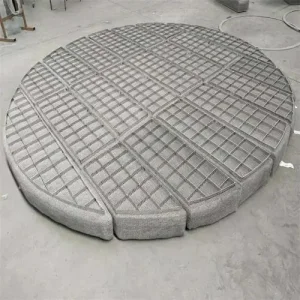
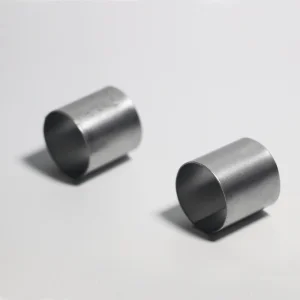
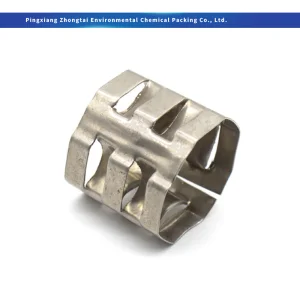
High-efficiency internals, mist eliminators, catalyst support balls, and environmental filtering media engineered at Pingxiang Zhongtai.
Clear, direct answers regarding specification selection, regeneration parameters, regulatory compliances, and factory logistics.
While silica gel relies on a broad amorphous pore structure that loses dynamic capacity at low relative humidity, molecular sieves possess uniform crystalline micropores. An indicating molecular sieve maintains ultra-high adsorption affinity even at trace moisture levels, achieving effluent dewpoints down to -70°C, compared to roughly -40°C for silica gel.
Yes. Thermal regeneration is typically carried out between 150°C and 200°C in an oven or with dry gas purging. As adsorbed moisture is desorbed from the crystal matrix, the optical indicator returns to its baseline dry color (amber/orange or royal blue). Care must be taken not to exceed 250°C, which would degrade organic indicator chemistry.
Yes. We specialize in non-hazardous, heavy-metal-free, and cobalt-free formulations. Our orange-to-green indicating sieves comply strictly with EU REACH Annex XVII, SVHC candidate lists, and RoHS directives, ensuring smooth clearance through European and American customs.
Because indicating sieves carry an indicator premium over standard 3A, 4A, or 13X sieves, plants rarely fill entire vessels with them. The standard engineering practice is to pack 90-95% of the bed volume with standard molecular sieve and place a 5-10% top cap of indicating sieve aligned with an optical vessel sight-glass to serve as a breakthrough monitor.
Every single batch undergoes testing for static water adsorption capacity, dynamic flow attrition, bulk density, bead diameter sizing, crush resistance, and spectral color transition coordinates. Lot test reports (COA) are certified and filed with each customer's shipment documentation.
Yes. We produce beads in 1.6-2.5mm, 2.0-3.0mm, 2.5-5.0mm, and 3.0-5.0mm fractions, as well as cylindrical extruded pellets. Specialized color change thresholds tailored for specific relative humidity trigger points can be formulated by our R&D technical team upon consultation.