Premium factory-direct media formulated for mechanical robustness, minimal silica extraction, and extreme thermo-chemical duty cycles.
Comprehensive engineering insights into ceramic structural density, surface phase transitions, and advanced morphology for next-generation chemical reactors.
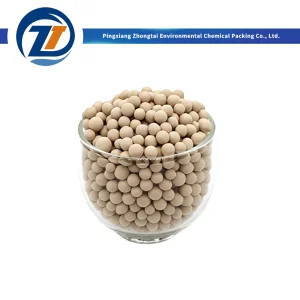
Traditional catalyst support media risk severe downstream catalyst poisoning caused by volatile silicic acid under severe hydrothermal conditions (high-pressure steam reforming). Advanced alpha-alumina phases (>99.5% Al₂O₃) eliminate silica leaching, ensuring continuous operation at working temperatures surpassing 1400°C.
Moving from conventional roll-forming to computerized cold isostatic pressing (CIP) generates an isotropic grain packing density. In grinding operations, micro-crystalline structures attenuate catastrophic shattering, restricting media consumption rates to negligible wear profiles (<0.01% per 24h continuous wet attrition).
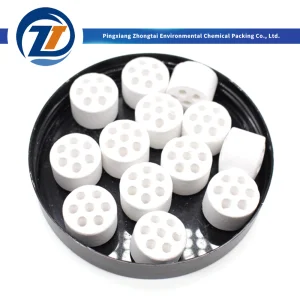
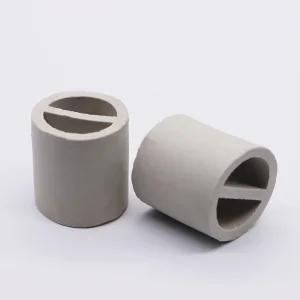
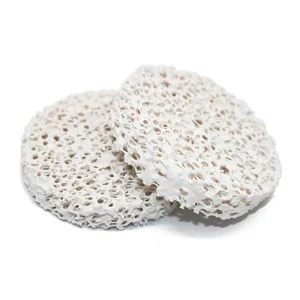
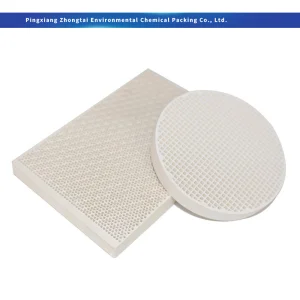
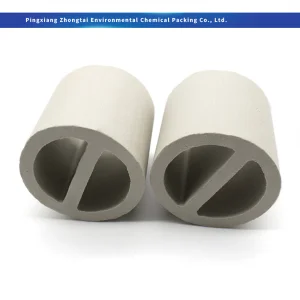
The transition toward engineered macro-porous and fluted perforated ceramic geometries decreases system-wide bed pressure drop (ΔP) by up to 28%. These structured bodies simultaneously deliver uniform gas-liquid flow redistributions across fixed bed catalyst layers without sacrificing compressive yield strength.
Verified physical-chemical metrics meeting ASTM C515 and international petrochemical design standards.
| Alumina Grade Type | Al₂O₃ Content (%) | Water Absorption (%) | Crush Strength (Ø25mm) | Bulk Density (g/cm³) | Max Temperature Limit |
|---|---|---|---|---|---|
| Standard Inert Catalyst Support | 17% – 23% | < 2.0% | > 5.5 kN / particle | 1.35 – 1.45 | 1050°C |
| High-Strength Intermediate Support | 23% – 30% | < 1.5% | > 7.2 kN / particle | 1.45 – 1.55 | 1200°C |
| Wet Ball Mill Grinding Media | 92% – 95% | < 0.02% | > 18.0 kN / particle | 3.60 – 3.70 | 1450°C |
| Super High Purity (Zero Silica) | ≥ 99.5% | < 0.01% | > 22.0 kN / particle | 3.80 – 3.92 | 1650°C |
Combining the geologic raw mineral abundance of Jiangxi with automated high-temperature tunnel kilns to satisfy multi-thousand-ton critical path timelines.
Situated within Pingxiang's specialized chemical ceramics cluster, our operations source refined kaolinite, industrial alpha-alumina powders, and bauxite from direct adjacent reserves, eliminating multi-tier logistics latency and isolating raw material costs.
Continuous tunnel kilns equipped with multizone SCADA thermocouple loops enforce exact firing profiles up to 1700°C. Sintering kinetics are closely held within ±2°C thresholds, delivering precise volumetric shrinkage control and eliminating internal voids.
Every industrial production run is monitored with computerized crush testing, ICP-OES elemental analysis, and optical sphericity inspection. Mill certificates and test dossiers follow each batch for seamless inclusion into EPC audit trails.
Targeted solutions developed for refinery operations, bulk chemicals, industrial metallurgy, and continuous emissions control systems.
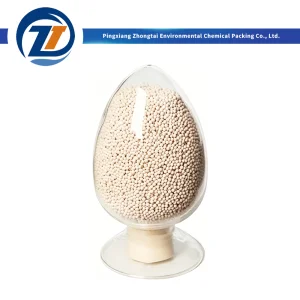
Graded beds of high-crush inert alumina balls (ranging from 1/8" to 2") isolate fine particulate foulants while supporting high-density catalyst beds under hydrogen partial pressures up to 200 bar.
Application of 99.5% high-purity support media avoids hot-spot runaways caused by thermal bridging and limits silica fouling in downstream quench loops and tubular reactors.
Dense micro-crystalline 92% and 95% grinding balls supply targeted kinetic force in agitated vertical and horizontal mills, generating narrow sub-micron dispersions for calcium carbonate, zircon, and lithium battery pigments.
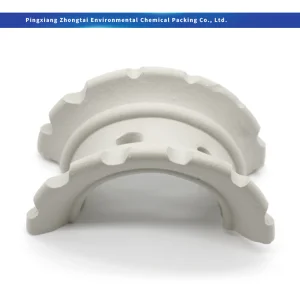
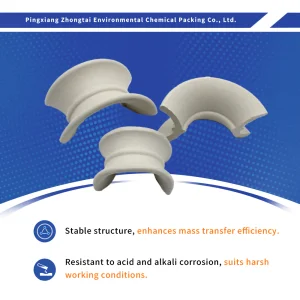
Thermal storage media and ceramic saddles yield high thermal capacity (>1000 J/kg·K) with low thermal expansion coefficients, enduring rapid directional thermal cycling up to 1100°C without spalling.
Engineered to mitigate risk for international EPC contractors, refinery turnarounds, and industrial procurement consortia.
Support for pre-shipment inspections by SGS, Bureau Veritas, or TÜV. Testing includes bulk density validation, point-load crush strength across statistical samples, and chemical composition analysis per ISO 9001 quality guidelines.
Shipment options include multi-layer moisture-proof 1000kg/1200kg super sacks with internal polyethylene liners, airtight steel drums, or shrink-wrapped wooden cases treated according to ISPM 15 phytosanitary standards for ocean and intermodal freight.
Maintained strategic buffers of standard sizes (1/8", 1/4", 1/2", 3/4", 1", 1-1/2", 2") facilitate immediate emergency delivery to regional logistics hubs within 7 to 14 days, minimizing unplanned downtime during unexpected plant outages.
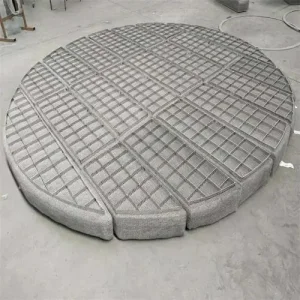
Complete mass transfer, molecular separation, and filtration media designed for modern chemical processing towers.
Targeted technical and operational insights addressing key specifications, reactor mechanics, and international delivery protocols.
Standard 17–23% Al₂O₃ inert balls supply adequate compressive load resistance, chemical inertia, and thermal resistance up to 1050°C, making them an economical choice for general petroleum hydrotreating, hydrodesulfurization, and organic synthesis bed hold-downs. Alternatively, 99%+ alumina balls are strictly specified for high-temperature steam environments—such as secondary steam reformers and ammonia units—where moisture and high temperatures leach free silica (SiO₂). This prevents vapor carryover that fouls and deactivates sensitive noble metal catalysts downstream.
Grading follows a layered configuration designed to retain the catalyst while balancing pressure drop across the bed. The rule of thumb specifies that the support ball diameter must be at least twice the diameter of the adjacent process particle to prevent migration into the lower plenum, but no larger than four times the particle size to minimize voids that could cause bridging and catalyst attrition. Beds typically graduate upward through 2", 1-1/2", 1", 3/4", 1/2", 1/4", and 1/8" layers.
Thermal shock resistance is governed by material density and coefficient of thermal expansion (CTE). High-performance alumina supports are fired under controlled thermal cycles to develop a stable crystalline matrix. We test thermal shock resistance by heating samples to 850°C followed by immediate quenching in 20°C water for repeated cycles, ensuring the finished media remains free of macro-cracking, splitting, or internal micro-fissuring.
In continuous wet grinding of hard industrial minerals (such as quartz or zircon sand), high-density 92% Al₂O₃ balls exhibit wear rates between 0.010% and 0.015% per 24 hours. The ultra-fine micro-crystalline matrix of 95% Al₂O₃ reduces that wear rate to less than 0.008% per 24 hours. This minimizes mill charge consumption and reduces foreign elemental contamination in the finished slip or slurry.
Every industrial delivery includes a Certified Material Test Report (CMTR) detailing chemical analysis (via XRF/ICP), bulk density verification, water absorption levels, and point-load crush strength tests across a statistical sample from the production run. Shipments can also include Third-Party Inspection Reports (SGS/BV/TÜV), Certificates of Origin, Fumigation Certificates (ISPM 15 compliance), and technical safety data sheets (MSDS/TDS).