Direct factory supply engineered for extreme thermal stability, anti-crushing resilience, and chemical corrosion resistance.
Navigating the global market for industrial ceramics requires a granular understanding of the China Alumina Balls Price structure. As the world's primary manufacturing hub for chemical tower packings, catalyst bed support media, and high-purity alumina grinding spheres, China's supplier ecosystem directly dictates international procurement trends. The pricing of alumina balls is not merely a scalar metric based on weight; it is a complex function of chemical purity ($\text{Al}_2\text{O}_3$ percentage ranging from 17% inert ceramic to 99.5% high-purity alpha-alumina), cold crush strength, thermal shock resistance, and sintering temperature curves.
Over recent fiscal quarters, procurement executives across North America, Europe, and Asia-Pacific have observed price fluctuations driven by three macroeconomic anchors: raw material (calcined bauxite and synthetic alumina) volatility, environmental compliance mandates governing continuous tunnel kilns, and global freight dynamic rebalancing. Understanding these metrics enables EPC contractors, refinery plant procurement leads, and chemical plant operators to lock in long-term supply contracts with audited Chinese suppliers at optimized operational expenses (OPEX).
Selecting the optimal supplier requires balancing initial cost per metric ton against long-term bed stability. Low-grade ceramic support balls containing high silica ($\text{SiO}_2$) content can cause catastrophic silica leaching in high-temperature hydrotreating or steam reforming units, poisoning sensitive precious-metal catalyst beds downstream.
To establish rigorous Quality Assurance (QA) standards during sourcing, engineering teams must evaluate ceramic spheres based on physical, thermal, and chemical performance metrics. China suppliers generally segment alumina balls into four primary functional categories:
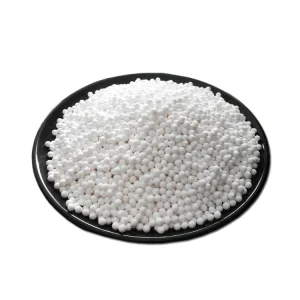
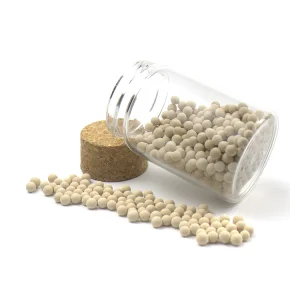
Widely utilized as base support media in refining catalytic reactors and desiccant dryers. Composed of a balanced microcrystalline mixture of kaolin clay and feldspar silica-alumina matrix, providing adequate crush resistance at cost-effective market prices.
Specially formulated for high-energy ball mills, wet/dry attrition mills, and ultrafine mineral grinding circuits. Characterized by high density ($\ge 3.60\,\text{g/cm}^3$), high Mohs hardness (9), and exceptionally low wear loss parameters.
Synthesized from reactive calcined $\alpha\text{-Al}_2\text{O}_3$ powder. Free of silica binder ($<0.2\%\,\text{SiO}_2$), making them impervious to hydrogen attack, hot steam leaching, and corrosive acid-gas degradation in secondary ammonia reformers and gasification units.
| Property Parameter | 17-23% Inert Ball | 90-92% High Alumina | 99% High Purity Inert | Activated Alumina Desiccant |
|---|---|---|---|---|
| $\text{Al}_2\text{O}_3$ Chemical Purity | 17.0% – 23.0% | $\ge 90.0\%$ | $\ge 99.2\%$ | $\ge 93.0\%$ ($\gamma\text{-phase}$) |
| Bulk Density ($\text{g/cm}^3$) | 1.35 – 1.45 | 2.00 – 2.20 | 1.90 – 2.10 | 0.68 – 0.78 |
| Specific Gravity ($\text{g/cm}^3$) | 2.30 – 2.45 | 3.60 – 3.65 | 3.75 – 3.85 | 3.10 – 3.30 |
| Water Absorption (%) | $\le 3.0\%$ | $\le 0.02\%$ | $\le 0.5\%$ | $\ge 45.0\%$ (Static Adsorption) |
| Cold Crushing Strength ($\text{kN/particle}$) | $> 3.5$ (for $\varnothing 25\text{mm}$) | $> 18.0$ (for $\varnothing 25\text{mm}$) | $> 12.0$ (for $\varnothing 25\text{mm}$) | $> 0.15$ (per bead) |
| Max Working Temp (°C) | 1100°C | 1500°C | 1750°C | 350°C (Regeneration Limit) |
Intent mining across international industrial procurement networks indicates that buyers seeking China Alumina Balls Price Supplier & Suppliers are evaluating options beyond raw unit costs. Their primary decision vectors focus on Total Cost of Ownership (TCO), operational safety margins, export shipping lead times, and batch-to-batch chemical reliability.
Refineries operating hydrodesulfurization (HDS), hydrocracking, and catalytic reforming beds require inert alumina top hold-down and bottom support spheres. Buying teams search for certified low-silica grades ($\text{SiO}_2 < 0.2\%$) to prevent bed fouling and pressure drop spikes ($\Delta P$) over multi-year turnarounds.
High-purity 99% alumina balls are heavily specified for shift converters, shift reactors, and primary/secondary reformers. With operating temperatures exceeding 1200°C in high-pressure steam environments, high thermal shock resistance and high mechanical crush strength are non-negotiable procurement mandates.
Mining operations processing gold, copper, quartz, and glaze slip seek wear-resistant 92% alumina grinding media. Procurement intent focuses on wear-loss guarantees (less than $0.01\%$ per hour), high density to optimize mill throughput, and volume discounts per metric ton.
In chemical engineering processes, ceramic balls serve far greater functions than inert space-fillers. They act as essential hydrodynamic flow distributors, pressure drop mitigators, and thermal buffer zones. Improper sizing or poor mechanical strength can lead to sphere spalling, dust generation, void space reduction, channeling, and localized hot-spot formation within catalyst layers.
To maximize gas-liquid distribution while preventing fine catalyst particles from migrating downstream, experienced process engineers design graded packing layers. A standard reactor support bed configuration uses a stepped sphere size gradient:
By specifying precision-formed, highly spherical China alumina balls with narrow size tolerances ($\pm 1.0\text{mm}$), process operators achieve predictable bed porosity ($\sim 40\%$ void fraction). This optimizes hydrodynamic flow profiles and prevents premature shutdown cycles caused by bed packing compression.
Working directly with verified manufacturing clusters in Pingxiang, Jiangxi Province—the chemical packing capital of China—provides global buyers with distinct manufacturing scalability and cost efficiencies. However, maintaining strict Quality Assurance (QA) standards is critical to establishing long-term supplier trust.
Every production lot undergoes rigorous laboratory analysis under ASTM D4179 (Single Pellet Crush Strength), X-Ray Fluorescence (XRF for chemical purity), and Archimedes water displacement density testing. Full Factory Test Certificates (FTC) are supplied prior to shipment.
Industrial orders are packaged in heavy-duty 1000kg PP jumbo bags with moisture-proof polyethylene inner liners, reinforced plastic drums, or fumigated wooden cases bound to heavy-duty ISPM-15 compliant wooden pallets.
Full support for Certificate of Origin (Form E, CO, RCEP), HS Code harmonized declaration (HS 6909.19 / 2818.20), and FOB, CIF, DDP delivery terms tailored to global port destinations.
The industrial ceramics manufacturing ecosystem in China is undergoing a technological transition toward green sintering processes, automated spherical molding, and micro-structural formulation tuning.
Transitioning from traditional coal gas producers to clean natural gas and energy-recuperative tunnel kilns. This shift significantly reduces carbon emissions per metric ton while ensuring precise heat distribution, resulting in tighter bulk density tolerances and lower thermal expansion coefficients.
Next-generation activated alumina adsorbents leverage nano-template binding mechanisms. This creates targeted pore size distributions (mesoporous and macroporous networks), increasing static water adsorption capacity above 50% without compromising bead crush strength.
Replacing manual inspection with AI-driven vision sorting systems. Automated camera arrays examine each alumina sphere for surface micro-cracks, ovality deviations, and structural flaws at speeds exceeding 10 tons per hour per production line.
Direct manufacturer catalog for refinery revamps, environmental scrubbing, gas drying, and water treatment units.
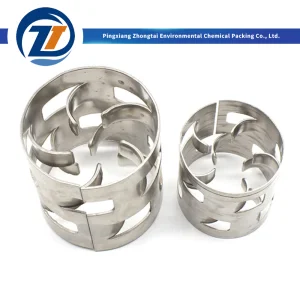
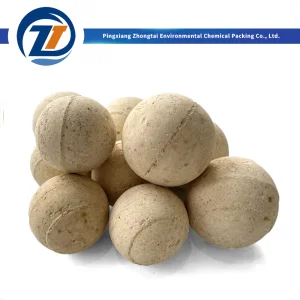
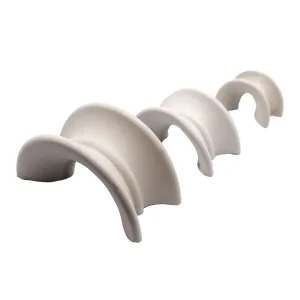
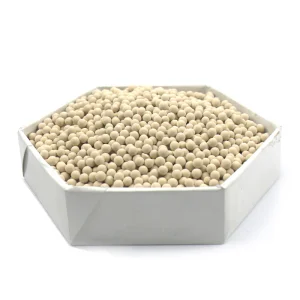
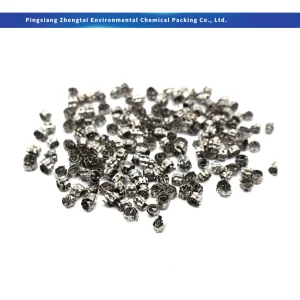
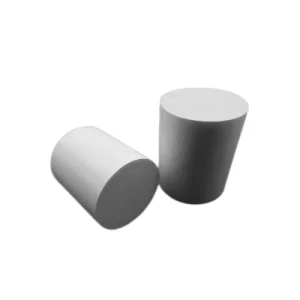
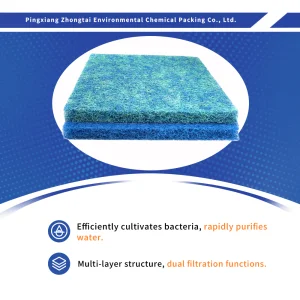
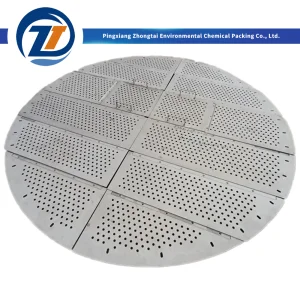
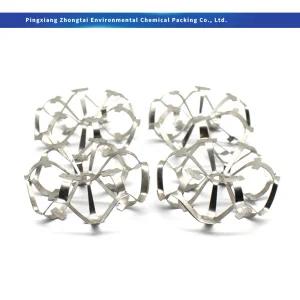
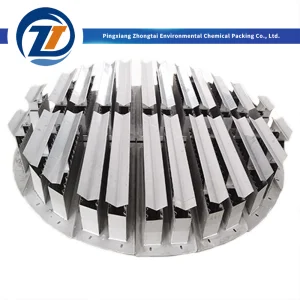
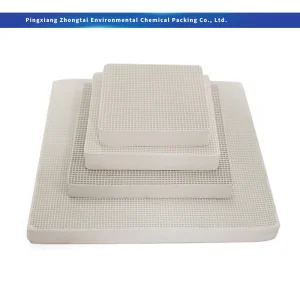
Established in 2003, Pingxiang Zhongtai Environmental Chemical Packing Co., Ltd. is a specialized manufacturer and global exporter of industrial chemical packing media. Operating from the West Section Hi-Tech Industry Park of Pingxiang City, Jiangxi Province, China, our company manufactures inert ceramic balls, alumina grinding media, metal/plastic random packing, structured packing, RTO honeycomb ceramics, ceramic foam filters, and molecular sieves.
Our in-house chemical engineering team works directly with global EPC contractors and plant engineers to recommend optimal packing media sizes, materials, and bed volume configurations tailored to column operational conditions.
Zhongtai products are exported to over 50 countries across Southeast Asia, the Middle East, Europe, and North America. International client audits, such as our 2018 Korean customer audit, validate our strict manufacturing controls.
Commercial Office: No. 905, Global Business Center, Economic Development Zone, Pingxiang City, Jiangxi, China. Direct inquiry assistance is provided via [email protected] or +86-18270997020.
Clear, engineer-backed answers to the most common questions regarding pricing structures, specifications, lead times, and application suitability.
