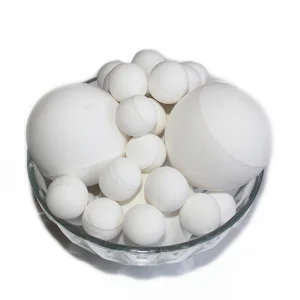
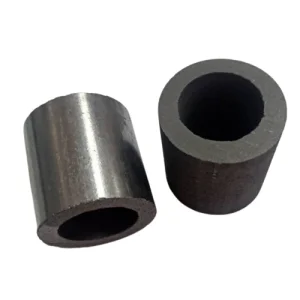
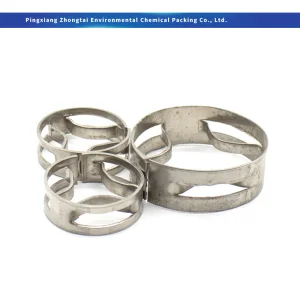
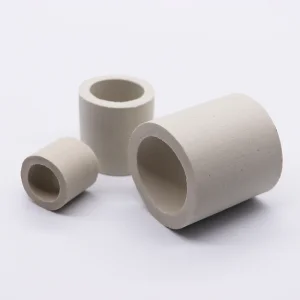
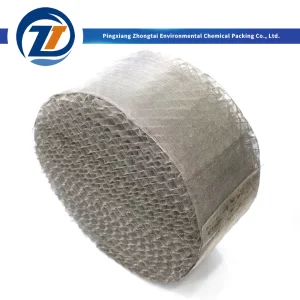
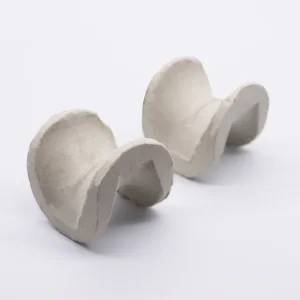
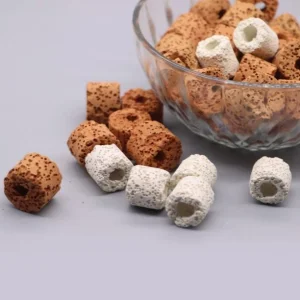
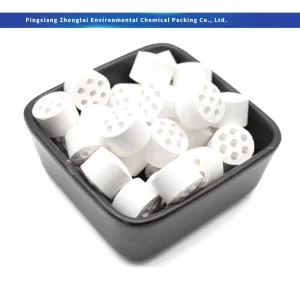
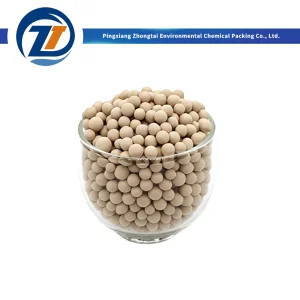
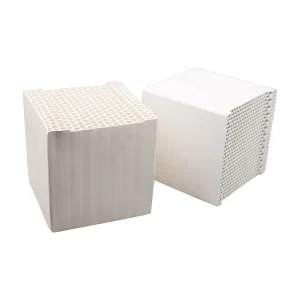
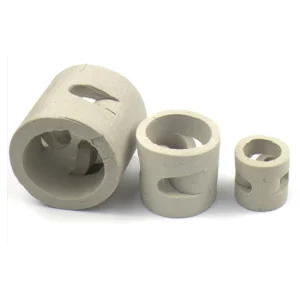
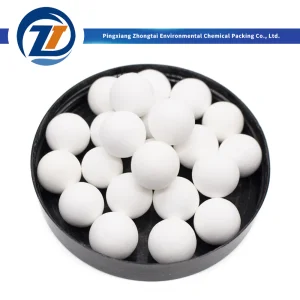
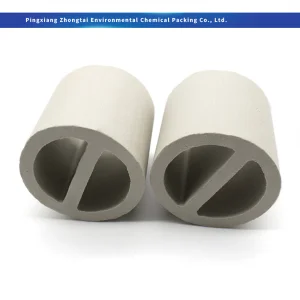
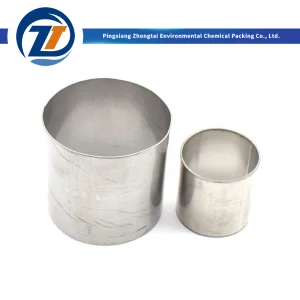
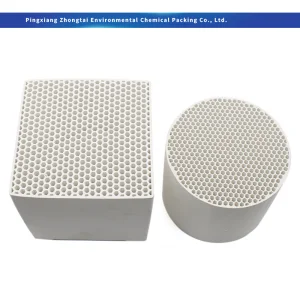
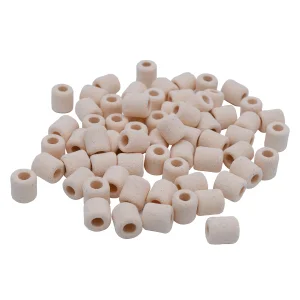
High-performance adsorbents, heat recovery monoliths, and ceramic column packings engineered alongside our acid-resistant masonry lines for seamless process tower integrations.
Modern chemical refining, hydrometallurgical processing, and sulfuric acid manufacturing environments operate under severe thermodynamic extremes. Unprotected carbon steel, standard refactories, or polymer liners experience rapid hydrolytic degradation, oxidative stress, and mechanical cavitation.
Inside sulfur burning, metallurgical smelting, and pyrite roasting facilities, drying and intermediate/final absorption towers face 93% to 99.2% sulfuric acid at temperatures reaching 120°C to 200°C. Our acid-resistant bricks establish a rigid, thermally insulating vitrified barrier that protects the outer steel containment and PTFE/membrane substrate from chemical scorch and abrasive gas-liquid impingement.
Continuous strip steel pickling lines and high-pressure acid leaching (HPAL) autoclaves processing battery-grade nickel, cobalt, and lithium operate with mixed hydrochloric (HCl), nitric (HNO₃), and hydrofluoric (HF) acid chemistries. Our dense vitrified tiles withstand both hydrodynamic scouring from turbulent turbulent flows and continuous corrosive chemical attack.
Thermal power utilities and waste incineration facilities utilizing wet flue gas desulfurization (WFGD) experience saturated flue gas conditions where sulfur dioxide and trioxide condense below acid dew point into highly acidic sulfurous droplets (pH ≤ 1.0). Ceramic acid masonry chimneys completely neutralize condensation degradation while preventing structural collapse.
| Containment Material | Maximum Temperature | Acid Resistance Range (Excluding HF) | Abrasion Resistance | Relative CAPEX / Lifespan Metric |
|---|---|---|---|---|
| Vitrified Acid Resistant Bricks (China Factory) | 900°C – 1250°C | pH 0.0 – 11.0 (Full Concentration Range) | Exceptional (Mohs 7 – 8) | Lowest Lifecycle Cost (25+ Year Service Life) |
| High-Silicon Carbon Bricks | 350°C – 500°C | pH 0.0 – 14.0 (Tolerates HF) | Moderate (Mohs 4 – 5) | High Initial Cost / Susceptible to Strong Oxidizers |
| Exotic Nickel Alloys (Hastelloy C-276 / Alloy 20) | 400°C – 650°C | Narrow concentration bands; localized pitting risk | High ductility / Low erosion yield | Extremely High CAPEX / High Stress Corrosion Cracking |
| PTFE / FEP Polymer Linings | 150°C – 200°C | Broad Chemical Inertness | Very Low (Vulnerable to Tear / Wear) | Moderate Initial Cost / Frequent Replacement (3-5 Years) |
The worldwide transition toward green hydrometallurgy, regional sulfuric acid production, and critical mineral extraction has created severe supply constraints for premium-grade acid-proof refractory materials. Sourcing from our automated manufacturing infrastructure delivers undeniable technical and commercial leverage.
Pingxiang, located in Jiangxi Province, holds over a century of industrial ceramic expertise. Our specialized chemical brick formulations utilize native high-purity kaolinitic clays, potassium-feldspar, and secondary silicates containing less than 0.5% iron oxide (Fe₂O₃) and minimal titania (TiO₂). By maintaining localized mining, calcination, wet ball-milling, extrusion, and high-temperature natural gas sintering within a 25-kilometer logistics radius, we achieve unshakeable supply chain reliability and superior batch homogeneity compared to distributed producers.
Procurement decisions driven solely by initial FOB metric cost often overlook the catastrophic downtime costs associated with unplanned tower outages. A failed acid tower in a 5,000 metric ton per day (MTPD) sulfuric acid complex results in daily operational losses exceeding $150,000 USD. China acid-resistant bricks engineered under rigorous ASTM C279 Type III or Type II protocols deliver:
Every production run undergoes strict destructive testing, compositional validation, and dimensional verification documented via 3.1 Mill Inspection Certificates compliant with ASTM, DIN, and GB standards.
| Physical / Chemical Parameter | Testing Protocol | ASTM C279 Standard Requirement | Our Engineered Typical Values | Practical Significance for Plant Operators |
|---|---|---|---|---|
| Acid Solubility (Weight Loss) | ASTM C279 / GB/T 8488 (Boiling 78% H₂SO₄, 48 hrs) | ≤ 8.0% (Type I), ≤ 6.0% (Type III) | ≤ 0.6% – 1.2% | Prevents thickness degradation in continuous hot concentrated acid immersion. |
| Water Absorption | ASTM C20 / C373 (Vacuum Boiling Method) | ≤ 6.0% (Type I), ≤ 1.0% (Type III) | 0.4% – 0.8% | Completely arrests capillary acid penetration to inner membrane and steel shell. |
| Cold Crushing Strength (CCS) | ASTM C133 / EN 993-5 | ≥ 40.0 MPa (5,800 PSI) | 100.0 – 135.0 MPa | Withstands extreme packing weight, support grid thrusts, and hydraulic surges. |
| Modulus of Rupture (Flexural Strength) | ASTM C674 / ISO 5014 | ≥ 10.0 MPa | 22.5 – 30.0 MPa | Resists mechanical shearing and thermal stress flexing during startups and shutdowns. |
| Bulk Density | ASTM C20 / C134 | ≥ 2.10 g/cm³ | 2.30 – 2.45 g/cm³ | Indicates optimal microstructural compaction and thorough vitrification during firing. |
| Thermal Shock Resistance | Water Quenching Cycle (150°C to 20°C) | No Visible Cracks (Pass standard cycle) | > 30 Quench Cycles without Failure | Eliminates cracking during severe process upsets, acid pump restarts, and thermal excursions. |
Rigorous X-ray fluorescence guarantees Al₂O₃ content between 28% and 34%, with total SiO₂ > 65% in fully crystallized glassy and mullite phases.
Automated optical sorting checks every standard brick (230 × 114 × 65 mm / 38 mm) to ensure dimensional precision within ±1.0% to minimize mortar joint thickness.
Sub-surface non-destructive acoustic testing detects internal shrinkage voids, delamination, or firing micro-cracks before dispatch.
Every wooden crate features QR-coded batch tracking detailing the specific kiln run, thermal profile logging, and physical lab test verification.
An acid-resistant lining is an interdependent composite system. The finest ceramic brick will fail prematurely if paired with an improper jointing mortar or an unstable elastomeric backing membrane. We supply end-to-end engineered system specifications.
For dry gas and concentrated sulfuric acid towers operating between 80°C and 450°C, potassium silicate mortars (K₂O·nSiO₂) catalyzed with condensed aluminum phosphate hardeners are preferred over sodium silicates. Potassium silicate eliminates sodium sulfate (Glauber's salt) efflorescence, which otherwise causes joint spalling under thermal cycling.
When processing wet chemicals, organic solvents, hydrochloric acid pickling baths, or fluctuating acidic/alkaline wash sequences (pH 1.0 to 12.0), resin-based jointing compounds provide unbeatable impermeability. Modified carbon-filled furan and bisphenol-A epoxy novolac systems create seamless, non-porous joints resilient against hydraulic pressure.
Critical vessels—such as high-pressure acid leach autoclaves, oleum absorption sumps, and wet chlorine scrubbers—utilize a dual-tier brick configuration. A 38mm back-course tile laid in staggered joints acts as an initial thermal buffer, while a 65mm or 100mm face-course brick provides heavy mechanical protection against turbulence and erosion.
Zhongtai and our ceramic engineering partners are pioneering material advances to support higher-efficiency, carbon-neutral, and ultra-harsh metallurgical flowsheets through 2030 and beyond.
Incorporating 3-5% sub-micron yttria-stabilized zirconia into the aluminosilicate matrix promotes micro-crack pinning, increasing fracture toughness (K₁C) by 45% for high-vibration slurries.
Transitioning natural gas firing zones to blended hydrogen fuel technology to eliminate carbon dioxide emissions during ceramic vitrification while maintaining ultra-tight ±3°C temperature bands.
Precision dry-pressed tongue-and-groove brick shapes that mechanically lock together, reducing mortar-joint exposure surface area by 65% and preventing brick shifting under hydrodynamic surge forces.
Commercializing non-portland alkali-activated slag and fly-ash geopolymer mortars that achieve chemical bonding with acid brick surfaces, virtually eliminating joint permeability.
Answers to critical technical and logistical questions asked by process design engineers, EPC procurement directors, and plant maintenance superintendents.
Precision-formed random packing, catalyst support bed ceramics, and structured distillation meshes manufactured in our Pingxiang manufacturing park.