High-integrity synthetic zeolites, inert ceramic supports, and high-capacity random/mist elimination media built to withstand industrial multi-cycle thermal regeneration.
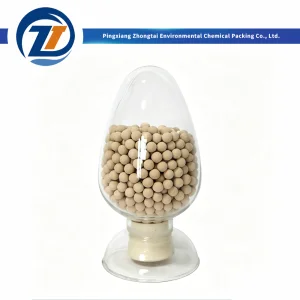
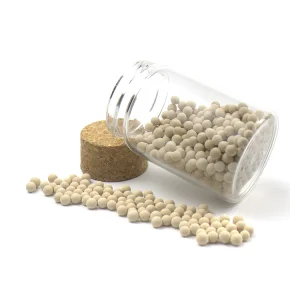
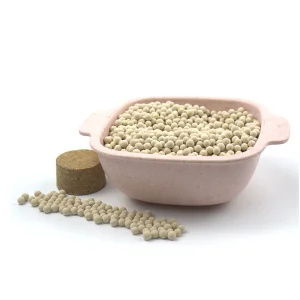
Type 13X molecular sieve (synthetic Faujasite Na-X framework with 10Å aperture) requires precise thermal and volumetric purge regimes to prevent irreversible structural collapse during cyclic adsorption and desorption.
The crystallographic unit cell of 13X zeolite, Na86[(AlO2)86(SiO2)106]·264H2O, features large supercages (13Å diameter) entered via 12-member oxygen rings. High isosteric adsorption heat for water (approx. 45 to 65 kJ/mol) dictates that desorption requires minimum thermal thresholds of 200°C to 315°C to break strong electrostatic dipole interactions with charge-balancing extra-framework sodium cations (Na⁺).
The most catastrophic failure mode in industrial regeneration is hydrothermal amorphization (zeolite "steaming"). If moisture is driven off cold pellets too rapidly without sufficient dry purge sweep gas, an in-bed autoclave micro-environment develops. This hydrolyzes Si-O-Al framework bonds, causing permanent dealumination, crystal loss, and micropore surface area reduction from >850 m²/g down to unusable levels.
Efficient thermal swing adsorption (TSA) relies heavily on the driving force: the chemical potential gradient between the molecular sieve surface and the purge carrier gas. Regeneration sweep gas must exhibit a dew point lower than -40°C (ideally < -60°C). Any moisture slippage in the purge loop restricts equilibrium desorbed moisture release, permanently increasing the residual capacity baseline (Q_res).
Process engineering benchmarks for continuous industrial columns (Air Separation Unit prepurification, LNG natural gas sweetening, cracked gas drying).
Rate: < 0.2 bar/min. Prevents fluidization, bed lifting, high gas shear velocities, and mechanical attrition of the zeolite beads.
Ramp rate: 1.5°C to 2.5°C/min up to 180°C. Strips light weakly-bound hydrocarbons before high-temperature desorption.
Plateau at 250°C – 315°C for 3 to 6 hours. Fully desorbs chemically bound H2O and CO2 from the internal faujasite supercages.
Counter-current flow of clean, dry slip-gas (dewpoint < -60°C) until bed temperature drops below 40°C to restore working capacity.
Repressurize using feed-gas slip stream through equalizing valves. Ensures smooth transition back to the adsorption cycle.
| Operational Parameter | Standard TSA Protocol | PSA / VPSA Oxygen Service | Natural Gas & LNG Drying | Engineering Compliance Notes |
|---|---|---|---|---|
| Regeneration Temp Peak | 220°C – 260°C | Ambient (Depressurization) | 260°C – 315°C | Exceeding 350°C risks lattice sintering |
| Purge Gas Ratio (V_purge / V_feed) | 12% – 18% | 20% – 30% | 8% – 14% | Requires clean, dry hydrocarbon-free slipstream |
| Purge Gas Dew Point Target | < -50°C | < -40°C | < -65°C | High moisture purge drives severe hydrothermal decay |
| Bed Velocity During Heating | 0.08 – 0.15 m/s | N/A (Pressure swing) | 0.06 – 0.12 m/s | Controlled below minimum fluidization velocity (U_mf) |
| Residual Moisture Content (wt%) | < 1.5% | < 3.0% | < 0.5% | Karl Fischer Titration verified per ASTM D6869 |
| Cycle Turnaround Window | 8 to 24 Hours | 30 to 120 Seconds | 12 to 36 Hours | Dependent on bed diameter and heat transfer profile |
From cryogenic fractionation trains to offshore LNG liquefaction terminals, Zhongtai 13X zeolites provide unmatched hydrothermal longevity and regenerative stability.
Simultaneous deep co-adsorption of moisture (< 0.1 ppmv) and CO2 (< 0.5 ppmv) ahead of cold boxes. Prevents cryogenic heat exchanger freeze-ups. Counter-current waste nitrogen TSA purge restores full static and dynamic adsorption capacity with minimal power consumption.
Targeted removal of H2S, carbonyl sulfide (COS), and mercaptans (R-SH). 13X faujasite pore aperture (1.0 nm) easily accommodates branched sulfur species. Engineered calcination suppresses coking during high-temperature thermal regeneration sweeps.
High dynamic water capacity during polymer-grade ethylene and propylene drying. Zhongtai 13X incorporates optimized binder formulation that exhibits zero polymerization catalysis, avoiding premature bed pressure drop spikes and run-away regenerations.
Rapid depressurization regeneration cycles in industrial and medical oxygen generators. Rigorously screen-classified to provide uniform spherical geometry, high pack density, and high nitrogen/oxygen selectivity (α_N2/O2 > 3.2).
Pingxiang Zhongtai Environmental Chemical Packing Co., Ltd. leverages the world’s most concentrated chemical mass transfer manufacturing ecosystem in Jiangxi, China.
Direct supply partnerships for sodium aluminate and silica sol within a 50 km logistics radius. Complete quality oversight from raw synthetic gelation and crystallization to binder addition (attapulgite and kaolinite clays), guaranteeing consistent Si/Al molar ratios (2.4 to 2.8) and zero batch-to-batch variation.
Continuous rotary activation kilns equipped with multi-zone digital PID thermal control. Tight ±2°C temperature precision prevents localized overheating that causes structural defects, maximizing the initial micropore volume (> 0.35 cm³/g) and crush resistance (> 35 N for 1.6-2.5 mm beads).
Annual synthetic zeolite capacity exceeding 12,000 metric tons. Located on major high-speed freight corridors to Shanghai, Ningbo, and Shenzhen ports. Packed in air-tight, nitrogen-purged 200L hermetically sealed steel drums or 1,000 kg moisture-barrier supersacks with internal aluminum linings.
As global industry drives toward Net-Zero carbon goals, molecular sieve thermal swing regeneration is evolving through electrifying technologies and artificial intelligence.
Direct volumetric dielectric heating of polar water molecules inside 13X cavities. Bypasses external convection bottlenecks, cutting desorption energy input by up to 40% and shortening regeneration cycles by 60% with zero hydrothermal overheating.
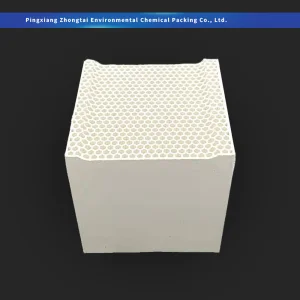
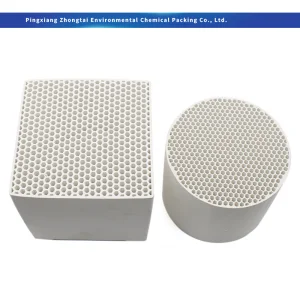
Moving from random spherical beads to 3D-printed cordierite-zeolite and honeycomb composite monoliths. Reduces bed pressure drop (ΔP) by up to 65% while maintaining rapid intra-crystalline mass transfer rates and eliminating mechanical bed movement.
Machine-learning sensor arrays analyze dynamic bed temperature profiles, feed dewpoint transients, and breakthrough curves in real time. Dynamically shifts regeneration heating triggers, preventing under-regeneration and saving massive parasitic steam/electric power.
Conversion of inert inorganic clay binders directly into active faujasite crystals via secondary hydrothermal crystallization. Yields 100% active zeolite content with a 20% higher dynamic adsorption capacity compared to conventional binder-based 13X beads.
From certified factory acceptance testing (FAT) to on-site reactor bed loading supervision, Zhongtai guarantees flawless operational onboarding.
Every production batch is tested and validated against ASTM D4179 (Single Pellet Crush Strength), ASTM D4058 (Attrition and Abrasion Resistance), ASTM D3838 (pH of Activated Zeolites), and dynamic breakthrough test vessels that replicate client gas velocities and partial pressures.
Full documentation packs supplied with every container: Factory Certificate of Analysis (CoA), Safety Data Sheet (SDS), Non-Hazardous Cargo Declaration, REACH and RoHS compliance certificates, and third-party inspection reports (SGS / TÜV Rheinland / BV audits welcomed).
Engineering advisory support for Sock Loading and Dense Phase (Snowstorm) loading to eliminate void bridging and ensure uniform pressure drop. Our field engineers provide step-by-step guidance on initial in-situ thermal dehydration and plant restart schedules.
Detailed technical answers to common queries regarding 13X molecular sieve regeneration parameters, cycle life, thermal degradation, and factory procurement.
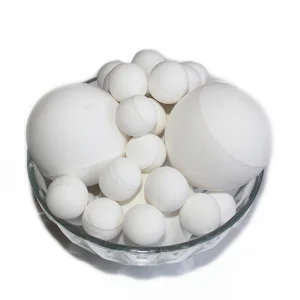
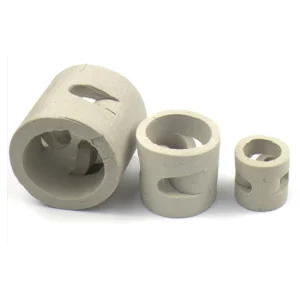
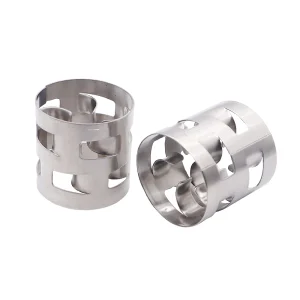
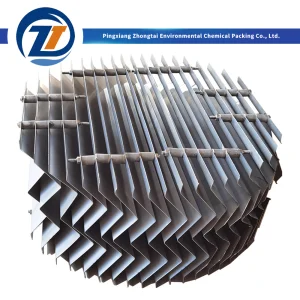
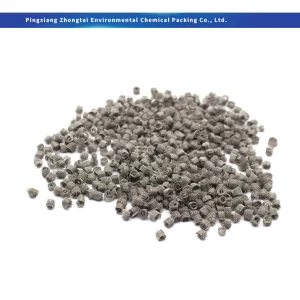
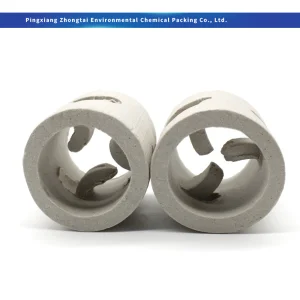
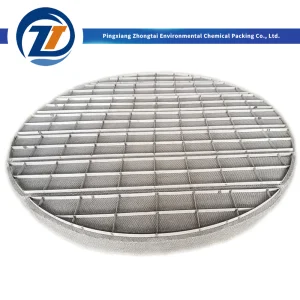
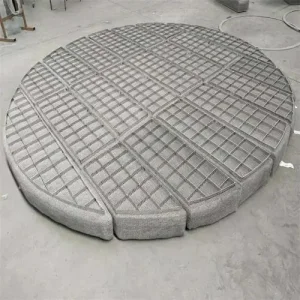
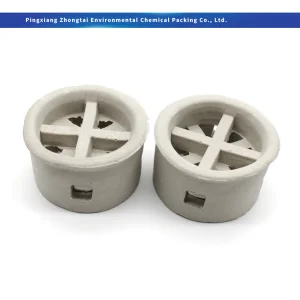
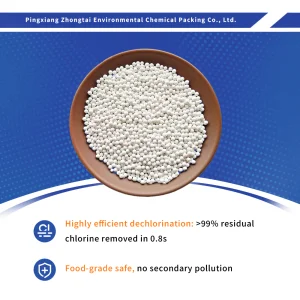
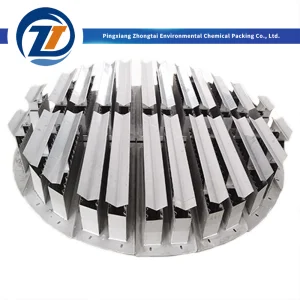
Complementary mass transfer packings, liquid distributors, structured wire gauze, and environmental purification substrates manufactured in our Pingxiang facility.
Connect directly with Pingxiang Zhongtai’s chemical process engineering division. Share your column dimensions, gas feed composition, breakthrough cycle targets, and delivery port to receive verified batch pricing and simulation reports within 24 hours.
