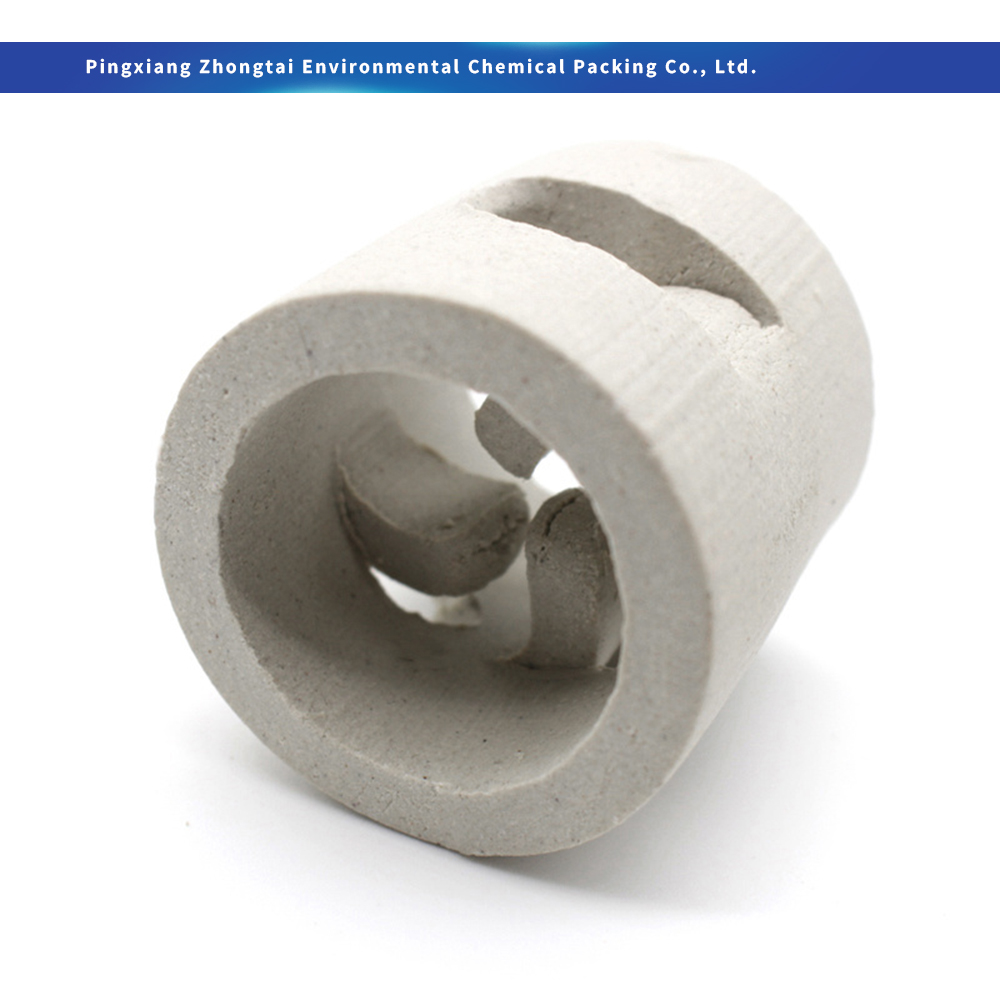
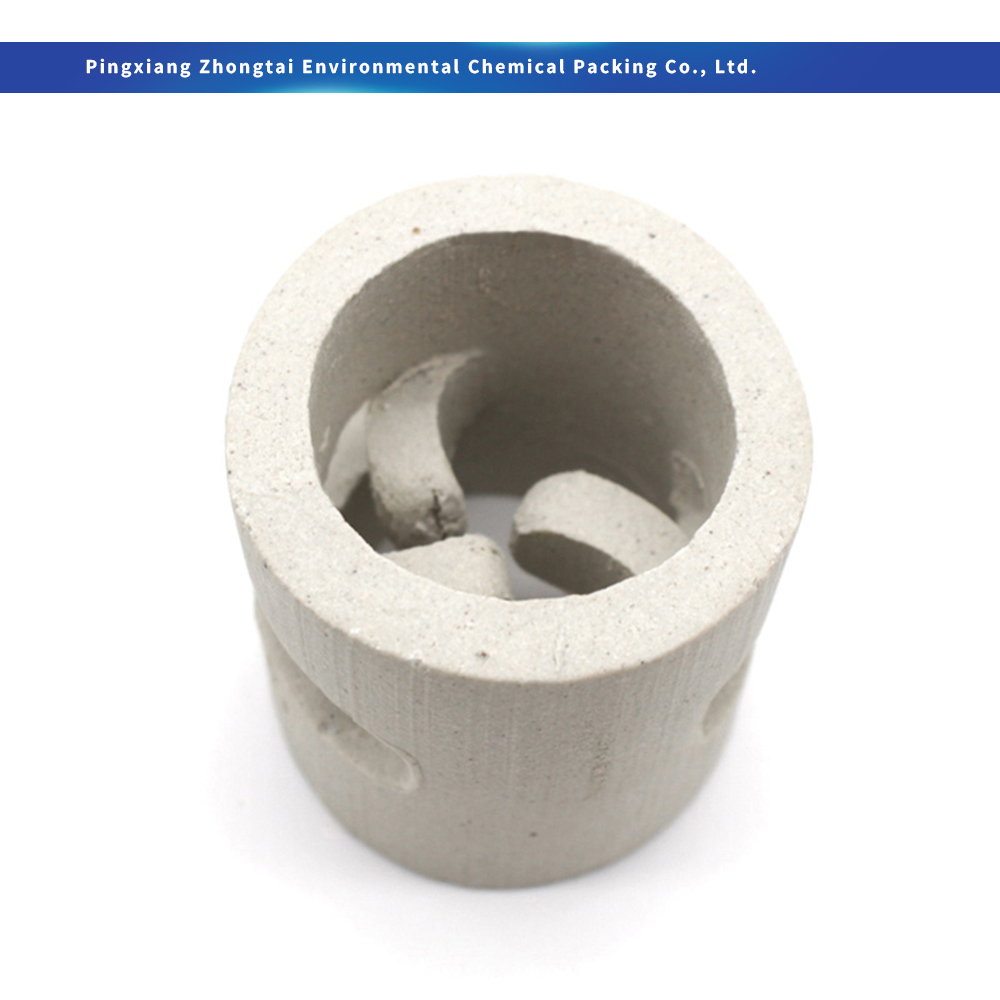
1 / 5




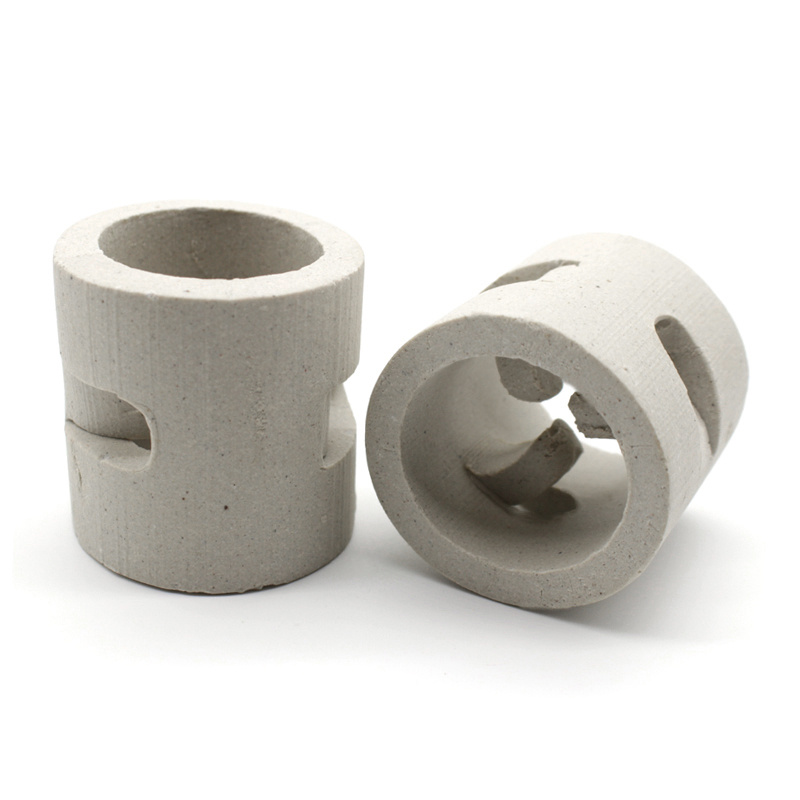
Constructed from high-alumina ceramic, it withstands all inorganic and organic acids (except hydrofluoric acid) and can operate at temperatures exceeding 1200°C, ensuring long-term stability in the most aggressive chemical environments.
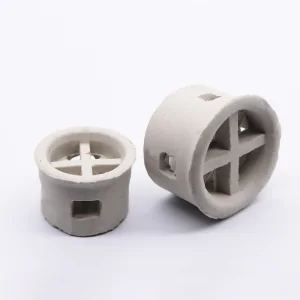
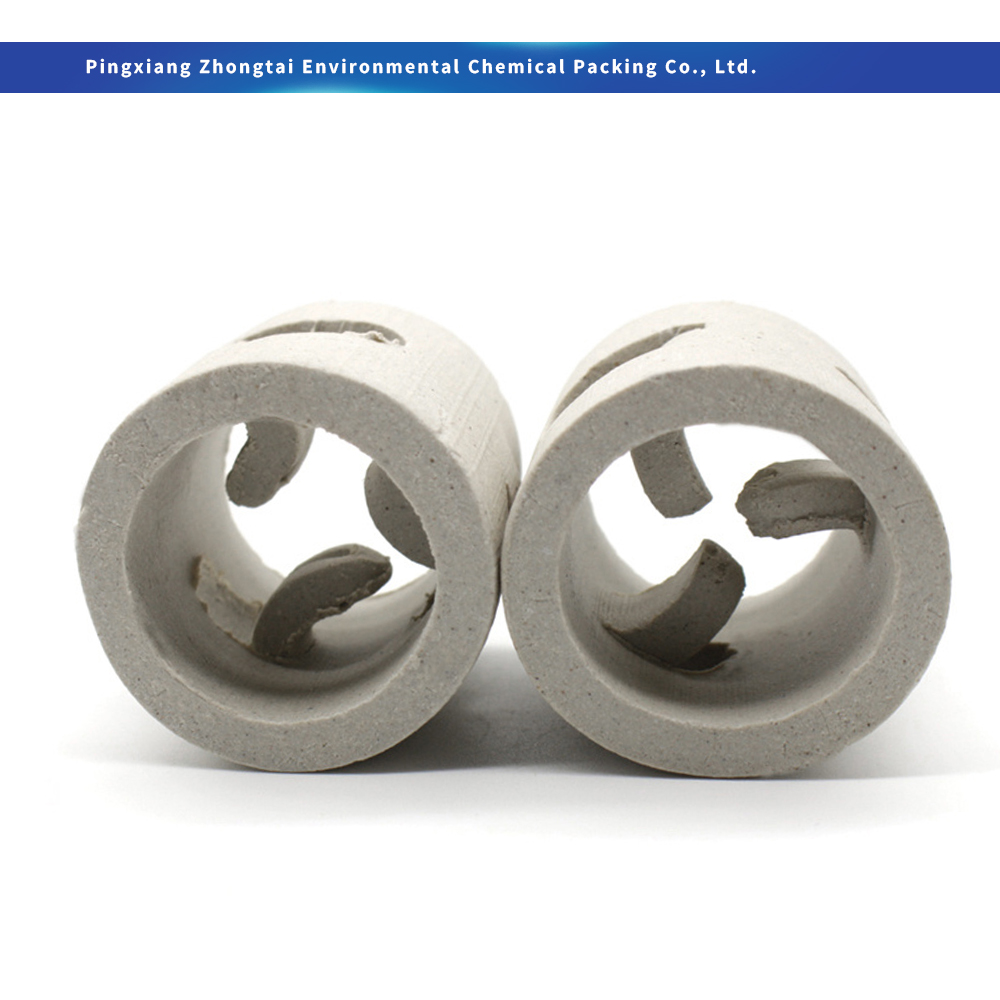
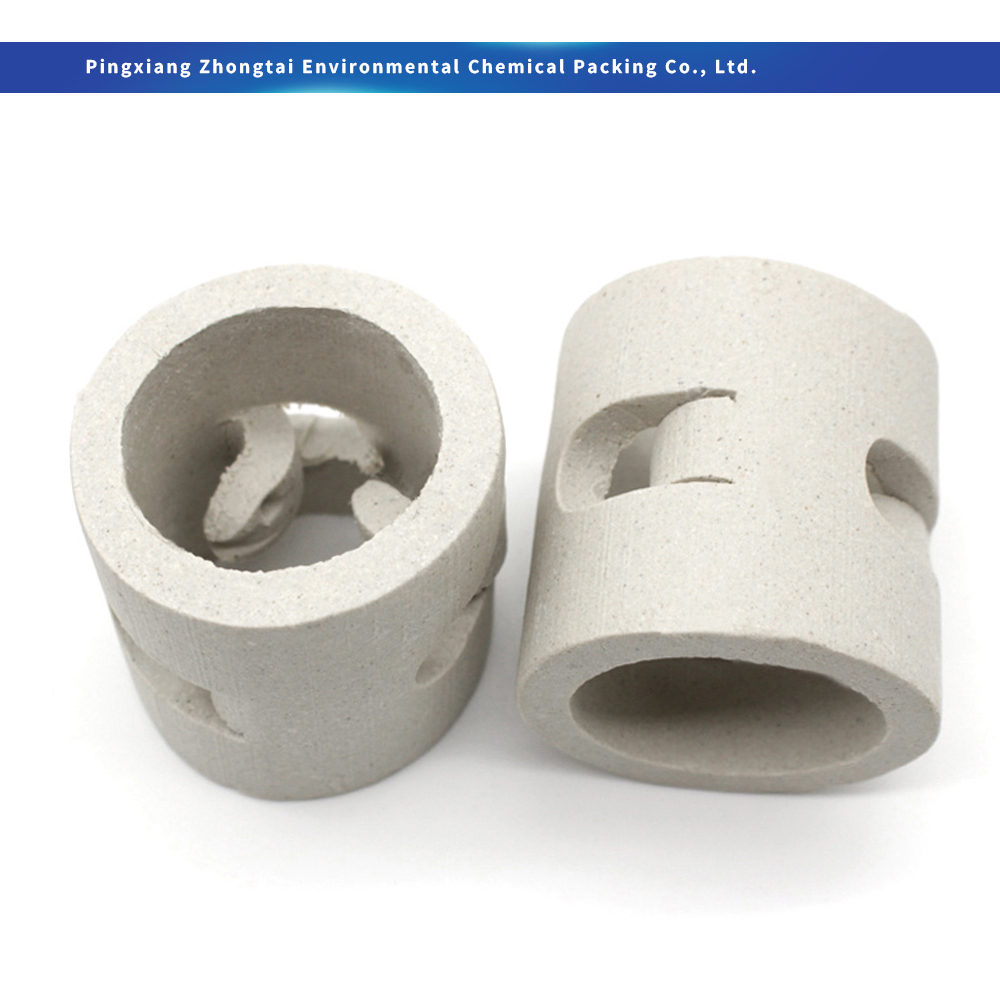
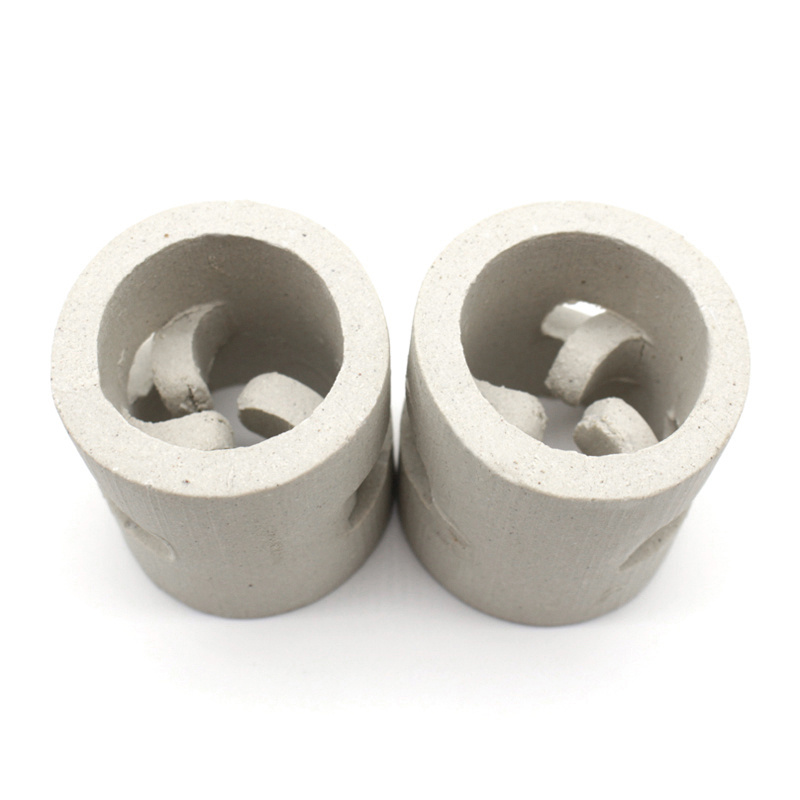
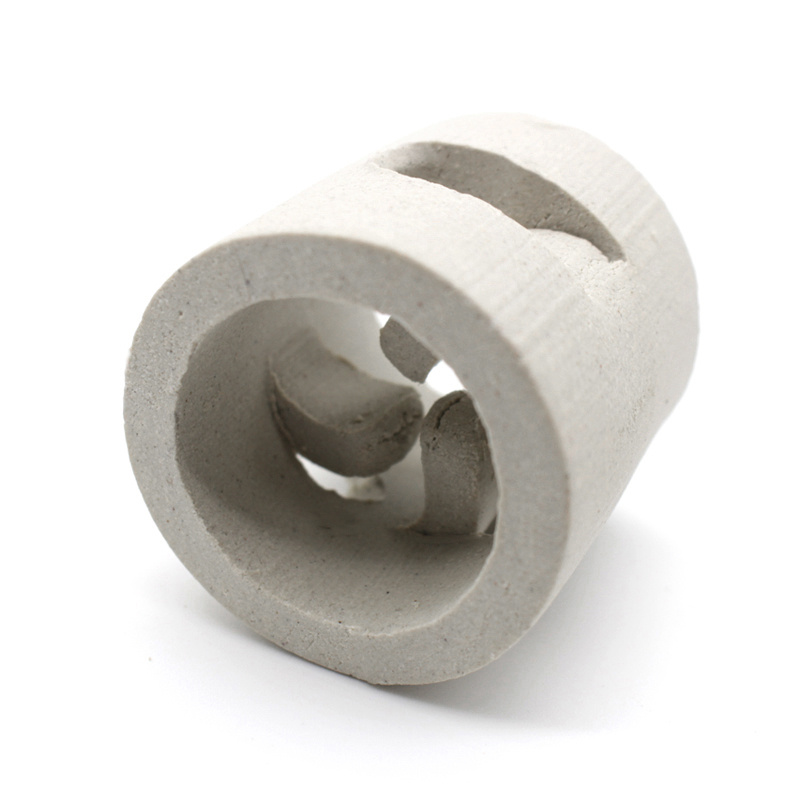
The unique open-hole structure with internal tongues significantly improves gas-liquid distribution, offering 50-100% higher treatment efficiency compared to Raschig rings.
Achieves up to 70% lower pressure drop than traditional designs, making it an energy-saving choice for modern chemical plants.
Sintered at high temperatures, the ceramic body provides high mechanical durability and resistance to thermal shock, preventing breakage during operation and maintenance.
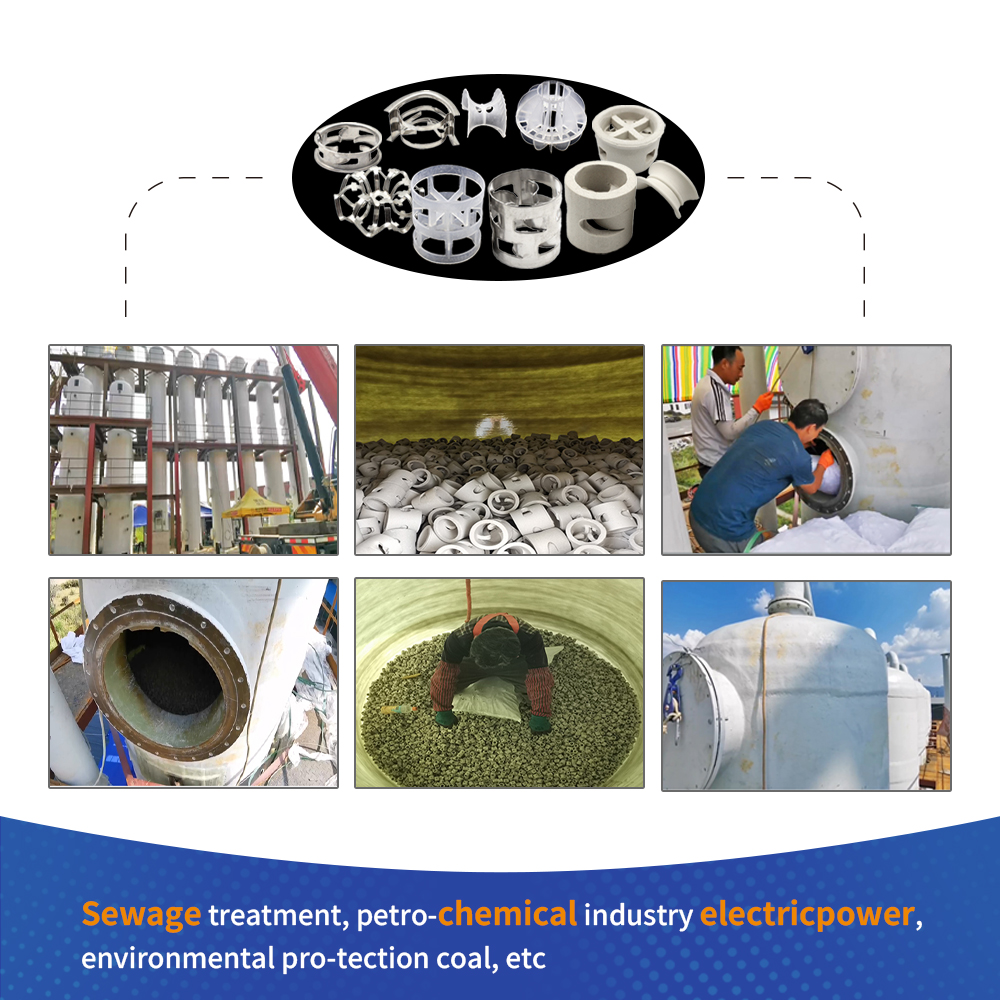
A versatile packing media for diverse applications including drying, absorption, cooling, scrubbing, and regeneration towers in chemical, metallurgical, and environmental protection industries.
Based on the classic Pall Ring geometry, it has been widely adopted worldwide, backed by decades of industrial application data and compliance with GB/T18749-2008 standards.
| Size (mm) | D×H×T (mm) | Surface Area (m²/m³) | Void Ratio (%) | Bulk Density (kg/m³) | Packing Factor (m⁻¹) |
|---|---|---|---|---|---|
| φ25 | 25×25×3.0 | 210 | 73 | 630 | 540 |
| φ38 | 38×38×4.0 | 150 | 77 | 620 | 332 |
| φ50 | 50×50×5.0 | 110 | 81 | 600 | 252 |
| φ80 | 80×80×8.0 | 75 | 80 | 520 | 146 |





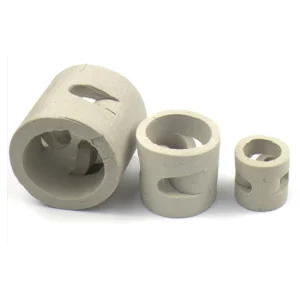
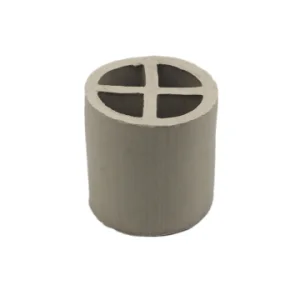
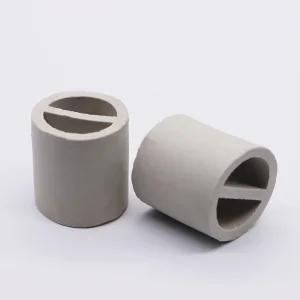
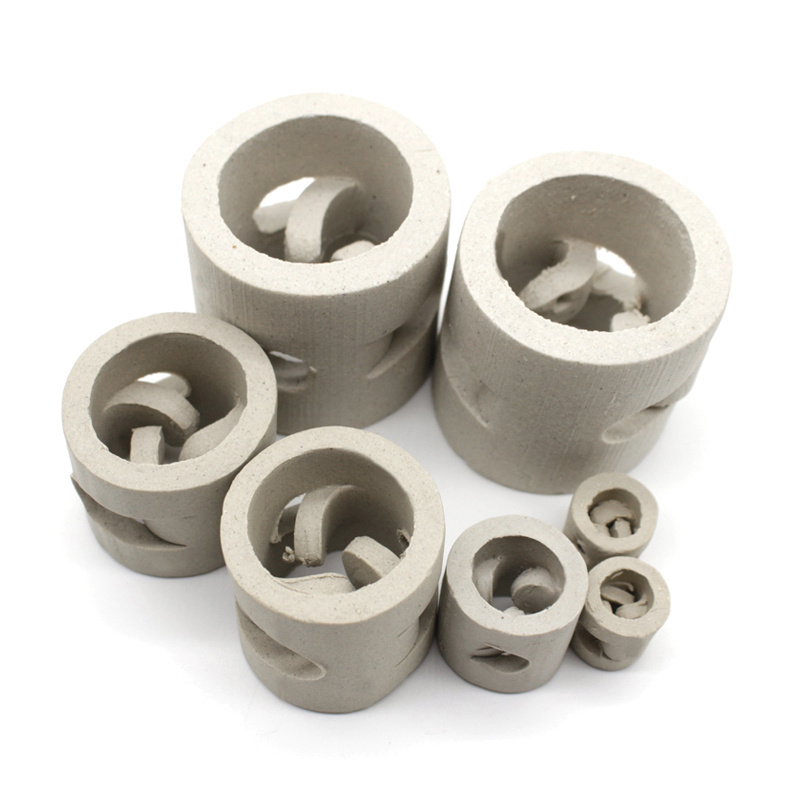
Ceramic Pall Rings feature an open-wall design with two layers of windows and inwardly curved finger-like tongues. This structure significantly increases available internal surface area, improves gas-liquid distribution, and provides 50% to 100% greater mass transfer efficiency while reducing pressure drop by up to 70%.
Manufactured from high-grade ceramic materials, they operate reliably at temperatures up to and exceeding 1200°C. They offer outstanding resistance to virtually all organic and inorganic acids, except hydrofluoric acid (HF).
The standard available sizes are φ25 mm, φ38 mm, φ50 mm, and φ80 mm. Each size provides distinct void ratios (ranging from 73% to 81%) and specific surface areas tailored to diverse hydraulic tower designs.
They are widely applied across chemical processing, metallurgy, coal gasification, and environmental protection in operations such as drying towers, absorption towers, cooling towers, scrubbing units, and regeneration columns.
Our Ceramic Pall Rings are manufactured strictly in accordance with the GB/T18749-2008 industrial ceramic standard, ensuring uniform wall thickness, high mechanical crush resistance, and consistent chemical composition.
The high-temperature sintering process densifies the ceramic matrix, conferring high compressive strength, low water absorption, and superior resistance to abrupt thermal fluctuations during cyclic unit operations.