Engineered directly from Pingxiang’s industrial chemical-grade porcelain basins to meet rigorous U.S. chemical plant benchmarks. Below are the four flagship geometries deployed in continuous service across Gulf Coast refineries, midwestern fertilizer plants, and flue-gas desulfurization towers.
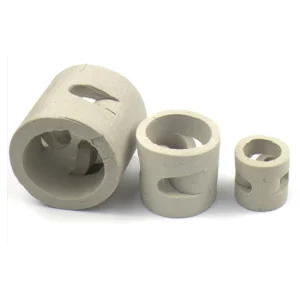
Optimized open-wall internal web design reducing hydraulic resistance while maximizing mass transfer interfacial area in acid absorption service.
View Product Specs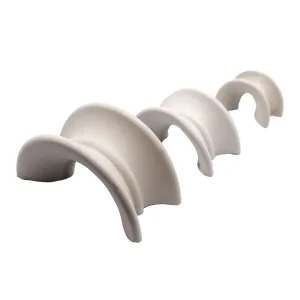
Industry-standard smooth saddle curvature preventing nesting, delivering exceptional liquid hold-up and minimal static bed channeling.
View Product Specs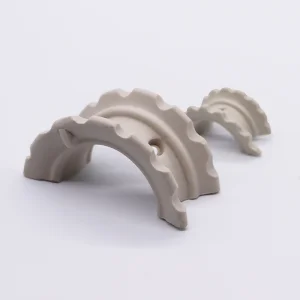
Scalloped-edge geometry providing intermittent liquid drip points, enhancing mass transfer rate while lowering pressure drop up to 25%.
View Product Specs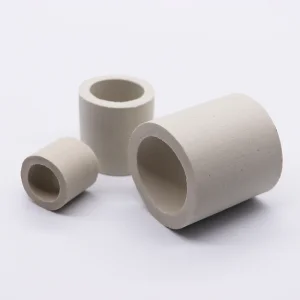
Robust classical hollow-cylinder design engineered for heavy static catalyst support beds and severe thermal fluctuation scrubbing towers.
View Product SpecsNorth America’s chemical manufacturing paradigm is experiencing a fundamental structural shift. Boosted by sustained domestic natural gas liquids (NGL) feedstocks along the Texas-Louisiana petrochemical corridor, coupled with EPA Title V mandates and rigorous decarbonization funding, U.S. plant engineers are demanding elevated thermodynamic performance from mass transfer equipment.
The southeastern United States (notably Central Florida’s bone valley fertilizer complexes and Louisiana’s Mississippi River industrial corridor) operates some of the world's highest capacity contact sulfuric acid plants. Severe operating environments involving 93% to 98.5% concentrated circulating H₂SO₄ at temperatures exceeding 120°C render polymeric packings obsolete and metallic alloys cost-prohibitive.
Plant operators require high-density ceramic saddle packing with low iron and alkali matrix leaching, preventing catalyst bed crusting in primary converter beds while maintaining ultra-low bed pressure drop.
Under federal incentives, Gulf Coast ammonia and hydrogen production facilities are executing aggressive revamp projects. Treating sour natural gas and synthetic gas requires CO₂ and H₂S removal in high-pressure absorption columns.
Ceramic random tower packings provide a non-reactive, non-foaming, chemically robust contact medium resistant to cyclical hydrothermal breakdown during amine solvent regeneration and hot potassium carbonate (Benfield) stripping procedures.
Transparency in procurement is critical for project estimation and turnaround budgeting. Below is an authentic engineering pricing breakdown and physical matrix based on FOB China ports (with average landed DDP US Gulf/East Coast logistics models available upon inquiry). Rates reflect industrial chemical porcelain grade meeting ASTM C515 specifications.
| Packing Media Geometry | Nominal Size (in / mm) | Surface Area (m²/m³) | Void Fraction (%) | Bulk Density (kg/m³) | Crush Strength (kN/pc) | Estimated Pricelist (USD / m³) | Primary Industrial Fit |
|---|---|---|---|---|---|---|---|
| Ceramic Intalox Saddle | 1" (25 mm) | 255 | 73% | 650 | > 2.2 | $260 – $320 | Acid Drying & Inter-pass Absorption |
| Ceramic Intalox Saddle | 1.5" (38 mm) | 160 | 76% | 580 | > 3.8 | $240 – $295 | High Throughput SO₂ Strippers |
| Ceramic Intalox Saddle | 2" (50 mm) | 110 | 79% | 520 | > 5.5 | $220 – $275 | Chlorine Recovery & RTO Heat Storage |
| Ceramic Super Intalox | 1" (25 mm) | 270 | 77% | 620 | > 2.4 | $290 – $350 | Low ΔP Acid Scrubbers |
| Ceramic Super Intalox | 2" (50 mm) | 125 | 81% | 490 | > 5.2 | $250 – $310 | Vacuum Strippers & Organic Absorption |
| Ceramic Pall Ring | 1" (25 mm) | 220 | 74% | 640 | > 2.8 | $280 – $340 | Thermal Demanding Distillation Columns |
| Ceramic Pall Ring | 2" (50 mm) | 115 | 78% | 540 | > 6.1 | $240 – $290 | Tail Gas Decontamination Units |
| Ceramic Raschig Ring | 1" (25 mm) | 190 | 68% | 710 | > 3.0 | $210 – $260 | Corrosive Wastewater Steam Stripping |
| Ceramic Cascade Mini Ring | #2 (~38 mm) | 175 | 79% | 560 | > 4.2 | $310 – $380 | Modernized FCC Revamps & Deep Strippers |
| Carbon Graphite Raschig | 1" (25 mm) | 195 | 70% | 590 | > 2.5 | $680 – $850 | Hydrofluoric (HF) Acid Scrubbing Towers |
*Note: Pricelist fluctuates based on global energy costs (firing gas), alumina mineral raw feedstocks, order metric tonnage, and ocean freight indices. Custom packaging (wooden crates vs. flexible bulk jumbo bags) and tailored palletization (ISPM 15 heat treated) can be specified.
When plant downtime costs upwards of $150,000 per day during scheduled refinery or acid plant turnarounds, media failure is not an option. Here is how specialized Chinese ceramic tower packing engineering answers the toughest technical challenges in the field.
Challenge: Excessive pressure drop and acid mist carryover in 10-meter diameter drying towers running traditional 3-inch ceramic Raschig rings, causing premature demister pad blindings.
Solution: Replacing existing packed beds with 2" and 3" Ceramic Super Intalox Saddles. The scalloped edges reduce bed restriction by 28% and eliminate channeling along the tower wall, significantly lowering compressor power loads.
Challenge: Highly corrosive wet chlorine and hypochlorite streams causing rapid environmental stress cracking of high-density polyethylene (HDPE) and polypropylene packing.
Solution: Transition to unglazed, high-silica vitreous chemical porcelain saddles. Ceramic media offers infinite life against oxidation and chlorine radical attack with zero dissolution or mechanical fatigue.
Challenge: Standard silicate ceramics break down violently upon contact with even trace amounts of hydrofluoric acid, forming toxic silicon tetrafluoride gas.
Solution: Deployment of 100% synthetic carbon/graphite Raschig rings. Inert to HF and highly aggressive fluorinated chemicals, providing total reliability in severe refinery alkylation scrubbers.
Direct import for strategic process units requires complete institutional trust. Every shipping container bound for the United States undergoes comprehensive laboratory validation under rigorous international QA/QC frameworks.
Our ceramic chemical packing products are formulated using refined kaolin, feldspar, and technical-grade alumina, wet-ground and fired in high-temperature tunnel kilns at 1280°C–1320°C. This ensures a fully vitrified, dense microcrystalline body.
Navigating global supply chain dynamics requires end-to-end transparency. We provide turnkey export facilitation directly to Houston, Los Angeles/Long Beach, New Orleans, Savannah, and Norfolk ports.
As global industry marches toward carbon net-neutrality and process intensification, tower packing media is evolving far beyond traditional inert stones. Our R&D team in Pingxiang is pioneering several cutting-edge technical roadmaps designed for the next generation of North American energy systems.
Modifying ceramic porcelain surface micro-roughness during extrusion creates super-hydrophilic surface conditions. This promotes complete liquid film spreading even at ultra-low irrigation densities (< 2 m³/m²·h), slashing the Height Equivalent to a Theoretical Plate (HETP) by up to 18%.
Engineering ultra-low pressure drop ceramic profiles with 83%+ void fractions specifically designed to minimize blower energy demand during the ambient intake of vast cubic volumes of atmospheric CO₂ across alkaline solvent contactors.
Formulating high-cordierite and mullite composites tailored for high-temperature cyclical storage (up to 1,400°C) inside regenerative thermal oxidizers (RTO) and modern industrial solar-to-steam chemical crackers.
Explore our full line of specialized random column packings. From partition rings designed for deep bottom-bed structural supports to carbon rings for harsh fluoride contact, our Pingxiang manufacturing base guarantees direct factory precision and competitive volume pricing.
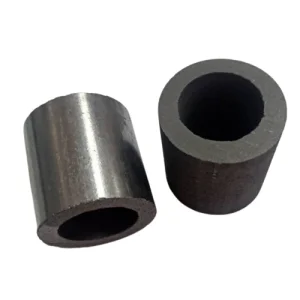
Pure graphite matrix engineered specifically for hydrofluoric acid services and concentrated hot alkaline scrubbers.
View Product Specs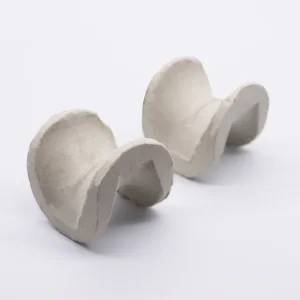
Classic curved saddle contour ensuring balanced aerodynamic distribution across wet gas drying towers.
View Product Specs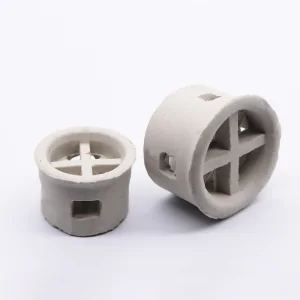
Low aspect ratio geometry providing preferential vertical alignment, reduced pressure drop, and exceptional liquid throughput.
View Product Specs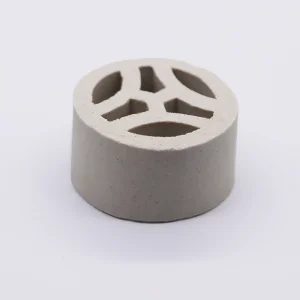
Internal Y-partition reinforces crush resistance, designed for deep bed bottoms and catalyst bed support grids.
View Product Specs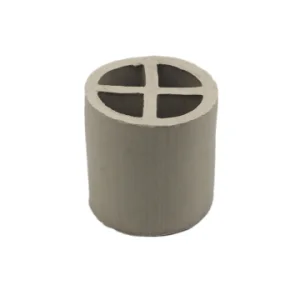
High-load cross partition design providing heavy mechanical support at column support plate interfaces.
View Product Specs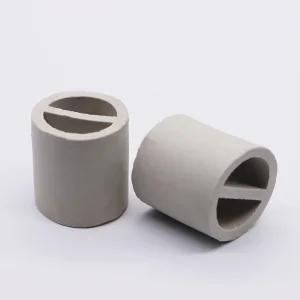
Internal central baffle partitions drastically increasing geometric surface area for high-efficiency gas contact.
View Product Specs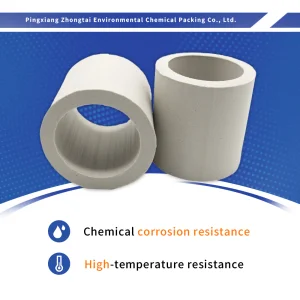
Versatile random cylindrical packing specified across universal industrial gas scrubbing and wastewater towers.
View Product Specs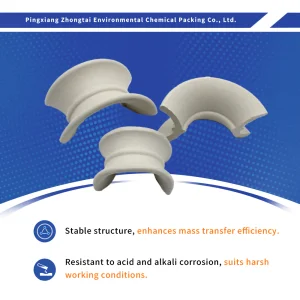
Heavy-duty acid and heat resistant series with sizing from 16mm to 76mm, guaranteed for primary sulfuric absorption.
View Product SpecsDirect answers to the most common questions raised by EPC contractors, procurement directors, and chief process engineers across the United States.
Pingxiang is widely acknowledged as the world’s largest manufacturing capital for industrial ceramics and chemical mass transfer media, harboring dense supply chains, specialized tunnel kilns, and purer kaolin deposits. Our ceramic packing meets or exceeds standard U.S. benchmarks (ASTM C515 chemical porcelain/stoneware standards). Chemically and physically, our 1" and 2" ceramic Intalox saddles and Super Saddles offer identical hydraulic capacity, bulk density, and acid solubility resistance (>99.6%) compared to legacy American domestic brands, while yielding 30% to 45% net procurement savings even after considering ocean freight and customs tariffs.
Standard Raschig rings have closed cylindrical walls that frequently align and nest, causing uneven liquid distribution and localized stagnation. Standard saddles improve upon this, but Super Intalox saddles incorporate scalloped and scalloped fluted edges. These serrated lips act as natural dripping points, breaking liquid sheets into fine droplets. This mechanism constantly renews the mass transfer boundary layer, decreases the Height Equivalent to a Theoretical Plate (HETP) by up to 15%, and lowers gas-side pressure drop across the bed by approximately 20% to 25%.
For standard geometries (e.g., 1", 1.5", 2" saddles or pall rings), factory manufacturing lead times generally range from 7 to 14 business days for multi-container quantities (100–300 m³). Ocean transit from Shanghai, Ningbo, or Shenzhen ports to Houston or New Orleans averages 28 to 35 calendar days via standard maritime carriers. We supply all customs documentation, including ISF filing details, ISPM 15 fumigation stamps, Bill of Lading, Certificate of Origin, and Mill Test Certificates to ensure rapid customs release.
Standard industrial chemical porcelain handles steady-state operating temperatures up to 1,100°C without dimensional deformation. However, rapid localized temperature quenching exceeding 150°C within seconds can cause brittle micro-fracturing in low-grade ceramics. Zhongtai's high-performance formulations incorporate adjusted silica-to-alumina ratios and controlled fluxing agents that reduce thermal expansion coefficients, enabling our packings to safely withstand sudden temperature fluctuations of up to 180°C during emergency shutdowns.
Random ceramic packings are susceptible to impact fractures if loose or improperly loaded. We utilize reinforced 1.0 m³ or 1.2 m³ polypropylene jumbo bags equipped with internal lifting loops, or 25 kg multi-wall polyethylene-lined craft paper cartons. All units are strapped and stretch-wrapped onto heavy-duty, heat-treated solid-wood pallets (ISPM 15 compliant). Breakage during maritime transit is guaranteed below 1.5%, which is well below the 3% industry standard threshold.
Whether you require a complete bed replacement calculation, custom hydraulic modeling, technical data sheets, or an immediate containerload pricelist delivered DDP to your U.S. facility, our mass transfer engineering group is on standby to assist.
