
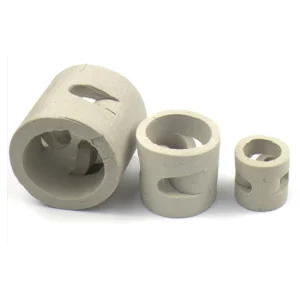
Direct factory production engineered for high void fractions, minimal pressure drop (ΔP), and maximum active geometric surface area under severe acidic and high-temperature operating conditions.
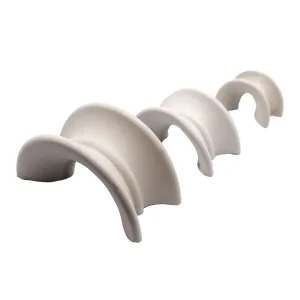
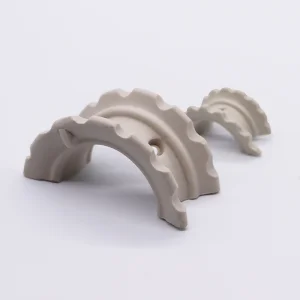
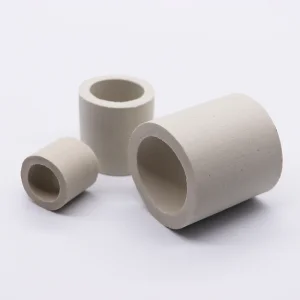
Navigating stringent UK Environmental Agency mandates, Net Zero 2050 benchmarks, and robust chemical scrubbing demands along the Greater London industrial corridor.
Greater London and the surrounding Southeast economic zone host some of Europe's largest municipal waste incineration, energy-from-waste (EfW) facilities (such as the Cory Riverside and Edmonton EcoPark operations), and specialized chemical treatment sites. These facilities require ultra-reliable acid gas wet scrubbers to remove hydrogen chloride (HCl), sulfur dioxide (SO₂), and nitrogen oxides (NOₓ) prior to atmospheric release. Ceramic tower packings represent the only viable medium that survives aggressive condensing acid solutions at elevated operating temperatures without polymer cracking or metallic pitting corrosion.
Process operators in London must operate strictly under Environment Agency Best Available Techniques (BAT) guidance and UK REACH chemical safety compliance. Industrial mass transfer equipment must deliver predictable Height Equivalent to a Theoretical Plate (HETP) performance with near-zero degradation rates. Ceramic packings supplied by Zhongtai exhibit acid resistance exceeding 99.8% in boiling sulfuric acid test conditions, ensuring London operators avoid unexpected column collapses, downtime, or toxic vapor release excursions.
Engineering Note for London Consulting Engineers: When retrofitting existing absorption towers within restricted footprint urban facilities along the River Thames, upgrading from legacy Raschig rings to third-generation Ceramic Cascade Mini Rings or Super Intalox Saddles reduces system pressure drop by up to 34%, drastically reducing electrical power consumption for induced-draft blowers.
How modern chemical plants, carbon capture pilot facilities, and sulfuric acid complexes worldwide are driving advanced geometric ceramic designs.
Direct air capture (DAC) and point-source carbon capture, utilization, and storage (CCUS) projects require high gas throughput with ultra-low delta P to make CO₂ amine solvent absorption energetically viable. Ceramic packing formulations with tailored surface roughness facilitate rapid interfacial liquid spreading without surface dryout.
Transitioning from standard chemical porcelain to mullite-cordierite engineered ceramics provides significantly improved thermal shock resistance. This prevents macro-cracking during rapid temperature fluctuations commonly encountered during emergency reactor blowdowns or thermal swings in RTO oxidizers.
Global chemical processors are rapidly replacing legacy packing geometries. Modern asymmetrical shapes—such as Cascade Mini Rings and Super Saddles—induce turbulent liquid vortex shedding, breaking stagnant laminar liquid films and boosting overall mass transfer coefficients (KLa) by 15% to 28%.
Engineered to exceed British Standards (BS EN 993) and ASTM C279 (Class 1 & Class 2 Chemical-Resistant Masonry Units).
| Nominal Packing Type | Available Size Range (mm) | Specific Surface Area (m²/m³) | Free Void Fraction (%) | Bulk Density (kg/m³) | Crushing Strength (N/piece) |
|---|---|---|---|---|---|
| Ceramic Pall Ring | 25, 38, 50, 76 | 110 – 220 | 70 – 75 | 550 – 680 | ≥ 1,200 |
| Ceramic Intalox Saddle | 16, 25, 38, 50, 76 | 140 – 460 | 68 – 76 | 560 – 720 | ≥ 1,500 |
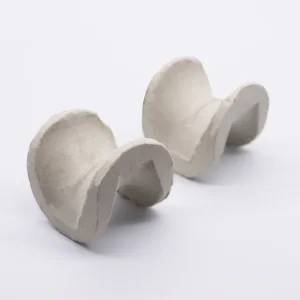
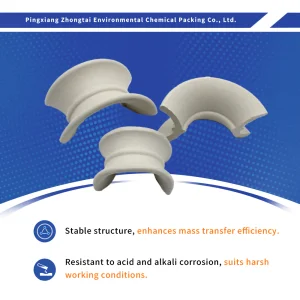
| Super Intalox Saddle | 25, 38, 50, 76 | 150 – 320 | 72 – 79 | 510 – 640 | ≥ 1,800 |
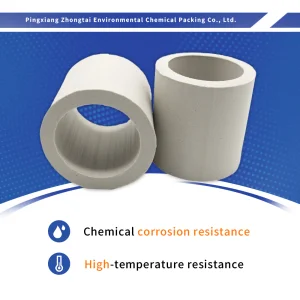
| Ceramic Raschig Ring | 10, 15, 25, 50, 80 | 90 – 500 | 62 – 70 | 650 – 880 | ≥ 1,000 |
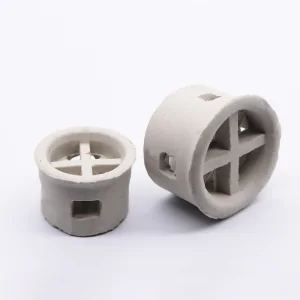
| Cascade Mini Ring (CMR) | 25, 38, 50 | 160 – 290 | 73 – 78 | 530 – 620 | ≥ 1,650 |
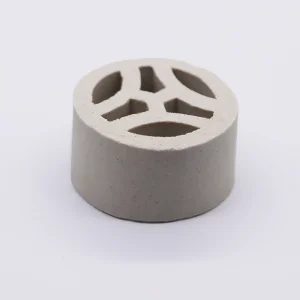
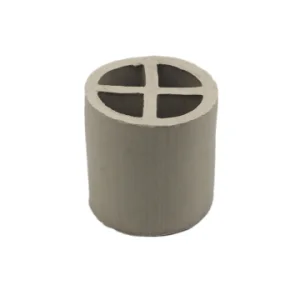
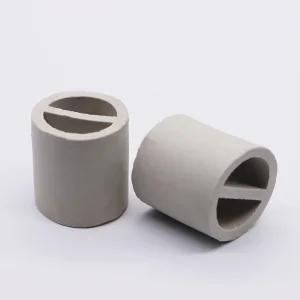
| Cross-Partition Ring | 80, 100, 120, 150 | 60 – 120 | 55 – 65 | 750 – 950 | ≥ 3,200 |
Engineered solutions deployed across essential industrial sectors within Greater London, the Home Counties, and UK maritime hubs.
Advanced wastewater facilities operated by Thames Water and regional authorities require stripping columns to remove high ammonia concentrations from sludge dewatering side-streams. Ceramic random packings provide unmatched bio-fouling resistance and withstand aggressive acid-cleaning CIP cycles.
London area waste-to-energy generation units burn heterogeneous waste profiles generating dense HCl, HF, and SOx exhaust streams. Ceramic saddles deployed inside quench towers and primary absorption columns endure temperatures above 300°C without mechanical failure or thermal stress fracturing.
Southeast England's pharmaceutical corridor around Cambridge, Oxford, and London utilizes glass-lined or high-alloy reactors for active pharmaceutical ingredient (API) extraction. Non-contaminating, iron-free ceramic tower packings maintain absolute solvent purity in corrosive distillation setups.
Continuous R&D breakthroughs in ceramic materials science, computational fluid dynamics (CFD), and automated tunnel kiln firing control.
Traditional trial-and-error geometric designs are superseded by finite-volume multiphase computational fluid dynamics. By modeling boundary layer separation and liquid micro-droplet detachment at discrete contact points, our newest generation shapes eliminate hydrodynamic dead spaces, reducing bed wall channeling by over 40%.
Our Pingxiang manufacturing base leverages micro-porous surface treatment techniques during glaze-free slip casting. This creates a controlled capillary surface network that forces high-surface-tension aqueous wash liquors to form uniform wetting sheets even at low irrigation densities (L < 5 m³/m²·h).
As European and UK purchasers emphasize Scope 3 carbon supply chain accounting, Pingxiang Zhongtai has converted firing lines to ultra-low emission, natural-gas-fired continuous roller tunnel kilns integrated with heat recovery loops. Every ton of ceramic packing manufactured maintains an independently audited low-carbon profile, easing regulatory compliance under impending UK Carbon Border Adjustment Mechanism (CBAM) frameworks.
Combining high-capacity ceramic random packing with engineered ceramic support plates, liquid redistributors, and bed limiters.
Full column packs for 98% and 93% H₂SO₄ drying towers and final absorption towers. Resistant to boiling oleum, aggressive thermal cycles, and mechanical weight settling over 10+ year operational runs.
Engineered systems for chlorine drying using concentrated sulfuric acid, as well as emergency caustic hypochlorite scrubbers. Ceramic composition prevents degradation from wet chlorine gas attack.
High-mass cordierite and alumina partition rings engineered for heat storage beds in volatile organic compound oxidizers. Delivers rapid thermal cycling durability up to 1,250°C without spalling.
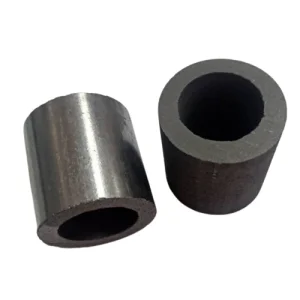
Explore our complete range of ceramic, carbon, and engineered specialty packing media, available with direct factory export to the Port of London, Tilbury, and Southampton.
In-depth chemical engineering clarifications regarding ceramic mass transfer media selection, hydrodynamic limitations, and UK import logistics.
Connect with our chemical engineers for rapid hydrodynamic sizing, Sherwood-Eckert flooding pressure drop calculations, and containerized FOB/CIF London shipping quotations.