Engineered to handle harsh chemical attrition, exceptional thermal gradient fluctuations, and continuous sulfuric and chlor-alkali absorption cycles.
A comprehensive examination of unit operations, corrosive operating environments, and structural revitalization across regional economic clusters.
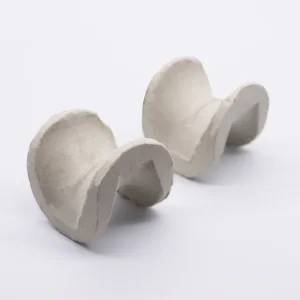
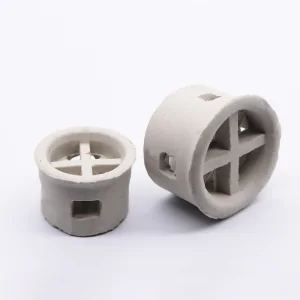
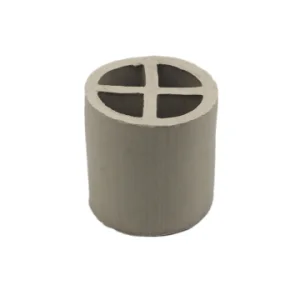
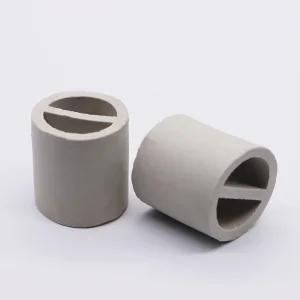
Fertilizer and agrochemical production is concentrated around Punjab and Sindh. Plants rely on continuous contact absorption processes using concentrated H₂SO₄ (93%–98%) at elevated temperatures. Ceramic packings like Intalox saddles and cross rings are essential to prevent corrosion while sustaining mass transfer under heavy oxidative stress.
The manufacturing centers around Sheikhupura, Faisalabad, and Karachi host large-scale chlor-alkali complexes. Wet chlorine gas drying and caustic scrubber columns require high chemical inertia. Industrial ceramics offer zero plastic-leaching risks and bypass the rapid pitting typical of standard alloy steels in moist halogen conditions.
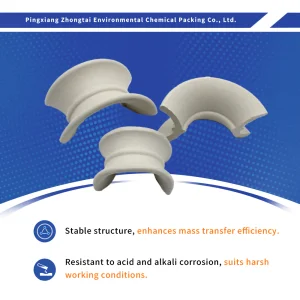
As Pakistan's Environmental Protection Agency (Pak-EPA) tightens particulate and SOx/NOx emission standards in textile, power generation, and smelting clusters, plants are upgrading flue gas desulfurization (FGD) and tail gas scrubbers with higher-efficiency ceramic geometries like Super Intalox saddles.
Modern process engineering demands higher specific surface area, reduced pressure drop, and lower life-cycle operational costs.
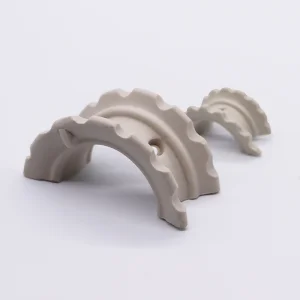
Global mass transfer is moving away from high-pressure-drop, legacy smooth rings toward corrugated, scallop-edged geometries. Ceramic Super Intalox saddles and Mini Lessing rings lower hydraulic drag by up to 28% compared to standard Raschig rings, directly lowering plant blower power use.
Located in Pingxiang, Jiangxi Province—China’s industrial ceramics capital—our production integrates local raw kaolin mining, automated extrusion, computerized roller kilns, and in-house testing labs. This geographic cluster eliminates cross-provincial material freight and supports high output consistency.
With stable freight lanes operating between Shanghai/Ningbo and Karachi, bulk shipping of palletized ceramics takes approximately 14–20 days. This gives Pakistani procurement directors an alternative to expensive Western manufacturers, with direct factory pricing and matching metallurgical standards.
| Packing Model | Material Type | Bulk Density (kg/m³) | Specific Surface Area (m²/m³) | Free Volume (%) | Recommended Service |
|---|---|---|---|---|---|
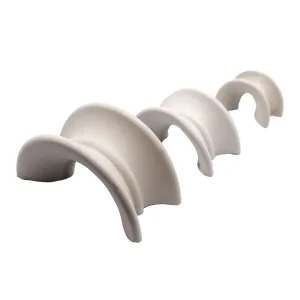
| Ceramic Intalox Saddle | Chemical Porcelain / Alumina | 540 – 650 | 140 – 260 | 70 – 76% | H₂SO₄ Absorption, Stripping, RTO Units |
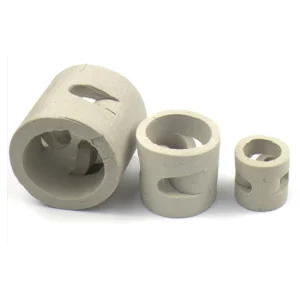
| Ceramic Pall Ring | Acid-Resistant Silicate | 500 – 620 | 110 – 220 | 72 – 78% | CO₂ Scrubbers, Acid Mist Removal |
| Ceramic Super Intalox | Refined Kaolin / Mullite | 480 – 580 | 160 – 320 | 75 – 82% | High-Capacity Revamps, Vacuum Columns |
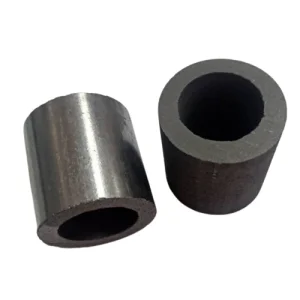
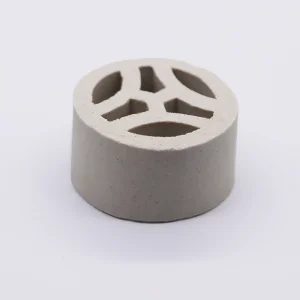
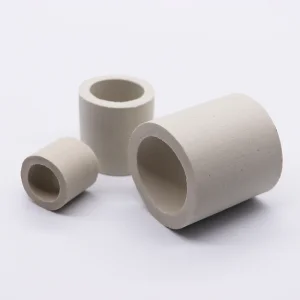
| Ceramic Raschig Ring | Standard Chemical Porcelain | 580 – 720 | 90 – 200 | 68 – 73% | Catalyst Support Beds, General Scrubbing |
Plant downtime can cost tens of thousands of dollars per day. Sourcing teams use rigorous testing metrics to prevent premature packing fracture and bed settling.
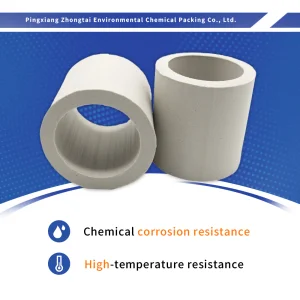
Our ceramic packings have an acid resistance rating over 99.8% in concentrated boiling sulfuric, nitric, and hydrochloric acids. This prevents silica leaching and structural collapse during process upsets.
Sudden unit shutdowns or fast restarts can cause rapid temperature changes. Our vacuum-extruded ceramics withstand sudden thermal shocks from 20°C to 850°C without micro-fracturing or spalling.
Tall industrial scrubbers—often reaching bed heights of 10 to 18 meters—require packings that can support heavy vertical loads. Batch-tested crushing strengths exceed 12 kN per piece, helping to prevent bottom-tier collapse.
Our technical team can help you calculate pressure drop, hydraulic capacity, and the right packing volume for your tower dimensions.
Direct technical answers to common questions about selection, logistics, and material compatibility for industrial columns.
Engineered for high mass transfer efficiency, low pressure drop, and extended service life in severe chemical processes.