Engineered to handle severe acid condensation, aggressive vapor loads, and demanding scrubbing environments with minimal pressure drops.
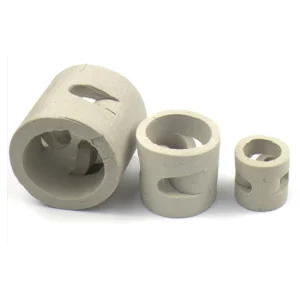
Featuring internal open-cylinder web geometry, these rings optimize liquid-vapor interfacial renewal in hot sulfuric acid plants.
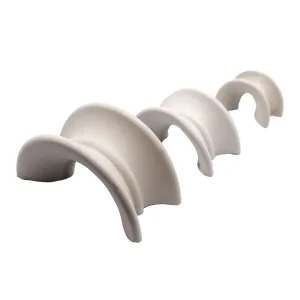
Industry-standard smooth curvature saddles ensuring isotropic liquid distribution and resilient resistance against thermal stress cycles.
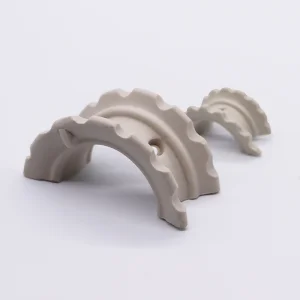
Enhanced scalloped perimeter edges prevent bed nesting, reducing gas pressure drop by 25% across high-velocity contact columns.
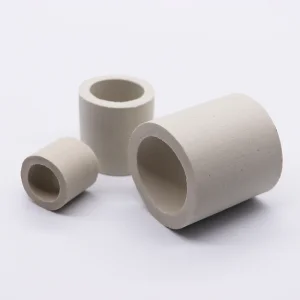
Proven cylindrical contact media providing dependable acid-resistant packing density in heavy-duty absorption and separation reactors.
Strategic deployment of ceramic mass transfer equipment across industrial zones, agro-industrial corridors, and emerging resource operations.
Under Ethiopia's Ten-Year Development Plan, self-reliance in chemical fertilizers is paramount. Sulfuric acid manufacturing plants in Dire Dawa and Oromia require ceramic random packing that survives 98.5% concentrated H₂SO₄ at exothermic contact temperatures exceeding 120°C without leaching alumina or silica into the stream.
The state-backed expansion of sugar complexes—including Wonji-Shoa, Metehara, Finchaa, and Tendaho—demands heavy-duty bio-ethanol stripping and rectification columns. Ceramic packing ensures uninterrupted operation during non-stop seasonal milling campaigns, avoiding organic fouling and galvanic corrosion.
The Great Rift Valley’s immense geothermal potential (such as the Aluto-Langano and Corbetti initiatives) requires scrubbing non-condensable corrosive sour gases like H₂S and CO₂. Chemical ceramic packing provides the high chemical inertness needed for continuous abatement towers without risking hydrogen embrittlement.
A rigorous examination of chemical purity, crystal phases, mechanical crush resilience, and fluid dynamic performance under severe operational parameters.
Our chemical tower packings are manufactured from refined secondary kaolinitic clays, fluxing feldspathic minerals, and micro-fine quartz powders. Vitrified in automated tunnel kilns at temperatures ranging from 1280°C to 1320°C, the ceramic body forms an interlocking needle-like mullite (3Al₂O₃·2SiO₂) crystal matrix embedded within an amorphous glassy silica phase.
This microscopic morphology completely eliminates internal connected porosity, ensuring liquid water absorption strictly below 0.5% (tested under ASTM C373 protocols). As a result, penetrating acidic process liquids cannot enter the interior, preventing frost spalling, chemical delamination, and sub-surface crystal cleavage during abrupt plant shutdowns or temperature cycling.
In industrial scrubbing applications dealing with sulfur trioxide (SO₃), nitric acid fumes, chlorine gas, and organic solvents, the chemical packing demonstrates an acid resistance rating exceeding 99.8% according to ASTM C515 and DIN 51102 Part 1 standards.
Unlike austenitic stainless steels (such as SS304 or SS316L) which suffer from pitting corrosion and chloride stress corrosion cracking, and unlike thermoplastics (PP, PVDF, PTFE) which degrade rapidly when temperatures exceed 100°C in oxidizing atmospheres, our chemical ceramic remains inert across the entire pH scale from 0 to 11 (excluding hydrofluoric acid and concentrated boiling alkali).
| Performance Parameter | Chemical Porcelain (Zhongtai) | Standard Earthenware | Polypropylene (PP) | Stainless Steel (316L) |
|---|---|---|---|---|
| Al₂O₃ Content (%) | 23% – 30% / 70% (Custom) | 12% – 18% | N/A (Polymer) | N/A (Metal) |
| Acid Resistance (ASTM C515) | ≥ 99.8% | 94.0% – 96.5% | Good (<60°C) | Pitting in Chlorides |
| Max Operating Temperature | 1,150°C | 800°C | 105°C | 750°C |
| Bulk Crush Strength (kN) | > 6.5 kN (50mm saddle) | 3.2 kN | Deforms Elastically | Very High |
| Water Absorption (%) | < 0.5% | 2.0% – 5.0% | < 0.02% | 0.00% |
| Thermal Shock Tolerance | ΔT = 220°C (Rapid Quench) | ΔT = 110°C | Moderate | Excellent |
Real-world integration scenarios engineered for local operating conditions, plant revamps, and industrial park expansions.
Installed in industrial drying columns, our Ceramic Intalox Saddles and Super Saddles prevent acid-mist entrainment. They provide dependable wet-wall mass transfer, enabling Ethiopian chemical producers to achieve complete SO₃ absorption with minimal mechanical pressure losses.
In gold and mineral extraction plants across southern and western Ethiopia, wet off-gas scrubbers neutralize hydrogen cyanide (HCN) and sulfur dioxide fumes. Ceramic Raschig and Cross-partition rings ensure chemical inertness against harsh alkaline hypochlorite and acidic scrubbing streams.
Specialized processing facilities in Hawassa, Kilinto, and Bole Lemi Industrial Parks utilize ceramic random media in packed biological reactors, ammonia stripping towers, and VOC removal scrubbers, operating reliably without chemical degradation or bacterial fouling.
Direct supply line from the world’s foremost industrial ceramics cluster straight to Ethiopian manufacturing centers.
Located in Pingxiang, Jiangxi Province—internationally recognized as the core manufacturing cluster for chemical packings—Zhongtai benefits from a complete localized industrial supply chain. From proprietary kaolin deposits to natural-gas-fired shuttle and tunnel kilns, we maintain comprehensive oversight of material purity, production velocity, and cost management.
With an annual production volume exceeding 50,000 metric tons of ceramic random packing, structured packing, and inert catalyst support balls, our automated sorting, tumbling, and screening lines guarantee zero defect delivery. Every pallet is carefully packed to withstand long-distance maritime transport and overland transit.
Navigating Ethiopian quality standards, pre-shipment inspections, and commercial bank payment mechanisms.
Our industrial chemical packings fully conform to Ethiopian Conformity Assessment Enterprise (ECAE) guidelines and ES standards. We partner with authorized third-party inspection firms (SGS, Intertek, Bureau Veritas) to provide pre-export verification of conformity (PVoC), ensuring smooth import clearance.
We work in full accordance with National Bank of Ethiopia (NBE) foreign exchange regulations. Our finance team regularly accepts documentary Letters of Credit (L/C) through major Ethiopian financial institutions, providing thorough documentation to prevent currency allocation delays.
Every shipment is accompanied by batch-specific Mill Test Certificates (MTC), independent chemical analysis reports (Al₂O₃, SiO₂, Fe₂O₃ content), crush strength test logs, acid loss assays, and official Certificates of Origin, making plant maintenance record audits straightforward.
Supporting process modernization, column debottlenecking, and low-carbon industrial production.
Replacing older, standard Raschig rings with high-performance Ceramic Super Saddles or Cascade Mini Rings reduces hydraulic pressure drops by 30% to 45%. This allows Ethiopian distillation and absorption units to increase processing capacity without replacing the structural column shells.
As Ethiopia leverages renewable hydropower from the Grand Ethiopian Renaissance Dam (GERD) for green fertilizer production, high-purity alumina ceramic bed supports and high-temperature catalyst packings are essential for high-pressure Haber-Bosch reactors.
Our R&D facility continues to advance high-porosity composite ceramics and zirconia-strengthened mullite bodies designed to withstand thermal cycling up to 1350°C, providing extra durability for severe metallurgical flue-gas treatment.
Engineered ceramic, graphite, and structured contactors designed for aggressive separation, stripping, and absorption services.
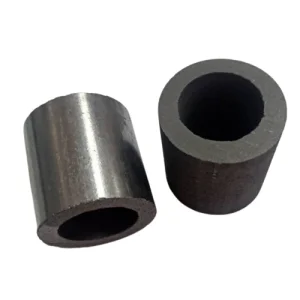
Specialized non-oxide packing built for Ethiopian chemical plants handling aggressive fluoride-bearing and strong reducing media.
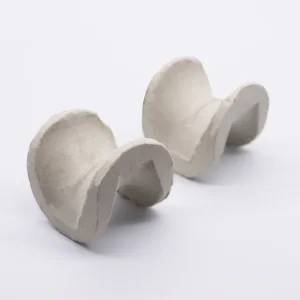
Classic aerodynamic saddle design providing balanced fluid dispersion and reliable thermal resistance for gas drying duties.
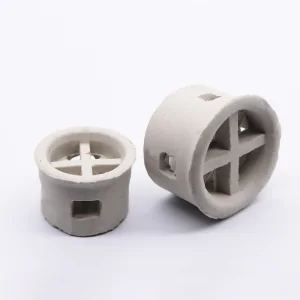
Features a low aspect ratio and beveled edge design to minimize liquid entrainment and enhance volumetric efficiency.
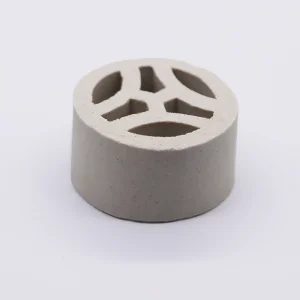
Structured internal partitions provide high compressive strength for lower bed supports in tall industrial packed columns.
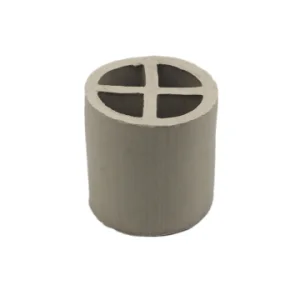
Cross-reinforced internal design offering excellent resistance to high physical compression and liquid surge impacts.
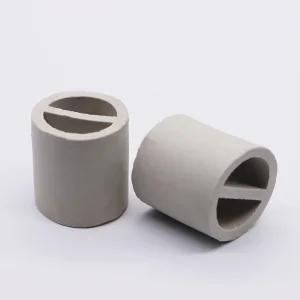
Internal partition walls provide extra contact surface area for specialized acid mist removal and high-efficiency gas scrubbing.
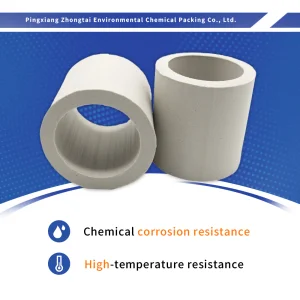
Economical and durable mass transfer solution designed for acidic regeneration, stripping, and general chemical absorption towers.
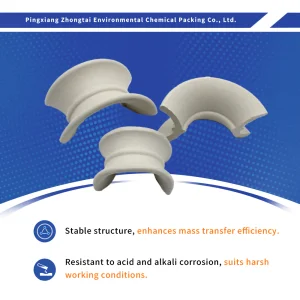
High-grade 16–76mm saddles providing outstanding hydraulic capacity, high thermal shock tolerance, and maximum mass transfer efficiency.
Comprehensive engineering insights regarding material selection, hydraulics, transit logistics, and international specifications.
Get in touch with our mass transfer engineers for complete technical datasheets, bed pressure drop calculations, and containerized pricing direct to Djibouti Port or Modjo Dry Port.
