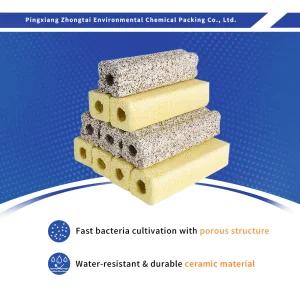
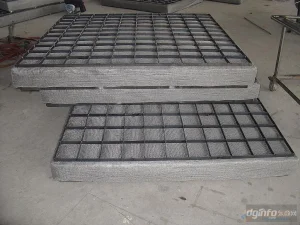
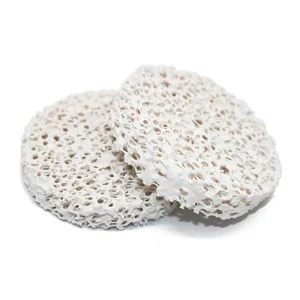
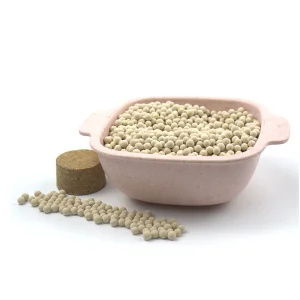
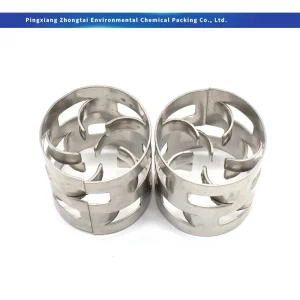
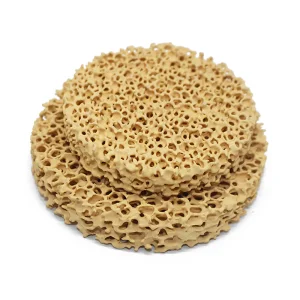
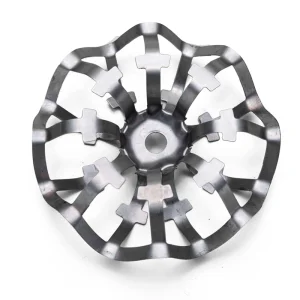
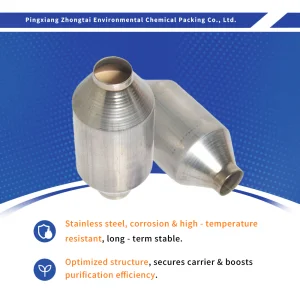
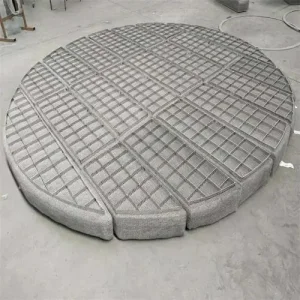
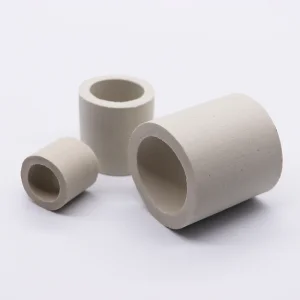
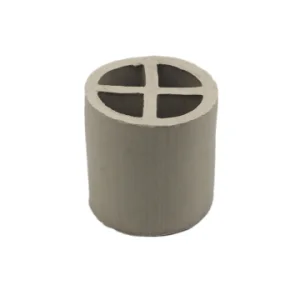
Explore our export-certified catalytic bed supports, high-alumina grinding balls, and industrial mass-transfer equipment engineered for severe chemical environments.
Achieving sub-micron dispersion and contamination-free wet milling requires rigorous control over crystalline phase transformation, grain boundaries, and stoichiometric stabilizing agents.
Pure zirconium dioxide (ZrO₂) undergoes destructive volumetric expansion upon cooling: transitioning from cubic phase at high temperature, to tetragonal at 2,370°C, and finally to monoclinic phase below 1,170°C. This crystalline expansion (~4–5%) causes self-shattering in unstabilized ceramics.
To overcome this, Pingxiang Zhongtai stabilizes the crystalline structure using precisely dosed yttrium oxide (Y₂O₃, typically 3 mol% or 5.2 wt%) or cerium oxide (CeO₂). When a dynamic shear crack propagates through a YSZ bead during intense agitation in an ultra-fine vertical or horizontal pin-type bead mill, the metastable tetragonal grains adjacent to the crack tip transform into monoclinic grains.
This localized phase transformation triggers compressive mechanical stresses that arrest crack growth—a microscopic phenomenon known as Transformation Toughening. This gives our beads an exceptional crush resistance unattainable with standard alumina or glass media.
| Media Grade | Chemical Composition | Bulk Density (g/cm³) | Hardness (Mohs / HV) | Crush Strength (Ø 1.0mm) | Primary Industrial Use-Case |
|---|---|---|---|---|---|
| 95 YSZ Micro-Beads | ZrO₂ ~95%, Y₂O₃ 5.2% | ≥ 3.65 (True: 6.05) | 9.0 Mohs / 1250 HV | > 2500 N | Battery Slurry & MLCC |
| Ce-Stabilized Zirconia (CSZ) | ZrO₂ ~80%, CeO₂ ~20% | ≥ 3.80 (True: 6.20) | 8.5 Mohs / 1150 HV | > 2200 N | High-Viscosity Screened Mills |
| Zirconia Toughened Alumina (ZTA) | Al₂O₃ 70–85%, ZrO₂ 15–30% | ≥ 2.50 (True: 4.10) | 9.0 Mohs / 1400 HV | > 1800 N | Mineral Mining & Paints |
| Zirconium Silicate (ZrSiO₄) | ZrO₂ 65%, SiO₂ 33% | ≥ 2.45 (True: 4.00) | 7.5 Mohs / 1000 HV | > 1200 N | Calcium Carbonate Grinding |
Zhongtai integrates vertical material refining, continuous computer-controlled sintering kilns, and stringent export logistics within China's industrial ceramics capital.
Our strategic manufacturing base in Pingxiang, Jiangxi Province maintains direct channel access to pure zirconium oxychloride (ZOC) precursor refineries and rare-earth yttrium stabilizers. This upstream vertical integration insulates buyers from global raw material price spikes while ensuring tight batch-to-batch chemical consistency.
We deploy liquid-phase titration technology for ultra-fine micro-beads (<0.5 mm) alongside cold isostatic pressing (CIP) for larger structural and valve-bearing spheres (up to 50 mm). The droplet sol-gel polymerization guarantees roundness, defect-free interior consolidation, and zero air-bubble entrapment within each bead.
Unlike intermittent batch kilns that experience thermal variations, Zhongtai uses high-temperature, PLC-governed continuous roller kilns operating at 1,480°C to 1,550°C. Multi-stage thermal curves eliminate residual stresses, maximize densification, and ensure uniform grain growth throughout every production lot.
Our dedicated packaging line uses multi-layer poly-lined drums, vacuum-sealed buckets, and heat-treated, fumigated export pallets. Every single shipment includes lot-specific ICP-OES chemical analysis, crushing-strength reports, and sphericity certificates for direct filing in corporate ISO management systems.
Across battery energy storage, electronics, coatings, and pharmaceuticals, advanced processors are transitioning to YSZ beads to achieve nano-scale particle distributions without metal contamination.
Modern LiFePO₄ (LFP), high-nickel ternary (NMC 811), and silicon-carbon anode slurries require uniform milling down to $D_{50} < 200 \text{ nm}$. Standard steel or alumina media introduces metallic iron or aluminum cross-contamination, causing micro-short circuits in assembled battery cells. Zhongtai’s 95 YSZ micro-beads (Ø 0.1mm - 0.6mm) deliver pure nano-grinding without heavy metal residue, maximizing initial coulombic efficiency and battery cycle life.
Multi-Layer Ceramic Capacitors (MLCC) require barium titanate ($BaTiO_3$) dielectric powders to be refined below 80 nm without lattice defects. Spherically perfect 0.05 mm to 0.2 mm YSZ beads permit dynamic pin-counter pin agitator speeds of up to 16 m/s, delivering high kinetic energy while completely eliminating large agglomerates that would otherwise puncture dielectric ceramic layers.
Active Pharmaceutical Ingredients (APIs) formulated as nano-suspensions demand strict adherence to FDA and cGMP standards. Zhongtai offers mirror-polished, chemically stable YSZ beads with zero internal fissures. These resist CIP/SIP autoclave sterilization cycles, contain zero extractable processing aids, and protect active molecules from discoloration or chemical degradation.
High-solids automotive coatings, UV inkjet printer dispersions, and titanium dioxide ($TiO_2$) pigments require intense shear to break down agglomerates without shattering the primary crystal structure. Zirconia beads provide the high specific mass (density > 6.0 g/cm³) needed to grind high-viscosity pastes with lower mill residency times, cutting batch electrical power consumption by 25–40%.
Specifying the wrong grinding bead size leads to broken beads, plugged separator screens, or extended mill cycles. The rule of thumb for bead sizing in wet horizontal sand mills is:
Where $D_{bead}$ is the nominal bead diameter, and $D_{feed\_90}$ is the 90th percentile particle size of the incoming feed slurry. For instance, milling an incoming slurried feed with $D_{90} = 15 \mu\text{m}$ down to $D_{50} = 0.5 \mu\text{m}$ mandates a media diameter between 0.3 mm and 0.4 mm, paired with a separator screen gap of 0.1 mm to 0.15 mm.
Procurement teams often compare media purely on upfront cost per kilogram. However, an operational TCO analysis reveals:
Glass / Silicate Beads: Low initial cost, but high wear rate (0.2–0.8% per 24h) causes rapid bead shrinkage, screen plugging, frequent chamber teardowns, and heavy product contamination.
Zhongtai 95 YSZ Precision Media: While unit prices are higher, an ultra-low wear rate (<0.01% per 24h) extends media lifetime to over 4,000–8,000 operating hours. This yields 60% lower annual media consumption, less mill chamber liner replacement, and zero contaminated product batches.
Ensure smooth procurement, regulatory compliance, and consistent production quality by including these standardized technical criteria in your requests for quotation.
Require supplier documentation verifying $ZrO_2 + HfO_2 \ge 94.8\%$ and $Y_2O_3 = 5.15\% \pm 0.20\%$. Insist on ICP emission spectrometry proving $SiO_2 < 0.05\%$, $Fe_2O_3 < 0.01\%$, and $Na_2O < 0.01\%$ to protect your slurry from electrical conductivity shifts.
Define narrow sizing spans (e.g., 0.6–0.8 mm instead of 0.5–1.0 mm). Sphericity ratios must exceed 98% with an aspect ratio $\le 1.05$. This eliminates misshapen "dumbbells" or flat discs that can jam mill screens and destroy mechanical shaft seals.
Request certified laboratory testing demonstrating wear loss $\le 0.01\%/\text{day}$ in standard high-solids water-based attrition testing, verifying that individual beads will not fracture under high shear ($14 \text{ m/s}$).
Specify UN-rated 25kg hermetically sealed steel drums or heavy-duty HDPE containers strapped on ISPM-15 compliant pallets. Every container must carry barcoded batch numbers tied directly to manufacturing sintering logs.
Speak directly with our technical team in Pingxiang. We provide custom sizing, laboratory testing kits, and tailored wholesale quotes within 24 hours.
Detailed engineering and procurement answers for chemical plant managers, formulation chemists, and corporate purchasing officers.
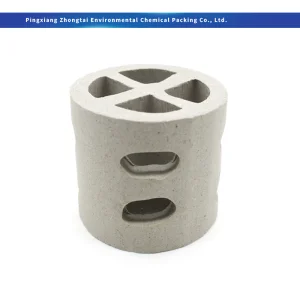
Engineered alongside our wear-resistant media, Zhongtai's chemical packings serve distillation, VOC abatement, absorption, and high-temperature metal filtration towers worldwide.