Explore high-performance tower packings, structured catalyst supports, and advanced ceramic media manufactured under ISO 9001:2015 quality standards.
Quantitative performance indices demonstrating why metal Pall rings remain the global benchmark for random tower packing in severe chemical process duties.
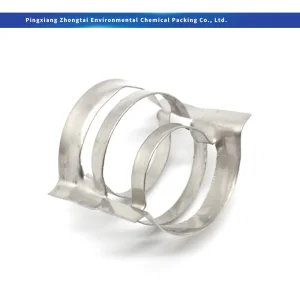
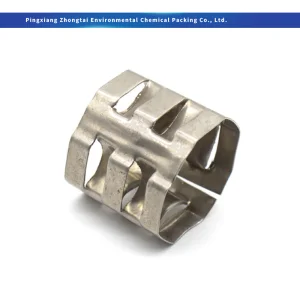
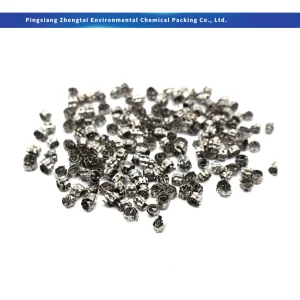
In modern chemical processing, petroleum refining, and gas purification industries, mass transfer efficiency dictates plant operational profitability and capital payback cycles. Among random tower packings, Stainless Steel Pall Rings represent a critical engineering milestone. Developed as a direct aerodynamic and structural evolution of the classic Raschig ring, the Pall ring design modifies the cylindrical geometry by introducing internal punched tabs and open lateral windows.
Today, the global market for stainless steel random packing is experiencing unprecedented demand driven by three major macro-economic shifts:
Engineering Gain Insight: The open wall structure of metal Pall rings allows continuous internal liquid-gas contact while drastically lowering vapor flow resistance. This geometric innovation yields a 40% increase in hydraulic capacity and a 50% reduction in pressure drop compared to solid-walled Raschig rings of equivalent diameter.
Understanding the fluid dynamics of Stainless Steel Pall Rings requires analyzing how liquid distribution, void fraction, and specific surface area interact under varying vapor-liquid loads. The internal spatial arrangement formed by inward-bent tabs creates dynamic drip points that continuously refresh the liquid film, preventing channeling and stagnant zone formation.
| Nominal Size (mm / inch) | Dimensions (D × H × T mm) | Surface Area ($m^2/m^3$) | Void Space (%) | Bulk Density ($kg/m^3$) | Packing Factor ($m^{-1}$) |
|---|---|---|---|---|---|
| 16 mm (5/8") | 16 × 16 × 0.4 | 345 | 93.1% | 545 | 310 |
| 25 mm (1") | 25 × 25 × 0.5 | 215 | 94.8% | 410 | 175 |
| 38 mm (1.5") | 38 × 38 × 0.6 | 145 | 95.6% | 345 | 115 |
| 50 mm (2") | 50 × 50 × 0.7 | 110 | 96.2% | 300 | 80 |
| 76 mm (3") | 76 × 76 × 1.0 | 72 | 97.1% | 230 | 52 |
Selecting the appropriate stainless steel alloy is paramount to avoiding stress corrosion cracking (SCC), pitting, and premature column bed failure. Global buyers must align raw material specifications with process chemistry:
China, and specifically established industrial chemical packing clusters such as Pingxiang, Jiangxi Province, has consolidated its position as the premier manufacturing hub for mass transfer equipment worldwide. The strategic manufacturing advantages of sourcing wholesale Stainless Steel Pall Rings from leading Chinese production facilities encompass multiple core pillars:
Direct proximity to tier-1 stainless steel raw coil mills (such as TISCO, Baosteel, and Tsingshan) guarantees material traceability, batch consistency, and reduced raw material acquisition lead times.
High-speed continuous progressive stamping dies allow high dimensional accuracy ($\pm 0.05\text{ mm}$ wall thickness compliance) with minimal material burring, preserving the structural integrity of window tabs.
Every wholesale batch undergoes spectro-analysis (PMI testing), crush resistance evaluation, bulk density verification, and chemical passivation treatment to prevent post-installation oxidation.
The versatility of Stainless Steel Pall Rings makes them the preferred choice across diverse unit operations in chemical process plants worldwide:
In atmospheric and vacuum distillation, minimizing reboiler heat input while maximizing light fraction recovery is paramount. SS316L Pall rings installed in stripping zones provide exceptional hydraulic turndown ratios, allowing refineries to adjust throughput dynamically based on crude oil supply fluctuations without experiencing column weeping or flooding.
In natural gas treating plants and industrial flue-gas CO2 absorption systems, aqueous amine solutions (such as MEA, DEA, and MDEA) wash acidic gases. Stainless steel 316L Pall rings ensure even gas distribution, low foaming susceptibility, and long operational campaigns under high temperature and corrosive amine conditions.
In pharmaceutical and fine chemical manufacturing, solvents like ethanol, acetone, and isopropyl alcohol must be recovered with high purity. The low Height Equivalent to a Theoretical Plate (HETP) of 25mm and 38mm SS Pall rings allows compact column heights while satisfying strict product purity limits.
As the global process industry pivots toward net-zero carbon targets, column internal design is undergoing rapid technological development. The future trajectory of random packing technology centers on several key innovations:
When issuing a Request for Quotation (RFQ) to wholesale suppliers for Stainless Steel Pall Rings, procurement teams and process engineers should ensure the following technical parameters are explicitly defined to avoid mismatching specifications:
RFQ Verification Checklist for Buyers:
Expert answers to common engineering questions regarding stainless steel random packings, performance selection, and international sourcing.
Complete product catalogue covering specialized packing rings, ceramic refractory supports, and high-efficiency trays.