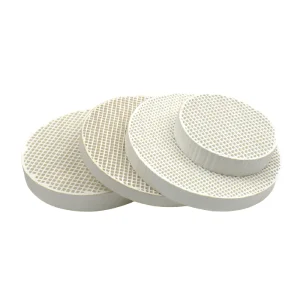
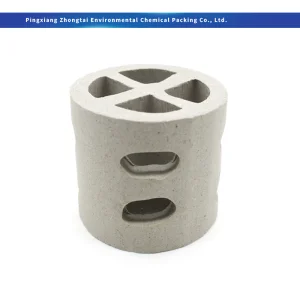
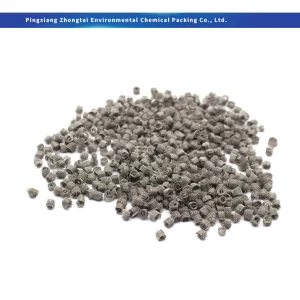
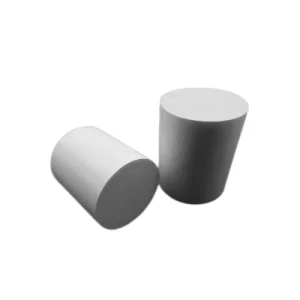
Engineered for high mass transfer efficiency, thermal shock resistance, and zero structural degradation under extreme chemical aggression.
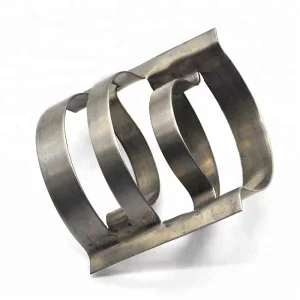
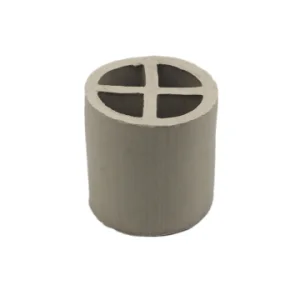
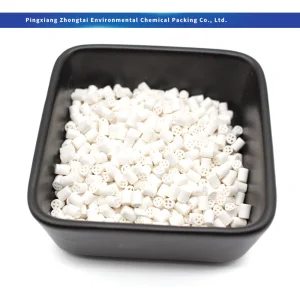
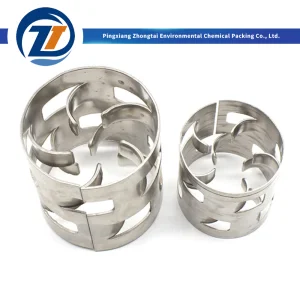
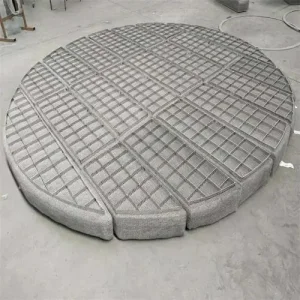
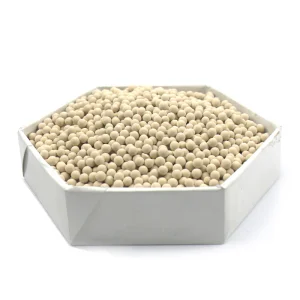
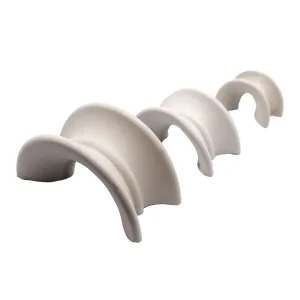
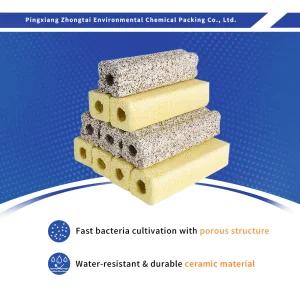
Comparative technical metrics illustrating the mechanical, thermodynamic, and fluid dynamic advantages of recrystallized and reaction-bonded SiC honeycomb monoliths.
| Property Parameter | Reaction-Bonded SiC (RBSiC) | Recrystallized SiC (RSiC) | Cordierite Benchmark | Standard Mullite |
|---|---|---|---|---|
| Thermal Conductivity (W/m·K at 800°C) | 28 – 35 | 35 – 45 | 1.2 – 1.8 | 3.5 – 5.0 |
| Max Continuous Service Temp (°C) | 1380 | 1650 | 1200 | 1400 |
| Thermal Shock Cycles (1100°C to Cold Air) | > 50 Cycles | > 80 Cycles | 15 – 20 Cycles | 10 – 15 Cycles |
| Compressive Strength (MPa, Axial) | ≥ 220 | ≥ 160 | 15 – 25 | 35 – 50 |
| Acid Corrosion Rate (98% H2SO4 at 100°C) | < 0.02 g/m²·day | < 0.01 g/m²·day | Decomposes | Surface Degradation |
| Specific Surface Area (m²/m³ at 400 CPSI) | 2400 – 2800 | 2200 – 2600 | 1800 – 2200 | 1900 – 2300 |
Field-proven deployments of silicon carbide honeycomb structures solving critical heat transfer and aggressive fluid separation challenges worldwide.
Standard cordierite honeycombs fail rapidly when halogenated solvents, organosilicons, or sulfur vapors enter the thermal oxidizer stream. SiC honeycombs withstand aggressive acidic condensates, delivering a 95%+ thermal recovery factor without bed glazing, cracking, or thermal degradation.
Operating stably above 1200°C in reducing hydrogen environments, SiC honeycomb filter arrays remove sub-micron particulate matter, fly ash, and tar residues before catalytic conversion stages, preserving downstream catalyst beds from particulate contamination.
Silicon carbide honeycombs operate as structural microchannel thermal storage cores in advanced solar receivers and ultra-high-temperature fluid heat exchangers. Superior thermal conductivity prevents local hotspots and thermal shock failure during cyclical heat transfer surges.
Combining the natural raw mineral advantages of Pingxiang’s industrial ceramic cluster with precision automated processing and strict testing regimens.
Our computerized paste-mixing and closed-loop extrusion units regulate sub-micron alpha-SiC particle packing, eliminating structural microcracks and internal voids prior to drying and high-temperature vacuum sintering.
Positioned directly in Pingxiang, Jiangxi, Zhongtai integrates specialized raw materials, precision tunnel kilns, and experienced ceramic technologists within an immediate operational radius, lowering overhead without sacrificing material purity.
Every shipment is verified through computerized axial crush tests, laser particle inspection, and certified metallurgical audits. Complete traceability dossiers, mill test certificates, and third-party inspection reports accompany all export orders.
Enterprise procurement solutions aligned with strict chemical industry compliance and international maritime cargo protocols.
All structured packings, inert alumina supports, and silicon carbide monoliths comply with REACH and RoHS protocols. Complete mill analysis certificates verify compliance with chemical and petrochemical project requirements.
To eliminate maritime transport damage and in-transit vibration chipping, ceramic blocks are vacuum-sealed, cushioned with shock-absorbent composite foams, and secured inside reinforced, fumigation-free ISPM-15 wooden crates.
Our engineering support group works directly from client column dimensions, flow rates, operating temperatures, and acceptable pressure drop limits to recommend cell density (CPS) and wall thickness dimensions for plant revamps and new builds.
Direct engineering insights regarding silicon carbide honeycombs, mass transfer column packings, and international order fulfillment.
Explore our extensive manufacturing scope for high-temperature reactors, gas scrubbing units, and industrial purification systems.