Explore factory-direct specialized chemical tower packings, molecular sieves, and catalytic filtration media engineered for critical global process units.
The global molecular sieve market is undergoing a structural transition driven by decarbonization, green hydrogen purification, and high-purity petrochemical separation requirements.
Carbon Capture, Utilization, and Storage (CCUS) projects globally are adopting modified 13X and amine-functionalized zeolites to achieve selective CO2 adsorption at lower thermal regeneration energy costs.
Liquefied Natural Gas (LNG) processing requires ultra-deep dehydration (<0.1 ppm H2O) to prevent hydrate formation in cold boxes, favoring high crush strength 3A and 4A molecular sieves.
Ethanol dehydration plants rely heavily on 3A zeolite adsorbents for azeotropic water separation, while PSA hydrogen purification units demand high-purity 5A and Li-X zeolites.
Molecular sieves are crystalline metal aluminosilicates possessing a three-dimensional interconnecting network of silica and alumina tetrahedra. The uniform pore structure—ranging precisely from 3 Ångströms to 10 Ångströms—enables selective adsorption based on molecular size, polarity, and degree of unsaturation. For plant procurement managers and chemical process engineers, selecting the optimal zeolite medium directly dictates bed lifetime, regeneration energy consumption, and downstream gas/liquid purity levels.
Synthetic zeolites are primarily synthesized in Type A (LTA structure) and Type X/Y (FAU structure). The aperture diameter is controlled through targeted cation exchange during factory crystallization:
When operating deep-bed desiccant towers, selecting an incorrect pore size or low-grade binder causes co-adsorption. For instance, using 4A instead of 3A in an ethylene drying tower results in ethylene co-adsorption inside the zeolite cages, triggering exothermic runaway polymerization and rapid green-oil fouling of the bed.
The following engineering benchmark table outlines chemical formulas, physical properties, primary application fields, and indicative factory bulk pricing structures for global B2B buyers.
| Molecular Sieve Grade | Nominal Pore Diameter | Chemical Formula | Bulk Density (g/ml) | Crush Strength (N/Bead) | Water Adsorption (% wt) | Wholesale Price Range (USD/MT) |
|---|---|---|---|---|---|---|
| Zeolite 3A | 3 Å (0.3 nm) | 2/3K2O · 1/3Na2O · Al2O3 · 2SiO2 · 9/2H2O | 0.68 – 0.74 | ≥ 35 N (1.6-2.5mm) | ≥ 21.5% | $1,150 – $1,650 |
| Zeolite 4A | 4 Å (0.4 nm) | Na2O · Al2O3 · 2SiO2 · 9/2H2O | 0.68 – 0.73 | ≥ 40 N (1.6-2.5mm) | ≥ 22.0% | $980 – $1,400 |
| Zeolite 5A | 5 Å (0.5 nm) | 3/4CaO · 1/4Na2O · Al2O3 · 2SiO2 · 9/2H2O | 0.69 – 0.75 | ≥ 45 N (1.6-2.5mm) | ≥ 21.5% | $1,350 – $1,950 |
| Zeolite 13X (HP) | 10 Å (1.0 nm) | Na2O · Al2O3 · (2.8±0.2)SiO2 · (6-7)H2O | 0.64 – 0.70 | ≥ 38 N (1.6-2.5mm) | ≥ 24.0% | $1,450 – $2,200 |
| Lithium X (Li-X) | 10 Å (1.0 nm) | Li2O · Al2O3 · 2.0SiO2 | 0.62 – 0.68 | ≥ 30 N (1.6-2.5mm) | ≥ 25.5% | $4,200 – $6,800 |
*Note: Pricing subject to raw material synthetic kaolin resin market fluctuations, binder selection (Attapulgite vs. Clay), order volume, and packaging specification (e.g., Nitrogen purge steel drums vs. Jumbo sacks).
Key quality control milestones, packaging protocols, and supply chain safeguards for global EPC contractors and refinery buyers.
Molecular sieves are hygroscopic. Direct factory wholesale shipments require double-walled heavy-duty airtight plastic lining inside 25kg cartons, 150kg airtight steel drums, or 1000kg super sacks equipped with nitrogen blanketing.
High gas velocity inside industrial beds can lead to particle fluidization and severe dust formation. Factory batches are rigorously tested per ASTM D3802 (Ball-Pan Hardness) to guarantee attrition rates below 0.1% by weight.
X-Ray Diffraction (XRD) analysis verifies phase purity and zeolite crystal framework structure, ensuring zero residual non-crystalline binder phases that could degrade dynamic adsorption capacity.
Full documentation including REACH SVHC compliance, RoHS certificates, ISO 9001:2015 quality management tracking, and Batch Safety Data Sheets (MSDS) provided with every export shipment.
Tailored zeolite adsorbent configurations designed to optimize cycle times, suppress pressure drop, and lower energy footprints.
Challenge: Ethylene and propylene feedstocks require deep drying to sub-ppm levels before cryogenic fractionation. Standard desiccants adsorb unsaturated hydrocarbons, resulting in thermal coking during hot gas regeneration.
Solution: Implementation of high-potassium exchanged Type 3A molecular sieve. The restricted 3 Å pore aperture strictly excludes ethylene (>3.9 Å), allowing continuous deep water removal without bed fouling or side polymerizations.
Challenge: Sour natural gas streams containing water vapor, carbon dioxide (CO2), and hydrogen sulfide (H2S) cause pipeline corrosion and freeze-outs in LNG liquefaction heat exchangers.
Solution: Dual-layer adsorption bed design utilizing 4A zeolite for bulk water removal combined with a 13X-APG high-capacity polish layer to simultaneously capture trace CO2 and mercaptans.
Challenge: Conventional 13X zeolites require massive bed volumes and high power consumption to achieve 93%+ oxygen purity in Pressure Swing Adsorption (PSA) systems.
Solution: High-efficiency Lithium-exchanged X-type (Li-X) molecular sieve. Li-X exhibits an exceptionally high N2/O2 separation factor and rapid desorption kinetics, reducing unit footprint by 40% and power consumption by 25%.
Challenge: Distillation can only produce ethanol up to its azeotropic limit (~95.6% purity). Reaching fuel-grade anhydrous ethanol (>99.9%) requires overcoming high energy barriers.
Solution: Vapor-phase Pressure Swing Adsorption (PSA) utilizing targeted 3A bioethanol molecular sieve beads, yielding clean anhydrous ethanol with zero chemical entrainment agents.
The chemical process landscape demands continuously higher kinetic adsorption rates, lower regeneration energy requirements, and extended operational lifespans. Leading synthetic zeolite research focuses on three major technical vectors:
Integrating mesopores (2–50 nm) directly within microporous crystalline zeolite spheres eliminates internal mass transfer limitations, dramatically accelerating adsorption/desorption kinetics for heavy gas molecules.
Traditional molecular sieves contain 15%–20% non-adsorptive clay binder. Advanced in-situ crystallization transforms the binder phase directly into active zeolite matrix, increasing overall static adsorption capacity by up to 20%.
Surface modification using hydrophobically engineered silica shells reduces the thermal energy required for water desorption, enabling regeneration using waste industrial heat streams (<120°C).
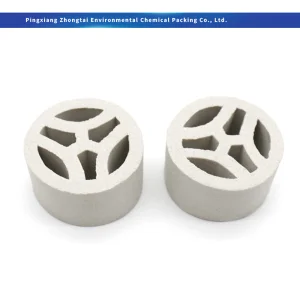
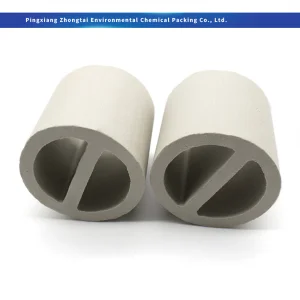
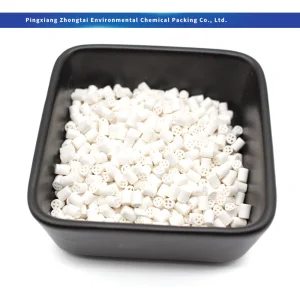
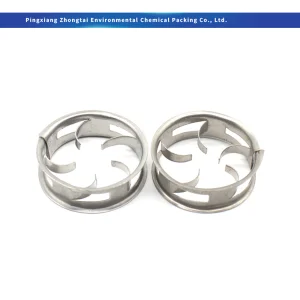
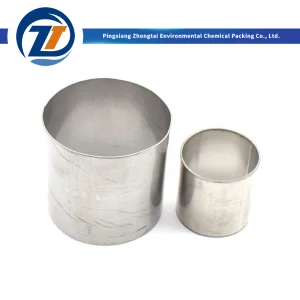
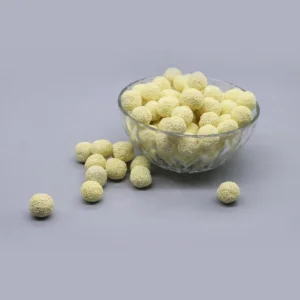
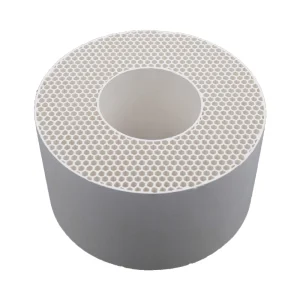
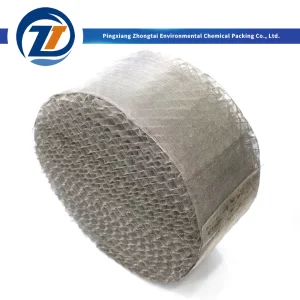
Direct factory direct catalog items engineered for chemical towers, thermal recovery systems, and industrial filtration.
Expert insights covering molecular sieve specification, pricing mechanics, bed loading practices, and regeneration parameters.
