Explore our industrial-grade engineered media designed for extreme chemical resistance, high crush strength, and maximum mass transfer efficiency.
A comprehensive engineering analysis of synthetic crystalline alkali metal aluminosilicates optimized for selective carbon dioxide capture and trace contaminant removal.
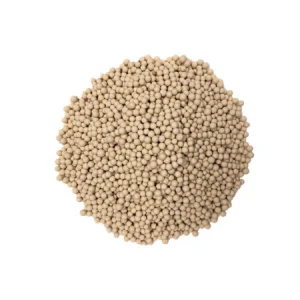
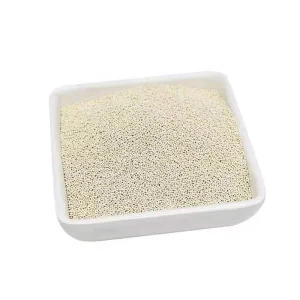
Carbon dioxide ($\text{CO}_2$) molecular sieves primarily leverage Na-X, Ca-A, and modified faujasite (FAU) crystal structures. The fundamental mechanism relies on a 10 Å (Angstrom) nominal pore diameter in Type 13X-APG and 13X-HP, which accommodates the kinetic diameter of $\text{CO}_2$ ($3.3\ \text{\AA}$) alongside water ($2.65\ \text{\AA}$) and hydrocarbons. By manipulating the framework $\text{Si}/\text{Al}$ molar ratio (typically 1.2 to 1.5) and counter-cation concentration ($\text{Na}^+$, $\text{Ca}^{2+}$, $\text{Li}^+$), the electric field gradient within the zeolite supercages is maximized. This creates a strong electrostatic interaction with the permanent quadrupole moment of the $\text{CO}_2$ molecule ($-1.4 \times 10^{-39}\ \text{C}\cdot\text{m}^2$), driving exceptional working capacities even at ultra-low partial pressures.
In dynamic bed designs for industrial Pressure Swing Adsorption (PSA) and Temperature Swing Adsorption (TSA) units, the Mass Transfer Zone (MTZ) length dictates bed utilization efficiency. Synthetic $\text{CO}_2$ molecular sieves manufactured by Pingxiang Zhongtai incorporate optimized binders (kaolin/attenuagite matrices) that preserve mesoporous transport channels without passivating active zeolite sites. Consequently, intraparticle diffusion resistance is minimized, producing a steep breakthrough curve. This allows plant engineers to reduce vessel bed heights by up to 18% while preventing early $\text{CO}_2$ slip in high-velocity gas streams.
Repeated thermal cycling during TSA regeneration (typically between $200^\circ\text{C}$ and $310^\circ\text{C}$) subjects standard zeolites to framework dealumination and mechanical degradation. Our enterprise-grade $\text{CO}_2$ molecular sieves undergo precision thermal conditioning, maintaining structural integrity up to 1,200 regeneration cycles. Furthermore, the heat of adsorption for $\text{CO}_2$ on specialized 13X APG is balanced at $35\text{--}42\ \text{kJ/mol}$, optimizing the trade-off between strong static adsorption capacity and minimal specific energy consumption ($\text{kWh/ton}\ \text{CO}_2$ captured) during desorptive heating phases.
E-E-A-T Technical Insight: When selecting a wholesale $\text{CO}_2$ molecular sieve supplier, chemical engineers must verify both static equilibrium adsorption isotherms (Langmuir-Freundlich parameters) and dynamic crush strength. Cheap adsorbents with poor binder formulation suffer from bed dusting, fluidization losses, and rapid pressure drop increases within the first 6 months of operational startup.
Customized chemical packing and adsorption technologies deployed across critical energy transition, gas purification, and manufacturing sectors worldwide.
In Liquefied Natural Gas (LNG) pretreatment trains, $\text{CO}_2$ concentration must be reduced to below $50\ \text{ppmv}$ to prevent freeze-out and solid blockages in cryogenic heat exchangers (cold boxes). Utilizing high-capacity 13X APG molecular sieves prior to liquefaction ensures deep co-removal of $\text{CO}_2$, $\text{H}_2\text{S}$, and mercaptans, protecting downstream metallurgy and satisfying international LNG pipeline delivery specifications.
Air Separation Units require complete elimination of atmospheric $\text{CO}_2$ and water vapor from raw compressed air before cryogenic distillation into liquid nitrogen, oxygen, and argon. Our APG (Air Separation Grade) molecular sieves deliver exceptionally low $\text{CO}_2$ breakthrough levels ($< 1\ \text{ppmv}$), preventing explosive acetylene build-up and cryogenic column ice fouling.
As carbon neutrality mandates accelerate, industrial emitters utilize Vacuum Pressure Swing Adsorption (VPSA) packed with engineered 13X-HP and Carbon Molecular Sieves (CMS) for post-combustion flue gas capture and DAC. These materials demonstrate superior selectivity coefficients ($\alpha_{\text{CO}_2/\text{N}_2} > 18$), facilitating flue gas polishing from 15% $\text{CO}_2$ concentrations up to pipeline-grade 99.5% purity.
| Molecular Sieve Grade | Pore Opening | Bulk Density (g/ml) | Crush Strength (N) | Static CO2 Capacity (wt%) | Primary Industrial Application |
|---|---|---|---|---|---|
| Zeolite 13X-APG | ~10 Å | 0.62 – 0.68 | ≥ 85 (Sphere 3-5mm) | ≥ 18.5% ($25^\circ\text{C}, 760\text{mmHg}$) | ASU Air Pre-purification, LNG $\text{CO}_2$ & $\text{H}_2\text{O}$ Removal |
| Zeolite 13X-HP | ~10 Å | 0.60 – 0.65 | ≥ 90 (Sphere 1.6-2.5mm) | ≥ 21.0% ($25^\circ\text{C}, 760\text{mmHg}$) | VPSA Industrial Oxygen & High-Purity $\text{CO}_2$ Separation |
| Zeolite 4A | ~4 Å | 0.68 – 0.72 | ≥ 60 (Sphere 3-5mm) | ≥ 14.0% ($25^\circ\text{C}, 760\text{mmHg}$) | Closed-loop gas drying, static $\text{CO}_2$ co-adsorption |
| Zeolite 5A | ~5 Å | 0.68 – 0.73 | ≥ 70 (Sphere 3-5mm) | ≥ 15.5% ($25^\circ\text{C}, 760\text{mmHg}$) | PSA $\text{H}_2$ Purification, Iso/Normal Paraffin Separation |
| Carbon Molecular Sieve (CMS) | 3 – 5 Å | 0.65 – 0.70 | ≥ 75 (Extrudate 1.1mm) | Kinetic Separation Curve | PSA Nitrogen Generation, Biogas Upgrading ($\text{CH}_4/\text{CO}_2$) |
Strategic research directions transforming commercial carbon separation and mass transfer efficiency.
Integrating surface-grafted polyethylenimine (PEI) and tetraethylenepentamine (TEPA) onto hierarchically porous 13X substrates. This chemical modification enables reversible chemisorption under humid conditions, significantly increasing dynamic $\text{CO}_2$ capacity during Direct Air Capture without requiring complete feed stream desiccant pre-drying.
Blending robust faujasite zeolite cores with ultra-high surface area MOF structures (e.g., Ni-MOF-74, Cu-BTC). The resultant core-shell hybrid particles deliver up to $40\%\ \text{higher}\ \text{CO}_2$ volumetric working capacity in rapid PSA cycles, directly reducing the required vessel volume for industrial gas facilities.
Developing magnetically active ceramic additives embedded within molecular sieve beads. Applying electromagnetic induction enables rapid, targeted dielectric heating of the bed, slashing TSA regeneration cycle duration by up to $60\%$ while cutting overall parasitic thermal energy consumption.
Enterprise procurement managers require total supply certainty, rigorous batch documentation, and zero contamination risk for critical process beds.
Every metric ton of molecular sieves manufactured at Pingxiang Zhongtai undergoes comprehensive laboratory analysis before dispatch. Standard testing protocols include X-Ray Fluorescence (XRF) for chemical oxide ratios, X-Ray Diffraction (XRD) for phase purity and crystallinity percentage, automated mercury porosimetry for pore size distribution, and dynamic water/$\text{CO}_2$ adsorption capacity validation.
Zeolite molecular sieves are highly hygroscopic materials that deactivate rapidly upon atmospheric moisture exposure. Wholesale orders are packaged in hermetically sealed, nitrogen-blanketed air-tight steel drums (150kg/drum) or moisture-barrier heavy-duty jumbo super-sacks (1,000kg) fitted with composite aluminum foil liners to guarantee $< 0.5\ \text{wt}\%$ initial water content upon site arrival.
All products strictly conform to EU REACH chemical safety registrations, RoHS Directives, and ISO 14001 Environmental Management Systems. Factory operations in Pingxiang leverage clean energy kilns and closed-loop water recovery systems, supporting scope 3 decarbonization metrics for multinational EPC buyers and operators.
In-depth responses covering adsorption chemistry, bed design, pricing models, and operational troubleshooting.
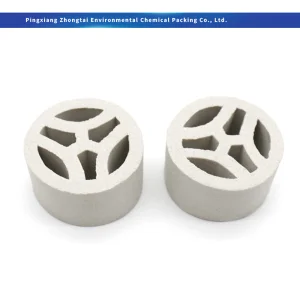
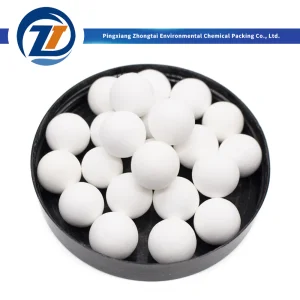
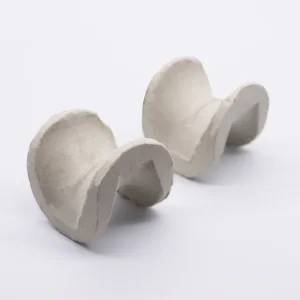
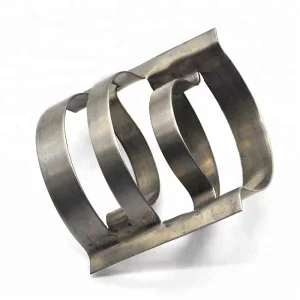
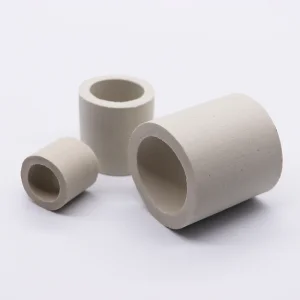
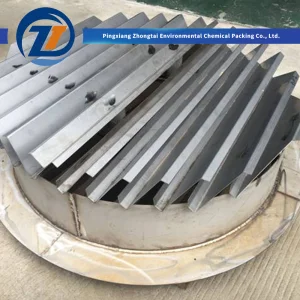
Industrial chemical absorption rings, ceramic saddles, and high-purity packing components engineered for chemical processing plants.
Contact Pingxiang Zhongtai Environmental Chemical Packing Co., Ltd. for engineering recommendations, dynamic breakthrough analysis, and factory-direct wholesale pricing.
