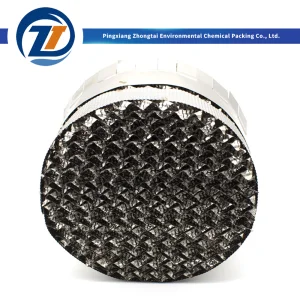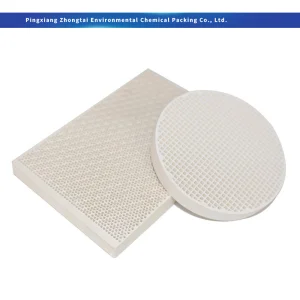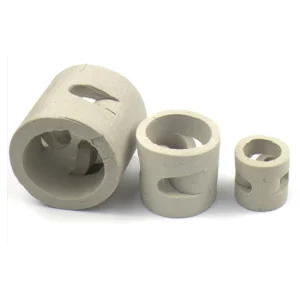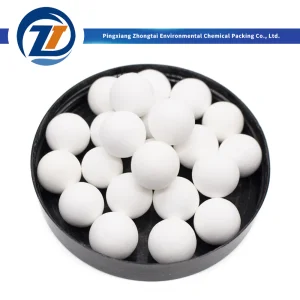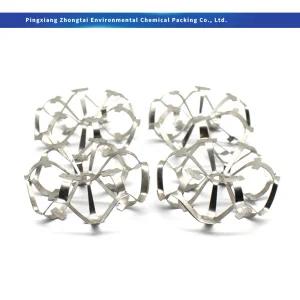
Reliable components manufactured directly in Pingxiang, optimized for thermodynamic efficiency and maximum column throughput.
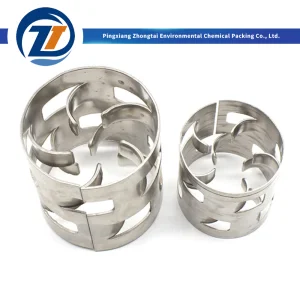
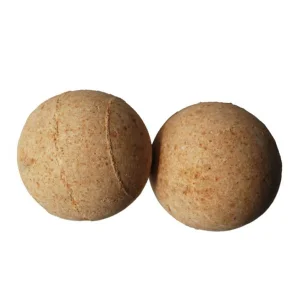
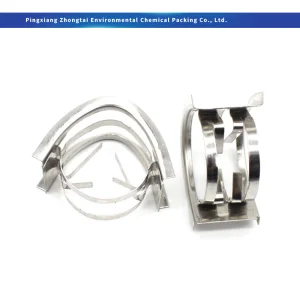
Industrial procurement demands for available ceramic balls have shifted beyond basic bulk pricing. Tier-1 engineering firms evaluate media based on lifecycle uptime and resistance profiles.
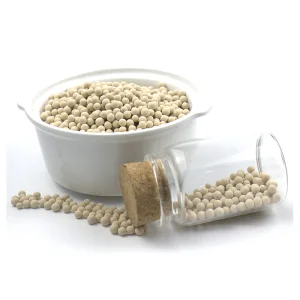
Modern petrochemical reactors operate at heights exceeding 25 meters, generating severe hydrodynamic bed loads. Procurement mandates verify minimum point crush strength exceeding 12 kN per ball to prevent particle degradation and bed blinding.
In high-pressure secondary steam reformers, silica volatilization poses downstream risk to synthesis catalysts. Enterprise buyers specify high-purity (≥99% Al₂O₃) ceramic balls to keep free SiO₂ below 0.1%, eliminating turbine blade deposition.
Rapid thermal transitions during startup and regeneration cycles induce catastrophic micro-cracking in substandard media. Our specialized firing cycles ensure consistent mullite-phase lattice stability up to 1400°C without spalling.
Strict composition criteria determine bed lifetime and fluid dynamics. Select the optimal grade calibrated to your process environment.
| Alumina Grade | Al₂O₃ Purity | SiO₂ Content | Bulk Density (kg/m³) | Water Absorption (%) | Recommended Industrial Service |
|---|---|---|---|---|---|
| Standard Inert Bed Support | 17% – 23% | 70% – 75% | 1350 – 1400 | < 3.0 | Hydrotreating, hydrocracking, basic thermal buffering |
| Medium Alumina Media | 23% – 30% | 65% – 70% | 1400 – 1450 | < 2.0 | Reforming units, petrochemical dryers, deep catalyst beds |
| High Alumina Grinding Media | 90% – 92% | < 6.0% | 1900 – 2100 | < 0.02 | High-wear ball milling, pigments, electronic slip grinding |
| Super High Purity Alumina | ≥ 99.0% | < 0.15% | 2000 – 2200 | < 0.01 | Ammonia converters, high-temp secondary reformers, synthesis reactors |
Adapting chemical inertness and mechanical resilience to the green energy transition and heavy chemical infrastructure.
Catalytic conversion for blue hydrogen, biomass gasification, and CO₂ capture units demands inert beds that withstand cyclic moisture shifts and syngas atmospheres without sulfur degradation.
Our Pingxiang facilities incorporate closed-loop multi-zone tunnel kilns with AI pyrometric modeling to achieve uniform crystal lattice density, reducing diameter tolerances to ±0.5mm across bulk orders.
Every shipment is backed by batch-level XRF chemical composition testing, cold-crush resistance logs, and full compliance with ASME and ASTM standards for pressure vessel internals.
Ongoing R&D focuses on micro-grooved spherical geometry to cut bed pressure drop by an additional 14%, directly reducing compression power requirements for gas plant operators.
Direct supply-chain integrity from the heart of Pingxiang industrial park to global chemical plants.
Standard packaging utilizes reinforced UV-stabilized jumbo ton bags (FIBC) with PE moisture liners or steel drums banded to heat-treated ISPM-15 compliant pallets for breakbulk maritime transits.
We routinely accommodate SGS, Bureau Veritas, and TÜV on-site inspection protocols for volumetric weight, crush force validation, and radio-frequency chemical verification prior to port dispatch.
Consult with our process engineering staff on bed profiling, graduation layers (from 2" support balls down to 1/8" capping layers), and hydraulic calculations to maximize overall plant run time.
Technical considerations regarding inert bed design, material choice, and procurement cycles.
Broadening efficiency across absorption columns, air separation, RTO abatement, and high-load grinding.