Direct manufacturer supply from Pingxiang's premier chemical ceramic and metallurgical mass transfer fabrication center.
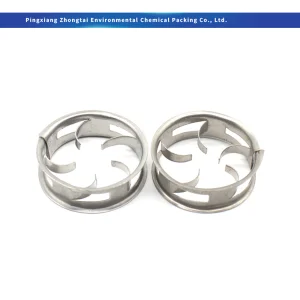
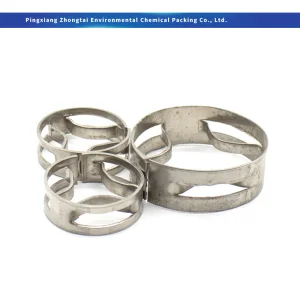
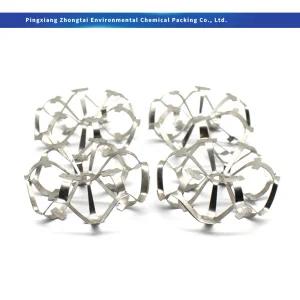
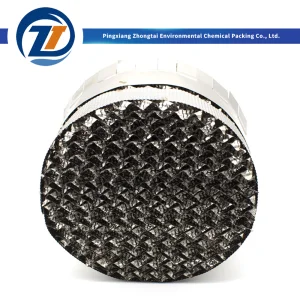
A rigorous examination of mass transfer kinetics, boundary layer behavior, and pressure drop mechanics in packed bed columns.
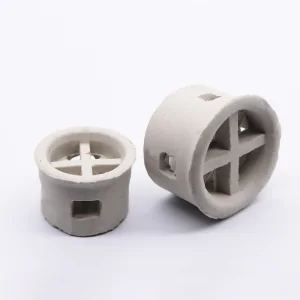
In chemical mass transfer and liquid-gas absorption columns, the selection of random packing geometry determines the operating ceiling of the entire separation column. The 25mm (nominal 1-inch) Ceramic Intalox Saddle Ring represents a crucial evolution from first-generation Raschig rings and rudimentary Berl saddles. By synthesizing an open arc curvature with bidirectional flanged saddles, this morphology eliminates closed annular spaces where stagnant liquid pockets form. It fundamentally transforms the fluid-hydraulic profile inside packed columns.
The aerodynamic saddle curvature forces rising vapors to split evenly across curved surfaces rather than colliding with perpendicular walls. The dry pressure drop (ΔP/Z) is reduced by up to 32% compared to equal-dimension cylindrical rings, effectively postponing column flooding under high superficial gas velocities.
According to Lewis-Whitman Two-Film Mass Transfer Theory, the rate of gas absorption depends on continuous renewal of the interfacial liquid film. The scalloped edges and non-nesting geometry of 25mm saddles continuously shear descending liquid rivulets into thin, turbulent dynamic films, accelerating interfacial mass transfer rates (KLa).
A classic failure mode of random packings is bed compacting, where adjacent elements nest together, causing extreme radial maldistribution and wall channeling. The distinct asymmetric wings of the 25mm Intalox design prevent inter-packing lock-in, preserving nominal void fraction (72–75%) over years of continuous load.
Certified physicochemical parameters and tiered procurement volume estimates for EPC bidding and plant maintenance cycles.
| Nominal Specification | Dimensions (D × H × T) | Bulk Density (kg/m³) | Geometric Area (m²/m³) | Free Void Space (%) | Packing Factor (1/m) | Crushing Strength (N/pc) |
|---|---|---|---|---|---|---|
| 25mm Ceramic Intalox (1") | 25 × 24 × 3.0 mm | 560 – 650 | 255 | 73 – 75% | 210 | > 1,450 N |
| 38mm Ceramic Intalox (1.5") | 38 × 36 × 4.0 mm | 510 – 590 | 160 | 76 – 78% | 125 | > 2,100 N |
| 50mm Ceramic Intalox (2") | 50 × 47 × 5.0 mm | 480 – 540 | 115 | 78 – 80% | 90 | > 3,200 N |
| 76mm Ceramic Intalox (3") | 76 × 70 × 7.5 mm | 420 – 480 | 85 | 80 – 83% | 55 | > 5,800 N |
The following tiered pricing schedule serves as an engineering procurement benchmark for standard industrial grade (Al2O3: 23-30%, SiO2: 68-73%) chemical porcelain 25mm Intalox Saddles. Custom chemical formulations, including super-low iron (<0.5%) or high alumina (up to 45%), are quoted against process specifications.
| Order Volume Tier | Indicative Price (USD / m³) | Indicative Price (USD / Metric Ton) | Standard Export Packaging | Manufacturing Lead Time | QC & Documentation Provided |
|---|---|---|---|---|---|
| Trial / Small (1 – 15 m³) | $410 – $460 / m³ | $680 – $760 / Ton | 25kg Poly Woven Bags on Pallets | 3 – 5 Days (Stock Available) | Batch CoA, Visual Inspection Report |
| Medium Plant (16 – 50 m³) | $360 – $405 / m³ | $600 – $675 / Ton | 1000kg Jumbo Bags / Palletized | 7 – 10 Days | CoA, Crush Strength & Acid Test Sheet |
| EPC / Full Column (>50 m³) | $310 – $355 / m³ | $515 – $590 / Ton | Jumbo Super Sack / Seaworthy Crates | 12 – 16 Days (High Throughput) | Full Dossier, SGS/BV Audit Verification |
*Note: Pricing subject to raw mineral market shifts, bulk container ocean freight indices, and specific packaging customizations (e.g., fumigated wooden boxes, nitrogen purges). Exact formal pricing delivered within 24 hours of process specification submission.
Deploying 25mm ceramic saddles across extreme corrosive, thermal, and acid-gas scrubbing environments.
In Double Contact Double Absorption (DCDA) sulfuric acid complexes, final absorbing and drying towers handle boiling 93–98.5% concentrated sulfuric acid with high exothermic heats of reaction. 25mm ceramic saddles withstand hot acid corrosion without silica leaching, delivering stable bed density under severe liquid irrigation rates.
Wet chlorine gas combined with hydrochloric acid vapors rapidly degrades standard grade stainless steels and causes environmental stress cracking in polypropylene (PP) or PVDF. Vitrified ceramic saddles provide complete immunity against elemental halogen attack, chlorine dioxide, and oxidative chlorinated brines.
Post-combustion emissions containing volatile organic compounds (VOCs), sulfur dioxide, and halogenated acids must be quenched and scrubbed before atmospheric venting. 25mm saddles serve in direct-contact quench columns, absorbing sudden thermal shocks without spalling or micro-cracking.
The 25mm size occupies the sweet spot in random packing selection. Smaller packings (e.g., 12mm / 16mm) provide slightly higher geometric area but generate excessively steep pressure drops per unit bed height, limiting gas throughput. Conversely, larger elements (50mm / 76mm) reduce pressure drop but require substantially deeper beds (higher HETP) to achieve high separation efficiency. The 25mm saddle delivers an optimized equilibrium:
Strategic procurement considerations, supply-chain resilience, and total cost of ownership (TCO) benchmarks across global territories.
Petrochemical revamps and sulfuric acid regeneration (SAR) facilities across Texas, Louisiana, and Alberta prioritize mechanical crush strength and compliance with strict ASME/ASTM codes. Factory-direct procurement from high-volume automated kilns yields a 35–45% landed cost advantage over local repackagers, even when ocean shipping and port handling are factored in.
In Germany, the Netherlands, and Scandinavia, chemical manufacturing centers operate under demanding emissions controls and safety regulations. Importers require thorough elemental analysis certifying non-hazardous raw clays, zero heavy metal leaching (Cd, Pb, As), and verified compliance with EU REACH frameworks before introduction to operational plant sites.
Massive greenfield downstream refinery and fertilizer complexes across Saudi Arabia, the UAE, Indonesia, and Vietnam demand rapid, high-volume delivery cycles. Pingxiang's dedicated industrial ceramic production hub ensures container-scale dispatches of 200+ cubic meters within 14 working days, maintaining tight project commissioning schedules.
When selecting mass transfer media for highly acidic or elevated temperature environments, engineers must balance capital expense (CAPEX) with operational downtime and scheduled turnaround frequency (OPEX):
| Evaluation Parameter | Chemical Porcelain 25mm Saddles | Alloy 20 / Hastelloy C276 Packings | Fluoropolymer (PVDF / PTFE) |
|---|---|---|---|
| Relative Material Cost | Baseline (1.0x) | High Premium (12x – 18x) | Moderate Premium (4x – 6x) |
| Maximum Service Temp | > 1,000 °C (Continuous) | ~ 550 – 650 °C | < 140 – 160 °C |
| Resistance to Oxidizing Acids | Immune (Except Hydrofluoric) | Variable by Chloride Concentration | High Chemical Inertness |
| Creep & Compressive Deformation | Zero Creep up to Failure Load | Zero Creep at Moderate Temp | High Creep / Prone to Flattening |
| Expected Plant Service Life | 10 – 15+ Operating Years | 8 – 12 Years | 3 – 6 Years |
Stringent factory acceptance criteria, standardized testing protocols, and robust multi-tier export shipping safeguards.
Full manufacturing and raw mineral adherence to ASTM C515 (Standard Specification for Chemical Porcelain and Stoneware Tower Packings) and Chinese chemical industry standard HG/T 21556.3.
Every firing lot is tested for acid solubility in boiling 70% sulfuric acid for 48 hours (ASTM C279), water absorption (<0.5%), and cold crushing resistance across 50 random samples.
Packed in reinforced UV-resistant jumbo bags (1.0 or 1.2 m³) with inner PE moisture liners, securely strapped on heat-treated ISPM-15 compliant solid fumigation pallets.
Welcoming independent inspection agencies (SGS, Bureau Veritas, TÜV) and client QA engineers for on-site tunnel kiln inspections, dimension checks, and lot verification.
Empirical performance data from major revamps and harsh chemical separation columns.
Challenge: An aging Gulf Coast DCDA sulfuric acid plant experienced excessive mist carryover and high bed pressure drop (ΔP > 3.8 kPa) using degraded 38mm Raschig rings, limiting production capacity to 84% nominal design.
Solution: The bed was unpacked and re-engineered with 180 m³ of precision-graded 25mm Ceramic Intalox Saddles on high-flow ceramic support plates.
Result: Pressure drop decreased by 26% while SO3 absorption efficiency rose to 99.94%, enabling sustained full capacity (102% nameplate) with zero acid carryover.
Challenge: Severe thermal cycling and acidic mist (SO2, SO3, HF traces, particulates) caused thermal spalling in standard ceramic packing, requiring unscheduled shutdowns every 8 to 11 months.
Solution: Zhongtai supplied low-iron, high-mullite customized 25mm ceramic saddles fired under controlled 1300°C soak temperatures to maximize thermal shock endurance.
Result: Zero spalling or bed disintegration over 42 months of continuous operation, reducing plant maintenance costs by over $180,000 annually.
Challenge: Wet chlorine gas saturated with water vapor required deep dehydration via 98% concentrated sulfuric acid without risk of localized heating failure.
Solution: Implementation of 25mm chemical porcelain saddles providing uniform gas distribution and maximum interfacial surface area in the lower high-flux contacting section.
Result: Chlorine outlet moisture consistently measured below 15 ppm by volume, protecting downstream compression stages from catastrophic wet-chlorine corrosion.
Pioneering automated manufacturing, advanced mineral formulations, and carbon-reduction initiatives in chemical ceramics.
Developing micro-textured ceramic surfaces using fugitive organic pore-formers during shaping. This micro-porous skin enhances the capillary spreading of liquids across the saddle surface, sustaining active wet mass-transfer area even during low-irrigation turndown operations.
Transitioning from manual slip molding to computer-controlled multi-cavity vacuum extrusion systems. This reduces dimensional tolerances from standard ±2.0mm down to ±0.5mm, improving bulk packing bed void consistency and eliminating regional bulk-density variations.
Upgrading natural gas and LNG-fired tunnel kilns with waste-heat recuperation loops and oxy-fuel combustion technology. This modernization program lowers the embodied carbon footprint per cubic meter of finished ceramic media by up to 28%, aligning with corporate Scope 3 supply chain targets.
Specific, specification-grade answers addressing hydrodynamic sizing, corrosion resistance, and plant installation.
Send us your tower diameter, gas/liquid flow rates, media chemistry, and operating temperatures for full hydraulic sizing.
Complete mass transfer equipment, internals, and specialized ceramic foundry media.