Engineered for low pressure drop, maximum volumetric surface area, and severe corrosive environments. Direct supply from Pingxiang's specialized production facility.
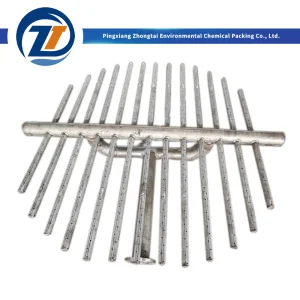
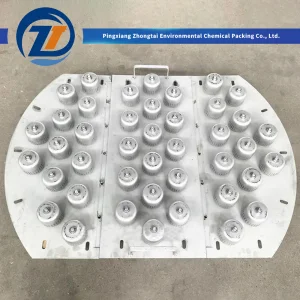
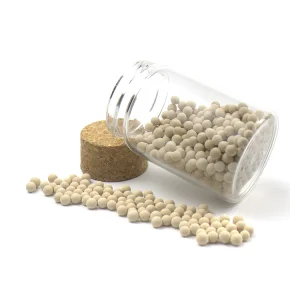
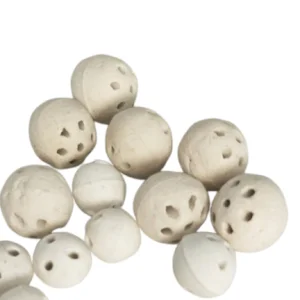
Synthetic crystalline aluminosilicates—conventionally designated as zeolite molecular sieves—constitute the molecular-scale separation engine of contemporary heavy industry. Characterized by uniform sub-nanometer pore architectures, high cation-exchange capacity, and reversible desorption kinetics, these materials dictate process efficiencies across multi-billion-dollar energy supply chains.
In cryogenic air separation units (ASU) and liquefied natural gas (LNG) trains, moisture and carbon dioxide concentrations must be suppressed below 0.1 ppmv and 50 ppmv respectively to avert cryogenic freeze-out in cold boxes. Zeolite 13X and 4A variants provide the necessary deep-drying dynamics and multi-contaminant adsorption isotherms under severe continuous flow conditions.
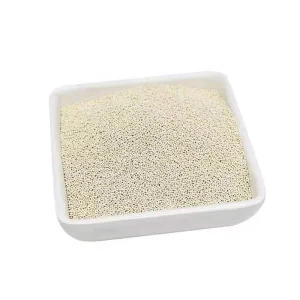
The transformation of pressure swing adsorption (PSA) and vacuum pressure swing adsorption (VPSA) systems relies on lithium-exchanged and highly polar synthetic zeolites (such as 13X-HP and 0.4–0.8 mm microspherical 5A). By exploiting the quadrupole moment differential between nitrogen and oxygen molecules, these sieves achieve nitrogen adsorption selectivity coefficients exceeding 3.2.
From ethylene cracker cracked-gas drying (Type 3A excluding olefin co-adsorption and polymerization) to normal-isoparaffin separation in octane-boosting isomerizers, zeolites are ubiquitous. Furthermore, emerging Carbon Capture, Utilization, and Storage (CCUS) frameworks employ customized microporous Faujasites for point-source post-combustion flue gas CO₂ capture.
Pingxiang, located in Jiangxi Province, has been recognized internationally as China's premier epicentre for chemical packings, industrial technical ceramics, and synthetic zeolites. By concentrating upstream chemical synthesizers, specialized kiln manufacturers, automated extrusion lines, and accredited analytical laboratories within a concise industrial corridor, Pingxiang Zhongtai Environmental Chemical Packing Co., Ltd. delivers measurable quality and lead-time advantages to global process operators.
Unlike secondary compounders that purchase commercial zeolite powders on the spot market, our integrated facility oversees the complete hydrothermal synthesis pathway. By managing raw sodium silicate, sodium aluminate, and structure-directing templates internally, we regulate the exact Silicon-to-Aluminum ratio ($SiO_2/Al_2O_3$) at the crystallite nucleation phase.
The mechanical longevity of a molecular sieve or ceramic support is dictated by binder matrix engineering and activation temperature control. Zhongtai incorporates high-purity attapulgite and kaolinitic clay binders, coupled with multi-zone computerized rotary calcination kilns that eradicate micro-fissures during the dehydration process.
Procurement and process engineers can reference physical characteristics, nominal pore openings, dynamic water adsorption capacities, and standard ASTM test parameters across our primary product families.
| Zeolite Type / Grade | Cationic Form | Pore Window (Å) | Bulk Density (g/ml) | Static H₂O Adsorption (% wt) | Crush Strength (N/bead) | Primary Industrial Use Case |
|---|---|---|---|---|---|---|
| Molecular Sieve 3A LTA Structure |
Potassium ($K^+$) | ~3.0 | 0.68 – 0.74 | ≥ 21.0% (RH 60%, 25°C) | ≥ 35 (1.6-2.5mm) ≥ 65 (3.0-5.0mm) |
Cracked gas drying, ethanol dehydration, insulated glass desiccant units. |
| Molecular Sieve 4A LTA Structure |
Sodium ($Na^+$) | ~4.0 | 0.66 – 0.72 | ≥ 21.5% (RH 60%, 25°C) | ≥ 30 (1.6-2.5mm) ≥ 60 (3.0-5.0mm) |
Instrument compressed air dryers, closed-loop refrigerant circuits, natural gas drying. |
| Molecular Sieve 5A LTA Structure |
Calcium ($Ca^{2+}$) | ~5.0 | 0.68 – 0.73 | ≥ 21.5% (RH 60%, 25°C) | ≥ 35 (1.6-2.5mm) ≥ 70 (3.0-5.0mm) |
PSA hydrogen purification, normal/iso-paraffin separation, standard medical oxygen. |
| Molecular Sieve 13X FAU Structure |
Sodium ($Na^+$) | ~10.0 | 0.62 – 0.68 | ≥ 26.0% (RH 60%, 25°C) | ≥ 30 (1.6-2.5mm) ≥ 55 (3.0-5.0mm) |
Cryogenic air separation pre-purification ($H_2O$ & $CO_2$ removal), aerosol propellant sweetening. |
| 13X-HP High Purity Enhanced FAU |
Modified $Na^+/Li^+$ | ~10.0 | 0.60 – 0.65 | ≥ 27.0% (RH 60%, 25°C) | ≥ 25 (0.4-0.8mm) ≥ 40 (1.6-2.5mm) |
High-capacity medical oxygen concentrators, portable PSA/VPSA respiratory equipment. |
| Inert Ceramic Balls 17%–99% Al₂O₃ |
Alumino-silicate | Non-porous | 1.35 – 2.05 | < 1.0% (Water Absorption) | > 500 N to > 25,000 N (Size dependent) |
Hydrotreating catalyst bed top hold-down, reactor bottom support, steam reformer beds. |
Mass transfer columns and fixed-bed adsorption vessels represent harsh, unpredictable operating environments. Below are the precise operating conditions where our molecular sieves, column packings, and support media demonstrate uncompromised performance.
Ethanol-water forms an azeotrope at 95.6% purity, rendering pure distillation thermodynamically unfeasible. Zhongtai Type 3A Zeolite Sieves feature a precise 3Å aperture window that admits water molecules ($2.8\text{ \AA}$) while cleanly repelling the larger ethanol molecule ($4.4\text{ \AA}$). This eliminates co-adsorption, carbonization, and catalytic coking during 200°C–230°C superheated vapor regeneration phases.
In cryogenic air separation trains, incoming ambient air carries fluctuating moisture and atmospheric carbon dioxide. If allowed to enter downstream aluminum plate-fin heat exchangers, these freeze solid at cryogenic temperatures, obstructing flow channels. Packed dual-bed vessels loaded with our 13X APG (Air Pre-Purification Grade) molecular sieve ensure uninterrupted run cycles.
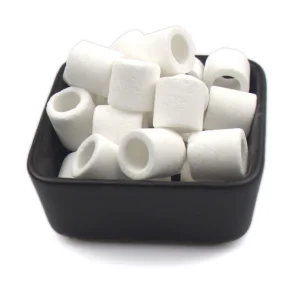
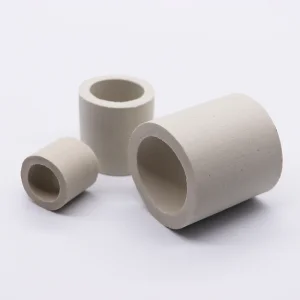
In world-scale sulfur burning and metallurgical roasting acid plants, packed columns operate under concentrated 93%–98% circulating $H_2SO_4$ at temperatures topping 120°C. Zhongtai Ceramic Intalox Saddles and Acid-Resistant Ceramic Raschig Rings provide permanent structural stability, demonstrating acid resistance ratings exceeding 99.8% in boiling sulfuric acid trials.
International engineering contractors (EPCs) and multinational petrochemical operators require verifiable quality documentation. Every production batch synthesized at our Pingxiang complex undergoes rigorous verification to confirm mechanical, chemical, and adsorption tolerances before export clearance.
To eliminate dusting and premature differential pressure build-up across fixed beds, sieves undergo ASTM D4058 attrition testing alongside automated single-bead crush strength statistical sampling across 100 randomly selected particles per batch.
Equilibrium water capacity, nitrogen/oxygen selectivity coefficients, and carbon dioxide dynamic breakthrough curves are documented via automated gravimetric vapor sorption (DVS) and chromatographic gas breakthrough analyzers.
Zeolite adsorbents react rapidly with atmospheric humidity. Shipments are packed in air-tight heavy-gauge steel drums with internal polyethylene liners, or vacuum-sealed 1,000 kg super sacks with aluminum-foil moisture barriers.
The transition toward decarbonized processing and low-carbon hydrogen demands next-generation adsorption media and high-turndown tower equipment.
Conventional zeolites incorporate 15–20% inert binder clays, which add mechanical cohesion but dilute active adsorption capacity. Next-generation binderless sieves convert the inert clay matrix into crystalline zeolite phase via in-situ hydrothermal crystallization, elevating volumetric adsorption capacity by up to 25%.
By engineering hierarchical meso-microporous structures within zeolite crystals, diffusion path lengths are reduced by a factor of ten. This accelerates adsorption-desorption cycle times from minutes down to seconds, enabling compact, high-efficiency hydrogen purification and point-of-care medical oxygen devices.
Modified alkali-metal doped faujasites are being engineered to resist acid gas moisture degradation while maintaining high carbon dioxide affinity in temperatures ranging from 40°C to 75°C. This unlocks lower-cost capture alternatives to energy-intensive amine wash columns.
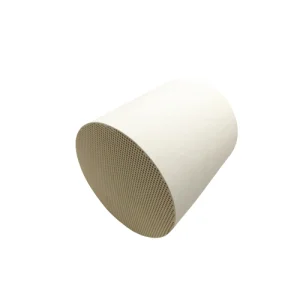
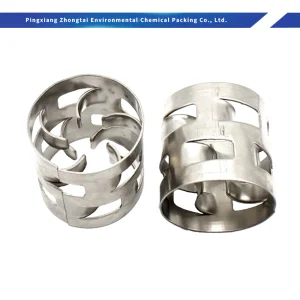
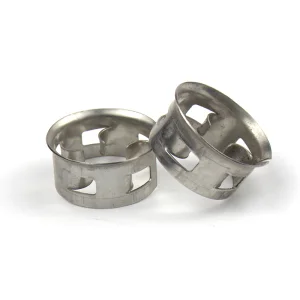
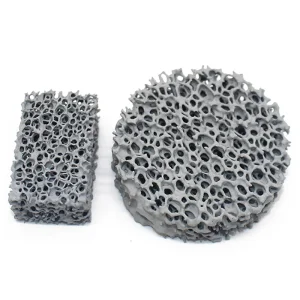
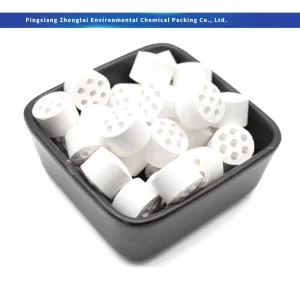
Comprehensive solutions encompassing catalytic emission controls, molten foundry filtration, distillation column packings, and unconventional fracturing ceramics.
From initial thermodynamic process modeling to vessel commissioning at your project site, our export workflow eliminates operational surprises.
We analyze process stream compositions, gas velocities, bed diameters, and operational pressure drops to calculate optimal bead diameter, pore geometry, and mass transfer zone (MTZ) length.
Representative grab samples undergo XRD crystal verification, single-pellet crush testing, and moisture analysis via Karl Fischer titration, documented in verified Batch Inspection Certificates.
Automated vacuum sealing in moisture-barrier steel drums or nitrogen-purged supersacks ensures product arrives with fresh static water capacity (<1.5% wt package moisture).
Direct rail and sea container routes originating from our Pingxiang manufacturing base to Ningbo, Shanghai, or Shenzhen ports, accompanied by full Certificates of Origin and compliance files.
Direct engineering responses to the technical inquiries most frequently posed by refinery process leads, procurement heads, and EPC project managers.
Collaborate directly with our Pingxiang chemical engineering team. Submit your vessel dimensions, stream composition, operating pressure, temperature, and target purity for a comprehensive technical proposal within 24 hours.
