Evaluating the real FOB/CIF pricing parameters of Type 3A molecular sieves requires analyzing raw material synthesis, potassium ion-exchange thresholds, binder chemistry, and bulk calcination dynamics.
In global chemical processing, petrochemical refining, and high-performance glass manufacturing, the baseline China Zeolite 3A price represents one of the most competitive benchmark metrics for industrial desiccants. Synthetic potassium-aluminosilicate molecular sieve 3A (with an effective pore opening of approximately 3 Ångströms or 0.3 nm) is manufactured via hydrothermal synthesis followed by a rigorous potassium ion-exchange process on a 4A (sodium form) crystalline precursor framework.
Global procurement teams must navigate a wide price variance when securing direct factory quotes from Chinese manufacturing hubs, particularly Pingxiang, Jiangxi—the world-renowned epicenter for industrial ceramics, chemical packing, and molecular sieve adsorbents. Prices generally range from $1,150 to $2,300 per metric ton (FOB China). Understanding why this cost gap exists requires examining four core manufacturing parameters:
Achieving a high $K^+$ replacement ratio (>40% ion exchange from $Na^+$ to $K^+$) ensures precise 3Å pore restriction, preventing co-adsorption of unsaturated hydrocarbons like ethylene or propylene while maintaining ultra-low water dew points (-70°C to -80°C).
Premium grade 3A utilizes high-purity Attapulgite or Kaolin clays (typically 20% binder content) to preserve high static water capacity (≥21.5%). Binderless or custom-formulated beads carry premium pricing due to advanced extrusion and calcination steps.
High-pressure industrial towers (e.g., cracked gas drying beds operating at 50-70 bar) require minimal dust generation and superior point-crush strength (≥35 N for 1.6-2.5 mm, ≥70 N for 3.0-5.0 mm), directly influencing raw material sintering parameters.
Because active 3A molecular sieve adsorbents greedily absorb atmospheric moisture, pricing quotes vary depending on packaging: air-tight steel drums (150kg/200L), moisture-barrier jumbo bags (1000kg), or vacuum-sealed cartons with moisture indicators.
Explore direct factory options for gas drying, mass transfer tower packing, catalyst beds, and environmental filtration systems.
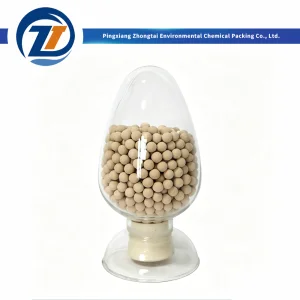
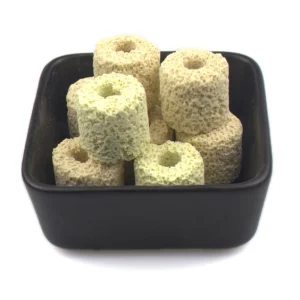
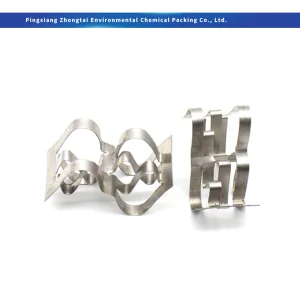
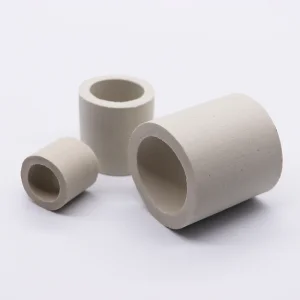
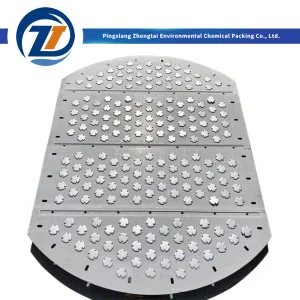
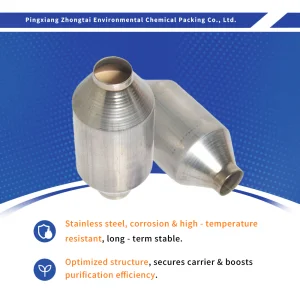
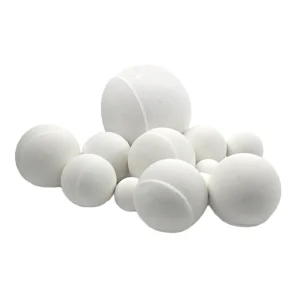
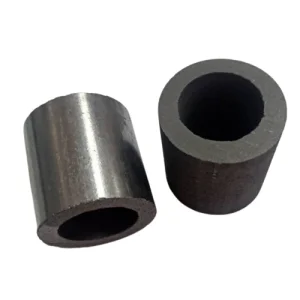
In-depth technical parameters comparing 3A molecular sieves against 4A, 5A, and 13X grades to assist chemical engineers in bed sizing and dynamic load calculations.
The fundamental chemical formula of Potassium-Sodium Aluminosilicate Type 3A molecular sieve is $x K_2O \cdot (1-x) Na_2O \cdot Al_2O_3 \cdot 2.0 SiO_2 \cdot w H_2O$, where $x \approx 0.40$ to $0.45$. The structural unit cell consists of a three-dimensional framework of $SiO_4$ and $AlO_4$ tetrahedra linked through shared oxygen atoms. By ion-exchanging sodium ions with larger potassium ions, the nominal pore window narrows from 4 Ångströms to 3 Ångströms.
Because the kinetic diameter of the water molecule ($H_2O$) is roughly 0.265 nm (2.65 Å), water passes easily into the internal supercage structure (alpha-cage) where strong electrostatic forces bind it to unsaturated cations. Conversely, molecules such as Ethane (3.8 Å), Ethylene (3.9 Å), Propylene (4.5 Å), or Ethanol (4.3 Å) are kinetically excluded. This unique molecular sieving action eliminates co-adsorption, preventing temperature spikes, bed fouling, and hydrocarbon loss during continuous drying cycles.
| Molecular Sieve Grade | Pore Window | Active Cation | Bulk Density (g/ml) | Static Water Capacity | Excluded Molecules (> Cut-off) | Primary Industrial Use Case |
|---|---|---|---|---|---|---|
| Zeolite 3A | 3 Å (0.3 nm) | $K^+$ / $Na^+$ | 0.68 – 0.74 | ≥ 21.5% | Ethylene, Propylene, Ethanol | Cracked gas drying, Insulating Glass, Bio-ethanol |
| Zeolite 4A | 4 Å (0.4 nm) | $Na^+$ | 0.66 – 0.72 | ≥ 22.0% | Propane, Butane, Ethane | Air drying, Refrigerant systems, Closed loop liquid desiccation |
| Zeolite 5A | 5 Å (0.5 nm) | $Ca^{2+}$ | 0.68 – 0.73 | ≥ 21.5% | Iso-paraffins, Aromatics | PSA Oxygen Generators, Iso/Normal Paraffin Separation |
| Zeolite 13X | 10 Å (1.0 nm) | $Na^+$ (Type X) | 0.62 – 0.68 | ≥ 24.0% | Large hydrocarbons, complex amines | Cryogenic air pre-purification ($CO_2$ & $H_2O$ removal), $H_2S$ removal |
How localized mineral reserves, automated continuous tunnel kilns, and integrated chemical industrial clusters drive competitive pricing without sacrificing E-E-A-T benchmark quality.
Pingxiang manufacturers benefit from direct regional access to high-grade kaolin clay reserves and synthetic liquid sodium silicate plants, cutting raw material freight expenses by up to 18% compared to isolated global producers.
Modern Chinese factories employ micro-processor controlled continuous rotary and tunnel calcination kilns. Precise temperature zoning (600°C–650°C) reduces energy consumption per metric ton while ensuring uniform residual moisture (<1.5%).
Leading Chinese suppliers adhere to strict ISO 9001 quality systems. Every batch undergoes rigorous test protocols for packed bulk density, dynamic water absorption, attrition rate (ASTM D3802), and liquid phase potassium exchange titration.
Where and why top-tier industrial procurement managers specify China Zeolite 3A molecular sieve beads and pellets across various energy and chemical sectors.
User intent mining for terms like "China Zeolite 3A price factories" reveals that buyers are rarely seeking consumer-level desiccants; they require deep engineering validation for specific continuous-flow process operations. The main commercial consumption sectors include:
In steam cracking facilities, pyrolysis gas saturated with water must be dried down to <1 ppm moisture prior to cryogenic fractionation (-100°C). Zeolite 3A strictly adsorbs water while rejecting ethylene, propylene, and butadiene, preventing hydrate formation and exchanger freeze-up.
IG unit spacer bars are filled with matrix 3A desiccant. By adsorbing water vapor without trapping nitrogen or air, 3A prevents glass deflecting, seal stress, or double-glazing fogging under extreme outdoor thermal expansion and contraction cycles.
Standard distillation yields an azeotropic ethanol-water mixture (95.6% ethanol). Passing the vapor through a Pressure Swing Adsorption (PSA) or Temperature Swing Adsorption (TSA) 3A molecular sieve bed selectively strips water, producing >99.9% pure fuel-grade anhydrous ethanol.
In closed HVAC and automotive air conditioning systems (R-134a, R-410A, R-32, HFO-1234yf), traces of moisture react with halogenated refrigerants to form corrosive hydrofluoric or hydrochloric acids. Zeolite 3A desiccant cores remove moisture without degrading the chemical working fluid.
High-pressure natural gas streams heading into LNG liquefaction trains require ultra-deep water dew-point depression. Type 3A adsorbents prevent co-adsorption of heavy hydrocarbons ($C_2+$ liquids) and minimize mercaptan retention.
Used in electrical transformer oil conditioning and pharmaceutical solvent drying (acetonitrile, methanol, ethyl acetate), where water removal is critical to maintaining dielectric breakdown voltage or reaction stoichiometry.
Ensuring global export compatibility, REACH compliance, strict packaging integrity, and international laboratory verification.
Procuring directly from accredited Chinese suppliers eliminates supply risk when backed by standardized international laboratory documentation. High-quality export batches of Zeolite 3A comply with the following mandatory regulatory and testing frameworks:
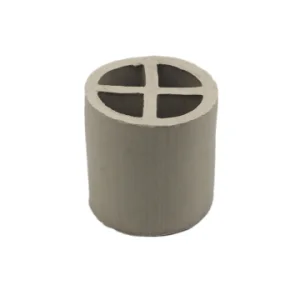
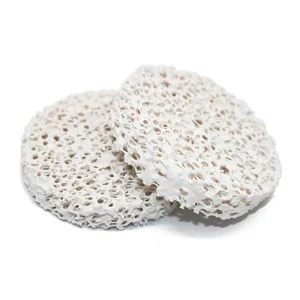
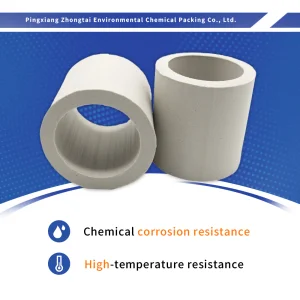
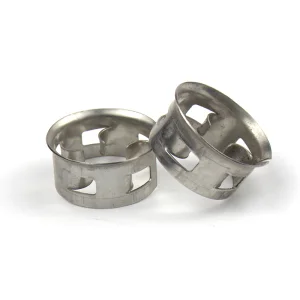
Expand your industrial sourcing capabilities with high-performance random packings, ceramic proppants, and filtration honeycomb media.
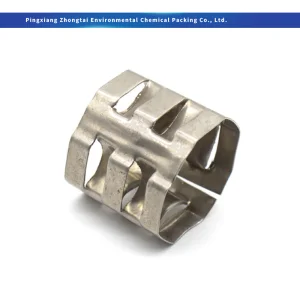
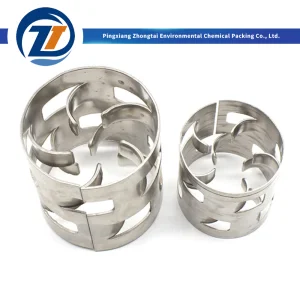
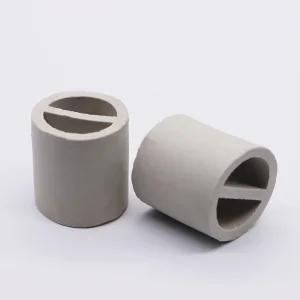
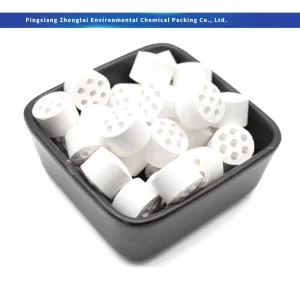
How decarbonization targets, energy-efficient regeneration cycles, and binderless technology are shaping China's molecular sieve production landscape.
As global environmental regulations push process plants toward zero-carbon targets, China's chemical adsorbents industry is evolving rapidly. Key innovation vectors impacting future 3A molecular sieve pricing and performance include:
Traditional molecular sieves incorporate 15–20% inert clay binder, which contributes no adsorption capacity. Next-generation binderless 3A beads convert the clay binder into active zeolite crystals via post-hydrothermal synthesis. This boosts mass-based water adsorption capacity by up to 15–20%, reducing vessel volume requirements and shipping weights for offshore or modular oil & gas skid packages.
Standard regeneration of 3A beds requires heating purges up to 200°C–300°C. Advanced pore structure modifications allow complete desorption at 150°C–180°C, lowering steam or electric heater energy demand by up to 22% during industrial reactivation cycles.
Chinese factories in Jiangxi are integrating solar energy arrays and closed-loop liquid waste neutralization systems. Procuring low-carbon certified desiccants helps multinational corporations meet Scope 3 ESG supply chain reduction goals.
Direct answers to the most common questions raised by chemical process engineers, plant maintenance leads, and global procurement specialists.
