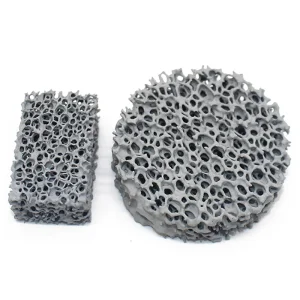
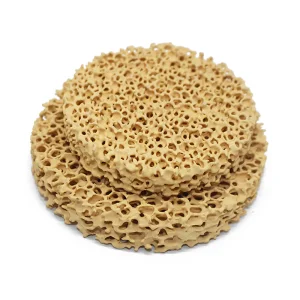
Procure direct from our Pingxiang manufacturing base. Below are foundational high-performance components across porous ceramics, synthetic zeolites, and precision random packings.
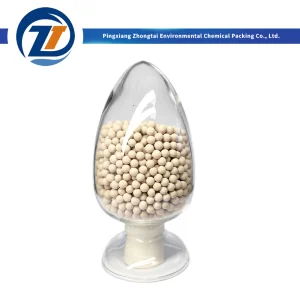
In modern chemical separation, industrial gas purification, and cryogenic fractionation, molecular sieve beads (zeolite desiccants) are the critical dynamic boundary between continuous process stability and catastrophic downstream plant poisoning. International procurement directors from North America, the European Union, the Middle East, and East Asia are aggressively optimizing their supplier matrices, transitioning from branded resellers to primary Chinese manufacturing centers.
Direct sourcing from certified Pingxiang factories reduces unit expenditure by 35% to 52% compared to Western repackagers, while eliminating intermediary distributors and guaranteeing traceability down to raw aluminosilicate source lots.
Thermal pressure swing adsorption (TSA) cycles impose brutal cyclic mechanical stress. High-grade spherical beads provide superior packing density and uniform voidage, avoiding the channel erosion and pressure drop spikes typical of irregular extrudates.
Stringent ASTM D3802 ball-pan testing ensures our molecular sieve beads exhibit attrition rates below 0.15% wt/hr. This safeguards downstream cryogenic expansion turbines, valves, and precision heat exchangers from abrasive particulate fouling.
Sieve beads operate on well-defined steric exclusion principles governed by their crystalline alkali metal aluminosilicate aluminosilicate frameworks. Synthesized typically in Type A (LTA) and Type X (FAU) lattices, precisely tailored ionic radii determine the effective aperture window down to fractions of an Ångström (Å).
| Zeolite Type | Cation / Formula | Effective Pore | Bulk Density (g/ml) | Static H₂O Adsorption | Crush Strength (N/bead) | Primary Industrial Sector |
|---|---|---|---|---|---|---|
| Type 3A | Potassium (K₁₂[(AlO₂)₁₂(SiO₂)₁₂]) | ~3.0 Å | 0.68 – 0.74 | ≥ 21.5% wt | ≥ 35 N (1.6-2.5mm) | Cracked gas, ethylene, propylene, ethanol dehydration |
| Type 4A | Sodium (Na₁₂[(AlO₂)₁₂(SiO₂)₁₂]) | ~4.0 Å | 0.66 – 0.73 | ≥ 22.0% wt | ≥ 30 N (1.6-2.5mm) | Instrument air dryers, closed-loop refrigerant circuits |
| Type 5A | Calcium (Ca₄.₅Na₃[(AlO₂)₁₂(SiO₂)₁₂]) | ~5.0 Å | 0.68 – 0.73 | ≥ 21.5% wt | ≥ 45 N (1.6-2.5mm) | Normal-paraffin separation, PSA hydrogen purification |
| Type 13X | Sodium-X (Na₈₆[(AlO₂)₈₆(SiO₂)₁₀₆]) | ~10.0 Å | 0.62 – 0.68 | ≥ 26.5% wt | ≥ 25 N (1.6-2.5mm) | Cryogenic ASU pre-purification (CO₂/H₂O/hydrocarbons) |
Selecting the precise pore aperture is non-negotiable. For example, in fuel ethanol production, Zeolite 3A permits water molecules (kinetic diameter ~2.6 Å) to enter the alpha-cages while strictly excluding ethanol molecules (~4.4 Å). Sourcing inferior 4A substitutes results in ethanol co-adsorption, thermal runaway inside the bed, coking during regeneration, and rapid sorbent deactivation.
Static equilibrium water capacity does not replicate real vessel hydrodynamic kinetics. Pingxiang Zhongtai sieve beads are manufactured with an optimized crystalline-to-binder ratio (typically 80:20 high-purity attapulgite clay), ensuring rapid mass transfer zone (MTZ) progression, narrow breakthrough profiles, and extended cycle runtimes reaching well over 24,000 on-stream operational hours.
From cryogenic liquefaction trains running at -160°C to high-temperature oxidative contactors operating above 1000°C, chemical and process engineers require media that will not disintegrate, glaze, or leach into product streams.
Molecular Sieve 13X beads serve as the front-end clean-up bed for ambient air separation. They trap trace ambient moisture down to <0.1 ppmv and remove atmospheric carbon dioxide down to <0.5 ppmv, eliminating frozen blockages in cold box plate-fin heat exchangers.
In midstream natural gas treatment, heavy acid gases and sulfur compounds (mercaptans, H₂S) along with moisture must be removed prior to cryogenic liquefaction. Specially formulated Type 13X-HP or mixed-metal sieve bead beds prevent hydrate formation and corrosion in transmission pipelines.
Ethylene and propylene feedstocks require profound dehydration prior to catalytic polymerization. Sieve Bead 3A prevents catalyst bed poisoning and stops unwanted green-oil polymer formation within the desiccant matrix, ensuring maximum run length between regeneration stages.
Navigating quotations from Chinese manufacturers requires an understanding of the technical cost drivers behind bulk synthetic zeolites. Quotations are dictated by raw material purity, thermal energy for continuous rotary calcination, binder formulation, and secondary screening.
| Product Category | Standard Mesh / Size | Indicative Price Range (FOB / MT) | Standard Packaging | Standard Lead Time | Target Dew Point |
|---|---|---|---|---|---|
| Molecular Sieve 3A Beads | 8x12 mesh (1.6-2.5mm) | $1,350 – $1,780 USD | 150kg Air-Tight Steel Drum | 7 – 14 Days | ≤ -80°C |
| Molecular Sieve 4A Beads | 4x8 mesh (3.0-5.0mm) | $1,200 – $1,550 USD | 25kg Carton / 1000kg Big Bag | 5 – 10 Days | ≤ -70°C |
| Molecular Sieve 5A Beads | 8x12 mesh (1.6-2.5mm) | $1,550 – $2,100 USD | 150kg Steel Drum w/ N₂ Purge | 10 – 15 Days | ≤ -80°C |
| Molecular Sieve 13X Beads | 4x8 mesh (3.0-5.0mm) | $1,450 – $1,950 USD | 150kg Air-Tight Steel Drum | 7 – 12 Days | ≤ -85°C |
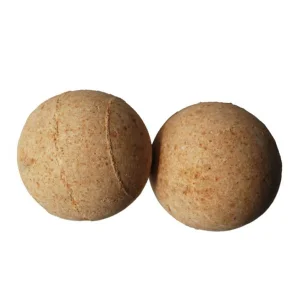
| High-Alumina Support Balls (99%) | 1/8" to 2" (3mm - 50mm) | $1,100 – $1,650 USD | 1000kg Super Sack on Pallet | 5 – 10 Days | Non-adsorptive support |
Adsorbent beads require absolute hermetic isolation from atmospheric air. We utilize UN-certified carbon steel drums with inner heavy-duty polyethylene liners, heat-sealed foil bags, or optional pressurized nitrogen blanket packaging for extended site storage.
Every shipment is accompanied by a mill-certified Certificate of Analysis verifying water adsorption capacity, bulk density, residual moisture content (tested via Loss on Ignition at 575°C ≤1.5% wt), and crush strength distribution curve.
With our sales office handling global operations, we support FOB Shanghai/Ningbo/Shenzhen, CIF destination port, or full DDP logistics directly to chemical plants and fabricator facilities across Europe, the Americas, and Southeast Asia.
The industrial transition toward hydrogen economies, carbon capture, and high-efficiency purification requires next-generation mass transfer contactors and specialized sorbents with enhanced thermodynamic envelopes.
Synthesizing beads where the clay binder is chemically converted into crystalline zeolite, delivering a 20% to 25% surge in active adsorption capacity per vessel volume.
Incorporating functional organic amines into porous 13X channels for selective post-combustion CO₂ capture from flue gas streams at reduced regeneration temperatures.
Transitioning calcination lines from coal gasification to electrified tunnel kilns, eliminating Scope 1 manufacturing emissions and complying with EU CBAM carbon border regulations.
Real-time computer vision dynamic imaging ensuring absolute sphericity, sub-millimeter bead size distribution, and rapid rejection of non-conforming out-of-round granules.
Pingxiang City, Jiangxi Province is universally recognized as the chemical packing capital of China. For decades, the region has centralized raw kaolin deposits, synthetic chemical plants, advanced high-temperature kilns, and multi-generational technical ceramic specialists.
Founded in 2003, Pingxiang Zhongtai Environmental Chemical Packing Co., Ltd. has leveraged this geographic synergy to become an internationally audited manufacturing leader. Our facilities house modern rotary calcination kilns, high-speed automated spheroidizers, metal punching lines, and advanced quality assurance laboratories.
Our factory regularly hosts overseas engineering audits, such as our comprehensive on-site ceramic inspection conducted by Korean industrial buyers in 2018, multi-year supply partnerships with South American engineering consortia established at the Canton Fair in 2019, and major equipment supply contracts finalized at the 2024 Indonesia International Trade Exposition.
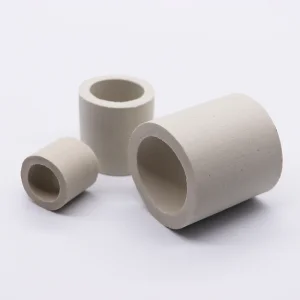
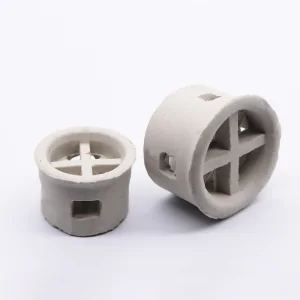
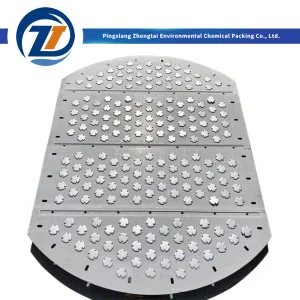
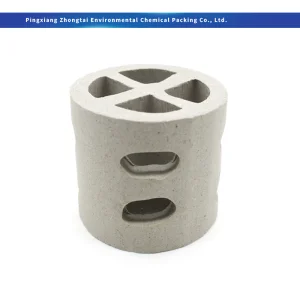
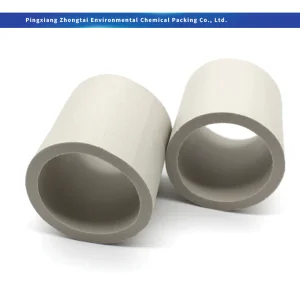
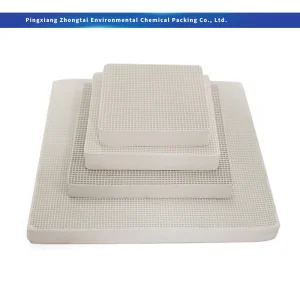
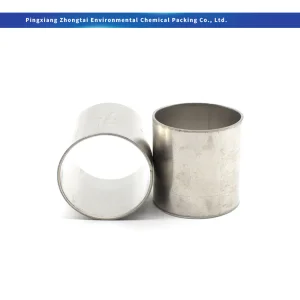
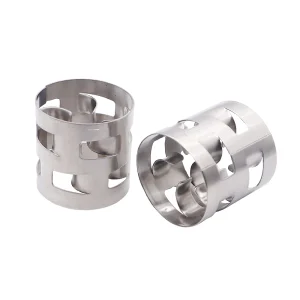
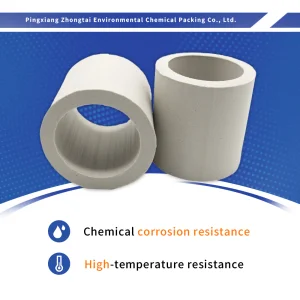
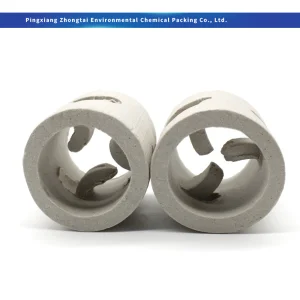
Complementing our zeolite sieve beads, Zhongtai produces full lines of corrosion-resistant random tower packing, refractory support spheres, and catalytic monolithic substrates.
Definitive engineering answers addressing desiccant selection, fluid dynamics, vessel design, and international shipping protocols.
