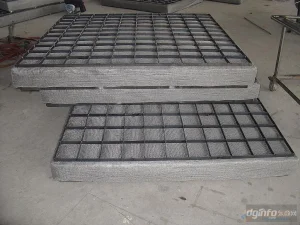
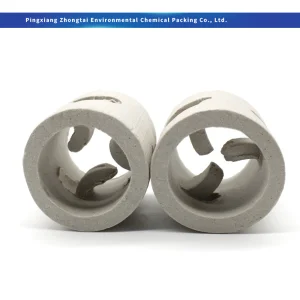
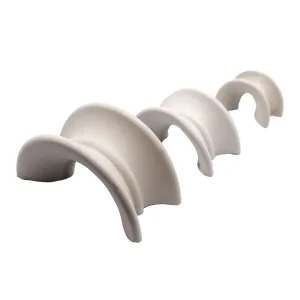
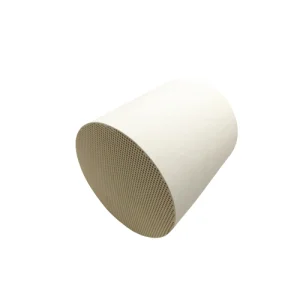
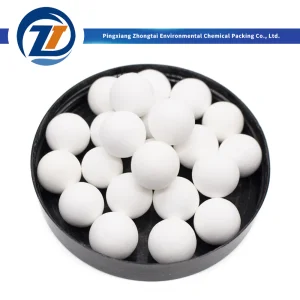
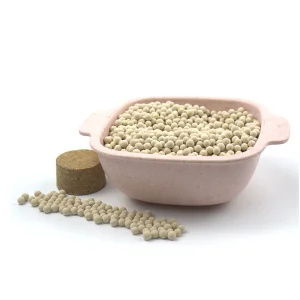
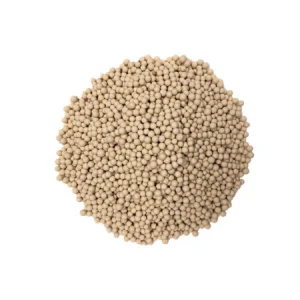
Direct supply from Pingxiang chemical packing production bases — tested for extreme mechanical strength, uniform pore distribution, and thermal endurance.
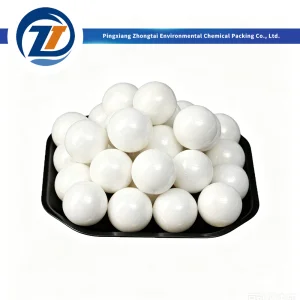
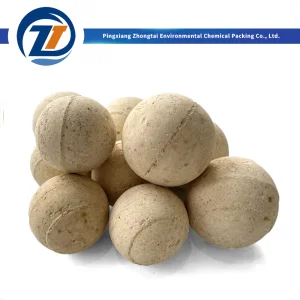
Wholesale Ultra Fine Yttria Stabilized Zirconia Grinding Ball Ceramic Milling Bead
View Product DetailsUnderstanding mass transfer zones, crystalline framework resilience, and thermal desorption dynamics in industrial pressure & temperature swing adsorption systems.
Regenerating molecular sieves represent the cornerstone of continuous, eco-efficient gas and liquid purification across modern petrochemical refining, air separation, and natural gas processing facilities. Unlike consumable desiccants, synthetic zeolites—specifically Type 3A, 4A, 5A, and 13X (APG grade)—are crystalline aluminosilicates structured with three-dimensional interconnecting channels of precise molecular dimensions. Their operational viability relies on reversibly adsorbing guest molecules (such as H₂O, CO₂, H₂S, and mercaptans) via dipole and quadrupole electrostatic interactions within their intracrystalline cavities.
Utilizes high-temperature purge gas (typically 200°C to 315°C) to overcome the adsorption heat barrier, driving off bound water molecules and restoring zeolite micropores to full equilibrium baseline.
Operates under ambient temperatures by oscillating system pressure. Adsorption takes place under elevated pressures, while rapid depressurization releases targeted impurities with minimal energy penalty.
Combines low-pressure adsorption with sub-atmospheric vacuum evacuation. Maximizes desorption velocity for volatile contaminants and gas separation streams such as oxygen generation.
| Zeolite Type | Nominal Pore Diameter | Cationic Framework | Typical Adsorbate Species | Regeneration Temp (°C) |
|---|---|---|---|---|
| Molecular Sieve 3A | 3 Å (0.3 nm) | Potassium (K-A) | H₂O, NH₃ (Excludes Ethylene, Propylene) | 175°C – 230°C |
| Molecular Sieve 4A | 4 Å (0.4 nm) | Sodium (Na-A) | H₂O, CO₂, SO₂, H₂S, C₂H₄ | 200°C – 250°C |
| Molecular Sieve 5A | 5 Å (0.5 nm) | Calcium (Ca-A) | n-Paraffins, Mercaptans, CO | 200°C – 300°C |
| Molecular Sieve 13X APG | 10 Å (1.0 nm) | Sodium (Na-X) | CO₂, H₂O, Hydrocarbon contaminants | 200°C – 315°C |
Inside China's digitalized industrial ceramic production hubs: Automated extrusion, precise temperature-controlled calcination, and rigorous batch quality assurance.
The global chemical processing industry requires adsorbents with unyielding physical integrity. At Pingxiang Zhongtai Environmental Chemical Packing Co., Ltd., industrial ceramic manufacturing has evolved from traditional furnace operations into highly integrated Industry 4.0 smart facilities. By co-locating raw material refining, binder chemical modification, automated bead forming, and continuous tunnel kiln calcination within a single manufacturing ecosystem, Chinese factories achieve unparalleled scale and batch-to-batch consistency.
Utilizes computer-controlled rotating dish granulators and hydraulic extruders to produce uniform 1.6–2.5mm, 3.0–5.0mm spheres and cylindrical pellets with minimal size distribution variances.
Continuous tunnel kilns equipped with multi-zone digital pyrometers maintain sintering temperatures within ±2°C. This eliminates crystal structural collapse, maximizing crush resistance under deep bed loadings.
Every batch undergoes automated X-ray diffraction (XRD) crystal analysis, static water absorption verification (ASTM E1064), and hydraulic crushing resistance evaluations prior to packaging.
Tailored molecular sieve bed configurations designed to prevent hydrate formation, eliminate catalyst poisoning, and achieve deep dew points below -100°C.
Deploying 13X APG molecular sieves in pre-purification units (PPU) to eliminate trace moisture and CO₂ down to <1 ppm. Prevents cryogenic heat exchanger freezing in air distillation plants.
High-capacity 4A and 5A zeolites remove water and mercaptans prior to liquefaction (LNG). Maintains continuous operation against acid gas corrosion and hydrocarbon co-adsorption.
Specially customized Zeolite 3A with controlled pore opening (3 Å) selectively adsorbs water molecules while excluding unsaturated olefins, preventing polymer formation and bed coking.
Pioneering high-silica frameworks, low-energy regeneration protocols, and binderless synthesis techniques for zero-carbon process engineering.
As global environmental regulations intensify and industrial facilities target Net-Zero emissions, molecular sieve technology is undergoing a paradigm shift. Chinese manufacturing leaders are heavily investing in next-generation material science to solve three critical industry bottlenecks: high thermal energy consumption during regeneration, steam-induced hydrothermal degradation, and binder-induced mass transfer resistance.
Traditional molecular sieve beads contain up to 20% clay binder, which adds no adsorption capability and creates dead weight. Binderless conversion technologies transform the clay matrix into active zeolite crystals, increasing volumetric adsorption capacity by 15-20% and reducing bed sizing requirements.
By optimizing the Silica-to-Alumina ratio (SAR) and integrating rare-earth cation exchange, next-gen molecular sieves resist dealumination when exposed to repeated high-pressure steam purge cycles at temperatures exceeding 350°C.
Emerging technology utilizes direct dielectric heating via microwave-assisted regeneration. By targeting water dipoles within the zeolite cage directly, thermal swing energy consumption is reduced by up to 40% while cutting heating cycle times in half.
A strategic framework for EPC contractors, plant operators, and procurement specialists evaluating Chinese molecular sieve suppliers.
Evaluating molecular sieve suppliers requires analyzing total cost of ownership (TCO) across the entire lifespan of the vessel fill. Purchasing low-cost adsorbents with insufficient mechanical crush strength often results in premature dusting, elevated pressure drop, channel formation, and un-scheduled plant shutdowns.
| Performance Indicator | Standard Market Grade | Zhongtai Export Standard Grade | Impact on Plant Operational TCO |
|---|---|---|---|
| Static Water Adsorption (RH 60%) | ≥20.5 wt% | ≥23.5 wt% | Extends online cycle runtime; reduces regeneration heating frequency. |
| Point Crush Strength (Spherical) | ≥35 N / piece (1.6-2.5mm) | ≥55 N / piece (1.6-2.5mm) | Prevents bead collapse under high bed depth pressure and gas surge velocity. |
| Attrition Loss Rate | ≤0.20 wt% | ≤0.05 wt% | Eliminates particulate carry-over; protects downstream filtration equipment. |
| Packed Bulk Density | 680 - 720 g/L | 700 - 740 g/L | Ensures maximum mass of active adsorbent per cubic meter of vessel volume. |
Rigorous regulatory adherence ensuring smooth global customs clearance, environmental compliance, and site deployment support.
Full enterprise management system certification covering raw material traceability, manufacturing environmental impact, safety protocols, and continuous process improvements.
Complete compliance with European Chemical Agency (ECHA) standards. Material Safety Data Sheets (MSDS) and REACH SVHC certifications available for seamless EU market distribution.
Heavy-duty moisture-proof packaging including 25kg airtight steel drums, triple-layer plastic lined bags, and super-jumbo bags on ISPM-15 compliant heat-treated wooden pallets.
In-depth engineering insights addressing thermal profiles, bed life extension, and operational troubleshooting.
Explore our complete range of ceramic, metal, and specialized molecular sieve products for industrial mass transfer columns.